
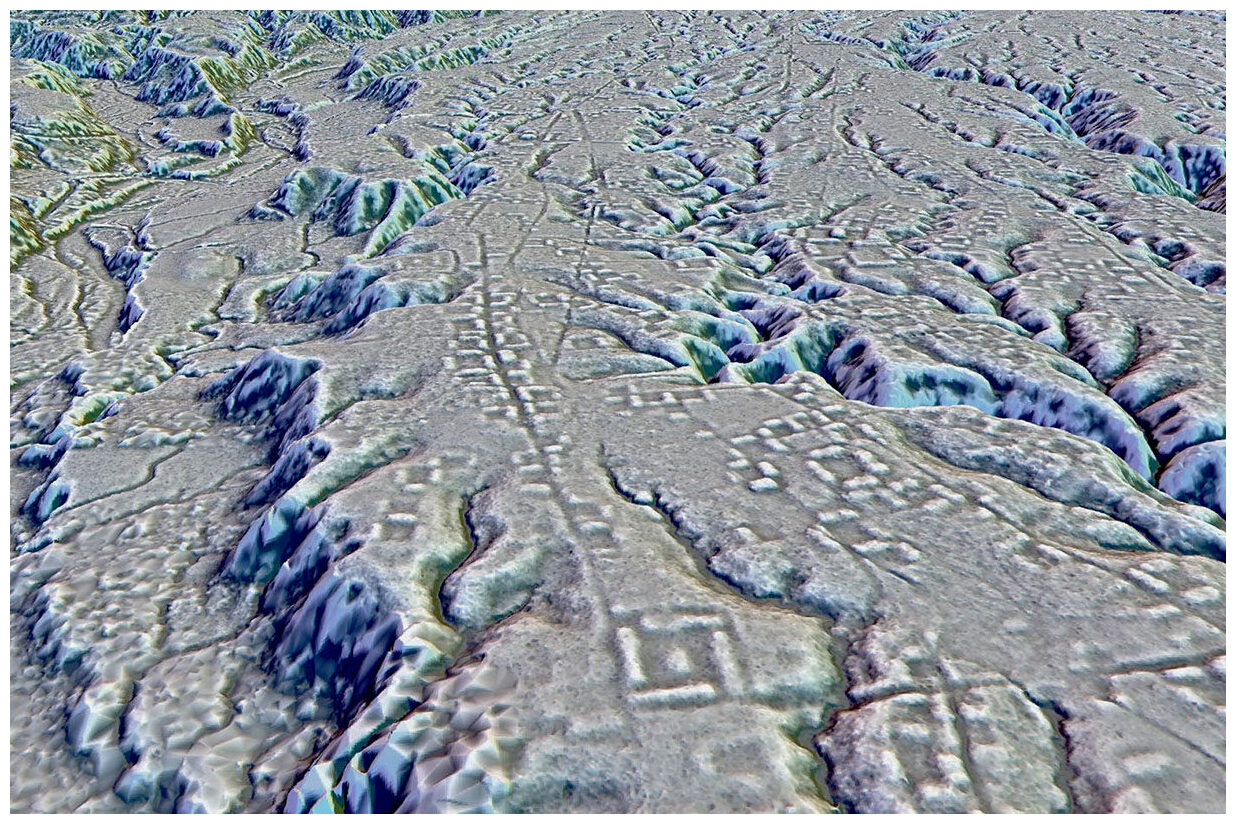
© ANTOINE DORISON AND STÉPHEN ROSTAINA lidar map of the city of Kunguints in the Ecuadorian Amazon reveals ancient streets lined with houses.
Lidar, which allows researchers to see through forest cover and reconstruct the ancient sites below, "is revolutionizing our understanding of the Amazon in pre-Columbian times," says Carla Jaimes Betancourt, an archaeologist at the University of Bonn who wasn't involved in the new work. Finding such an ancient urban network in the Upano Valley highlights the long-unrecognized diversity of ancient Amazonian cultures, which archaeologists are just beginning to be able to reconstruct.
Stéphen Rostain, an archaeologist at CNRS, France's national research agency, began excavating in the Upano Valley nearly 30 years ago. His team focused on two large settlements, called Sangay and Kilamope, and found mounds organized around central plazas, pottery decorated with paint and incised lines, and large jugs holding the remains of the traditional maize beer chicha. Radiocarbon dates showed the Upano sites were occupied from around 500 B.C.E. to between 300 C.E. and 600 C.E. "I knew that we had a lot of mounds, a lot of structures," Rostain says. "But I didn't have a complete overview of the region."











Comment: See Matt Ehret's prequel: Sir Henry Kissinger: Midwife to New Babylon