Secret HistoryS


Info

Over 30 mysterious children's graves uncovered in Norway

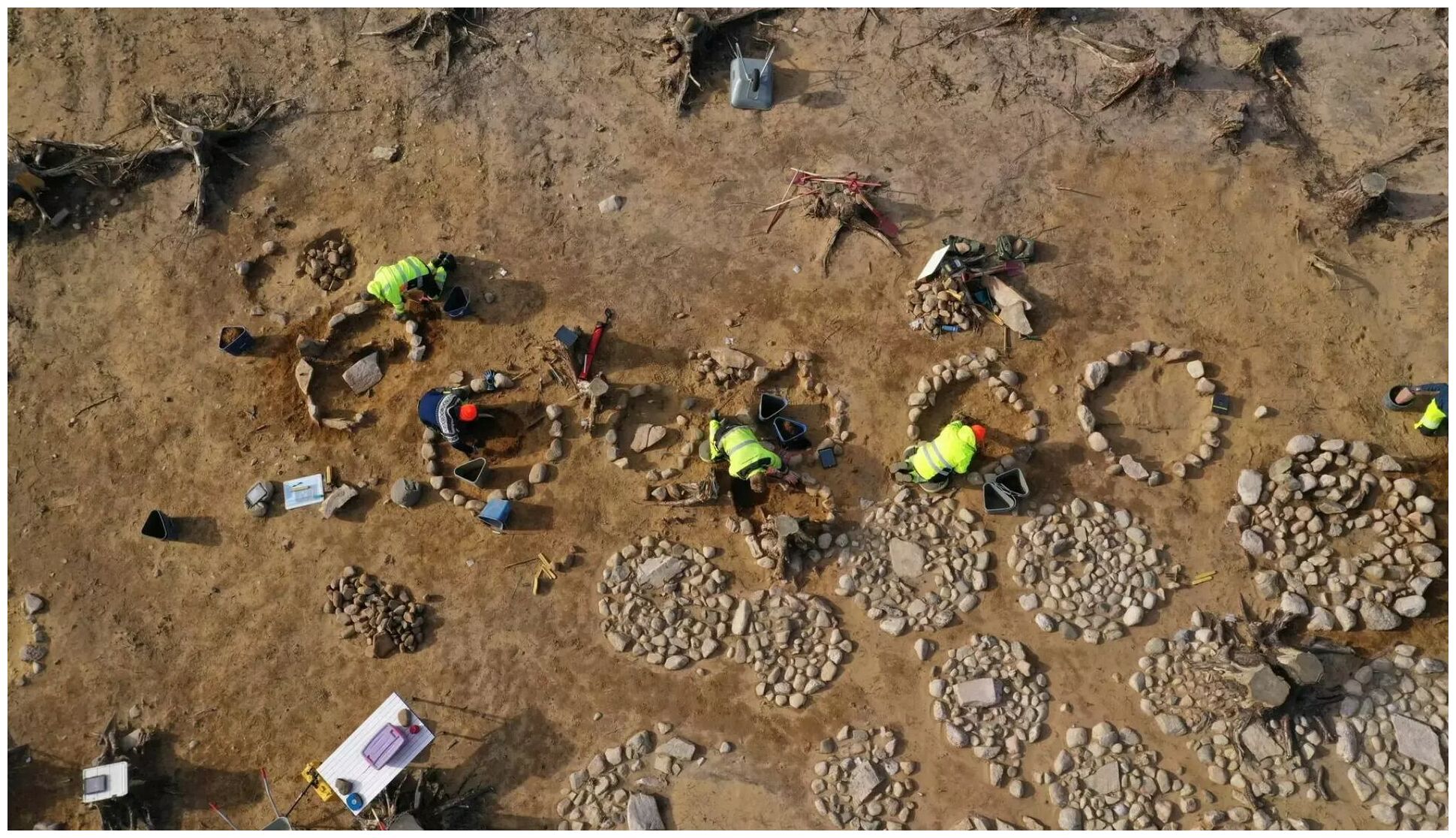
Archaeologists have discovered 40 circular stone formations during an excavation in southeastern Norway. All have cremated bone remains in the centre, mostly from children.
large burial field in southeastern Norway
© Museum of Cultural HistoryArchaeologists at work in a large burial field in southeastern Norway, where 40 circular stone formations with cremated bone remains, mostly from children, were found placed in the middle.
The burial field is unique in a European context, according to the Museum of Cultural History. It was found during an excavation in Fredrikstad municipality in 2023, and the analysis results of the bone remains are now complete.

The biggest surprise for the archaeologists was that almost all of those buried under the strange circular formations were children, the Museum of Cultural History informs NTB.

The first surprise, however, was discovering the graves, as none of them were visible in the terrain last autumn. But after removing the turf and cleaning, archaeologists discovered over 40 stone formations located 5-10 centimetres beneath the surface. These formations were round or oval, ranging from one to two metres in diameter. Several had clear edge stones and a central flagstone or large stone.

"We thought these must be graves," excavation leader Guro Fossum says. She is an adviser at the Museum of Cultural History.

Further investigations revealed burnt bones, pottery shards, and a possible brooch. All the graves were well preserved.

Crusader

1,500-year-old early Christian, ivory reliquary discovered, depicts intriguing 'unknown' scene

christian
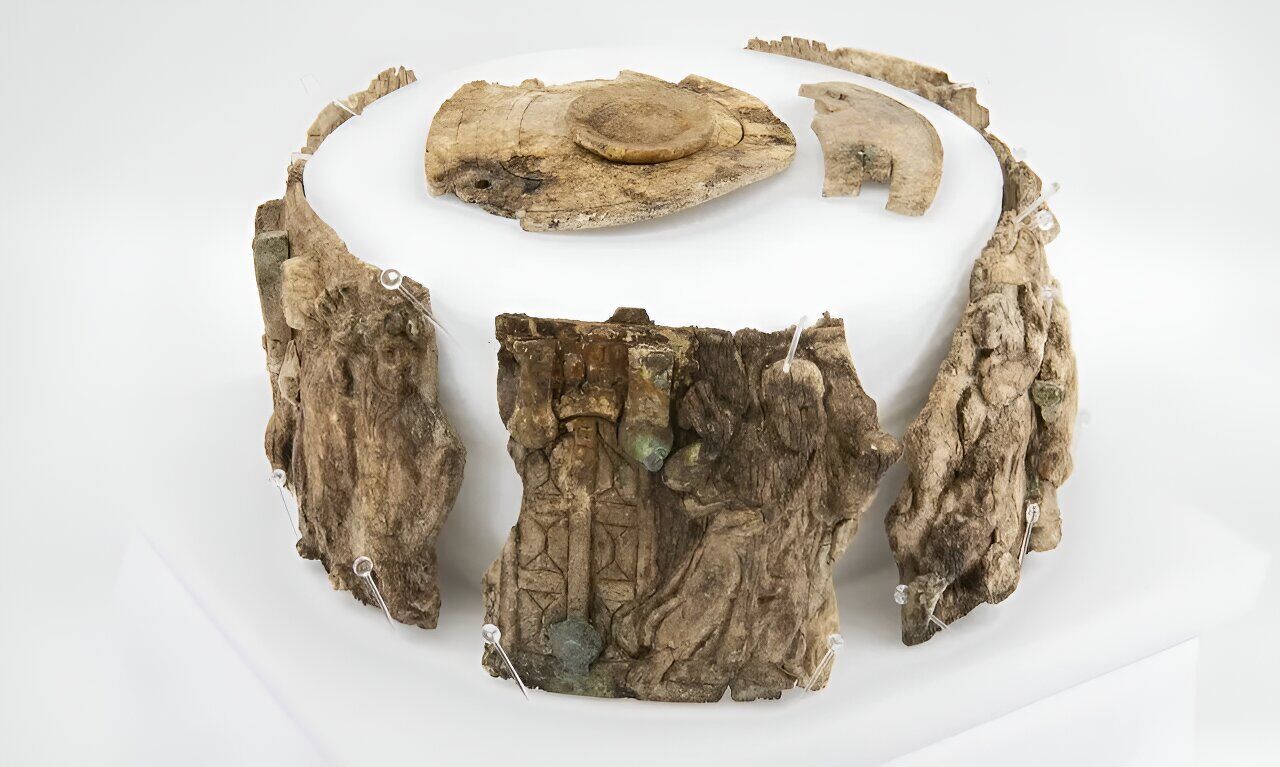
© University of InnsbruckIvory fragments of the pyx arranged in the round on a white background.
Since the summer of 2016, archaeologists from Innsbruck have been carrying out excavations in a late antique hilltop settlement in southern Austria. Two years ago, they made a sensational discovery: a Christian reliquary was still hidden in a previously unknown church. It contained a richly decorated ancient reliquary box made of ivory.

On 4 August 2022, a team of researchers led by archaeologist Gerald Grabherr made the spectacular discovery in an early Christian church on the Burgbichl in the municipality of Irschen in southern Austria: A marble shrine measuring around 20 by 30 centimeters was hidden under the altar in the side chapel area.

The shrine contained a heavily fragmented ivory "box" (pyx) richly decorated with Christian motifs — a reliquary that is normally taken away as the "holiest" part when a church is abandoned. In this case, however, it was left behind. It is the first such pyx to be found in an archaeological context in Austria.

Comment: The exquisite quality and sophistication evident in these early Christian objects is notable: And check out the following podcasts:

For fascinating insight into the truth about Christianity, and its origins, check out Laura Knight-Jadczyk's From Paul to Mark: PaleoChristianity


Info

Uzbek archeologists discover 8th century BC settlement

Chinese, Uzbek archeologists work on archaeological site.
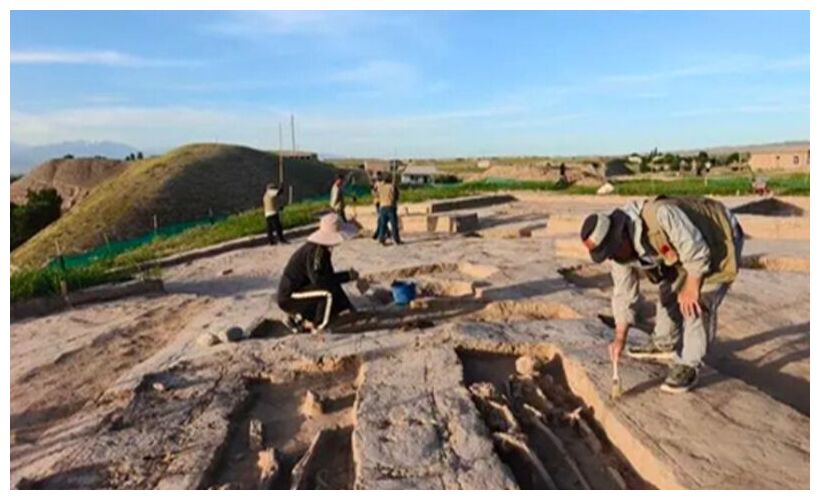
© Courtesy of Northwest UniversityChinese, Uzbek archeologists work on archaeological site.
With the mutual efforts of archaeologists from both China and Uzbekistan, an ancient settlement dating back to the 8th century BC was recently excavated in Uzbekistan, near the country's Surxondaryo river, also known as Surkhandarya.

The settlement site is a square-shaped architectural structure that contained multiple areas, which archaeologists have identified at a kiln and garbage pits.

Several smaller square rooms were also found within the ruins of the settlement. Archaeologist He Jierao told the Global Times that those spaces were likely "ancient kitchens or living rooms" since large amounts of pottery wares were also discovered nearby.

Utensils made of stone such as a millstone, mortars and pestles were discovered, revealing the "food processing history of ancient people in the region," He told the Global Times.

"It reveals the evolution of ancient people's community lifestyles and how they developed more civilized lifestyles," He emphasized.

The project was launched by archaeologist Ma Jian and his team at Northwest University in Xi'an, Northwest China's Shaanxi Province. Excavation work on the settlement started in April.

Info

Study reveals new insights into life at 'German Stonehenge'

Ringheiligtum Pömmelte
© Foto Community Germany
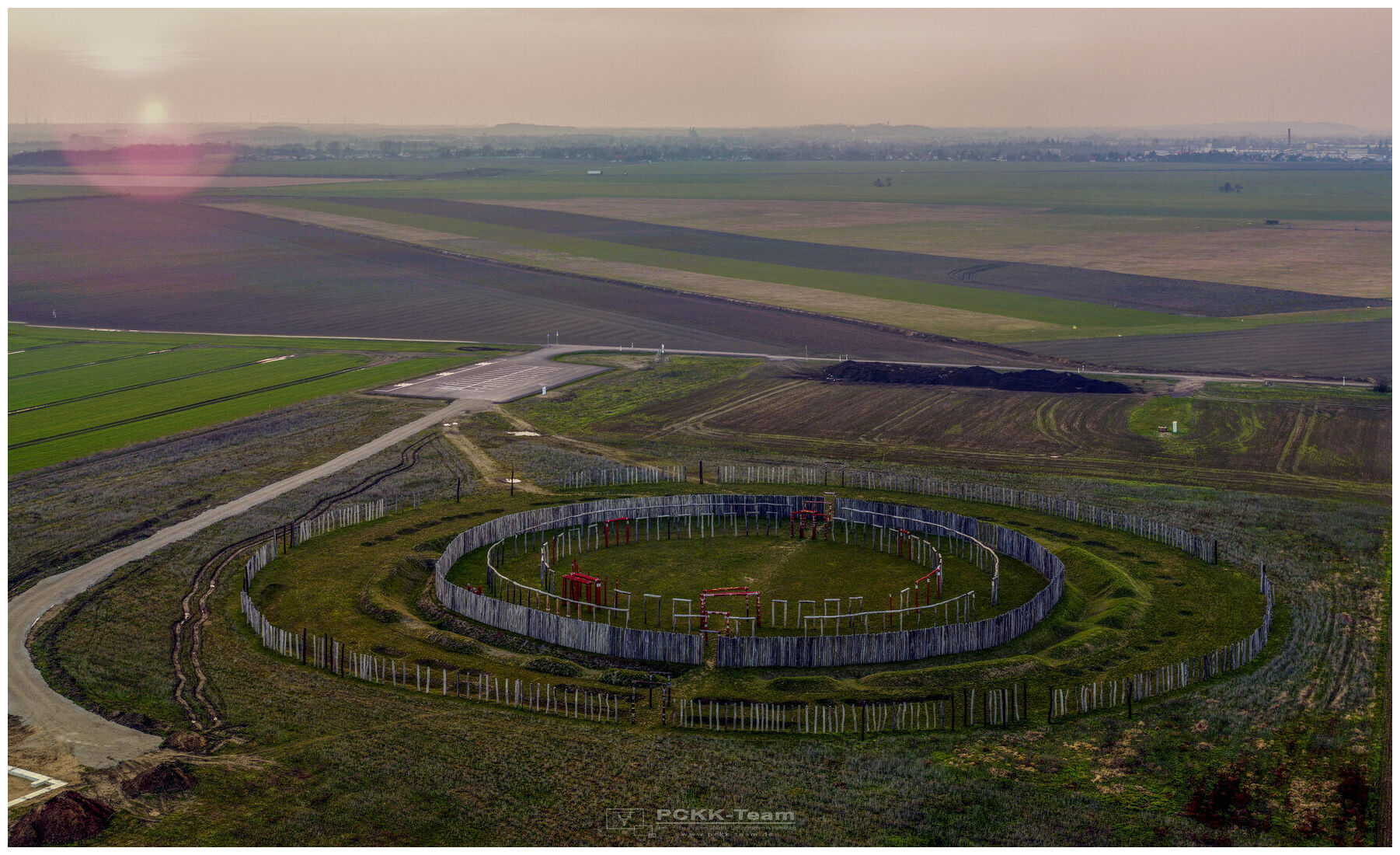
Excavations of the Ringheiligtum Pömmelte, nicknamed the "German Stonehenge", has revealed new insights into domestic life from prehistory.

Ringheiligtum Pömmelte is a late Neolithic/Early Bronze Age henge from the late third millennium BC. The monument features seven concentric rings made of palisades, ditches, and raised banks, each containing a series of wooden posts.

The site was discovered in 1991 through aerial photography near the present-day village of Pömmelte in Saxony-Anhalt, Germany.

From 2018 to 2022, archaeologists have excavated nearly 140 ancient dwellings dating from 2,800 BC to 2,200 BC. The older dwellings are linked to the Corded Ware and the Bell Beaker culture, while the more recent ones are associated with the Únětice Culture.

Info

Gilgamesh flood tablet

The baked clay tablet tells the tale of an epic flood.
Gilgamesh flood tablet
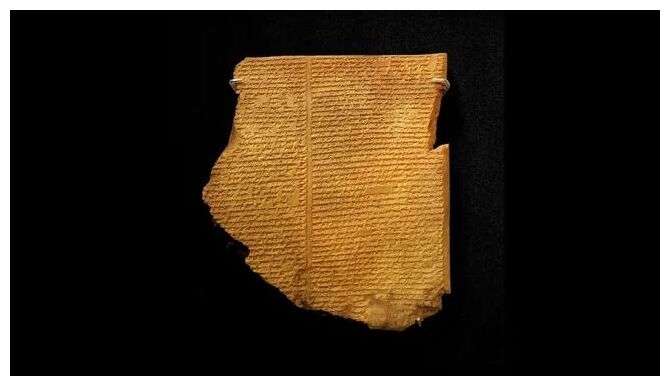
© World History Archive via AlamyThe Gilgamesh flood tablet contains an inscription detailing the story of an epic flood.
Name: Gilgamesh flood tablet

What it is: Also known as the 11th tablet of the Epic of Gilgamesh, this fragment of a baked clay tablet contains cuneiform inscriptions describing an epic flood that swept through Babylon. It is considered one of the oldest pieces of literature in the world.

Where it was found: Nineveh (also known as Kouyunjik), an ancient Assyrian city in Upper Mesopotamia (present-day Iraq).

When it was made: The Epic of Gilgamesh may date to as early as the third millennium B.C., but this particular tablet dates to the seventh century B.C.

What it tells us about the past: The epic tale that was carved into the ancient tablet is eerily similar to the biblical story of Noah's ark found in the Book of Genesis. The tablet describes how the gods sent a flood down to destroy Earth. However one god, Ea, alerts Utu-napishtim, the ruler of an ancient kingdom, of the plan and instructs him to build a boat to save himself and his family along with "birds and beasts of all kinds," according to the British Museum, which counts the artifact as part of its permanent collection.

Info

Earliest manuscript of Gospel about Jesus's childhood discovered

Papyrologists decipher manuscript fragment and date it to the 4th to 5th century.

Papyrus fragment f
© Staats- und Universitätsbibliothek Hamburg/Public Domain Mark 1.0Papyrus fragment from the 4th to 5th century.
For decades, a papyrus fragment with the inventory number P.Hamb.Graec. 1011 remained unnoticed at the Hamburg Carl von Ossietzky State and University Library. Now papyrologists Dr Lajos Berkes from the Institute for Christianity and Antiquity at Humboldt-Universität zu Berlin (HU), and Prof Gabriel Nocchi Macedo from the University of Liège, Belgium, have identified the fragment as the earliest surviving copy of the Infancy Gospel of Thomas.

This is a significant discovery for the research field, as the manuscript dates back to the early days of Christianity. Until now, a codex from the 11th century was oldest known Greek version of the Gospel of Thomas, which was probably written in the 2nd century AD. The Gospel tells episodes of the childhood of Jesus and is one of the biblical apocrypha. These writings were not included in the Bible, but their stories were very popular and widespread in Antiquity and the Middle Ages.

New insights into the transmission of the text

"The fragment is of extraordinary interest for research," says Lajos Berkes, lecturer at the Faculty of Theology at Humboldt-Universität. "On the one hand, because we were able to date it to the 4th to 5th century, making it the earliest known copy. On the other hand, because we were able to gain new insights into the transmission of the text."

"Our findings on this late antique Greek copy of the work confirm the current assessment that the Infancy Gospel according to Thomas was originally written in Greek," says Gabriel Nocchi Macedo from the University of Liège.

Better Earth

Unravelling the mystery of Seahenge: Timber structure was built off the coast of Norwich 4,000 years ago during an extreme cold spell

seahenge
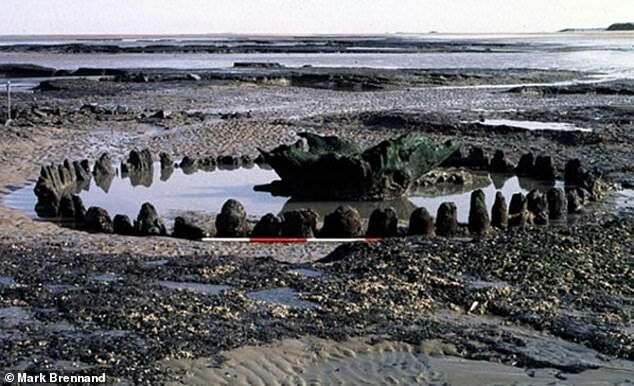
Scientists believe that Seahenge (pictured) may have been build as part of a ritual attempt to bring back warmer weather and prolong summer
When it comes to the mysteries of Britain's Neolithic past, Stonehenge is probably the structure people would recognise the most.

But archaeologists are now beginning to unravel the secrets of an even stranger structure, built off the coast of Norwich 4,000 years ago.

Researchers believe that 'Seahenge' and a second nearby monument were built by ancient Britons during a period of extreme cold, in an effort to try and bring back the warm weather.

Dr David Nance, an archaeologist at the University of Aberdeen, argues that Seahenge was built to resemble a cage designed to extend summer by keeping a young cuckoo singing.


Comment: Well, that's one archaeologist's speculation.


Comment: See also: Regarding the cuckoo/bird imagery, see:


Footprints

Evidence of more than 200 survivors of Mount Vesuvius eruption discovered in ancient Roman records

Vesuvius eruption
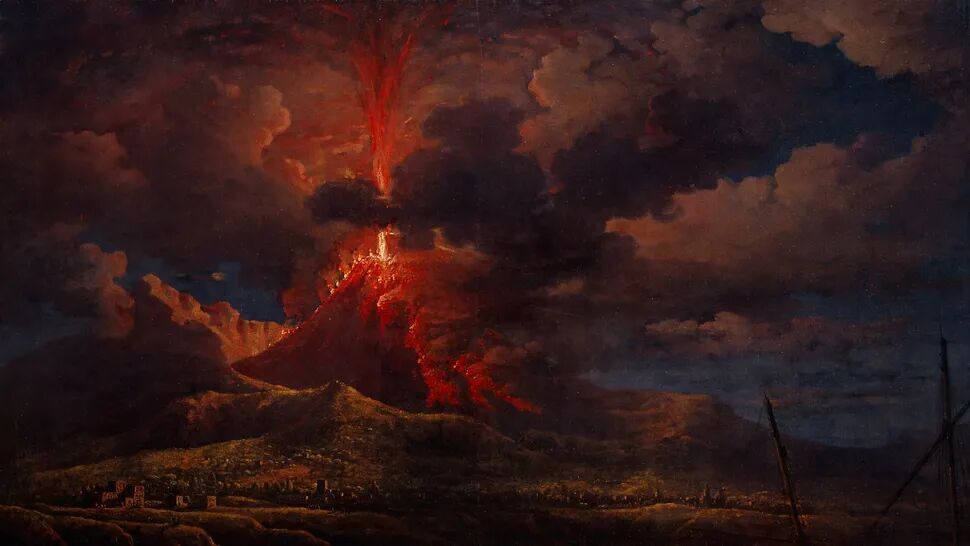
On Aug. 24, in A.D. 79, Mount Vesuvius erupted, shooting over 3 cubic miles of debris up to 20 miles (32.1 kilometers) in the air. As the ash and rock fell to Earth, it buried the ancient cities of Pompeii and Herculaneum.

According to most modern accounts, the story pretty much ends there: Both cities were wiped out, their people frozen in time.

It only picks up with the rediscovery of the cities and the excavations that started in earnest in the 1740s.

But recent research has shifted the narrative. The story of the eruption of Mount Vesuvius is no longer one about annihilation; it also includes the stories of those who survived the eruption and went on to rebuild their lives.

The search for survivors and their stories has dominated the past decade of my archaeological fieldwork, as I've tried to figure out who might have escaped the eruption. Some of my findings are featured in an episode of the new PBS documentary, "Pompeii: The New Dig."

Making it out alive

Pompeii and Herculaneum were two wealthy cities on the coast of Italy just south of Naples. Pompeii was a community of about 30,000 people that hosted thriving industry and active political and financial networks. Herculaneum, with a population of about 5,000, had an active fishing fleet and a number of marble workshops. Both economies supported the villas of wealthy Romans in the surrounding countryside.

Comment: See also:


Archaeology

Discovery of thousand-year-old game pieces comes as 'complete surprise' to experts

1000 year old game pieces germany medieval
© iStock/German Archaeological Institute, the State Office for the Preservation of Monuments Baden-Württemberg and the University of TübingenGerman archaeologists recently discovered that they found medieval game pieces back in 2022.
Medieval knights may have used the game pieces, experts say

Archaeologists in Germany recently announced the discovery of a game collection that dates back 1,000 years.

The findings were announced in a press release published by the University of Tübingen, the State Office for the Preservation of Monuments Baden-Württemberg (LAD) and the German Archaeological Institute (DAI) last week. The game pieces were found at the site of a presumed castle in southern Germany in 2022.

"During archaeological excavations at a forgotten castle in southern Germany, an excellently preserved knight piece has now been discovered," a statement from officials read. "The find is part of a unique games collection, which also includes other gaming pieces and a dice."

Comment: The impulse for social entertainment seems to be universal. Other discoveries:


Info

4,000-year-old circular stone building discovered on a Cretan hilltop

Ancient Circular Monument
© Ministry of Culture via InTime NewsThe impressive monument as seen in a Culture Ministry handout photo released on Tuesday.
During excavations for an airport on Greece's largest island of Crete, a large circular monument dating back 4000 years was unearthed.

A statement released by the Greek Ministry of Culture on Tuesday said the structure was a "unique and extremely interesting find".

Resembling a huge car wheel from above, the ruins of the labyrinthine, 1,800-square-meter (19,000-square-foot) building came to light during a recent dig by archaeologists.

The circular monument structure dates back to the Bronze Age Minoan Civilization. It was a civilization that developed on the island of Crete during the Bronze Age and lasted from 3000 BC to 1450 BC. The Minoans were a highly advanced society in seafaring, trade, and the arts. The civilization was named after the mythological king Minos.

The ministry said the building was mainly used between 2000-1700 B.C, and was founded around the time Crete's first palaces were being built — including at Knossos and Phaistos.

It said some of its features were comparable with early Minoan beehive tombs that were surmounted by stepped conical roofs and burial mounds in other parts of Greece.