
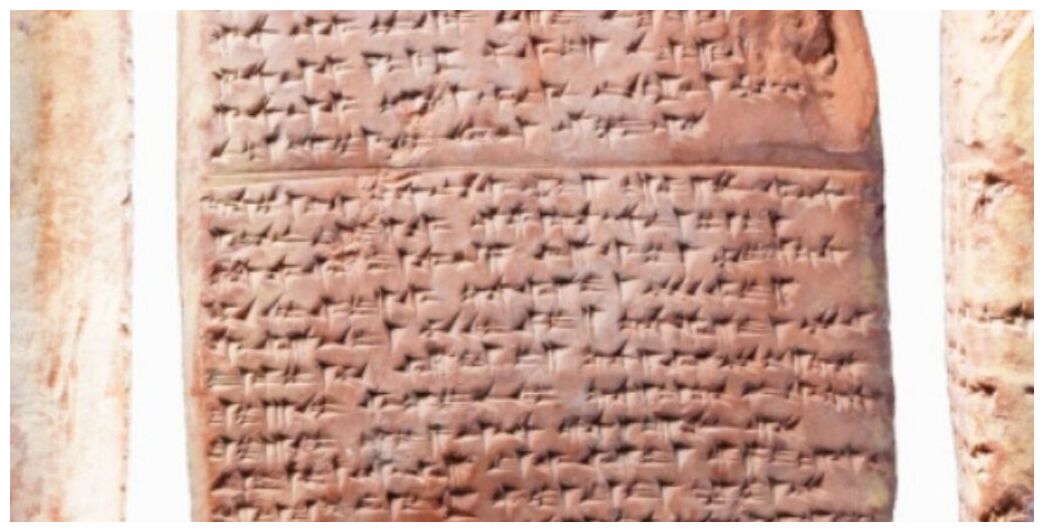
© Arkeonews NetA tablet found during excavations in Hattuša (today’s Boğazkale), the capital of the Hittite State, in 2023 revealed the existence of a lost language, Kalašma.
Based in central Anatolia, Türkiye, and with Hattuša as its capital, the Hittite Kingdom and later Empire is acknowledged as one of the principal Old World empires of the Eastern Mediterranean and Near East between 1650 and 1200 BCE from both rich archaeological remains and textual sources.
The tablet contains an introduction stating that a ritual expert conjures in (the language of) Kalašma.The Hittite ritual text refers to the new idiom as the language of the land of Kalašma. This is an area on the north-western edge of the Hittite heartland, probably in the area of present-day Bolu or Gerede.
"These texts show that Anatolia was a multilingual and multicultural place in 2000 BC," says Prof. Andreas Schachner, head of excavations at Hattuša.
The tablets, written in Kalašma, a language similar to the Luwian used by the Luwians who lived in southern Anatolia and about whom little is known, contain texts on daily life and celebrations.















Comment: What's perhaps most incredible is how little we seem to know about the period:
- Secrets of the exceptional diatretic vase revealed, recently discovered at 4th century Paleo-Christian necropolis in Autun, France
- Prittlewell: Stunning artefacts discovered in Anglo-Saxon nobleman's burial chamber in Southend-on-Sea, England
- 1,500-year-old early Christian, ivory reliquary discovered, depicts intriguing 'unknown' scene
- "Once in a lifetime" 1300-year-old gemstone necklace discovered in England may have belonged to high status Christian woman
- 'Intriguing' evidence of female mobility during the 630AD Christian Conversion Period
For fascinating insight into the truth about Christianity, and its origins, check out Laura Knight-Jadczyk's book From Paul to Mark: PaleoChristianityAs well as the following interviews: In Search of the Miraculous: Holy Grail Symbolism & Early Christian Mystery, with Laura Knight-Jadczyk