Secret HistoryS


Rocket

Soviet Union's top secret nuclear space missile was mistaken for a UFO

soviet space weapon
During the late 1960s, a top secret Soviet program to sneak nuclear weapons around U.S. early warning radars was mistaken for a rash of UFO sightings by Moscow's citizens. The weapon, known as FOBS, created a mysterious pattern in the night sky that many mistook for signs of alien visitation.

In the Spring of 1967, people living in the western Soviet Union noticed something odd in the sky at dusk: a mysterious crescent-shaped sliver of light, about the size of the moon from most directions but larger from others. The crescent appeared six times in 1967, always at the same time of day, before it finally disappeared.

According to veteran space expert James Oberg at Air & Space Magazine, the Soviet press speculated they were UFOs, and UFO enthusiast groups sprang up across the country to record the sightings.

Suddenly, after the sixth incident, Soviet press coverage of the incidents abruptly stopped. Someone in Moscow with top secret clearance realized that the crescents in the sky at sundown were actual evidence of a top secret weapons test, one that violate existing treaties on the deployment of nuclear weapons into space.

Colosseum

Long-lost Roman city of Neapolis discovered off Tunisia coast

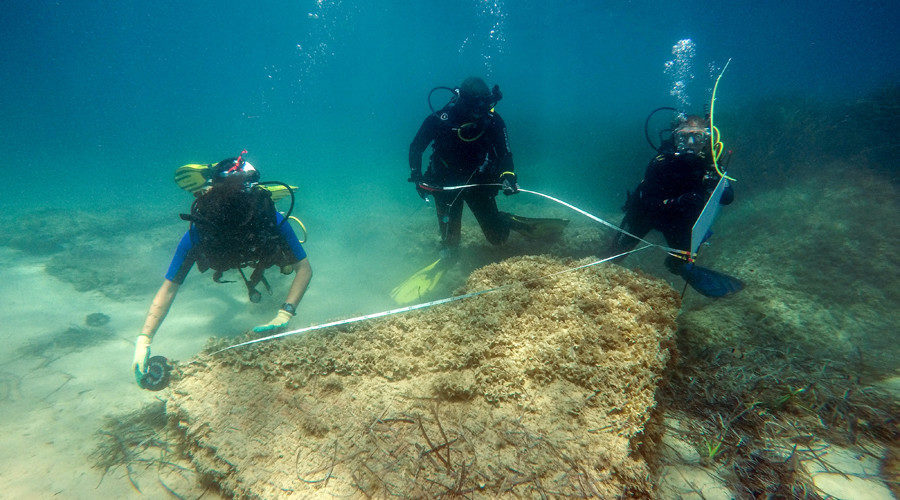
divers inspecting Neapolis
© University of Sassari / AFP
Ruins of the ancient Roman settlement Neapolis have reportedly been discovered submerged off the coast of Tunisia, giving further credibility to historical accounts that it was wiped from the map by a massive tsunami.

The underwater city was found near Nabeul by archaeologists from the National Heritage Institute Tunisia and Italy's University of Sassari in an expedition that has taken seven years.

Researchers believe Neapolis, whose ruins also dot the landscape above ground in the north-eastern town of Nabeul, was hit by unstoppable waves in 365 AD, report AFP.

Images of the project show archaeologists diving below the waves off Africa to pinpoint traces of Roman roads and buildings.

Dig

'Little Pompeii': Abandoned ancient town in France a 'microcosm of the Roman Empire'

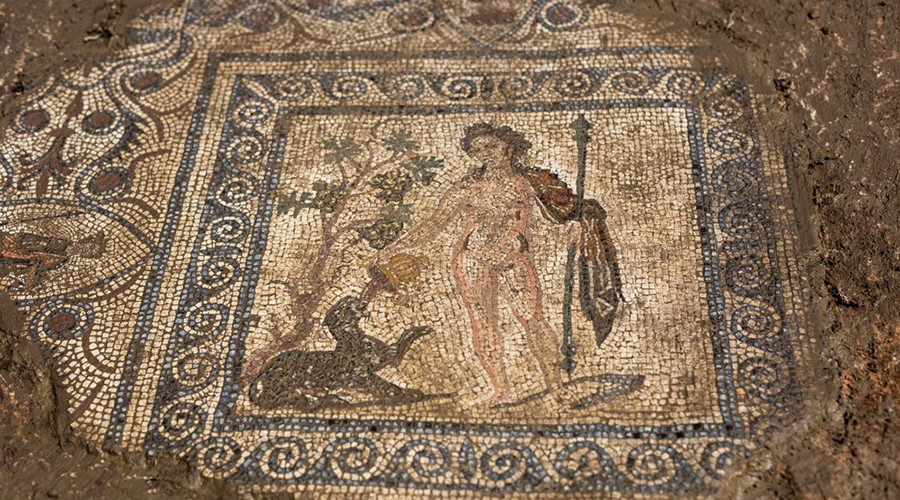
roman mosaic
© Flore Giraud
Archaeologists in France are hailing the ruins of a neighborhood nicknamed 'Little Pompeii' as a fine example of Ancient Roman society, after it was left frozen in time when its inhabitants fled a massive fire.

In an interview with RT.com, archaeologist Benjamin Clement explained how his team has been working since April to conserve the historical site before building begins nearby on a housing complex.

Several Ancient Roman residences are located at the site in the city of Vienne, which sits along the banks of the Rhone river. So far the researchers have uncovered lavish mosaics constructed from marble sourced as far away as Turkey, Greece and Tunisia.

Rose

Diana's last days: Inside story of how Diana snuck away with Dodi Fayed on holiday days before fatal crash in Paris

Diana, Princes of Wales and Dodi Fayed pictured in Sardinia, Italy
© BackgridDiana, Princes of Wales and Dodi Fayed pictured in Sardinia, Italy.

A battered grey Volvo saloon slips unnoticed out of the gates of Kensington Palace.

Hidden behind coats on hangers covering the side windows, Diana Princess of Wales lies across the back seat, out of view from prying eyes. The plan has worked.

Photographers from the world's press camped outside the princess's home had been lured away from the Palace gates by two decoy cars that left moments earlier.

Once through the gates, Diana's trusted driver Colin Tebbutt swings the Volvo through a series of twisting roads to check they are not being ­followed.

Certain that no cameramen are on their tail, he heads over the River Thames.

Roses

'Golden ray of light landed on Princess Di's coffin', says former Sun Royal Correspondent who tells of sorrow at her funeral

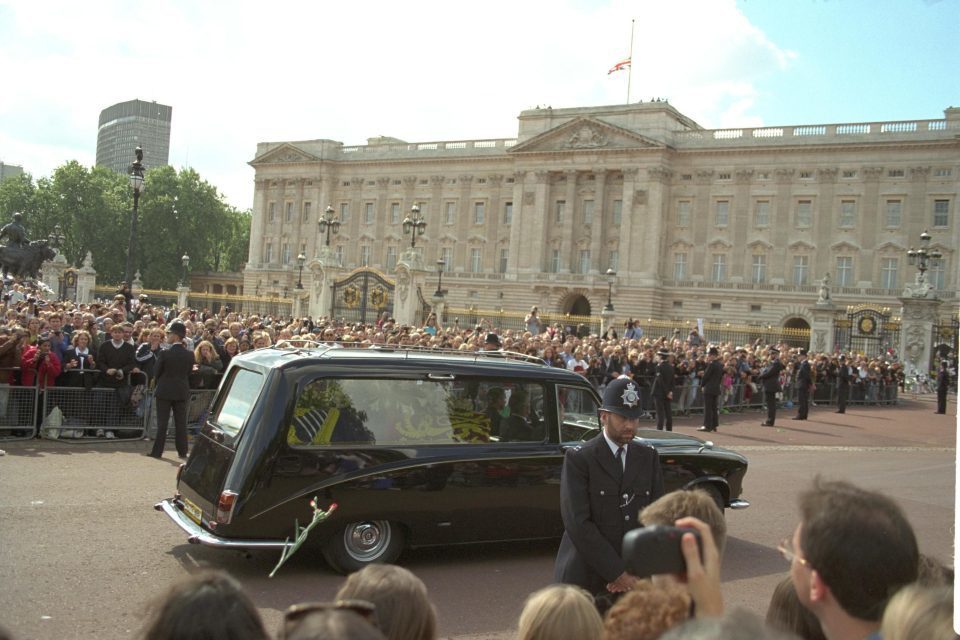
Princess Diana hearse
© Rex FeaturesDiana's hearse at Buckingham Palace
At the end of the funeral a single golden beam came through and landed on Diana's coffin showing us that even in death she was still in the spotlight.

I was sitting two rows behind the Fayeds facing towards where the Royal Family, led by the Queen, would sit.

All around were the most famous of faces, but Diana, even in death, was a bigger star than the others put together.

Comment: Unlawful Killing - The Murder of Princess Diana and Why it Matters


Magnify

What sharp teeth they had! New study suggests ancient whales were ferocious predators

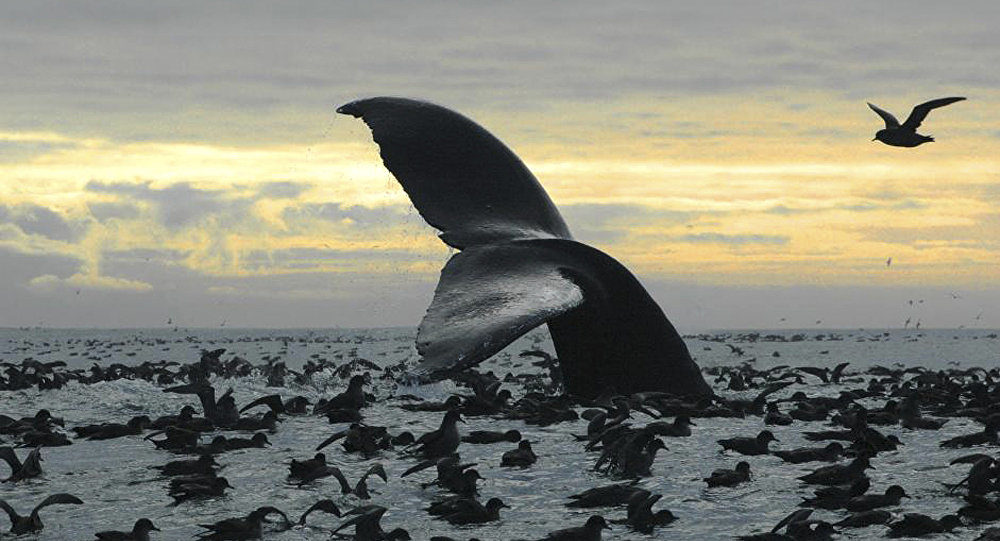
Whale sea
© AP Photo/ Brenda Rone/National Oceanic and Atmospheric Administration
A study by Australian paleontologists at Monash University and Museums Victoria reveals that archaic whales had sharp predator's teeth that resemble those of lions, discarding the hypothesis that ancient whales filter-fed.

"Contrary to what many people thought, it seems that whales never used their teeth as a sieve, and instead evolved their signature filter feeding strategy only later - maybe after their teeth had already been lost," the study's lead co-author Associate Professor Alistair Evans said.

Modern whales have comb-like plates in their mouths that can be used to filter plankton and small fish."Filter feeding is the defining trait of modern whales - there are few ways in which this unique strategy could have evolved from tooth-bearing, predatory ancestors, and our study firmly rules out one of them."

UFO 2

'Stones of the first encounter' thought to depict Mayan-ET contact

ancient stone alien
© Helium 24
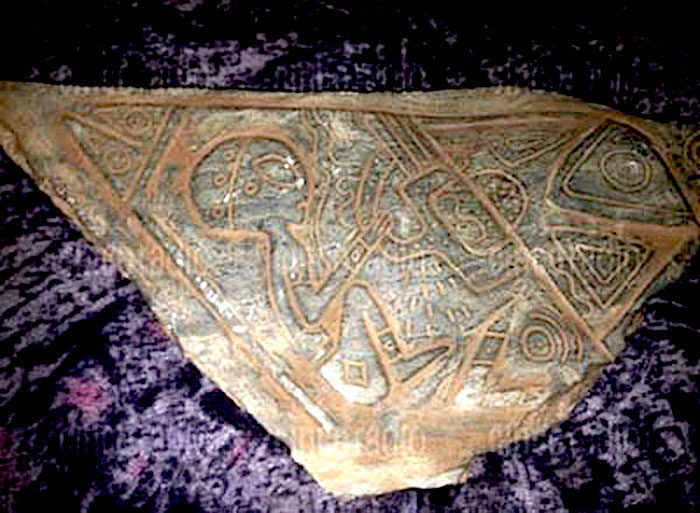
With so many Mayan artifacts seemingly depicting what we today would describe as extraterrestrials or aliens, it gets harder to dismiss them as hoaxes or misinterpretations of Mayan drawings and carvings of conventional objects, animals or people. Get ready for more. Word is spreading about a discovery in March 2017 of jade stones carved with so many realistic engravings of what look like aliens and spaceships that they're being called "Stones of the First Encounter." Are they?

As with many of these discoveries, it's difficult to determine who found the stones first due to language differences and the involvement of parties with television shows or YouTube channels. According to alien-ufo-sightings.com, these jade (jada) stones were found by local residents in a forest cave between Puebla and Veracruz, Mexico, in March 2017. At some point, the stones were either given to or viewed by Javier Lopez Diaz of CincoRadio, who claimed on Twitter that some of the images showed "contact" with beings from other worlds.

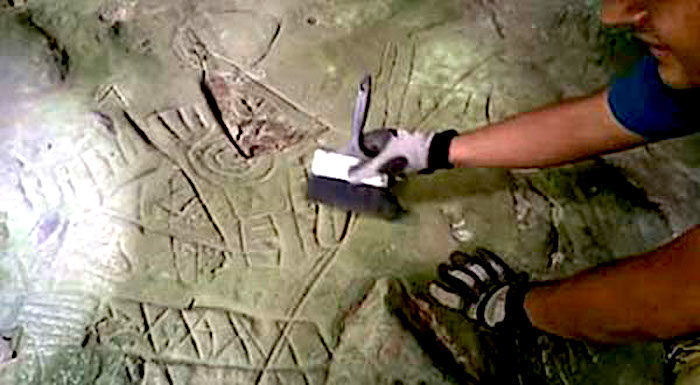
That apparently got the attention of Jose Aguayo at JAC Detector, a YouTube channel described as "searchers of treasure." Aguayo says he led a team through the jungle where the stones were said to have been found and "by chance" came upon the cave. It was in this cave that they found small thin sheets of gold and broken stones with designs of what look like "a spaceship with a gray alien-like being with an oval object in his hand and a former head of pre-Hispanic culture who apparently has an ear of corn." It was this group that gave them the name "Stones of the First Encounter" or "Stories of the First Meeting."
Cave drawings
© Helium 24
For more on this article, go here.

Propaganda

The New York Times 1917 - 2017: Publishing Fake News on Russia and Other Official Enemies

NY Times building
It has been amusing to watch the New York Times and other mainstream media outlets express their dismay over the rise and spread of "fake news." These publications take it as an obvious truth that what they provide is straightforward, unbiased, fact-based reporting. They do offer such news, but they also provide a steady flow of their own varied forms of fake news, often by disseminating false or misleading information supplied to them by the national security state, other branches of government, and sites of corporate power.

An important form of mainstream media fake news is that which is presented while suppressing information that calls the preferred news into question. This was the case with "The Lie That Wasn't Shot Down," the title of a January 18, 1988, Times editorial referring to a propaganda claim of five years earlier that the editors had swallowed and never looked into any further. The lie - that the Soviets knew that Korean airliner 007, which they shot down on August 31, 1983, was a civilian plane - was eventually uncovered by congressman Lee Hamilton, not by the Times.

Mainstream media fake news is especially likely where a party line is quickly formed on a topic, with any deviations therefore immediately dismissed as naïve, unpatriotic, or simply wrong. In a dramatic illustration, for a book chapter entitled "Worthy and Unworthy Victims," Noam Chomsky and I showed that coverage by Time, Newsweek, CBS News, and the New York Times of the 1984 murder of the priest Jerzy Popieluzko in Communist Poland, a dramatic and politically useful event for the politicized Western mainstream media, exceeded all their coverage of the murders of a hundred religious figures killed in Latin America by U.S. client states in the post-Second World War years taken together.1 It was cheap and safe to focus heavily on the "worthy" victim, whereas looking closely at the deaths of those hundred would have required an expensive and sometimes dangerous research effort that would have upset the State Department. But it was in effect a form of fake news to so selectively devote coverage (and indignation) to a politically useful victim, while ignoring large numbers whose murder the political establishment sought to downplay or completely suppress.


Dig

Unraveling the mystery of Zorats Karer, Armenia's 'Stonehenge'

Karahundj armenia stonehenge
© iStock
The misty and mountainous valleys of the south Caucasus have been host to human activity continuously for thousands of years, but only recently has the Western archaeological world had access to them.

From the cave in which researchers found the world's oldest shoe and the oldest winemaking facility, to traces of an Urartian city with hundreds of wine-holding vessels buried in the ground, the last four decades have witnessed extraordinary interest from scholars and tourists alike in the smallest republic in the former Soviet Union. None, however, are as quite as tantalizing as the 4.5 hectare archaeological site whose name is as contested as its mysterious origins.

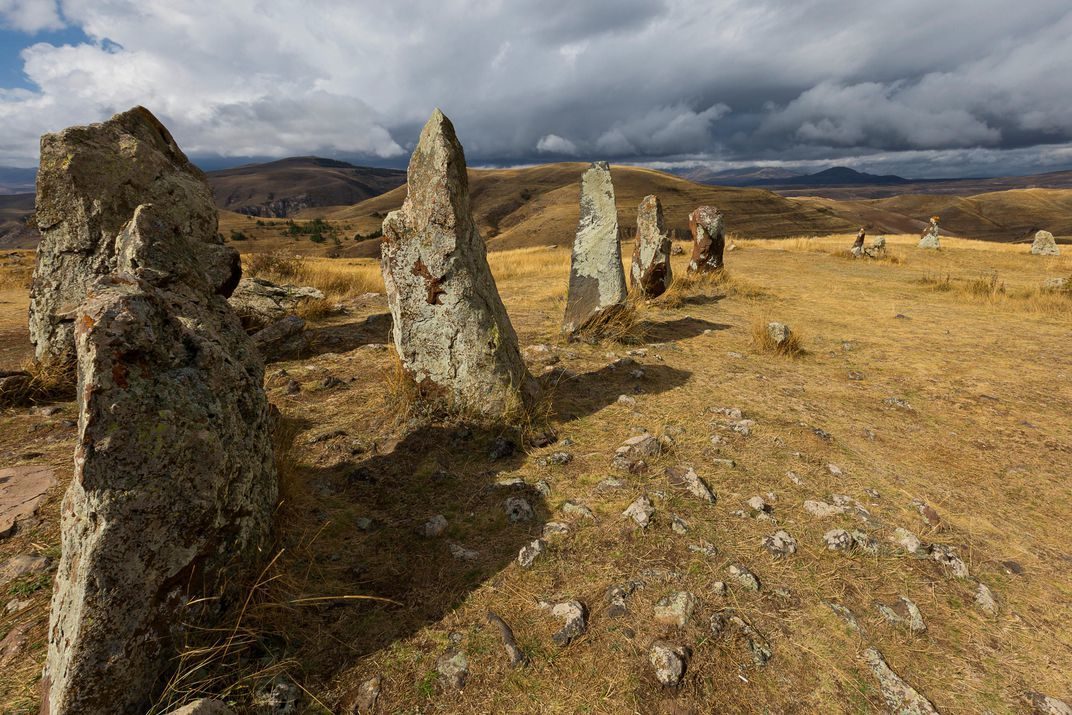
Located in Armenia's southernmost province, Zorats Karer, or as it is vernacularly known, Karahundj, is a site which has been inhabited numerous times across millennia, from prehistoric to medieval civilizations. It consists of a prehistoric mausoleum and nearby, over two hundred neighboring large stone monoliths, eighty of which have distinctive, well-polished holes bored near their upper edge.

Dig

Peru discovers 16 Chinese migrants in pre-Incan burial site

remains of one of the recently discovered 19th century Chinese immigrants
© AP Photo/Martin MejiaThe remains of one of the recently discovered 19th century Chinese immigrants lies at Huaca Bellavista in Lima, Peru, Thursday, Aug. 24, 2017. According to the Ministry of Culture of Peru, the tombs where located in a pre-Inca sacred site because Chinese immigrants could not be buried in the Catholic cemeteries of the time.
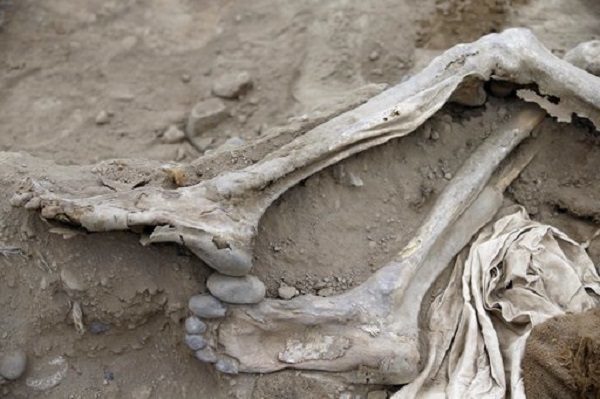
Peruvian archeologists have discovered in a sacred pre-Incan site the bodies of 16 men from China who arrived to South America almost two centuries ago as semi-enslaved workers.

The secret tomb in Lima is the biggest burial site of Chinese migrants ever found in Peru and was presented Thursday to journalists. Found alongside the bony remains were opium pipes and other personal objects used by the migrants.

As many as 100,000 Chinese migrants arrived to Peru in the second half of the 19th century and for little pay performed back-breaking work on farms, building railroads and removing guano, which is bird excrement coveted as fertilizer.

The Chinese were discriminated against even in death, having to be buried in the pre-Incan sites after being barred from cemeteries reserved for Roman Catholics.