Secret HistoryS


Red Flag

Antifa flag comes directly from German Communist Party in 1932

On the Left, the 1932 flag of the paramilitary wing of the Communist Party of Germany. On the Right, the 2017 flag of the paramilitary wing of the Democratic Party of America.
antifa flag
Everything theses Alt-Left thugs use today is exactly the same as back then. Their logo, weaponized words, double standards and lack of logic. Its all from Germany 85 years ago. They call everyone Nazis because that is who their opposition in Germany was. Antifa prefaced The National Socialist German Workers' Party and empowered them. Without Antifa's violence the Nazi party would have never won anything.

Comment: Curiously, it's also similar to the Ukrainian fascist flag.


Microscope 1

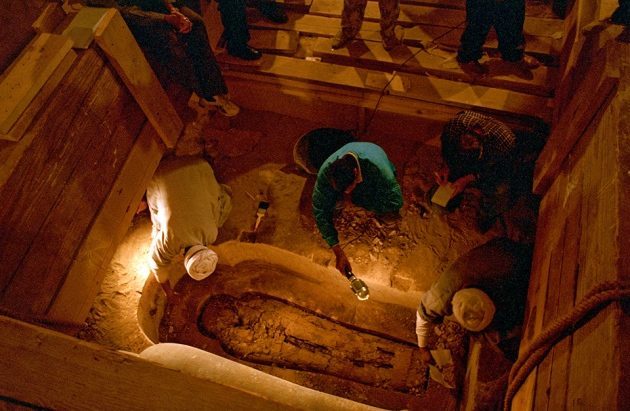
Genetic analysis of mummy DNA reveals ancient Egyptians closely related to Middle Easterners, not central Africans

Excavations ancient city Abusir el-Meleq Egypt
© Petr Bonek/AlamyExcavations in the ancient city of Abusir el-Meleq.
The tombs of ancient Egypt have yielded golden collars and ivory bracelets, but another treasure - human DNA - has proved elusive. Now, scientists have captured sweeping genomic information from Egyptian mummies. It reveals that mummies were closely related to ancient Middle Easterners, hinting that northern Africans might have different genetic roots from people south of the Sahara desert.

The study, published on 30 May in Nature Communications1, includes data from 90 mummies buried between 1380 bc, during Egypt's New Kingdom, and ad 425, in the Roman era. The findings show that the mummies' closest kin were ancient farmers from a region that includes present-day Israel and Jordan. Modern Egyptians, by contrast, have inherited more of their DNA from central Africans.

Archaeological discoveries and historical documents suggest close ties between Egypt and the Middle East, but "it is very nice that this study has now provided empirical evidence for this at the genetic level", says evolutionary anthropologist Omer Gokcumen of the State University of New York at Buffalo.

Dig

Scientists discover ancient works not read since the Dark Ages at Egyptian monastery

Saint Catherine's monastery Egypt
© KHALED ELFIQIThe library at Saint Catherine’s monastery has been in continuous use for 1,500 years
Ancient works not read by humans since the Dark Ages have been found at an Egyptian monastery, using a technique that allows researchers to reconstruct documents long ago scrubbed off parchment.

The finds at Saint Catherine's monastery on the Sinai peninsula hailed a "new golden age of discovery", according to the scientists behind the research, who believe that the methods could reveal many other lost texts.

They have been chronicling the monastery's library, which has been in continuous use for 1,500 years, but which is today threatened by growing Islamic fundamentalism and attacks on Christians in the region.

Eye 1

Antony Sutton, Skull & Bones, Hitler, The Bush Family

Bilderberg
The prodigious author and researcher, Antony Sutton (1925-2002), wrote about hidden men behind momentous events. I recently came across a 1999 interview with Sutton, conducted by Kris Millegan, researcher and head of TrineDay publishers.

Comment: More on Antony Sutton:


Ambulance

Princess Diana's driver: That night in the hospital

Princess Di
© huffpostarabi.com
Nearly twenty years after Princess Diana's death, her longtime driver, Colin Tebbutt, is speaking out about losing his friend. Tebbutt was one of the two British drivers who retrieved Princess Diana's body from the hospital where she passed away in Paris, France. In a recent interview, Tebbutt talked about what he witnessed on that fateful night at the hospital.

From the sounds of it, the chauffeur was in such a state of shock when he saw Princess Diana's lifeless body that his mind played tricks on him and made him think she was alive. He said,
I plugged the fans into the room to get some air circulating. I look 'round, and the eyelids and the front of the hair of the Princess were moving. I thought, 'God, she's alive,' Within a second, I realized what was happening. Turned around, a couple seconds to myself, I managed to get it together again. But that was the one bit when I felt I lost myself.
Colin Tebbutt offers the description of the hospital scene during The Story of Diana, an upcoming television event by People and ABC. The story is one Tebbutt has touched on before. He previously talked about having to put up blankets over the windows because paparazzi standing on adjacent buildings were trying to use zoom-lens cameras to capture a picture of Princess Diana through the hospital windows. Naturally, the temperature of the room went from hot to sweltering, which is why Tebbutt turned on all of the fans. He has said that he wanted not to be emotional at the hospital but that seeing her hair flutter tore him up inside.
A similar story previously came from Paul Burrell, the other driver who joined Colin Tebbutt in retrieving Princess Diana's body. In an interview, Burrell said he honestly thought Princess Diana was not dead when he entered the hospital room. He said the thought crossed his mind that the whole situation was nothing more than an elaborate joke. Sadly, that was not the case.

Archaeology

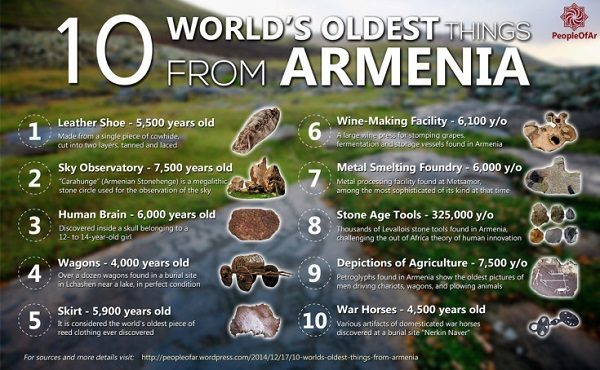
10 world's oldest artifacts from Armenia

Armenia

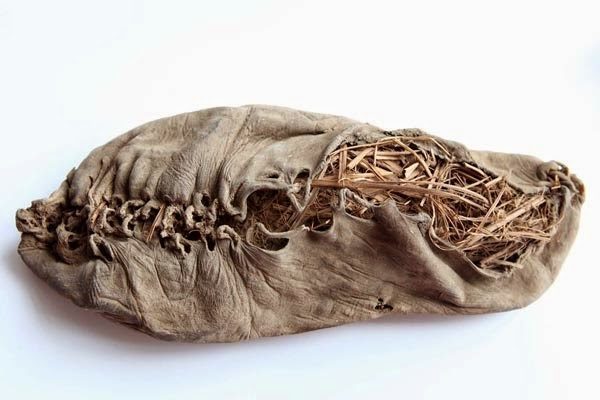
1. Leather Shoe - 5,500 years old


Armenian shoe
A perfectly preserved shoe, 1,000 years older than the Great Pyramid of Giza in Egypt and 400 years older than Stonehenge in the UK, has been found in a cave in Armenia. The 5,500 year old shoe, the oldest leather shoe in the world, is made from a single piece of cowhide, cut into two layers, tanned and laced. It contained grass, although the archaeologists were uncertain as to whether this was to keep the foot warm or to maintain the shape of the shoe. "It is not known whether the shoe belonged to a man or woman," said lead author of the research "We thought initially that the shoe and other objects were about 600-700 years old because they were in such good condition," said Dr Pinhasi. "It was only when the material was dated by the two radiocarbon laboratories in Oxford, UK, and in California, US that we realised that the shoe was older by a few hundred years than the shoes worn by Ötzi, the Iceman." Three samples were taken in order to determine the absolute age of the shoe and all three tests produced the same results. Interestingly enough the shoe very much resembles a traditional Armenian shoe known as "charokh" a type of moccasin, still in popular use in Armenia.

Comment: See also:


Sherlock

New study reveals link between Armenian genetics and Neolithic Europeans

bronze age armenia
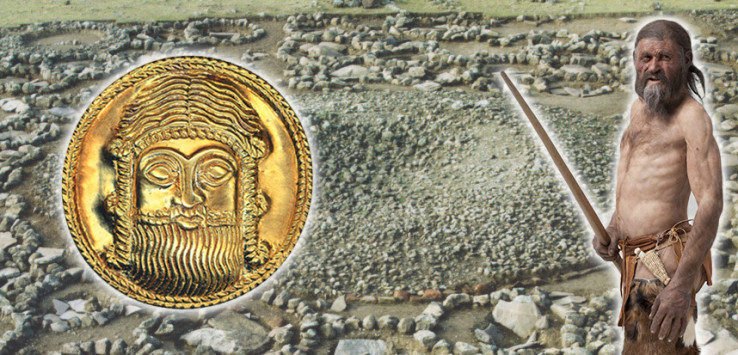
A new study into Armenian genetics reveals that present day Armenians are a mixture of local Bronze Age people who have retained homogeneity for over three thousand years, and show great affinity to Neolithic Europeans.

Armenians are an ethno-linguistic-religious group distinct from their surrounding neighbors. They have their own church, the Armenian Apostolic Church, which was founded in the 1st century CE, and became in 301 CE the first branch of Christianity to become a state religion. They have also their own alphabet and language which is classified as an independent branch of the Indo-European language family.

The historical homeland of the Armenians sits north of the Fertile Crescent, a region of substantial importance to modern human evolution. Genetic and archaeological data suggest farmers expanding from this region during the Neolithic populated Europe and interacted/admixed with pre-existing huntergatherer populations. Furthermore, Armenia's location may have been important for the spread of Indo-European languages, since it is believed to encompass or be close to the Proto-Indo-European homeland (Anatolia or Pontic Steppe) from which the Indo-Europeans and their culture spread to Western Europe, Central Asia and India.

Cross

Leading British scholar: 'We shouldn't be taking the Bible literally'

New Testament
© Fabrizio Bensch / Reuters
People should not take the Bible at face value, a leading British scholar has said after analyzing a unique Latin interpretation of the gospels from 800 AD.

Dr. Hugh Houghton of the University of Birmingham said the Bible should not be taken literally, after studying a copy of a fourth-century commentary by African-born Italian bishop Fortunatianus of Aquileia, which reads the religious text as a series of allegories rather than literal history.

"There's been an assumption that it's a literal record of truth - a lot of the early scholars got very worried about inconsistencies between Matthew and Luke, for example," Houghton said, according to the Telegraph.

"But for people teaching the Bible in the fourth century, it's not the literal meaning which is important, it's how it's read allegorically.

Comment: For more on the history of the bible, listen in:

The Truth Perspective: Interview with Russell Gmirkin: What Does Plato Have To Do With the Bible?


Star of David

Armenia's six-pointed star - 5000 years old

armenian star
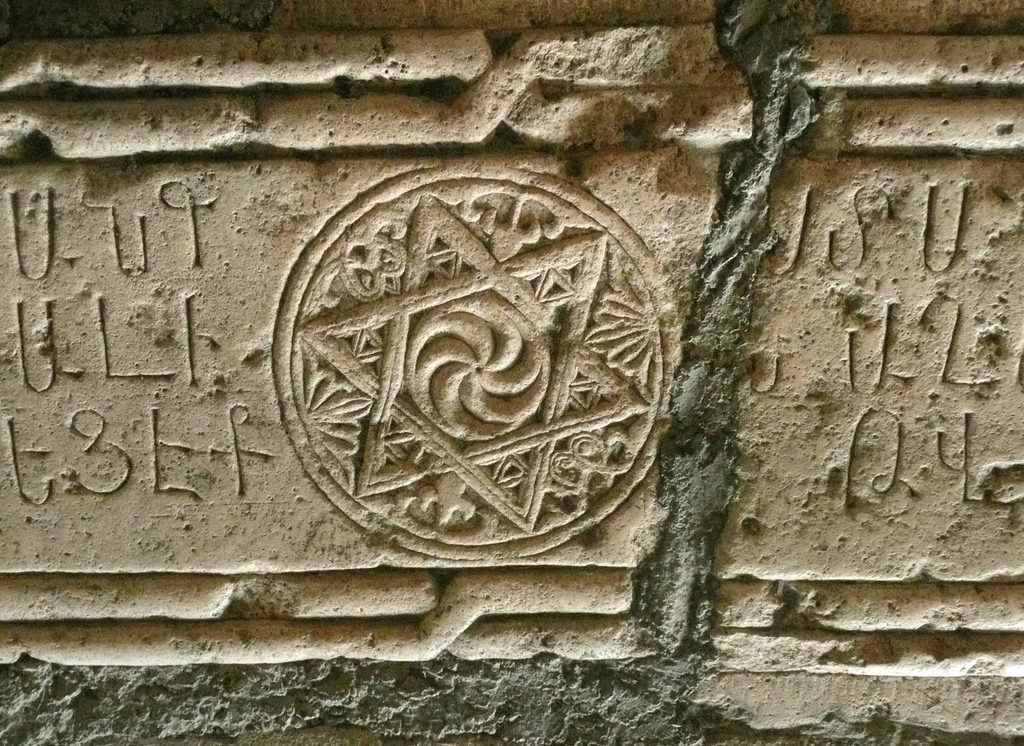
Marble tombstone of the Armenian Grand Prince Hasan Jalal Vahtangian (1214-1261)
A few months ago, I made a YouTube video about the history of the Armenian Wheel of Eternity. Maybe the most iconic among many ancient Armenian symbols. As expected people started to ask questions and post comments. Among the commentators a keen observer noticed that in some cases Armenians depicted the Wheel of Eternity inside a six pointed star. Because of the many questions I received since, I've decided to finally grant this symbol attention in a manner of a blog post.

Most people today associate the six pointed star (hexagram) with the Jewish Star of David (Magen David), as it is the modern symbol of Jewish identity and Judaism. In 1948 it was even adopted on the official flag of Israel. According to Wikipedia: "Its use as a symbol of the Jewish community dates to the 17th century." However, like many other aspects of Armenian culture, not much has been written about the Armenian usage of the hexagram. Even though its usage in science, art, architecture, decorations and even for religious purposes has been extensive throughout the history.

Video

New film reveals that Prince William and Prince Harry had not seen Princess Diana in the month prior to her death

William and Harry
The twentieth anniversary of Princess Diana's death is nearly upon us, and with the date looming, there's a new documentary with Prince William and Prince Harry looking back at their mother's life. The film shines a light on the fact that the Duke of Cambridge and his younger brother had not seen Princess Diana in a month when she passed away on August 1, 1997. At that time, the People's Princess and Prince Charles had a custody arrangement that kept the boys traveling back and forth. The princes were with their father when their mother died. In the documentary, Prince Harry illuminates this subject and says,
There was the point where our parents split, and we never saw our mother enough, or we never saw our father enough. There was a lot of traveling and lot of fights on the back seat with my brother -- which I would win. There was all that to contend with. And -- I don't pretend we're the only people to have to deal with that, but it was an interesting way of growing up.
It turns out Prince William and Prince Harry had plans to see their mother on the day that she and her boyfriend, Dodi Fayed, died in a car accident in Paris. The boys and Princess Diana had been apart for weeks. The princes were vacationing with Prince Charles and Queen Elizabeth II in Balmoral, Scotland. Meanwhile, Princess Diana was busy making humanitarian trips, including a journey to Bosnia to speak out against the use of landmines.

Comment: The loss and trauma of Princes William and Harry tragically losing their mother at such a young age is just another meaningless piece of 'collateral damage' to those who had Princess Diana killed: Unlawful Killing - The Murder of Princess Diana and Why it Matters