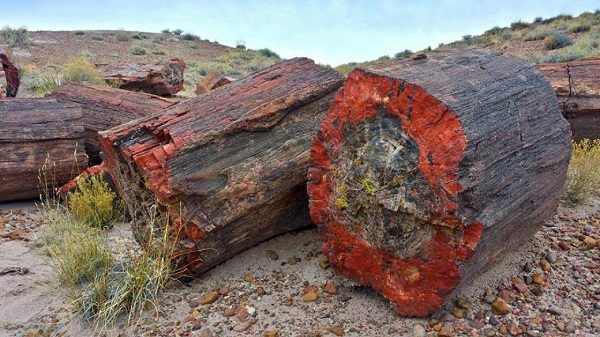
© Patrick Fuchs | Petrified Forest National ParkPetrified Forest National Park
Our February issue, which focused on
Petrified Forest National Park, generated a lot of reader interest in this Northern Arizona gem. And a few readers wrote to ask about something we didn't mention in the magazine.
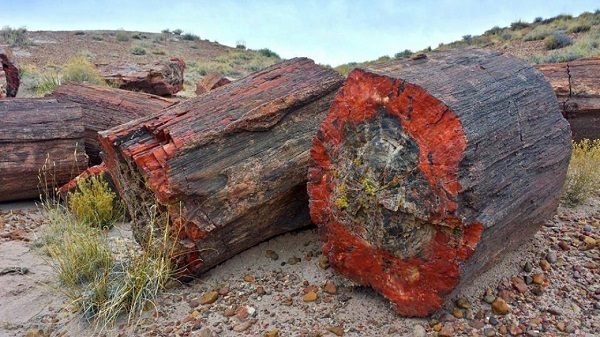
"If the age of the trees and, I assume, tree pieces are more than 200 million years old, why is it that many of the petrified tree sections appear to have been sawed cleanly apart?" asked Bob Klages of Oxford, Michigan. "A bit more of the scientific explanation of the actual process of petrification would also have been fascinating to read about."
To answer Mr. Klages' question, we turned to Bill Parker, the park paleontologist we featured in the issue. "The fossilization process itself is fairly complex," he says, but it goes something like this:
A tree dies, falls over and is buried in a river channel or floodplain, under layers of mud, sand and gravel. In the groundwater table, the tree becomes saturated like a sponge and expands. The water, sand and gravel cut off exposure to oxygen, so the tree doesn't rot. Volcanic ash in the water breaks down, and the silica that was in the ash goes into solution - forming silicic acid, which enters the waterlogged tree and interacts chemically with the wood, altering it to silica and replicating the features of the wood. Over time, you end up with a silica replica of the tree.













Comment: See also: A second 1,300 year-old ancient village discovered in Arizona's Petrified Forest National Park