Secret HistoryS


MIB

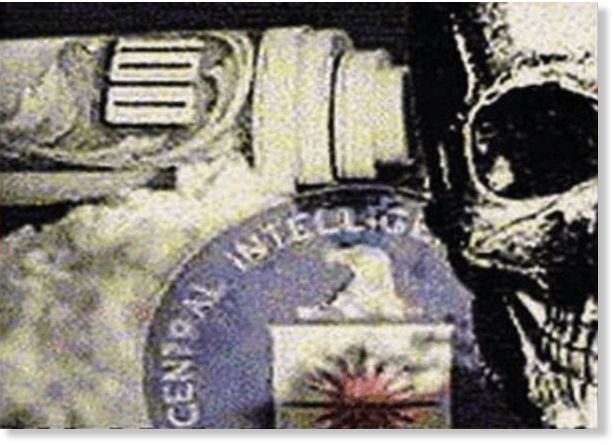
Addicts, armies and agents: How the CIA turned Vietnam and Laos into a lucrative drug trafficking enterprise

CIA drugs and money
At 7:30 a.m., on March 16, 1968, Task Force Barker descended on the small hamlet of My Lai in the Quang Nai province of South Vietnam. Two squads cordoned off the village and one, led by Lieutenant William Calley, moved in and, accompanied by US Army Intelligence officers, began to slaughter all the inhabitants. Over the next eight hours US soldiers methodically killed 504 men, women and children.

As the late Ron Ridenhour, who first exposed the massacre, said years later to one of the present authors, "Above My Lai were helicopters filled with the entire command staff of the brigade, division and task force. All three tiers in the chain of command were literally flying overhead while it was going on. It takes a long time to kill 600 people. It's a dirty job, you might say. These guys were flying overhead from 7:30 in the morning, when the unit first landed and began to move into those hamlets. They were there at least two hours, at 500 feet, 1000 feet and 1500 feet."

Comment: Now, more than 50 years after the depicted events, the CIA's massive criminal enterprise has only seen an even more 'aggressive expansion' - employed by "amiable psychopaths" who destroy the lives of millions - in order to ensure continuance of "the Company".

See:


Info

Pre-dynastic rock art discovered in Egypt

Ancient Grafitti
© Ahram Online
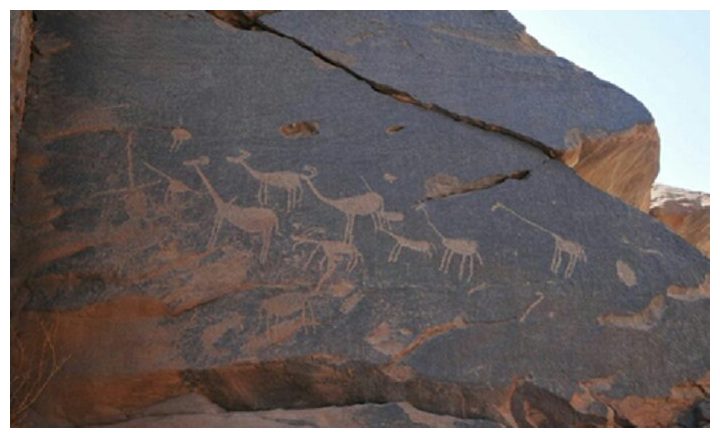
During an archaeological survey in the desert of Subeira Valley, south Aswan, an Egyptian archaeological mission from the Ministry of Antiquities stumbled upon pre-Dynastic rock markings.

Mostafa Waziri, secretary-general of the Supreme Council of Antiquities, explained that the markings can be dated to the late pre-Dynastic era, and were found engraved on sandstone rocks. They depict scenes of troops of renowned animals at that time, such as hippopotamuses, wild bulls and donkeys, as well as gazelles. Markings showing workshops for the production of tools and instruments were also found on some of the rocks.

Nasr Salama, director general of Aswan and Nubia Antiquities, described the newly discovered markings as "unique and rare" in Egypt. He pointed out that similar markings were previously uncovered at sites in Al-Qarta and Abu Tanqoura, north of Komombo town.

Key

US-UK intelligence 'hold key' to the demise of UN Sec. Gen. Dag Hammarskjold 56 years ago

Hammarskjold sepia
© New York TimesFormer UN Secretary General Dag Hammarskjold
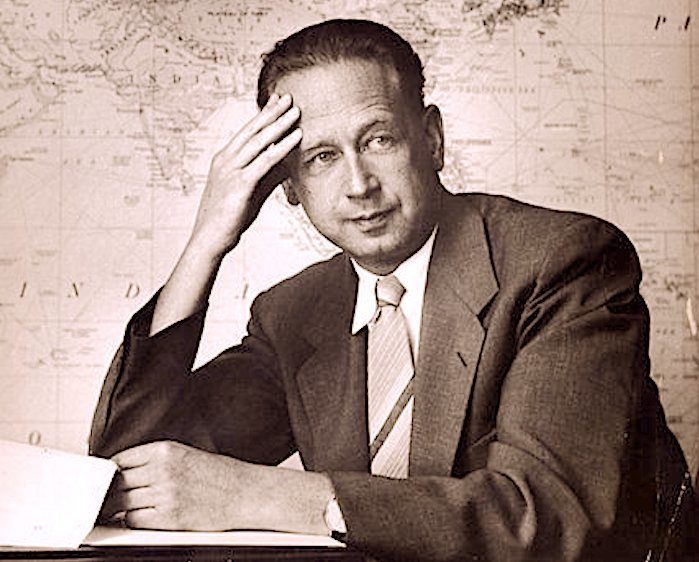
A United Nations investigation into the death of Secretary General Dag Hammarskjold in 1961 could be edging closer to solving the mystery. It is understood the UK and US intelligence services could be sitting on vital evidence.

The death, in a plane crash, of UN Secretary General Dag Hammarskjöld in 1961 has been a mystery ever since but a new investigation could be edging closer to solving it. Research by Swedish aid worker Goran Bjorkdahl and Susan Williams, a senior fellow at the Institute of Commonwealth Studies in London, has forced the UN to reopen the case.

"My own conclusion... is that Hammarskjold's DC6 was brought down and that the motive was to maintain the west's control over Katanga minerals. It is significant that the UN, after Hammarskjöld's death, has become less of a challenge to the big powers," wrote Bjorkdahl back in 2011.

Padlock

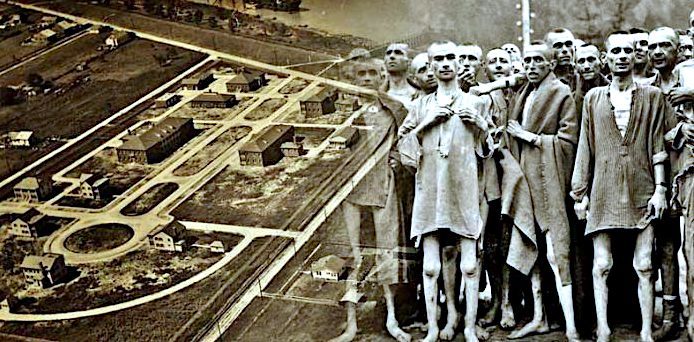
Camp Algiers: An internment camp for Nazi sympathizers and Jewish refugees, erased from US history

US camp
© TheFREETHOUGHTPROJECT.com
As neo-Nazis face off against AntiFa at various protests across the country, the media fanfare often leaves the public asking how much free speech groups should be allowed when it comes to their extreme beliefs. Advocates of freedom will argue that free speech extends to all, no matter how abhorrent their beliefs--but to truly see the reality of what occurs when groups are targeted for their suspected beliefs, just look at history.

After the Pearl Harbor attack occurred on Dec. 7, 1941, tens of thousands of Japanese Americans were forced into internment camps, based solely on their heritage. The Roosevelt Administration did not stop there, and a significant portion of its wrath was carried out in another camp that is not mentioned in most history textbooks: Camp Algiers.

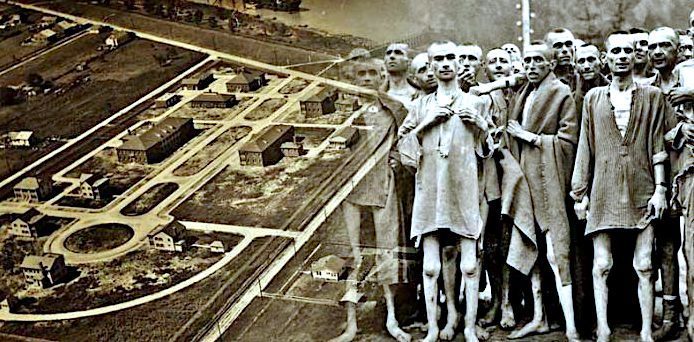
Camp Algiers was located in New Orleans, and while it was labeled as an internment camp for Nazi sympathizers from Latin America, a large percentage of the detainees were Jewish. The camp's legacy was detailed in a report by WWNO, New Orleans Public Radio.

Max Paul Friedman, a history professor at American University and an expert on the Latin American deportation operation during WWII, told WWNO that with over 1.5 million Germans lived in Latin America in the early 1940s, and the Roosevelt Administration made a case for the idea that "some of them might be Nazi agitators and even saboteurs and spies who could conceivably rise up and overthrow governments, and open up another front."

Boat

Vikings were never the pure-bred master race that white supremacists would like to portray

viking painting
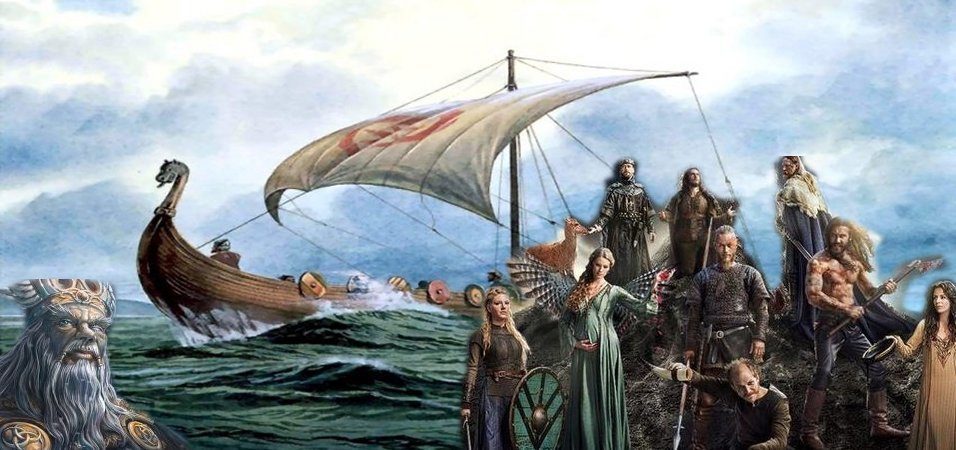
The word "Viking" entered the Modern English language in 1807, at a time of growing nationalism and empire building. In the decades that followed, enduring stereotypes about Vikings developed, such as wearing horned helmets and belonging to a society where only men wielded high status.

During the 19th century, Vikings were praised as prototypes and ancestor figures for European colonists. The idea took root of a Germanic master race, fed by crude scientific theories and nurtured by Nazi ideology in the 1930s. These theories have long been debunked, although the notion of the ethnic purity of the Vikings still seems to have popular appeal - and it is embraced by white supremacists.

Archaeology

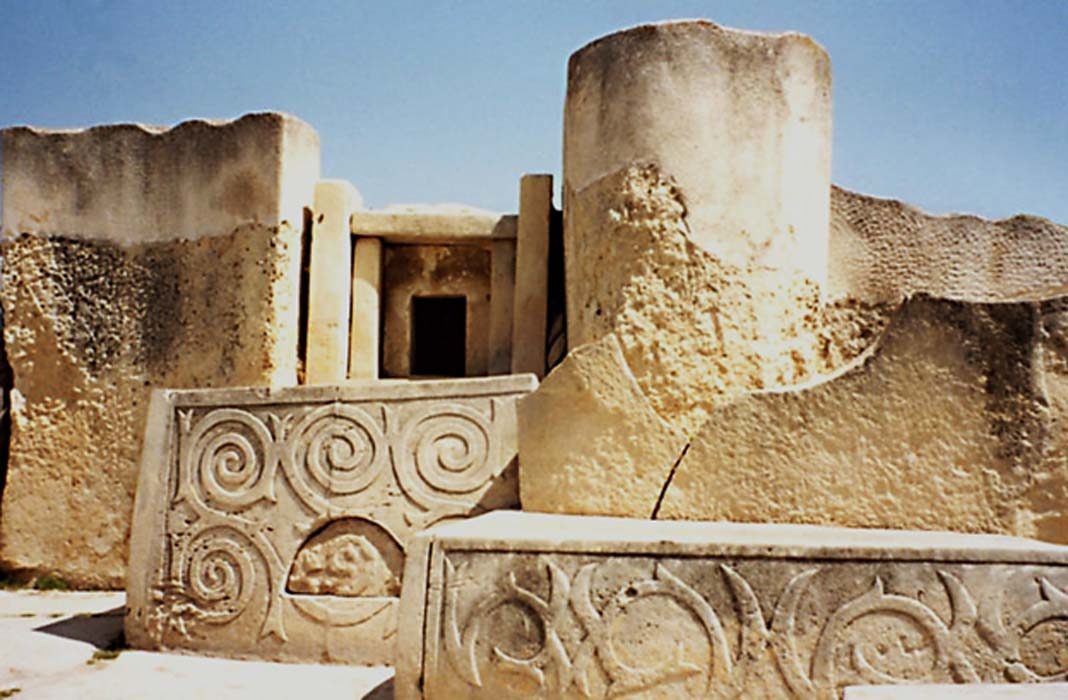
Tarxien Temples: Testaments to the architectural, artistic, and technological abilities of ancient Malta

Tarxien Temples Malta
View inside the prehistoric Tarxien Temples, Tarxien, Malta.
A group of enormous megalithic structures stand tall in Tarxien, on the southeastern part of the main island of Malta. Called the Tarxien Temples, the huge structures remain as a testament to the architectural, artistic, and technological abilities of the ancient islanders who constructed them.

The Tarxien Temples have been dated to the Temple Period (which lies between the Neolithic period and the Bronze Age). This temple complex is one of six sites that form the UNESCO World Heritage Site known as the Megalithic Temples of Malta (the other five being Ġgantija, Ħaġar Qim, Mnajdra, Skorba and Ta' Ħaġrat).

Comment: Uncovering 5,000 years of Malta's history


Archaeology

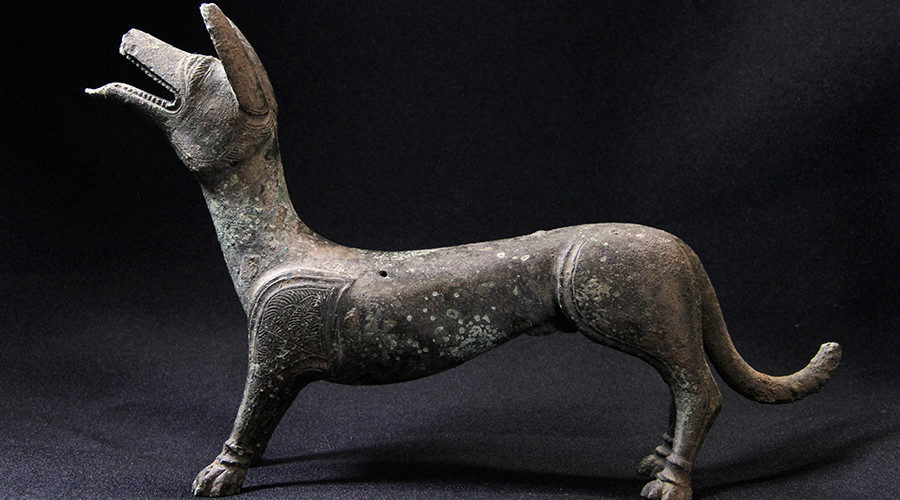
Treasure hunters unearth unique hoard of Roman bronze in Gloucester

roman bronze dog britain
© Bristol City Council
A pair of amateur metal detectorists scouring a site in their native Gloucestershire stumbled upon a cache of unique bronze Roman artifacts, some of which are the first such items found in British history.

The cache, which dates back to the last decades of the ancient Roman occupation of Britain in the 4th century, was discovered by Pete Cresswell and his brother-in-law Andrew Boughton.

Among the artifacts was a complete bronze statue of a "licking dog" thought to be the first of its kind ever found on the island. Archeologists believe it's an example of a "healing statue."

Magnify

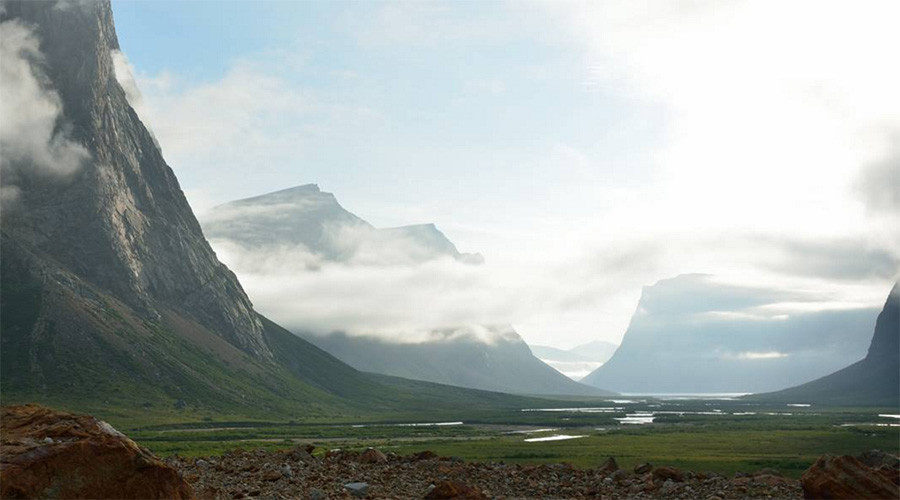
Traces of 3.95 billion-year-old organisms found in Labrador, Canada

Labrador, Canada
© nvcamperva /InstagramLabrador, Canada
Ancient rocks in northern Canada may contain the oldest traces of life on Earth, dating back 3.95 billion years, according to new research.

Graphite found in sedimentary rocks in Labrador revealed that the geochemical signature came from the decomposition of living organisms, researchers from the University of Tokyo said.

The substance - a form of carbon used in pencil lead - was analyzed by scientists to determine its isotope composition and the signature of its chemical elements.

The team concluded the graphite was "biogenic," meaning it was produced by living organisms. The identity of these organisms remains a mystery, however.

2 + 2 = 4

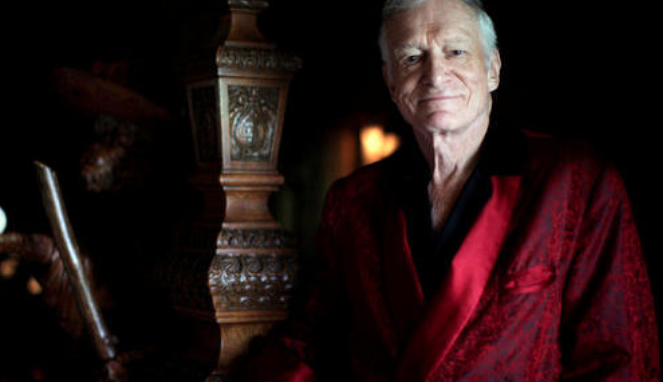
Hugh Hefner's legacy

Hugh Hefner
Hugh Hefner, America's famous porn magnate, has died at the age of 91 at the Playboy Mansion. Throughout his life, he championed unfettered hedonism in every form: Abortion, the legalization of marijuana, the liberation of sex from love, and pornography were all causes he fought - with much success - to bring into the mainstream. Hefner himself was not single-handedly responsible for the massive social changes that rocked the Western world from the Sexual Revolution onwards, but he was easily the single most recognizable symbol of them all.

It began with Dr. Alfred Kinsey, a zoologist with an expertise in gall wasps, who switched to the study of sex and began a campaign to change social norms around sexual behavior. His two major works, Sexual Behavior in the Human Male in 1948 and Sexual Behavior in the Human Female in 1953 stunned everyday Americans as nothing else had. Kinsey claimed that children were sexual from birth and could experience sexual pleasure (the abuse of children was facilitated in order to construct this faulty theory), that nearly half of men had affairs, that 85% of men had sex before marriage, that a staggering 70% of men had used prostitutes, and that between 10-37% of men had engaged in homosexual behavior.

Pyramid

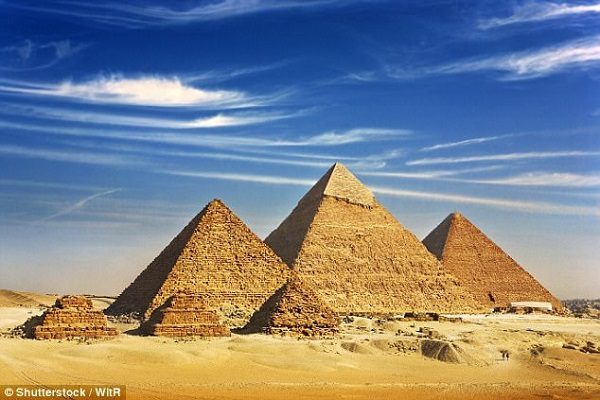
The Great Pyramid of Giza: Archaeologists uncover secrets of how mankind possibly pulled off one of its wonders of the ancient world

Pyramids
Archaeologists have discovered proof that shows how the Egyptians transported 2½-ton blocks of limestone and granite from 500 miles away to build the tomb of Pharaoh Khufu in about 2,600 BC.
It has for centuries been one of the world's greatest enigmas: how a Bronze Age society with little in the way of technology created Egypt's Great Pyramid of Giza - the oldest and only survivor of the Seven Wonders of the Ancient World.

Now archaeologists have discovered fascinating proof that shows how the Egyptians transported 2½-ton blocks of limestone and granite from 500 miles away to build the tomb of Pharaoh Khufu in about 2,600 BC.

At 481ft tall, it is the biggest of all the pyramids and was, until the Middle Ages, the largest man-made structure on Earth. Now the discovery of an ancient papyrus, a ceremonial boat and an ingenious system of waterworks have shed light on the infrastructure created by the builders.