
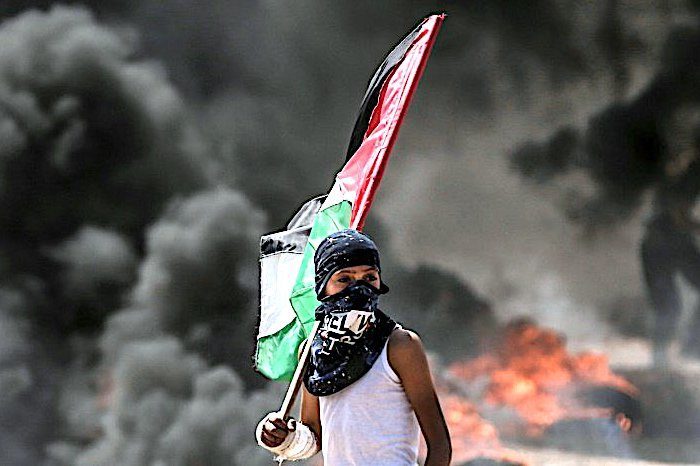
© AFP | Mahmud HamsMaybe he will be safe for today.
The groups have announced a ceasefire with Israel after two days of clashes, the news channel said.
Reuters also quoted an anonymous Palestinian official familiar with talks as saying that "Egyptian and international efforts succeeded in ending the current round of escalation."
Previously, the Israeli Air Force reported making airstrikes on military targets in the Gaza Strip, while the IDF reported that Hamas fired 17 missiles from Gaza.
Tensions on the Israeli border with Gaza had flared up after the start of the Great March of Return rally, which began on March 30, in order to mark the 70th anniversary of the foundation of Israel and protest the moving of the US embassy to Jerusalem. Over 60 Palestinians were reported killed and thousands of others wounded by the Israeli forces in the course of two days amid raging hostilities.
















Comment: A ceasefire...until another day.