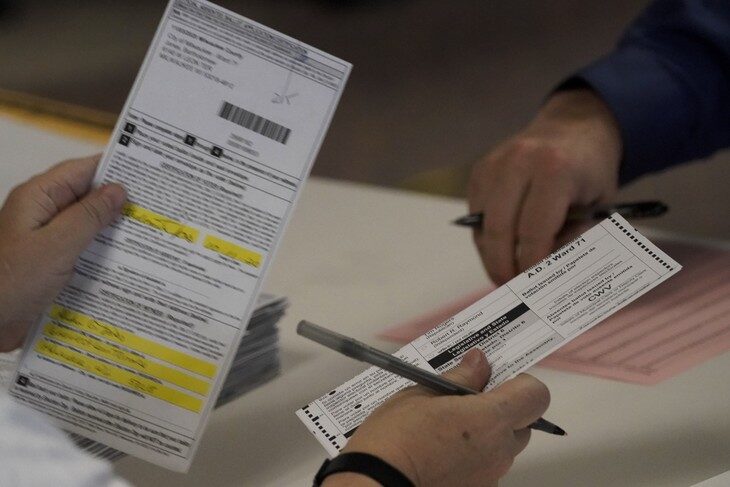
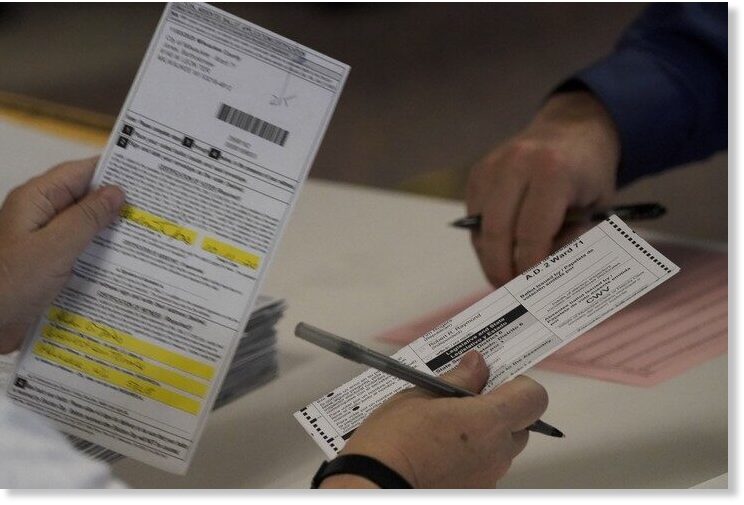
© AP Photo/Morry Gash
The effort by the Trump Campaign to reverse the outcome of the election in Wisconsin is beginning to gain some attention — it now has my attention.
Reversing Georgia, Pennsylvania, and Wisconsin are necessary to call into question what will happen in the Electoral College on December 14.
As explained in
this piece yesterday, in Georgia the focus is on
invalid voter registrations which used a mail-drop or business location as a "residence" address on the voter and mail-in ballot application.
Pennsylania is a mish-mash of various claims, most of which are traceable back to
partisan decisions of the state's Supreme Court, which makes them all reachable in an omnibus review by the US Supreme Court.
But the approach in Wisconsin has been a bit of a mystery to me until now.
The margin of Biden's "victory" in Wisconsin is
only 43,000 votes out of 3.2 million cast. The reversal of Wisconsin from 2016 pretty much comes down to
the additional 45,000 votes Biden received in Dane County compared to what Hillary Clinton received in 2016. That increase of 43,000 votes — from 217,000 to 260,000 — was an increase of 20%. Where did they all come from?
Comment: And how many people 'self-designated' as 'indefinitely confined' for the 2020 election? Brace yourself:
The Thomas More Society's Amistad Project
filed an emergency petition with the WI Supreme Court relating to this issue.
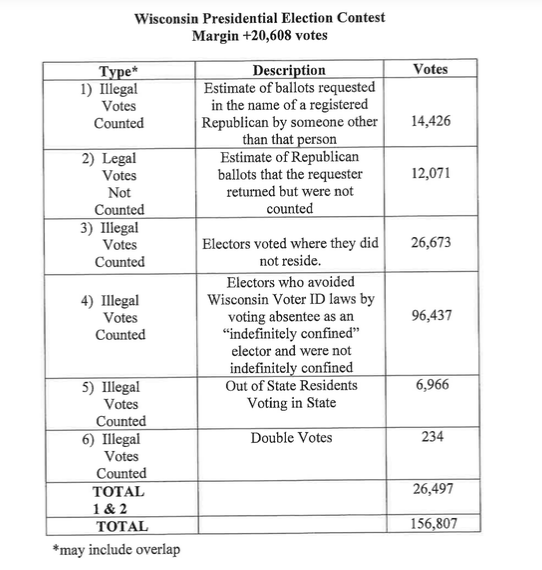
"We have identified over 150,000 potentially fraudulent ballots in Wisconsin, more than enough to call into question the validity of the state's reported election results, " said Phill Kline, director of the project, in a statement.
"Moreover, these discrepancies were a direct result of Wisconsin election officials' willful violation of state law," he added.
According to unofficial results in the state, Democratic presidential nominee Joe Biden beat President Donald Trump by about 20,000 votes.
The group said it found that more than 10,000 Republican ballots weren't counted; more than 10,000 GOP voters who had their ballots requested and filled in by another person; and around 100,000 illegal ballots that were counted anyway.
The 45-page filing asks the Wisconsin Supreme Court to block the certification of election results because of the alleged irregularities.
The Wisconsin Elections Commission didn't respond to a request for comment.
The lawsuit details a series of alleged illegal actions taken by Wisconsin officials that led to significant numbers of improper votes being counted. One example is not enforcing state laws that require voters to present photo identification when requesting an absentee, or mail-in, ballot. The only exceptions are for voters who are hospitalized or "indefinitely confined because of age, physical illness, or infirmity."
They utilized the Braynard team's research to conclude the following:
















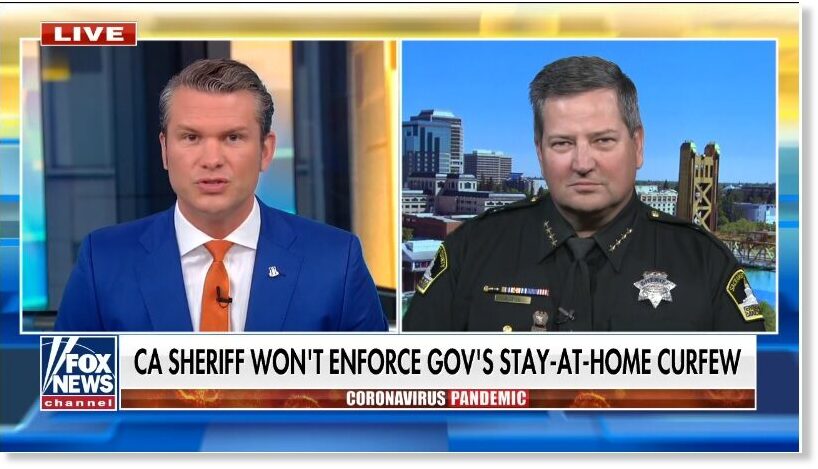



Comment: The general consensus among law enforcement about these orders is that they are NOT law and not enforceable. Plus, they probably have better things to do: Law enforcement across the US overwhelmingly REFUSING to enforce COVID orders - Will the public follow?