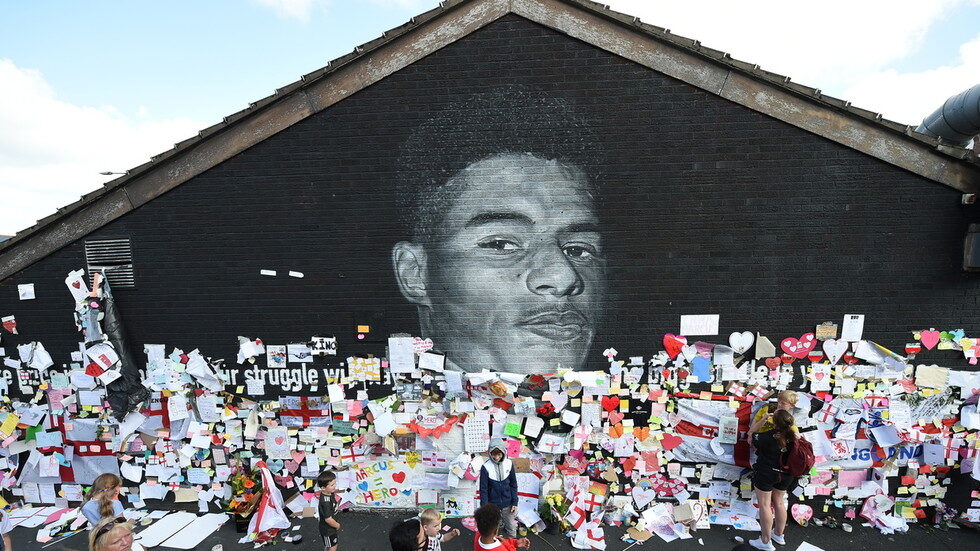
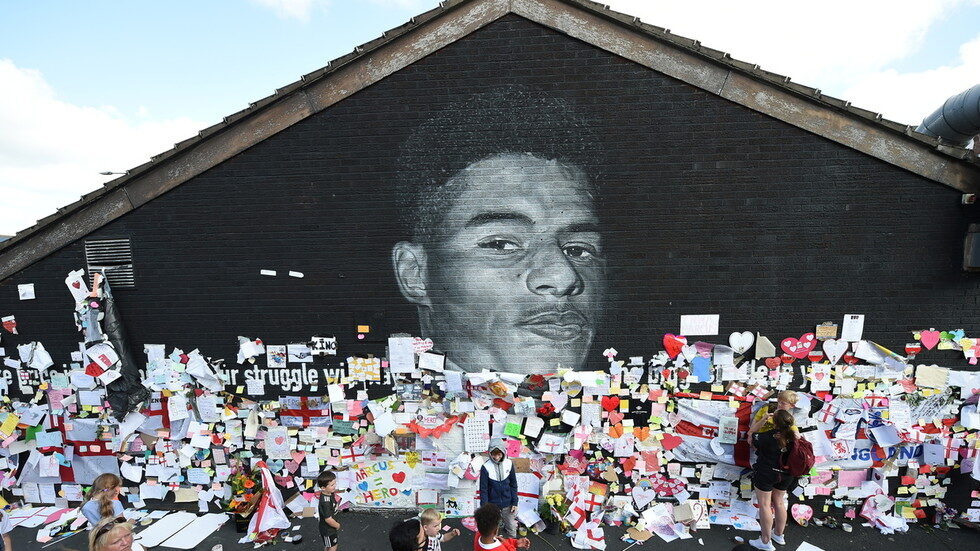
© REUTERS/Peter PowellPeople look at messages of support on the Marcus Rashford mural after it was defaced following the Euro 2020 Final between Italy and England.
Following the racial abuse of black footballers after England's defeat in the Euros, some are demanding the abolition of anonymous social media accounts. This overreaction could have dire consequences for online freedom.
Earlier this year, the glamour model-turned TV personality Katie Price started an
online petition to force social media companies to demand proof of identity before allowing people to create accounts. In the aftermath of England's Euro 2020 defeat on Sunday and the subsequent online abuse of the black footballers who missed penalties in that game, the petition has received a new lease on life, rocketing to over 600,000 signatories.
Price was responding to online abuse directed at her disabled son, Harvey. There is no doubt that Price and her son have been the target of some very unpleasant comments. The same can be said about the England players Marcus Rashford, Jadon Sancho and Bukayo Saka. When someone posts something in their own name, and if the comment amounts to hate speech or is threatening, then they face the prospect of being prosecuted or at the very least
sacked from their jobs.
But if someone is posting anonymously, legal action may be impossible, especially as much of the abuse of the England players came from outside the UK and quite possibly from automated 'bots'. As England manager
Gareth Southgate noted in reaction to the social media posts: "For some of them to be abused is unforgivable really. I know a lot of that has come from abroad, people who track these things are able to explain that, but not all of it."


















Comment: