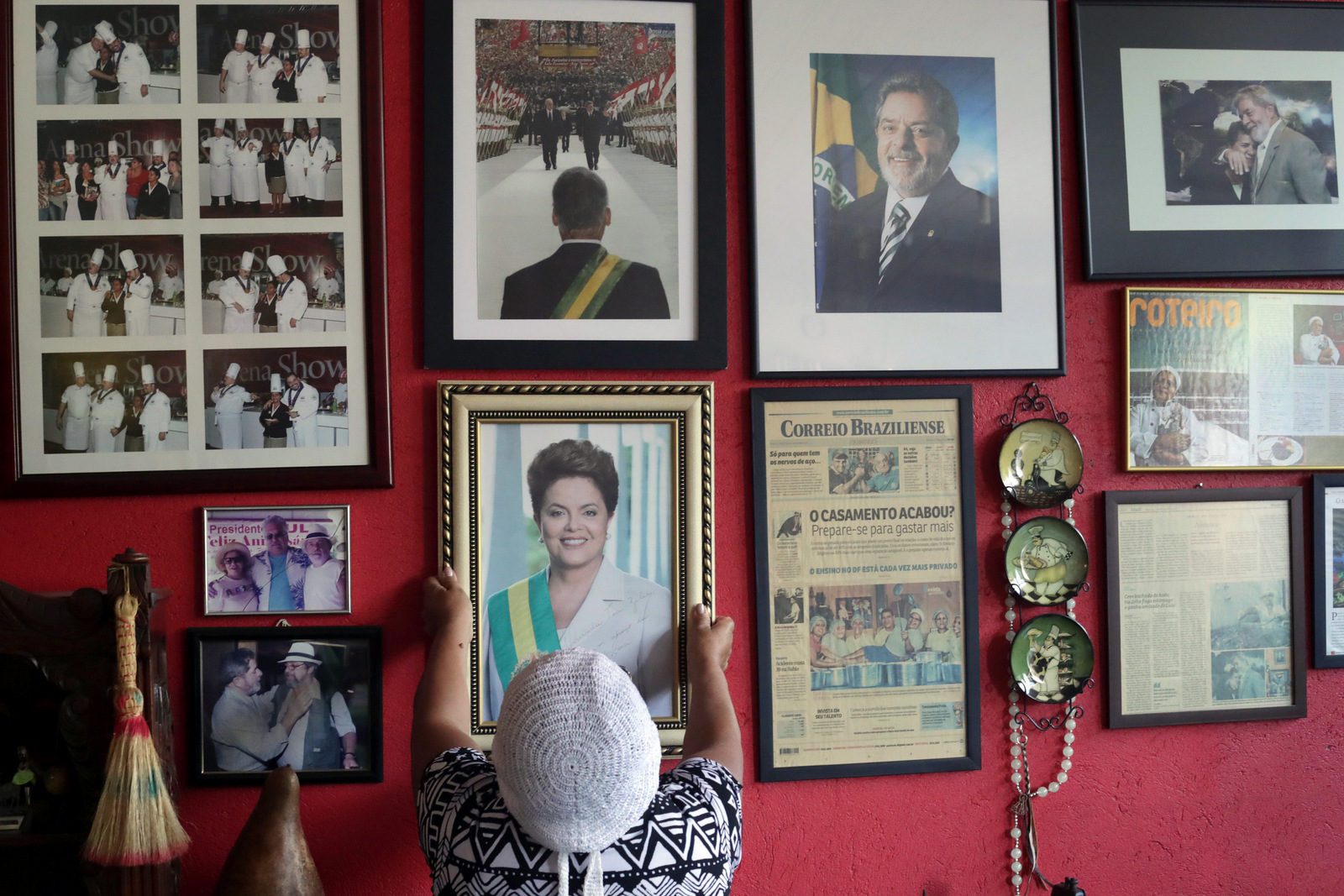
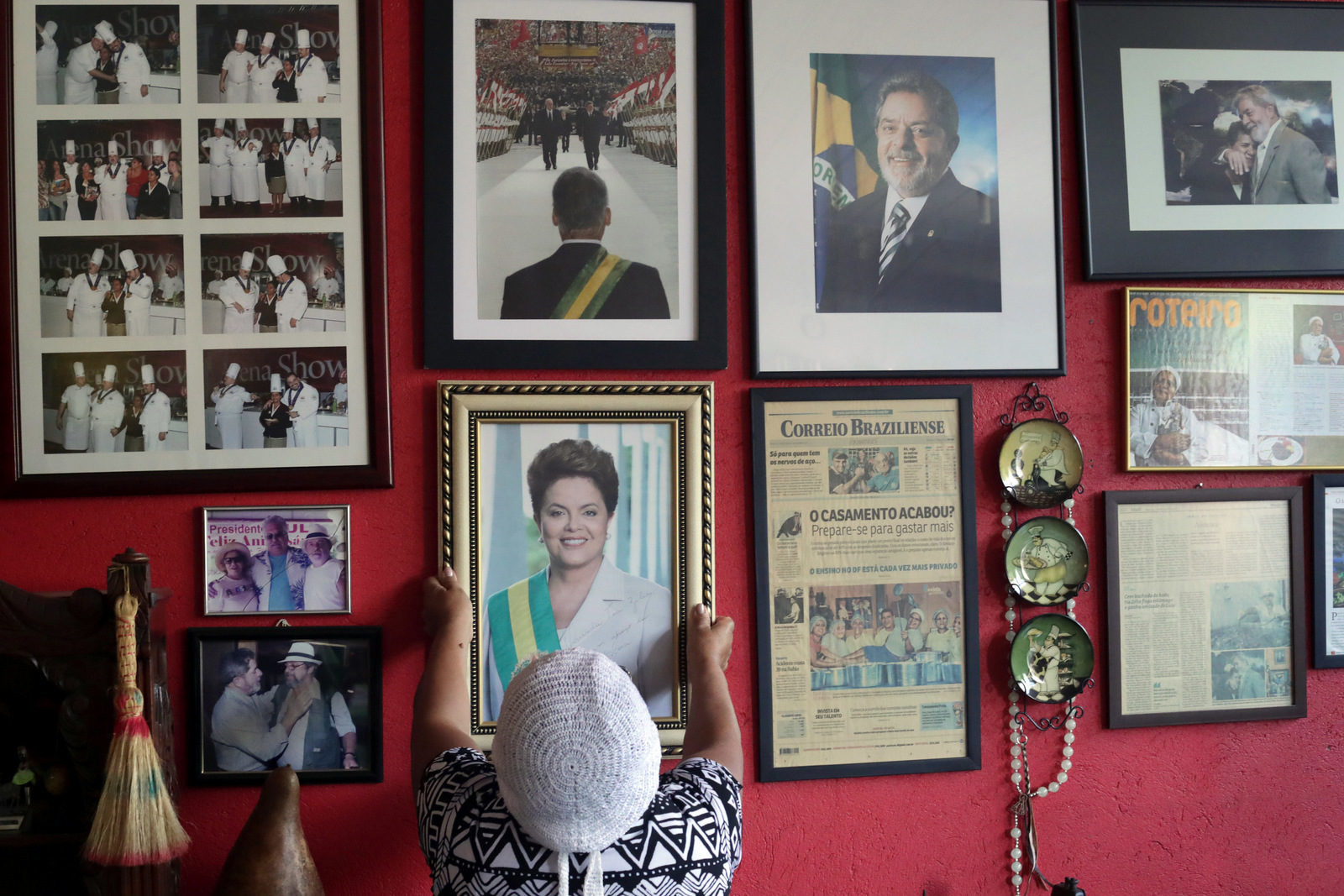
© AP/Eraldo PeresMaria de Jesus Oliveira da Costa, known as “Tia Zelia,” takes down an autographed photo given to her by Brazil’s impeached President Dilma Rousseff, to show it to journalists at her restaurant in Brasilia, Brazil, where photos of former President Luiz Inacio Lula da Silva also hang.
Harsh austerity. A 20-year public spending freeze. A non-elected government. A coup backed by the United States and corporate world.
This is the new reality that Brazil has faced following the impeachment and ouster of the democratically-elected Dilma Rousseff in August of 2016 on charges of corruption and her replacement by vice-president Michel Temer, a favorite of Washington.
This is also a new reality that has been met by widespread disapproval, occasional large-scale protests, and a new economic uncertainty for a country which, just a few years ago, was seen as an up-and-coming economic powerhouse, along with the rest of the BRICS, the bloc composed of emerging economies of Brazil, Russia, India, China and South Africa. This optimism has been quickly supplanted by an increasingly volatile social situation in Brazil and great pessimism for the future.
Much has been made in the media about the progressive credentials of the Rousseff government and that of her predecessor, Luiz Inácio Lula da Silva, both of whom represented the Workers' Party (PT) of Brazil. Much has also been made of the mass protests which led to Rousseff's outster, which bore similarities to protests seen in countries such as Venezuela against the Maduro regime, and the relative lack of protest that the Temer government has faced since ascending to power.




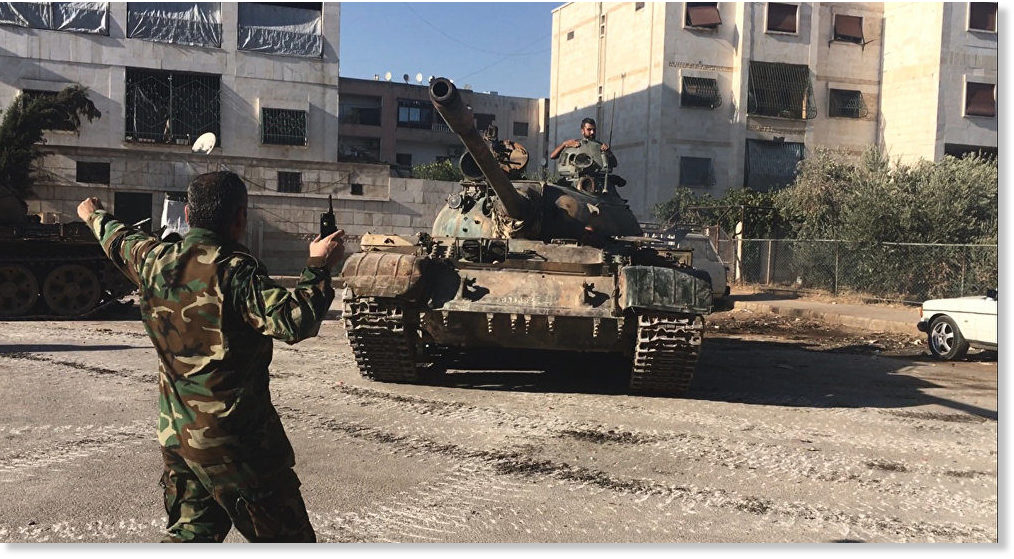








Comment: As Professor Tim Anderson notes in a recent interview, there is still plenty of resentment in the Syrian Army towards so-called 'rebel' factions: