Puppet MastersS


Attention

It gets worse: Wasserman Schultz seemingly planned to continue paying IT fraudster after he left U.S. for Pakistan

Debbie Wasserman Schultz
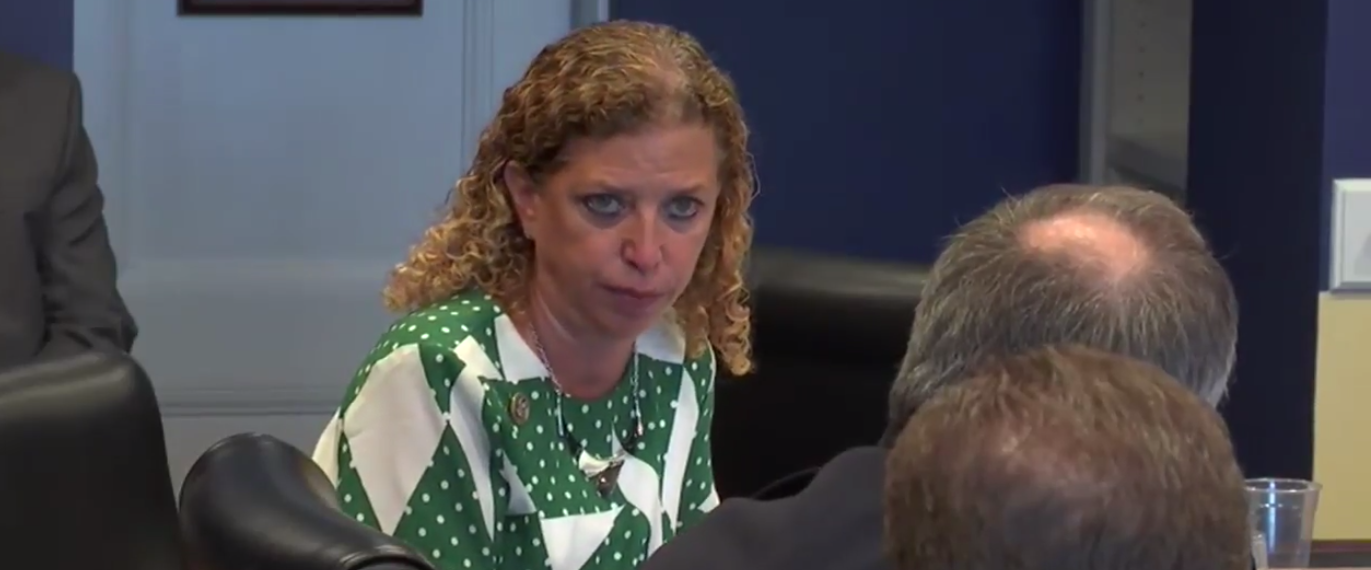
Rep. Debbie Wasserman Schultz promised "consequences" for Capitol Police chief investigation her IT staffer suspected of House data breach. House Committee on Appropriations video
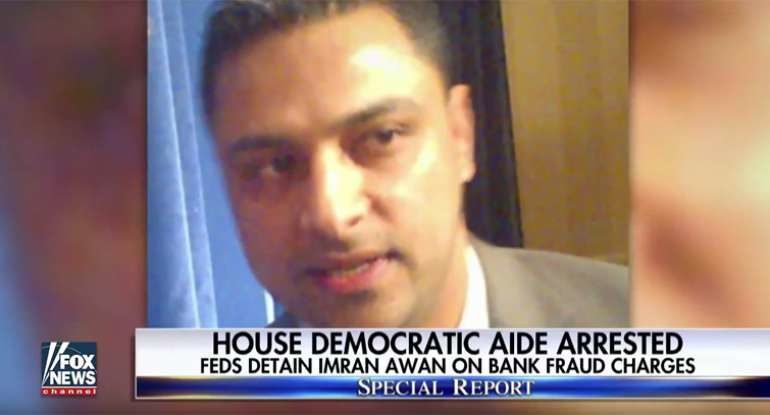
Democratic Rep. Debbie Wasserman Schultz seemingly planned to pay cyber-probe suspect and IT aide Imran Awan even while he was living in Pakistan, if the FBI hadn't stopped him from leaving the U.S. Monday. Public statements and congressional payroll records suggest she also appears to have known that his wife, a fellow IT staffer, left the country for good months ago - while she was also a criminal suspect.

In all, six months of actions reveal a decision to continue paying a man who seemingly could not have been providing services to her, and who a mountain of evidence suggests was a liability. The man long had access to all of Wasserman Schultz's computer files, work emails and personal emails, and he was recently accused by a relative in court documents of wiretapping and extortion.

Records also raise questions about whether the Florida Democrat permitted Awan to continue to access computers after House-wide authorities banned him from the network Feb. 2. Not only did she keep him on staff after the ban, but she also did not have any other IT person to perform necessary work that presumably would have arisen during a months-long period, according to payroll records.

Comment: See also:


Info

A litany of Democratic scandals makes the Mueller investigation ludicrous

imran awan
How many scandals can you fit on the head of a pin -- or, in Maoist parlance, let a Hundred Scandals Bloom! And given the way they are blooming, Robert Mueller's "Russia" investigation looks increasingly ludicrous.

Even if Mueller were even-handed and the exact right person for the job -- an open question at the moment -- no single special counsel could handle all this. It's a game of whack-a-mole to beat all games of whack-a-mole.

Let's enumerate the scandals as of this moment, several or all of which are or could be connected.

Attention

The real election scandal: Dems' political unmasking of Trump team must be prosecuted

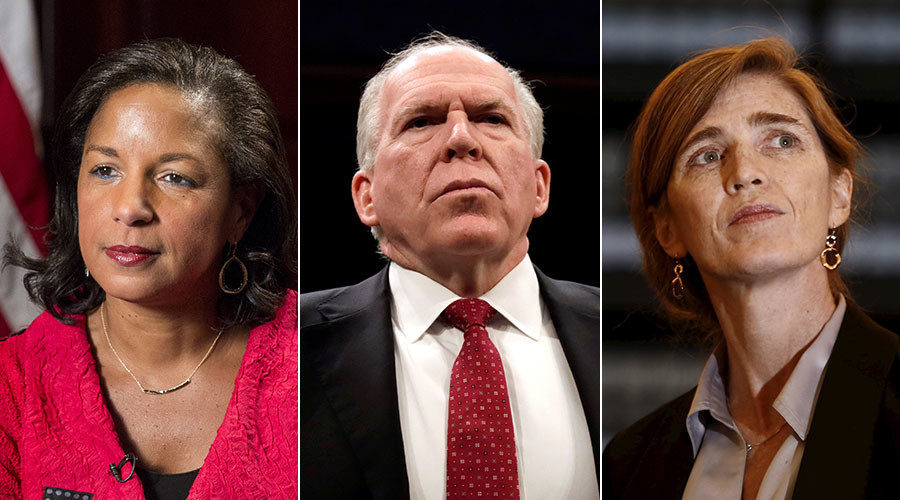
Susan Rice, John Brennan, Samantha Power
© Reuters
We can understand when a socialist dictatorship like Venezuela disintegrates into chaos, but it is not much different than the ongoing coup against the constitutionally elected President Trump and his administration by political operatives of former President Barack Hussein Obama.

Despite multiple investigations of alleged Russian collusion dating back to Trump's, shocking to liberals and progressives, election, the only crimes we know have been committed have been the leaking of classified information by Trump opponents, starting with the illegal unmasking of former National Security Adviser Gen. Michael Flynn.

Comment: The "exceptional" swipe at Venezuela aside, this article is on point. The whole election scandal is a case of inveterate criminals scrambling to blame their opponents for their own failures and inveterate criminality.


Info

Five things that actually threaten America: Russia is NOT one of them!

America is not threatened by Russia, Iran or North Korea, it is threatened by endless war, terrorism, identity politics, poor economic decisions and a fear of peace.
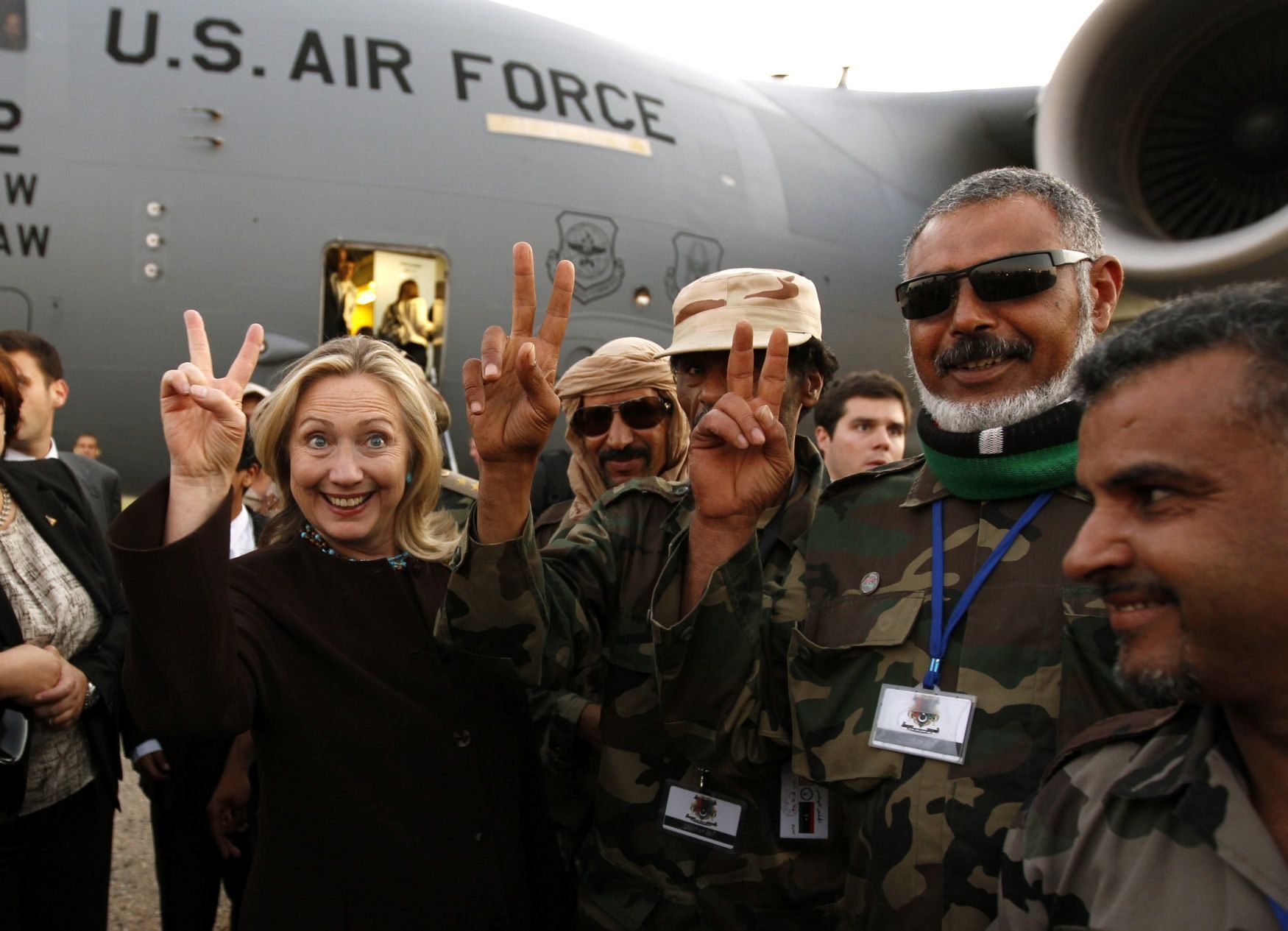
hillary
The following is a list of REAL threats to the American people, not America's financial interests, not its elites, but threats to the lives and prosperity of everyday people in all 50 states.

1. International terrorism

By its definition, international terrorism is a danger to the entire planet. From long-wolf psychopaths with weapons or weaponised devises (such as trucks or cars) to organised gangs of saboteurs or militants including ISIS, al-Qaeda and those of an FSA jihadist mindset, this is a danger that not only effects Americans but people in Syria, Iraq, Russia, India, Pakistan, Egypt, France, Germany, Libya, Nigeria, Belgium, Holland, Indonesia, Philippines, Australia and these are just some recent examples of places and nationalities targeted by terrorists.

Donald Trump has shown some hopeful signs in understanding the essence of fighting international terrorism, though they still remain incomplete.

The key element in fighting terrorism is not to have a foreign policy which funds, arms or politically encourages terrorism. Trump's stoppage of the CIA's programme (begun under Obama) to arm jihadists in Syria is a small step in the right direction.

Chess

US new anti-Russian sanctions point a dagger at the heart of Europe

russia sanctions
© New Eastern Outlook
Despite tough talk from Brussels (and Berlin) about "retaliation" over these new measures, no shots will be fired, no diplomatic relations broken, no dramatic shifts away from Washington and toward Moscow will be taking place.

In a nearly unanimous vote on Tuesday, the House passed a bill that imposes new sanctions on Moscow and forces Trump to seek Congressional approval before easing any restrictions on Russia. The bill is part of a larger sanctions regimen that would also impose new restrictions and punitive measures on Iran and North Korea and it was passed by the Senate in another nearly unanimous vote (98-2) on Thursday.

It is unclear at press time whether Trump will attempt to veto the bill, but even if he does the veto could likely be overridden by popular support from both houses.

The reaction to the bill from Russia is precisely as one would expect:

The sanctions are "equally dreadful from the point of view of international law and international trade relations," Kremlin press secretary Dmitry Peskov told reporters on Wednesday, warning that "such actions would not be left without a response."


Comment: This dagger might not hit its intended target - the sanctions may rebound on Washington's 'reality creators':


Info

Paul Craig Roberts interview: US committed to path of conflict with Russia, tensions higher than in Cold War

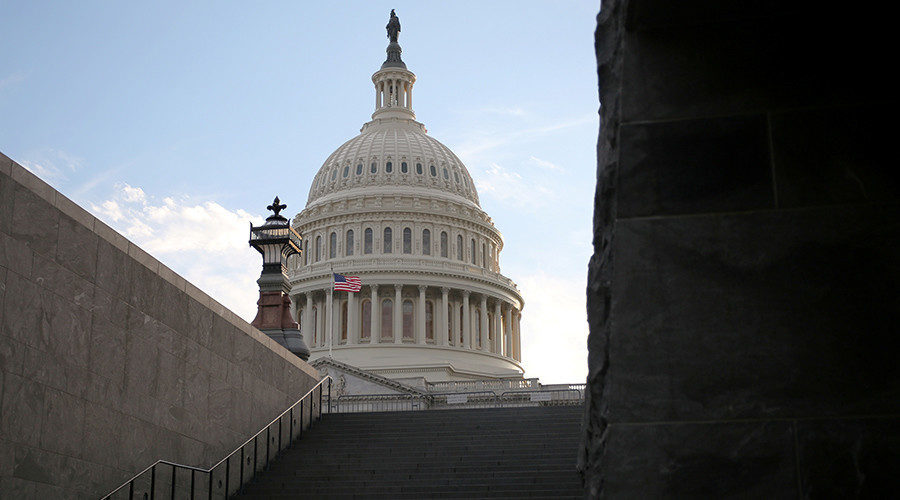
US Congress building
© Zach Gibson / Reuters
The new round of sanctions on Russia benefits the US energy industry and military-security complex, and indicates that conflict with Moscow the principal goal of US foreign policy, former Assistant Treasury Secretary Paul Craig Roberts says.

The Senate, in a nearly unanimous vote on Thursday, slapped new sanctions on Russia over alleged election interference by Russian hackers. The bill, which will prevent US President Donald Trump from easing existing sanctions on Russia and also imposes sanctions on Iran and North Korea, is sent to President Trump in a veto-proof fashion.

Trump reviewed the final version of the bill and plans to sign it, the White House announced on Friday.

RT America's Manila Chan discussed this with Paul Craig Roberts, the former Assistant Secretary of the US Treasury and chairman of the Institute for Political Economy.

Quenelle - Golden

Russia finally responds to US seizure of embassy facilities by ordering a staggering 755 US diplomats to leave

Vladimir Putin
© Sergey Guneev / Sputnik
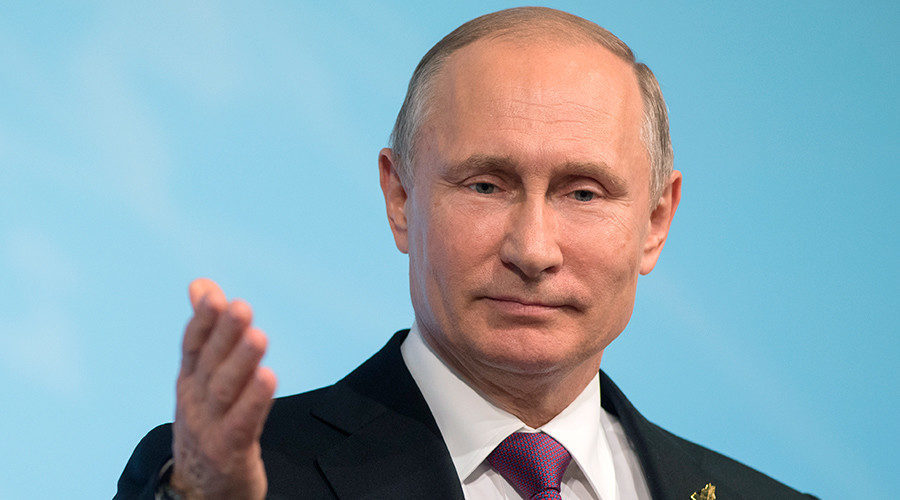
755 American diplomats will have to leave Russia as a result of Washington's own policies, Russian President Vladimir Putin has said in an exclusive interview with the Rossiya 1 TV channel.

"The American side has made a move which, it is important to note, hasn't been provoked by anything, to worsen Russian-US relations. [It includes] unlawful restrictions, attempts to influence other states of the world, including our allies, who are interested in developing and keeping relations with Russia," Putin told channel host, Vladimir Solovyov, Sunday.

"We've been waiting for quite a long time that maybe something would change for the better, we had hopes that the situation would change. But it looks like, it's not going to change in the near future... I decided that it is time for us to show that we will not leave anything unanswered," the Russian president added.

Eye 1

Abby Martin interviews Venezuela Economy Minister: Sabotage, Not Socialism, is the Problem


Today in the corporate media, Venezuela's economic problems are used to paint the country as a failed state, in need of foreign-backed regime change.

To get the Bolivarian government's side of the crisis, Abby Martin interviews Venezuela's Minister of Economic Planning, Ricardo Menéndez. They discuss shortages, oil dependency, the role of the US-backed opposition movement and more.

The Empire Files joined him in Cojedes, Venezuela, where he was speaking to mass community meetings, organizing the population to fight against what he calls an economic war.

Camcorder

HRW, Amnesty claim US surveillance infringes on fundamental rights, EU should rethink cooperation

Spy-eye
© The Register
International human rights organizations have appealed to the European Commission asking it to "re-evaluate" its Privacy Shield agreement on personal data transferring with Washington. The US surveillance practices do not comply with EU laws and standards, they claim.

"(T)he United States of America does not ensure a level of fundamental rights protection regarding the processing of personal data that is essentially equivalent to that guaranteed within the European Union," Human Rights Watch (HRW) and Amnesty International (AI) stated in a joint letter earlier this week.

Having addressed the Commissioner for Justice, Consumers and Gender Equality, Vera Jourova, AI and HRW "urged" the European Commission to reconsider its 2016 agreement with Washington, aimed at protecting the personal data of citizens on both continents.

America's "two main foreign intelligence surveillance laws - and the programs that are avowedly or reportedly conducted under it - demonstrably fall far short of essential equivalence to the standards set out in EU law and do not comport with international human rights guarantees," the letter stated.

The EU has agreed to personal data sharing with Washington under "incorrect conclusions," it added, while also calling on the European Commission to "encourage" its US partners "to adopt the necessary binding reforms so that the transfer of personal data to the United States does comply" with European norms and regulations. "We are also concerned about the lack of safeguards applicable to US intelligence-sharing arrangements with other states," the letter stated, criticizing the US government for the lack of available public data on the "current scope or details" of such international arrangements.

Comment: Good luck to the EU on reforming the US surveillance practices and reining in its "warrantless" spy operations. That genie is out of the bottle never to return...even if they promise.


Satellite

Russia and US to continue space cooperation despite tensions

Intl spacestation
© NASAInternational Space Station...where cooperation matters enough.
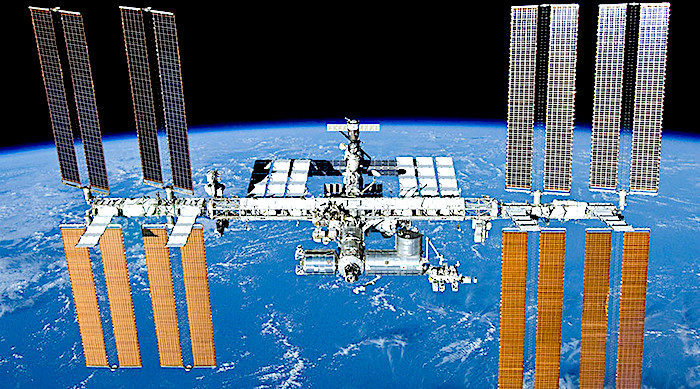
Roscosmos, NASA and the European Space Agency (ESA) all understand that if co-operation breaks down, it will seriously affect each other's work, the head of Russia's Federal Space Agency has said. "It's very easy to make hasty decisions which would interrupt our co-operation. In many respects, we and our partners understand that it will put us back, and so from the space agencies there's an understanding that this cooperation needs to be maintained and continued," Roscosmos director Igor Komarov, said Saturday in an interview with Russia-24.

The space agencies understand the need to work together in the cosmos despite political tensions back on Earth, Komarov said. "Since we rely so much on each other, both in scientific research and the activities of the ISS [International Space Station], our outer space activity is one of the spheres in which we hold an advantage, and this in many ways enable us to move forward together and work together effectively."

On Tuesday, Russian Deputy Prime Minister Dmitry Rogozin confirmed that Russia would not stop its supply of RD-180 rocket engines to the US as doing so would harm the national interest. "We could now, for example, cut off the delivery of RD-180 jet engines for US missiles," Rogozin said as quoted by RIA Novosti. "We discussed this issue, I will not hide it. I summoned our specialists several times. [But then] we thought - why?"

Congress banned the Pentagon from using RD-180 engines at one point following tensions with Russia over Crimea and Ukraine. The ban, was however, eased in 2015, after fears that it could drive United Launch Alliance (ULA) - a joint venture between Lockheed Martin Corp and Boeing Co - out of business, leaving only the privately-owned SpaceX with the capability to launch satellites. The ULA immediately placed an order for 20 RD-180 engines.

Comment: The US Congress has its swollen head in a bag. There is at least some hope of continued cooperation on the outer fringes of the planet -- as long as it is good for business.