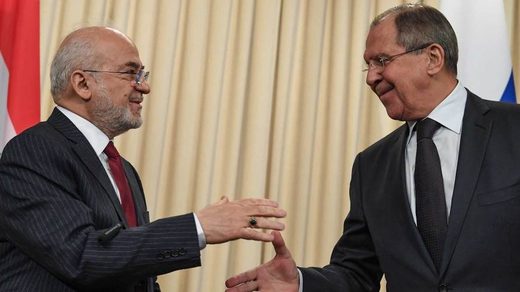
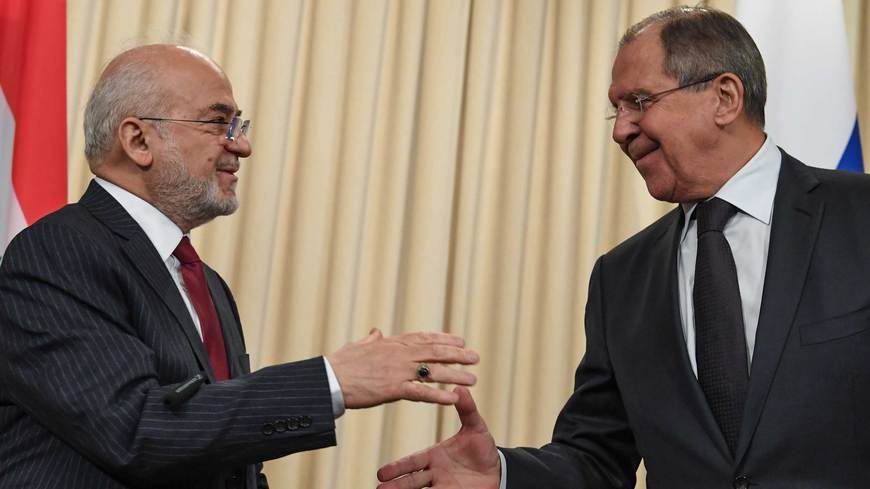
© KIRILL KUDRYAVTSEV/AFP/Getty ImagesRussian Foreign Minister Sergey Lavrov (R) shakes hands with his Iraqi counterpart Ibrahim al-Jaafari at the end of a joint press conference following their meeting in Moscow, Russia, Oct. 23, 2017.
As Kurds and Iraqis struggled to resolve their differences this week, Baghdad and Moscow were doing the same, albeit with much less animosity.
Iraqi Foreign Minister Ibrahim al-Jaafari visited Moscow to discuss with Russian Foreign Minister
Sergey Lavrov how to develop economic ties and contain terror groups such as the Islamic State and Hayat Tahrir al-Sham. But their focus during the Oct. 23-25 visit was the potential repercussions of last week's
battle between forces of Iraq's central government and those of the
Kurdistan Regional Government (KRG).
Iraqi Kurds overwhelmingly voted for independence Sept. 25.
Last week, Baghdad overwhelmingly crushed that hope, at least for the near future, and reclaimed much of the territory the KRG had held since 2014 - including an airport, a military base and highly prized oil wells.
While the foreign minister's visit seemed to show that Moscow and Baghdad are experiencing no major controversies, there was one prickly issue. Baghdad's only complaint against Moscow came from its
Oil Ministry on Oct. 19, the day after Russia's state-owned oil industry giant Rosneft announced
new contracts with the KRG in Erbil. The Oil Ministry called contracts made without reports to the central government in Baghdad "blatant interference in Iraq's internal affairs, a violation of its national sovereignty and of the international norms."













Comment: The hysteria would be hilarious if it were not for the fact that it has a grip on those who influence the foreign policy of the US military empire.
See also: