Puppet MastersS


USA

Brave new US Congress, or the same old hypocrisy?

House new group
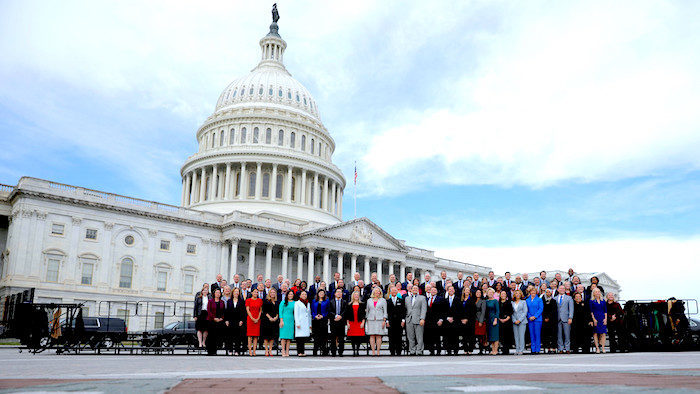
© Reuters/Carlos Barria'Incoming' House of Representatives, Capitol Hill, November, 2018
The 'Saudi Arabia Accountability and Yemen Act' bipartisan bill in the US Senate suggests that long-missing congressional activism in American foreign policy might be on the horizon, but likely would be on a selective basis.

Since the mid-1990s, the US Congress has abdicated its oversight of the executive's foreign and national security policies owing to increased partisan polarization, decreased legislative expertise on foreign affairs, and greater deference to the presidency on war, counter-terrorism and trade issues. This default congressional tendency of leaving the White House unconstrained on foreign policy may, however, shift in response to changing international circumstances.

The Senate bill challenges the Trump administration's core strategy of continuing a no-questions-asked, all-weather alliance with Saudi Arabia in spite of the CIA's conclusion with 'high confidence' that Saudi Crown Prince Mohammed bin Salman ordered Khashoggi's premeditated murder inside the Saudi Consulate in Istanbul, Turkey.

Many US congresspersons are taking a holistic view of Khashoggi's assassination as part of a broader pattern of reckless violence by the Crown Prince, who has pursued a relentless war of impunity in Yemen and unleashed a mass humanitarian disaster there.

The Senate bill demands suspension of US weapons sales to Saudi Arabia, a ban on US refueling of Saudi aircraft bombarding Yemen, and inquiries into human rights violations in Saudi Arabia and of war crimes committed in Yemen.

Comment: Fair assessment as to the dynamics we will see put forth from the House.


Beaker

Russia: Forcing OPCW to assign blame for chemical weapons incidents damages the organization

OPCW logo
© HOKRG Spain
A recently approved budget for an "attribution mechanism" which will let the UN's Chemical weapons watchdog also assign blame for attacks has already damaged the organization, Russia's envoy to the OPCW told RT.

The Organization for the Prohibition of Chemical Weapons' (OPCW) increased 2019 budget was greenlighted on Tuesday, including a $2.4 million allotment for the creation of an "attributional mechanism" which will allow the monitoring organization to assign blame for chemical weapons incidents. At the same meeting, the group shot down Russia and China's joint initiative to establish a special group to investigate the legitimacy of broadening the OPCW's powers.

The "attribution mechanism," which has yet to take any concrete shape, will provide the OPCW with the power to assign blame for chemical weapons-related incidents, a job which is currently the responsibility of the UN Security Council. The OPCW has traditionally only been tasked with monitoring and providing technical evaluations of such incidents.

Comment: A transparent plan: Condensing the responsibilities to increase outside control.


Star of David

IDF Chief of Staff Eisenkot claims Israeli operations in Syria curbed Iran, Hezbollah

Israeli jets
© unknown
According to the outgoing Israel Defense Forces (IDF) chief of staff, Iran was unable to give Hezbollah precision missile weapons because of Israeli bombings in Syria.

The military capabilities of Iran and Hezbollah near Israel's northern border are much smaller than they could be because of successful actions by Israel, outgoing IDF Chief of Staff Gen. Gadi Eisenkot said in a Monday statement.

The departing general said that the Israeli army will continue to counter Iran's attempts to take root in Syria and create a missile delivery route to Hezbollah in Lebanon.

During his trip to the northern border, Eisenkot "praised the armed forces for their actions aimed at preventing the consolidation of Iranian forces in Syria and Iranian attempts to move precision missile weapons to the 'Hezbollah' terrorist organization," the statement reads.

The chief of staff, whose service ends on December 31, underscored that the military capabilities of Iran and Hezbollah are far from what they had hoped, and this is the result of continuous and successful Israeli operations.

Comment: Israel's self-justifying backslaps.


Footprints

All foreign troops with exception of Russian military must leave Syria says US envoy

Flying over Palmyra
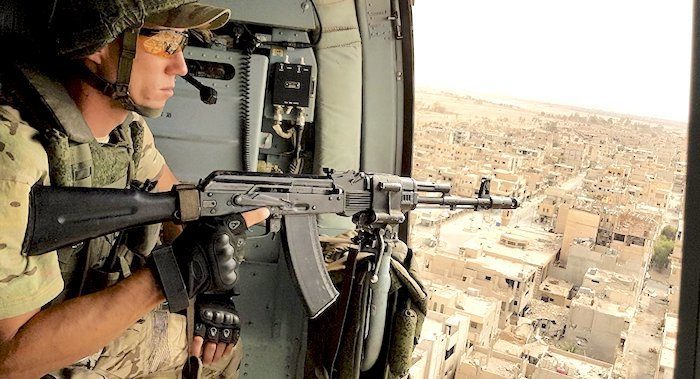
© APFlying over Palmyra, Syria
Earlier, the envoy claimed that US troops would be staying in the Arab Republic until the "enduring defeat" of Daesh. He also said that Bashar Assad should not govern the country in the future, noting, however, that it's not the US' job to oust him.

US Special Representative for Syria Engagement James Franklin Jeffrey said in a conference call with reporters that once Iran pulls its troops out of Syria and a political solution to the Arab state's problems is found, all other foreign forces would be ready to leave, too.

At the same time, he underscored that it wouldn't affect Russia, as it had military bases in Syria prior to the conflict, which broke out in 2011. Jeffrey explained that this is why the US has not included the withdrawal of Russian troops in its list of demands.

Previously, the US envoy for Syria called the situation, in regards to 5 foreign militaries operating in one country, namely Russia, the US, Israel, Turkey and Iran, "dangerous."

"The Russians, having been there before, would not in fact withdraw, but you've got four other outside military forces [...] all operating inside Syria right now. It's a dangerous situation," the envoy said.

Comment: Sounds good, but the devil is in the details.


Arrow Up

A lasting peace: Yemeni government ready for talks with Houthis to resolve crisis

Houthis
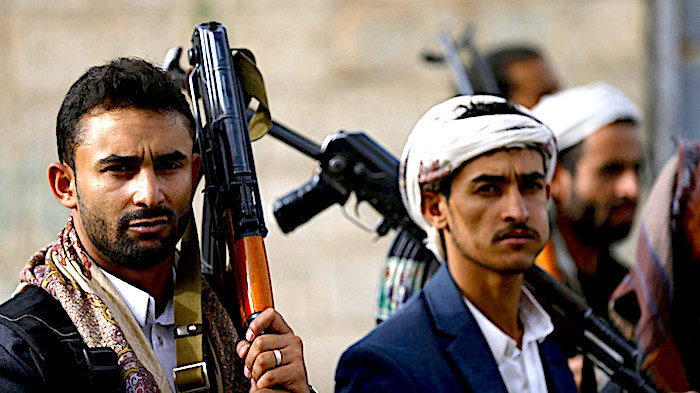
© Al ArabiyaHouthis
The Yemeni government is prepared to hold talks with Houthi rebels to resolve the ongoing crisis, yet the rebels should agree to participate in the upcoming consultations in Sweden without preconditions, Yemeni Ambassador to Russia Ahmed Salem Wahishi told Sputnik.

"The Government of the Republic of Yemen affirms its approval to participate in any upcoming consultations in order to achieve a lasting peace in Yemen based on the agreed references," Wahishi said.

The Yemeni authorities also emphasized the need to exert pressure on the Houthis to make them participate in the UN-led negotiations unconditionally, calling on the international community to take a firm stance against any attempt of the rebels to disrupt the consultations again.

Arrow Down

Interpol bows to US pressure, selects South Korean over Russian for new chief

Kim Jong-yang Interpol
© Newsis via APJong-yang was elected for a two-year term at the body's annual congress
Former acting president Kim Jong-yang elected as leader of Interpol, in blow to Moscow's efforts at pushing for Russian.

Interpol has elected Kim Jong-yang of South Korea as its new president, according to the international police body.

Jong-yang, who had been serving as acting president, was elected for a two-year term at the body's annual congress in Dubai on Wednesday, finishing the four-year term of his predecessor who was arrested in China this year.

Dollar

European Union rejects Italy budget, paves way for sanctions

EU rejects Italy's budget
© Global Look Press / Werner Otto
The European Union took the first step on Wednesday toward fining Italy after ruling that the country's spending drive violates the bloc's fiscal rules. Brussels has rejected Rome's budget plan for 2019.

"The Commission confirms the existence of a particularly serious case of non-compliance," the EU said in its annual review of euro-area nations' spending plans referring to Italy's 2019 budget. "With what the Italian government has put on the table, we see a risk of the country sleepwalking into instability."

Brussels has repeatedly voiced concerns over Rome's borrow-and-spend plans, warning the Italian government that it could trigger another debt crisis that would hurt them all.

According to EU regulations, a member country's public debt cannot be higher than 60 percent of its gross domestic product, or - if it is - has to be falling towards 60 percent at a satisfactory pace.

Dollar

Iran and Iraq considering replacing US dollar in trade with local currency

persian bazaar
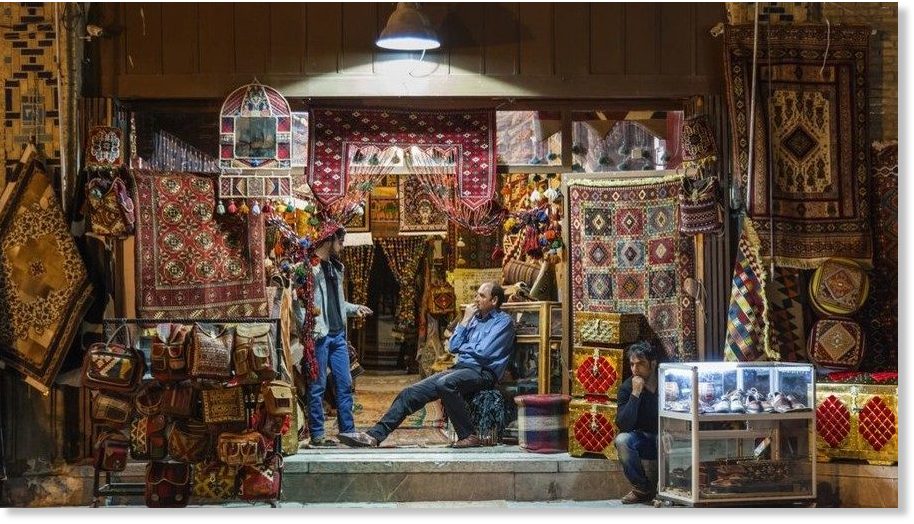
© Getty Images / Walter Bibikow
Apart from barter trade, Tehran and Baghdad are mulling the idea of using the Iraqi dinar for mutual transactions to reduce reliance on the US dollar amid banking problems Iran is facing due to US sanctions.

"Considering the problems that have emerged in dollar-based banking transactions, a joint proposal between Iran and Iraq is using Iraq's dinar in trade," Iranian ambassador to Baghdad Iraj Masjedi said, as quoted by Iran's Fars News Agency.

The announcement comes two weeks after Washington brought into action the second round of anti-Iranian sanctions that target the country's oil, shipping, and financial sectors. The previous batch of penalties, which came into effect in August, hit cars, carpets, metals trading, as well as access to the US dollar.

Chess

Could Spain derail Brexit deal over Gibraltar issue?

rock of gibraltar
© Reuters / Jon Nazca
As Spanish PM Pedro Sánchez threatens to reject the draft Brexit deal unless it clarifies the state of future talks on Gibraltar, Birmingham City University lecturer Dr. Arantza Gomez Arana speaks to RT about that possibility.

Prime Minister Sánchez underlined Spain's position when it comes to the draft agreement on Tuesday, stating that it must be modified to make clear that Gibraltar's future will rely solely on talks between Madrid and London.

"As of today, if there are no changes with respect to Gibraltar, Spain will vote no to the agreement on Brexit," Sanchez said. He also drove that message home on Twitter.

But what exactly would a "no" vote from Spain really mean for Brexit? Dr. Arantza Gomez Arana, a lecturer from Birmingham City University's School of Social Sciences and a member of its Centre for Brexit Studies broke down the situation for RT.

Map

Amnesty launches program to let netizens track US coalition destruction of Raqqa

raqqa
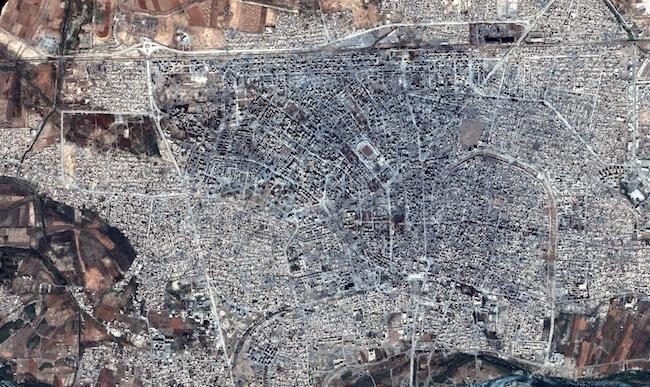
© CNES 2018, Distribution AIRBUS DSRaqqa’s overview after the battle; 16 October 2017.
Thousands of digital activists around the world will take part in an innovative new crowdsourcing data project Amnesty International is launching today, which uses satellite imagery to help plot how the US-led military coalition's bombings destroyed almost 80% of the Syrian city of Raqqa.

"Strike Tracker" is the next phase of an in-depth Amnesty International investigation, in partnership with Airwars, into the shocking scale of civilian casualties resulting from four months of US, UK and French bombardment to oust the armed group calling itself Islamic State (IS) from Raqqa.

Amnesty International's field investigations and analysis since the battle ended in October 2017 presented compelling evidence of apparent violations of international humanitarian law (the laws of war) by the US-led Coalition. They prompted the Coalition to revise its civilian death toll statistics upwards from 23 to more than 100 - a 300% increase.

"Based on our meticulous on-the-ground investigations, hundreds of interviews amid the rubble of Raqqa, and expert military and geospatial analysis, we've been able to push the US-led coalition to admit to almost every civilian death case we've documented so far. But with bodies still being recovered from the wreckage and mass graves more than a year later, this is just the tip of the iceberg," said Milena Marin, Senior Adviser for Tactical Research on Amnesty International's Crisis Response team.