CIA public archives show the objective of U.S. policymakers, regardless of the political party, is to monitor the activities of foreign nations, particularly resource-rich ones.
In 2017, then-U.S. Central Intelligence Agency (CIA) director Mike Pompeo
said: "we are very hopeful that there can be a [political] transition in Venezuela and we the CIA is doing its best to understand the dynamic there [sic], so that we can communicate to our State Department and to others." CIA monitoring of the political situation and interference in Venezuela is, of course, nothing new. Back in April 2002, just days before the coup that temporarily ousted President Hugo Chávez, a Senior Executive Intelligence Brief
anticipated the removal of Chávez by the Venezuelan military.
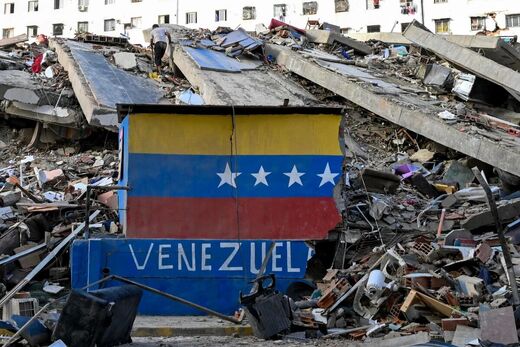
With the current crisis in Venezuela intensifying, thanks in no small part to the U.S. intelligence apparatus, it is worth examining the CIA's declassified and partly-declassified Venezuela archives. The archives include memos, briefing notes, and reports from the Agency itself, as well as from the National Intelligence Estimate. The records on Venezuela date back to the founding of the CIA in the late-1940s. With the exception of more recent records obtained under Freedom of Information Act requests, many of them
filed by Eva Golinger,
the records dry up in the 1980s. Those released so far reveal much about the deeply entrenched attitudes of Cold War planners.
The CIA records reveal that:
1) The main U.S. interest in Venezuela from the 1940s until at least the '80s is not just oil but the Venezuela's role in the region as a symbol of the success of "constitutional democracy," i.e., U.S. power; 2) The kind of "constitutional democracy" supported by the U.S. was a façade because the records also acknowledge that the military, not the Congress, retained the real political power; 3) The CIA and the wealthy business elites of Venezuela shared the conflation of mild state-socialism with "communism"; and 4) Intelligence analysts held two, contradictory beliefs, that Venezuelans were prosperous under U.S. patronage, but they also acknowledged that half the population lived in poverty.












Comment: You can't cuck the Tuck! (except on China, but that's a world away)
Dissenting voices like Tucker Carlson have become a rarity on US mainstream media, which is more a reflection of how controlled the system is rather than the opinions of many Americans: