Puppet MastersS


Question

Why is Britain putting a new roof on Skripal 'house of horrors'

skripal house new roof
© Reuters/Peter NichollsA scaffolder works at the site of former spy Sergei Skripal's house, in Salisbury, Britain
In 12 months of shifting sands, one thing remains as its original foundations: the British state narrative on Salisbury stands as a castle in the air.

One year from the dastardly fate of Sergei and Yulia Skripal, no one is a step forward on what happened to them, how, why, or of course where they are.

One year ago, a nerve agent was allegedly sprayed onto their front doorknob. One year later, their house needs a new roof as a result. And why the roof? And why only the roof?

I don't know what happened to the stricken pair but then, neither do you, however much you've followed the story in Britain's mass media. In fact, the more you've read, the more confused you're likely now to be.

Comment:


Yoda

UN report condemns bloody response to Gaza protests: Corbyn renews calls to end UK arms sales to Israel

Corbyn
© Getty ImagesJeremy Corbyn addresses the annual Labour Party conference in 2017.
UK Labour Party leader Jeremy Corbyn has renewed his calls for Britain to cease arms sales to Israel following a UN report last week that the Israeli army's actions against Palestinian protesters in Gaza's Great March of Return could amount to war crimes.

"The UK government must unequivocally condemn the killings and freeze arms sales to Israel," Corbyn tweeted on Friday, linking the report.

The Labour Party approved a motion during a conference last September that called for the same embargo on arms sales to Israel.

During the conference, Corbyn, who has sustained years of attacks and accusations of anti-Semitism for his support of Palestinian rights, slammed US policies in the region and said that Palestinians can't be "left alone in the darkness."

Bad Guys

Israel receives US THAAD missile defense system - part of 'joint exercises'

THAAD system
© US Missile Defense AgencyTerminal High Altitude Area Defense (THAAD) anti-ballistic missile battery
The U.S. military for the first time has moved an advanced missile defense system to Israel as part of a monthlong joint air defense exercise between the two countries.

U.S. European Command is currently conducting a Terminal High Altitude Area Defense (THAAD) system exercise deployment in Israel, "which is part of U.S. efforts to implement its operational concept & mission to assist in Israel's aerial defense," Israeli Defense Forces tweeted on Monday.

Comment: Sputnik adds:
The THAAD system, considered one of the most advanced in the world, will be added to the existing Israeli air defence. The latter currently includes the Iron Dome, designed to shoot down short-range rockets and the Arrow system.

Commenting on the exercise, IDF Spokesperson Brig.-Gen. Ronen Manelis specified the US anti-ballistic missile battery would be deployed in the south of the country and that about 200 American servicemen would participate in the drills.


Jet4

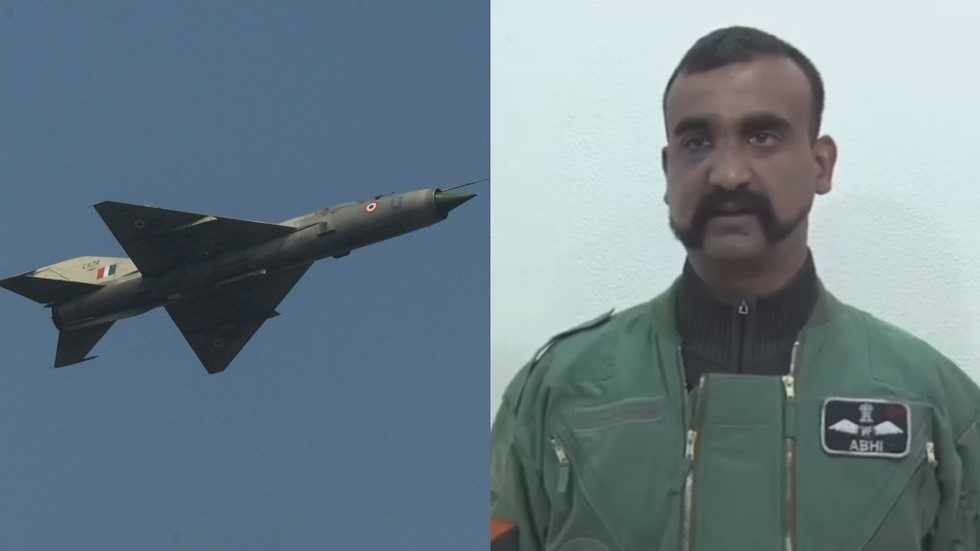
Indian media publishes 'minute-by-minute' account of India & Pakistan's aerial dogfight

Abhinandan Varthaman shot down
© (L) AFP / Dibyangshu Sarkar; (R) Ruptly / PoolIndia AF Wing Commander Abhinandan Varthaman
Indian media have provided a detailed account of its downed pilot's dramatic air combat with Pakistan in Kashmir, featuring rapid duels and daring aerial maneuvers on both sides. Some details have been disputed by Islamabad.

The detailed account of the dogfight was published by India's Times Now channel in an exclusive on Sunday.

The minute-by-minute report details the combat between the Indian jets and the Pakistan Air Force (PAF) on February 27, which ended with one MiG 21 downed and its pilot, Wing Commander Abhinandan Varthaman, captured by the Pakistanis on the ground.

Snakes in Suits

Former acting AG Whitaker leaves the Justice Department

Whitaker
Former acting Attorney General Matthew Whitaker has left the Department of Justice.

A Justice Department spokesman told The Hill that Whitaker's last day was Saturday but did not expand on the circumstances surrounding his departure or his plans after leaving. It is unclear where Whitaker might go, including whether he might seek another role in the Trump administration.

Whitaker served as the chief of staff for former Attorney General Jeff Sessions until November, when President Trump tapped him to lead the department temporarily following Sessions's ouster. Sessions resigned at Trump's request the day after the November midterm elections, after enduring months of criticism from the president over his decision to recuse himself from special counsel Robert Mueller's Russia investigation.

Apple Green

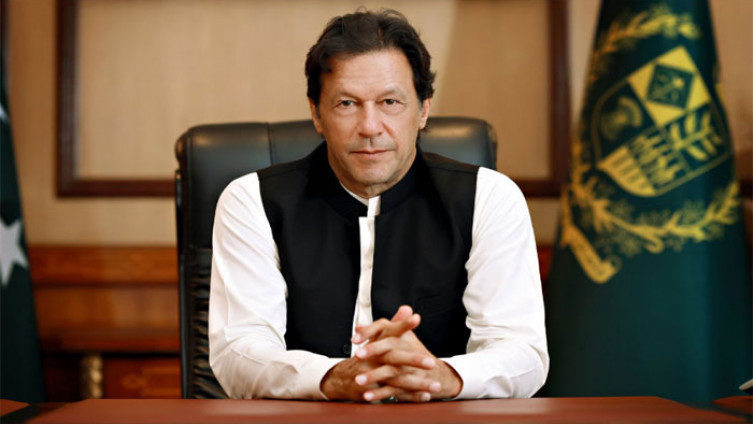
Pakistani PM Imran Khan rejects calls to award him Nobel Peace Prize, says it should go to whoever resolves Kashmir dispute

imran khan
Imran Khan
Pakistan's prime minister Imran Khan has rejected calls to be awarded the Nobel Peace Prize after a flare-up in tensions with neighbouring India.

Tensions ramped up between the two countries last week in a series of military clashes in which Pakistan admitted gunning down an Indian jet after it crossed the Line of Control in disputed Kashmir.

But the hashtag #NobelPeacePrizeForImranKhan trended on Twitter in Pakistan last Thursday after the PM made what he said was a "peace gesture" to release captured pilot Abhinandan Varthaman.

The move is widely thought to have eased the flare-up, although international observers are still worried about the ongoing fractious relationship between the two nuclear-armed countries.

Jet4

Escalation: Pakistani drone shot down by Sukhoi-30 jet in Bikaner, India

Pakistan drone shot down
© TwitterUAV shot down near Bikaner on Monday.
The Border Security Force confirmed two blasts at 11:30 on the Pakistani side at the Gharsana border in Sriganganagar, debris falls across the international border

An unmanned aerial vehicle belonging to Pakistan was on Monday shot down by Indian security forces in Rajasthan's Bikaner, just east of the international border with Pakistan.

Sources have confirmed to Times Now that "at around 11:30 am, an unidentified flying object from the Pakistani side violated the Indian airspace near Bikaner". Indian Air Force jets immediately fired at the UAV and brought it down. The debris apparently landed on the other side, near Fort Abbas in Pakistan.

The Border Security Force confirmed two blasts at 11:30 on the Pakistani side at the Gharsana border in Sriganganagar, but no debris of the UAV has fallen on the Indian side. Reports in Pakistani media completely denied the occurrence of such an event.

Comment: RT reports:
A Pakistani aircraft, presumed to be a drone, was detected by Indian anti-air defense and subsequently shot down by a Sukhoi Su-30MKI fighter jet, local media reports.

The unmanned aerial vehicle has violated Indian airspace and was scouting military positions in a desert area of the state of Rajasthan, ANI news agency reported, citing sources.


The drone was spotted by ground radars and a Russian-made Sukhoi Su-30MKI fighter jet was dispatched to the location. The plane has subsequently shot the drone down with an air-to-air missile.

The debris of the UAV apparently went down over Indian territory, yet local media issued conflicting reports on the exact location of the crash. The incident has not been officially confirmed yet.

The hostilities between India and Pakistan flared up last week when Indian forces conducted an air raid against suspected terrorist camps in Pakistani territory. The operation came in retaliation for a deadly suicide-bomb attack on an Indian paramilitary police convoy in the contested Kashmir region.

The air raid prompted Islamabad to retaliate by attacking targets in the Indian-controlled part of Kashmir. The outcome of the military actions is disputed, as the two sides have provided conflicting accounts on the effectiveness of the strikes and losses. So far, only the loss of an Indian MiG-21 fighter jet was officially confirmed, while Islamabad firmly denies reports that its F-16 plane was shot down as well.
India West adds:
The Sukhoi-30MKI reportedly brought down the drone by using an air-to-air missile soon after it was detected by Indian radars, sources said. The debris of the missile reportedly fell inside Pakistan at Fort Abbas, near Bahawalpur, where proscribed terrorist Jaish-e-Mohammed's headquarters is located, sources said.

However, it was later clarified that these were extra fuel tanks dropped by PAF fighters on patrol. Fort Abbas is located close to Rajasthan border.

Meanwhile looking at the debris, panic buttons were pressed in Pakistan. Even speculation of the air strike 2 went viral on Pakistani twitter users.

Sources confirmed that this was the second drone which attempted to violate the Indian air space. On Feb 27, another Pakistani drone had tried air space violation in Anupgarh. However, it didn't come close, and hovered on Indian borders reportedly with an aim to divert the attention of Indian forces. "Later they intruded into Indian territories through J&K's Nowshera the same day. So this time, when we saw a UAV, we scrambled and shot it down," confirmed a source.

Earlier in the day, IAF chief B.S. Dhanoa had claimed that the operations were still going on as he refused to go into details about the aerial engagement between the two forces.

Sources said that the forces continued to be on high state of alert and that the air defense systems are manned to deal with any eventuality.


X

Kremlin: Russia suspends INF Treaty with the US

Putin
© UnknownRussian President Vladimir Putin
President Vladimir Putin has signed a decree enacting Russia's suspension of the INF Treaty, a move that was announced after a similar decision by the US. The weapons control agreement was set to expire in less than six months.

Russia is putting on ice the Cold War-era agreement, which resulted in significant demilitarization of the European continent. The US will be formally notified about the decision.

The INF Treaty may be revived if the US "eliminates its earlier violations of its obligations" under the deal, according to the decree published by the Kremlin on Monday. Otherwise it will simply expire and cease to exist.

The Intermediate-Range Nuclear Forces Treaty came into force in 1988 and banned both the Soviet Union and the US from developing and deploying land-based cruise and ballistic missiles with ranges between 500 and 5,500 km. The agreement was signed to de-escalate tensions in Europe, where both countries had dozens of such missiles deployed, posing a risk of an accidental nuclear exchange. The missiles only needed minutes to reach their targets, leaving a very small window for the other side to decide whether a detected attack was a real one, requiring immediate retaliation, or a false positive.

The preservation of the agreement had been under threat for over a decade, with both sides complaining about the other not fully complying with its terms. The US claimed that Russia had secretly developed a missile that violated the INF - an accusation that Moscow denies.

Comment: See also:


Stock Down

Paul Craig Roberts: Is neoliberalism killing Russia?

Russian hand banks
© Gwen Sung/CNN MoneyRussian Dominoes
Putin's approval rating is high, but it has declined over the past year. The decline is mainly related to domestic policy. Apparently, the public perceives recent Kremlin economic policy as a continuation of the disastrous policies that Washington imposed on Russia in the 1990s when Russia was loaded up with foreign debt while state assets were privatized and plundered by oligarchs sponsored by the West who "cashed out" by selling the assets to foreigners.

The approval rating of Putin and the government dropped in response to the recent increases in the retirement age and value added tax. The former raised concerns about pension security and reminded Russians of the collapse of Soviet pensions. The latter reduced consumer disposable income and lowered consumer demand and the economic growth rate. These policies represent austerity imposed on the domestic population instead of on foreign creditors and reflect the neoliberal view that austerity leads to prosperity.

Russia is experiencing capital outflows due to the Russian private sector's repayment of loans to Western creditors. Russia has experienced over $25 billion a year of capital outflows since the early 1990s, accumulating to over a trillion dollars. This money could have been invested in Russia itself to raise the productivity and living standards of its citizens. The outflow puts the ruble under pressure, and the interest payments draw money out of the country away from Russian uses. If it were not for these outflows, the value of the ruble and Russian wages would be higher.

Pirates

Son of Bin Laden may lead new generation of Al-Qaeda, the timing is perfect

The bin Ladens
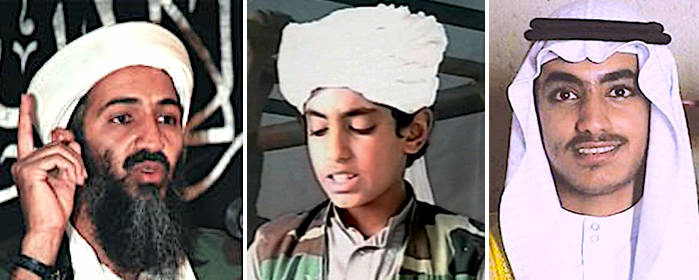
© BBC/The Mirror/Times NowOsama bin Laden • Young Hamza • Hamza bin Laden
It appears that Hamza Bin Laden, a son of the late founder of Al-Qaeda, Osama Bin Laden, may be the heir apparent to lead the militant group, based on what the US State Department now says. They declared Hamza - believed to be about 30 years old - the emerging leader of the terrorist group and announced a $1 million reward for information about him.

Despite trillions of American dollars spent and the enormous loss of life to try and eradicate Al-Qaeda, it has shown a remarkable resilience and now a resurgence with the demise of Islamic State (IS, formerly ISIS).

The current leader of Al-Qaeda, or AQ, is Ayman al-Zawahiri. Despite the State Department's announcement, Zawahiri remains in charge but sees Hamza as the next generation of leadership. What Zawahiri has been doing while the world's attention has been focused on the questionable destruction of IS has quietly been laying good ground work when AQ's leadership shifts to Hamza.

Zawahiri, who by his nature is old school and lacks total charisma unlike Bin Laden before him, has recognized the need to maintain a priority on the 'Far Enemy' - the West - while putting AQ's emphasis on the 'Near Enemy' by seeking "to create safe bases across the Islamic world for al-Qaeda and its affiliates to function," according to Sajjan M. Gohel, International Security Director for the Asia-Pacific Foundation, a think-tank based in London.


Comment: See also: