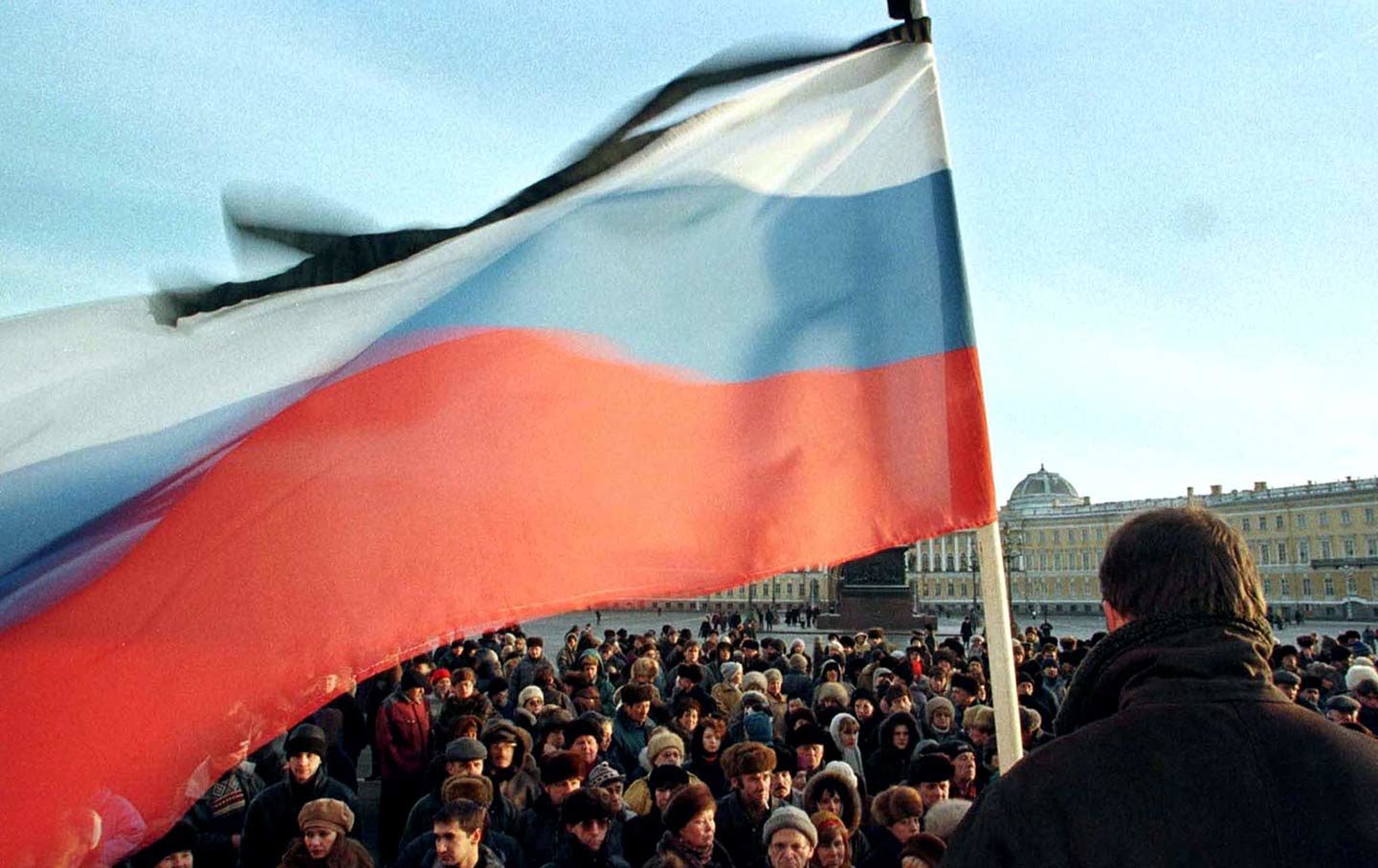
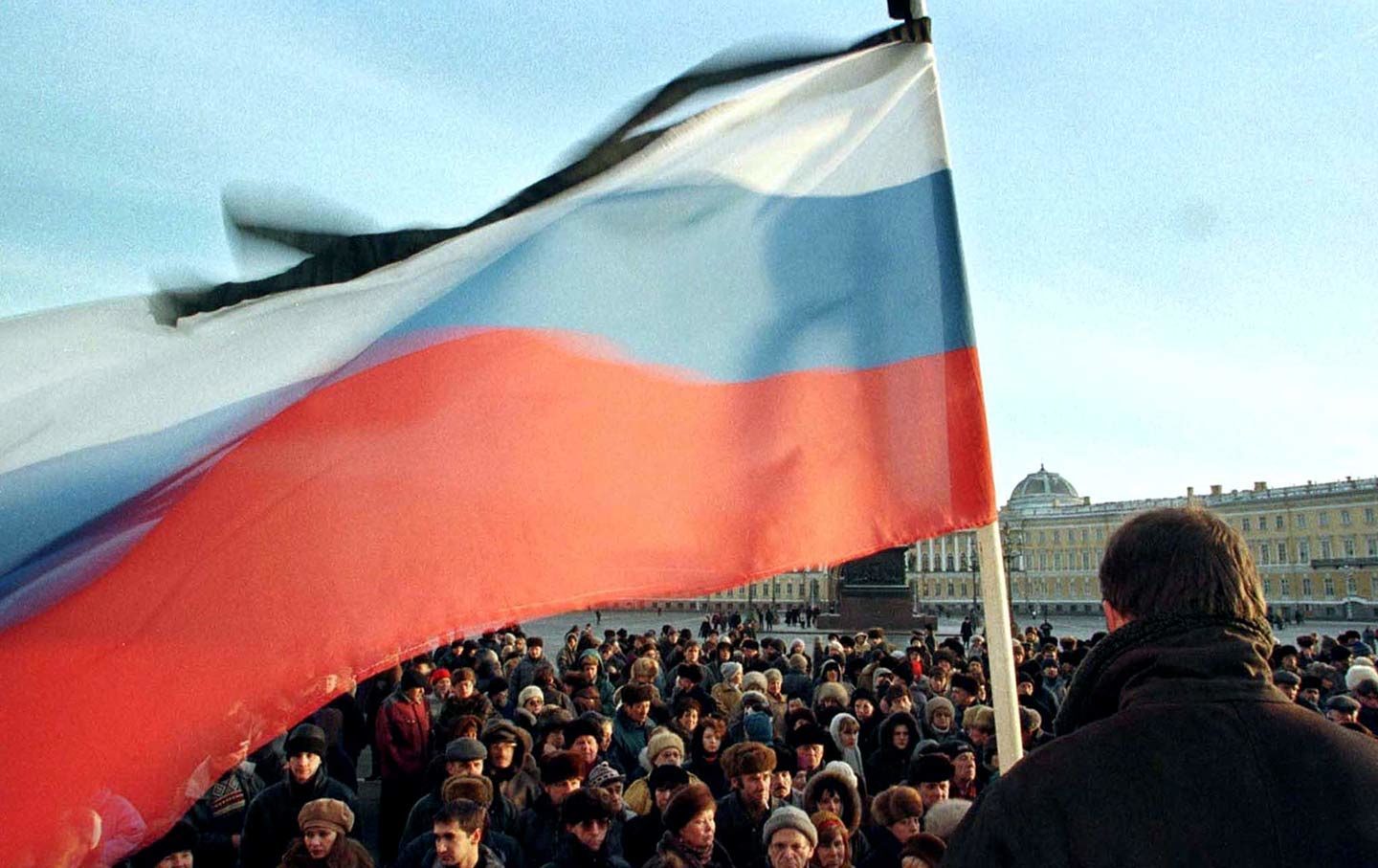
© Reuters / Alexander DemianchukA man waves a Russian flag in St. Petersburg in November 1998.
Even though the bipartisan Senate Intelligence Committee found "
no direct evidence of a conspiracy between the Trump campaign and Russia," Russiagate allegations of "collusion" between candidate and then-President Donald Trump and the Kremlin have poisoned American politics for nearly three years. They are likely to continue to do so for the foreseeable future, due not only to the current subpoena-happy Democratic chairs of House "investigative" committees.
At the core of the Russiagate narrative is the allegation that the Kremlin "meddled" in the 2016 US presidential election. The word "meddle" is nebulous and could mean almost anything, but Russiagate zealots deploy it in the most ominous ways, as a war-like "attack on America," a kind of "Pearl Harbor." They also imply that such meddling is unprecedented
when in fact both the United States and Russia have interfered repeatedly in the other's internal politics, in one way or another, certainly since the 1917 Russian Revolution.For context, recall that such meddling is an integral part of Cold War and that there have been three Cold Wars between America and Russia during the past one hundred years. The first was from 1917 to 1933, when Washington did not even formally recognize the new Soviet government in Moscow. The second is, of course, the best known, the 40-year Cold War from about 1948 to 1988, when the US and Soviet leaders, Ronald Reagan and Mikhail Gorbachev, declared it over. And then, by my reckoning, the new, ongoing Cold War began in the late 1990s, when the Clinton administration initiated the expansion of NATO toward Russia's borders and bombed Moscow's longtime Slav and political ally Serbia.
That's approximately 85 years of US-Russian Cold War in a hundred years of relations and, not surprisingly, a lot of meddling on both sides, even leaving aside espionage and spies. The meddling has taken various forms.









Comment: With drone attacks on the rise in the Trump administration, the lack of accountability for civilian victims is reaching new levels of obfuscation. Off-scene control by drone teams not only increases the margin for error, it also conveniently buffers blame for civilian casualties and inappropriate attacks. Canceling public reports of civilian casualties by drone warfare is a form of perception management aimed at protecting and prolonging a questionable use of force in unacceptable circumstances. Trump shouldn't hide the numbers, he should stop the drone attacks.
See also: