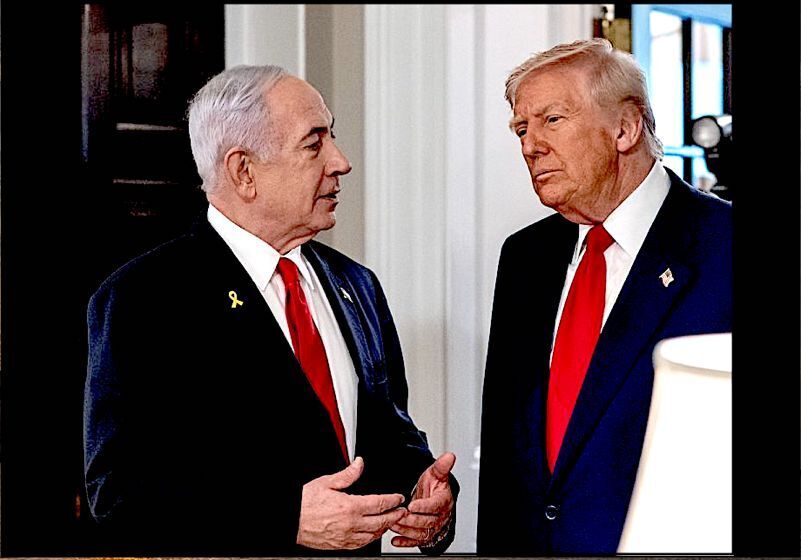
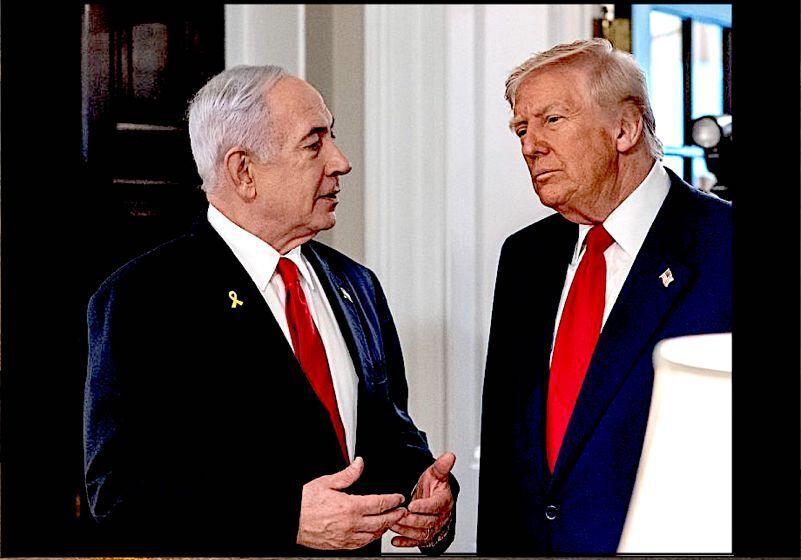
© FLICKR/WHITE HOUSEIsraeli PM Benjamin Netanyahu • US President Donald Trump • White House • April 7, 2025
The talks between Iran and the U.S. set to begin today have a chance to succeed if the Trump administration grounds its policy in the realities of Iran's nuclear program, not fearmongering promoted by Israel and its allies.
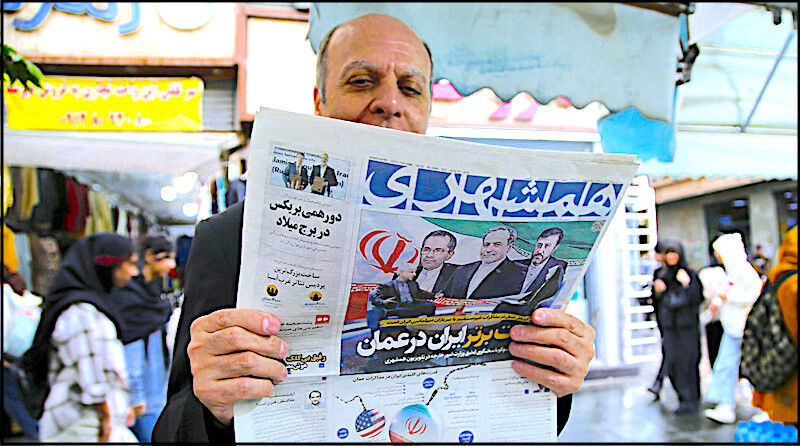
Iran and the United States are set to meet indirectly today in Oman, in the hopes of finding a way to resolve their confrontations over Iran's nuclear program without resorting to an "Israeli-led" attack on Iran.There are a lot of details to parse if these discussions are to bear fruit. It will be important to see whether each side — though most of the concern here really lays with the American side — is willing, at least in the context of these talks, to deal with realities over propaganda and pragmatism over sloganeering.
These talks are different from earlier ones. High-level officials from Donald Trump's administration are leading these talks. Trump's
schizophrenic approach to policy makes negotiations volatile but also leaves open possibilities for breakthroughs.
Netanyahu sidelinedIsraeli Prime Minister Benjamin Netanyahu's visit to Washington earlier this week clearly indicated the potential here.
Netanyahu came with the proper fealty to Trump, kissing the proverbial ring. He desperately needed a boost from Trump as protests and scandals swirled around him in Israel. He also needed Trump to back his aggressive stance against Iran,
a crucial point in ensuring the perpetual state of active war that Netanyahu needs to forestall elections next year and to
continue to delay his trials in court and investigations of his administration's failures.
He got none of it.










Comment: It follows recent ban by Germany of Russian participation in Victory day celebrations in Germany. See also: The Russian Foreign Ministry criticized Germany's ban on Russians' participation in Victory Day celebrations. It was after all, the Soviet Union which liberated the Auschwitz concentration camp.