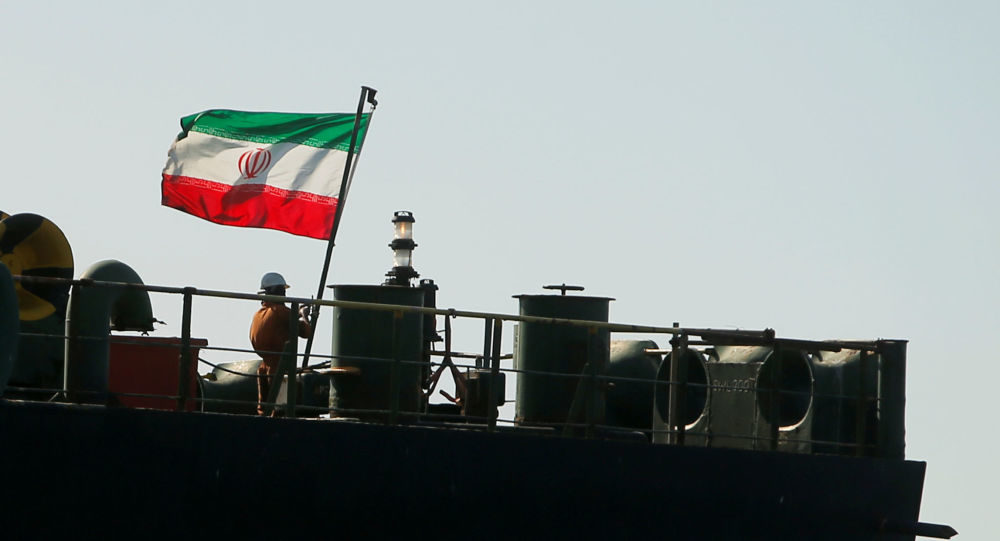
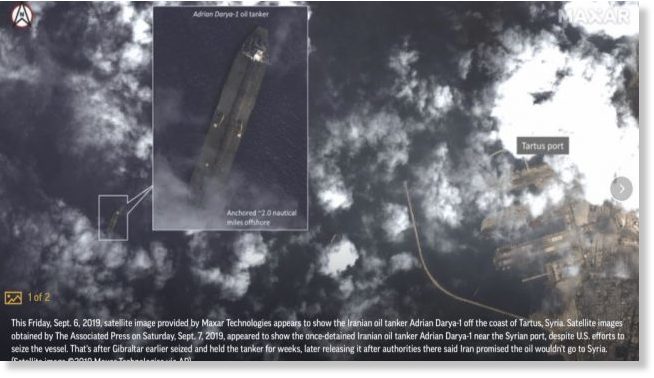
A secret deal has been set up between the US and Iran, through a third party, to enable the Iranian super tanker
Adrian Darya 1 (formerly
Grace 1) to deliver its 2.1 million barrels of oil to the Syrian government. Smaller tankers worked for five days unloading the oil to be delivered to the Syrian port of Tartous from offshore.
Sources closed to the negotiation team said the US "was determined to stop the Iranian supertanker from reaching Syria due to the US-EU strategy to economically sanction the Syrian President Bashar al-Assad and turn Syrians against their leader." These countries, responsible for the 2011-2019 war, failed to achieve a regime change and a failed state militarily. Now they are trying to reach their goal by surrounding the country and preventing its return to normality. The US stopped the Gulf countries from returning to Damascus and imposed on Jordan to restrict the flow of goods to and from Syria. It has closed the al-Tanaf crossing with Iraq and is occupying the north-east (oil-rich!) area for no strategic purpose for the United States.
Notwithstanding these drastic measures, Iran is determined to support its allies.According to sources,
Adrian Darya 1 remained for several days in the Mediterranean without a final destination, waiting for the end of the negotiations.
Steps were agreed to begin releasing the "Stena Impero" British-flagged 7 crew members. Once
Adrian Darya 1 has ended its delivery,
more crew members are expected to be released. "
Stena Impero" will be set free without further demand for financial compensation once "
Adrian Darya 1" reaches a point of safety.
Iran said it has a buyer for the 2.1 million barrels of oil carried by the supertanker. According to informed sources,
the client is Rami Makhlouf, President Assad's cousin who bought the 130 million dollars-worth cargo (in the open market). Iran offers hundreds of thousands of barrels monthly free to Syria and has done since the beginning of the 2011 war. Damascus pays the rest - at a much reduced price - to Iran or to whomsoever Tehran decides, said the sources.









Comment: See also: