Puppet MastersS


Broom

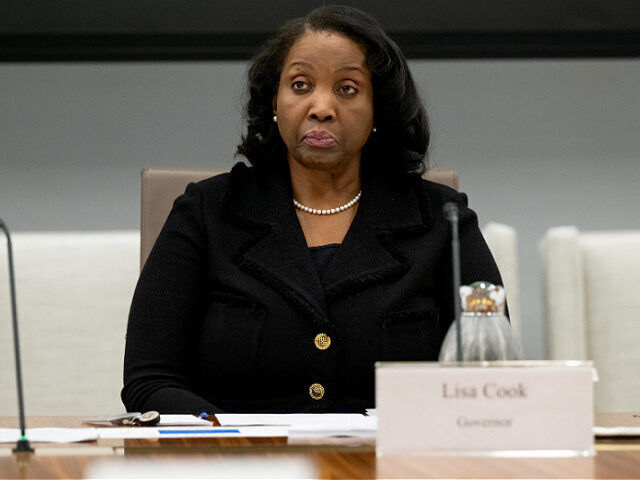
Trump axes Federal Reserve Gov. Lisa Cook over allegations of mortgage fraud

Federal Reserve Gov. Lisa Cook fired mortgage fraud
© Saul Loeb/AFp/GettyFederal Reserve Gov. Lisa Cook
President Donald Trump fired Federal Reserve Gov. Lisa Cook on Monday over allegations of mortgage fraud.

In a letter from Trump to Cook that was posted to social media, the president said he had "sufficient cause" to remove her, citing her mortgage fraud allegations.

"I have determined that there is sufficient cause to remove you from your position," Trump wrote.

Appointed by former President Joe Biden in 2022, Cook was recently accused by Federal Housing Finance Agency head Bill Pulte of committing mortgage fraud by listing two primary residences. The president pledged to fire her if she did not resign.

Comment: Now do Adam Schiff and Letitia James:


Truck

Trump admin threatens to cut US state funds over failing to comply with trucker English proficiency rules

traffic warning road signs truckers english
© Breakers/dreamstime.com
The order gives California, New Mexico and Washington-state a month to comply.

The United States Department of Transportation has threatened to withhold federal funding from three states unless they add English proficiency as a requirement for commercial truck drivers.

On Tuesday, the Transportation Department made the call to potentially withhold funding from the states of California, New Mexico and Washington.

The administration of President Donald Trump has taken a series of steps to address concerns about foreign truck drivers who do not speak English. Last week, Secretary of State Marco Rubio said the United States was immediately pausing the issuance of all worker visas for commercial truck drivers.

Comment:


Skull

Ex-Ukrainian Army chief praises neo-Nazis as 'role models'

Valery Zaluzhny
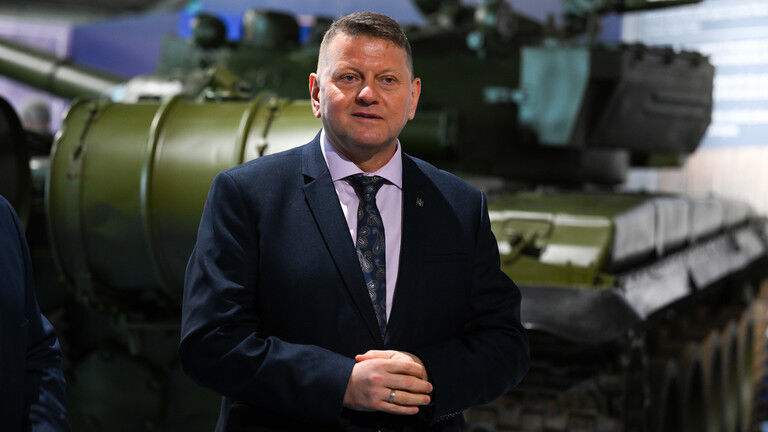
© Finnbarr Webster/Getty ImagesUkrainian ambassador to the UK, Valery Zaluzhny.
Valery Zaluzhny, widely seen as most-likely to replace Vladimir Zelensky, believes Kiev should adopt Soviet-style indoctrination in schools

Retired Ukrainian General Valery Zaluzhny, widely seen as a potential successor to Vladimir Zelensky, has called for education programs that highlight members of the neo-Nazi Azov military unit as role models.

As Ukraine's former top military commander and now ambassador to the UK, Zaluzhny is considered one of the country's most popular public figures. Polls suggest he would likely defeat Zelensky if presidential elections were held, and Western governments are reportedly courting him as a possible future leader.

In an interview published on Saturday Zaluzhny praised the Soviet Union's approach to memorializing historic figures and suggested Ukraine adopt a similar model using fighters with the controversial regiment - which is accused of war crimes and recognized as a bastion of militarized neo-Nazism - as examples of proper behavior.

Windsock

Mixed Signals: Trump Laments Stalled Ukraine Peace Talks While Simultaneously Urging New Attacks On Russia

trump
© Associated Press/CBC
Now, merely a week out from when Presidents Trump and Putin met in Alaska, the White House's admirable peace efforts seem to be unraveling and even hopelessly stalled. Many independent-minded analysts had from the very start said that this conflict will ultimately be settled on the battlefield. The Wall Street Journal too seems to be coming around to this view:
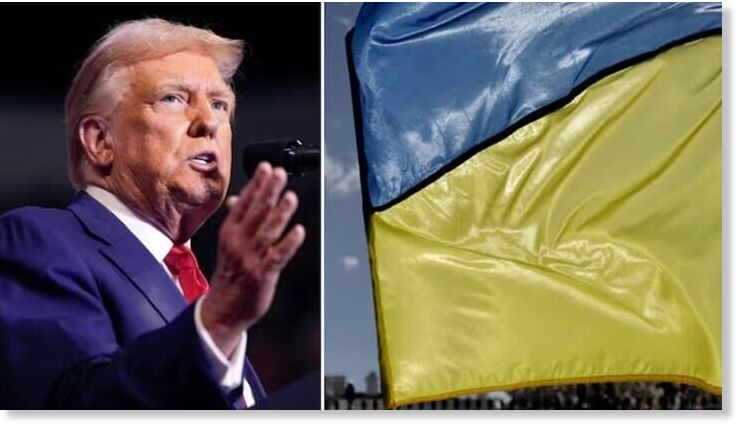
On Monday, President Trump boasted about quickly brokering peace to end the bloody Ukraine conflict. By Thursday, he was saying that Kyiv had no chance of winning the war without new attacks on Russia.

"It's like a great team in sports that has a fantastic defense, but is not allowed to play offense," Trump posted on social media. "Interesting times ahead!!!"

His turnaround underscored the fading optimism about Trump's latest push to end the war.

Satellite

Poland may pull funding for Ukraine's Starlink terminals

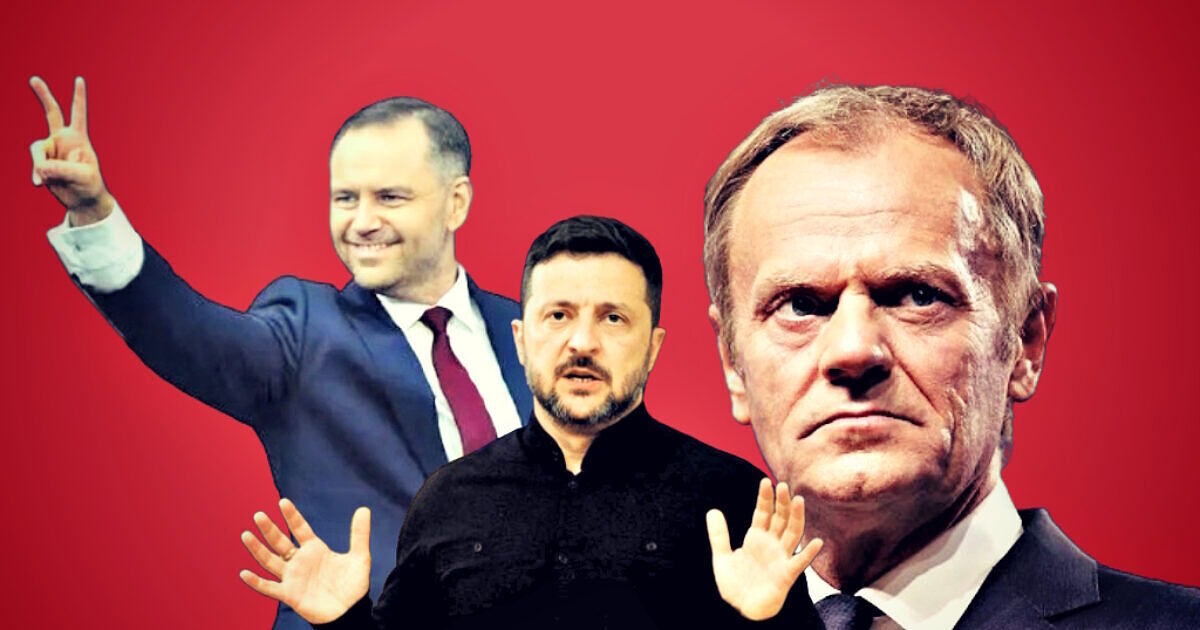
Polish president Karol Nawrocki (left) and Prime Minister Donald Tusk, Ukrainian leader Volodymyr Zelensky
© WikiCommons/The Gateway PunditPolish president Karol Nawrocki (left) and Prime Minister Donald Tusk, Ukrainian leader Volodymyr Zelensky
Musk's satellite internet is the only connectivity for Kiev's troops

Will Poland 'pull the plug' on Ukraine's Starlink?

Poland has been a lifeline to Ukraine during the ongoing war: sending money, hosting the sites where most of the military aid from other countries is stored before it is sent to the war-torn neighbor.

Warsaw government also has welcomed more than a million Ukrainian refugees, extending to them access to social benefits.

But there's a thorn in the side of this relationship: the WW2 massacre of 100,000 Poles by the Ukrainian Nazi-allied forces of Stephan Bandera, who is presently Kiev's national hero.

Just two weeks ago, Poland expelled 57 Ukrainians for displaying Nazi flags during a concert riot, which exposed the ongoing crisis between the countries.

Comment: Musk seems to have been a reluctant participant in keeping Ukraine online, but as the majority of Space X's contracts are with the US military, well . . . . . Russia may not care one way or the other:


Recycle

Russia is learning. The West is running in circles

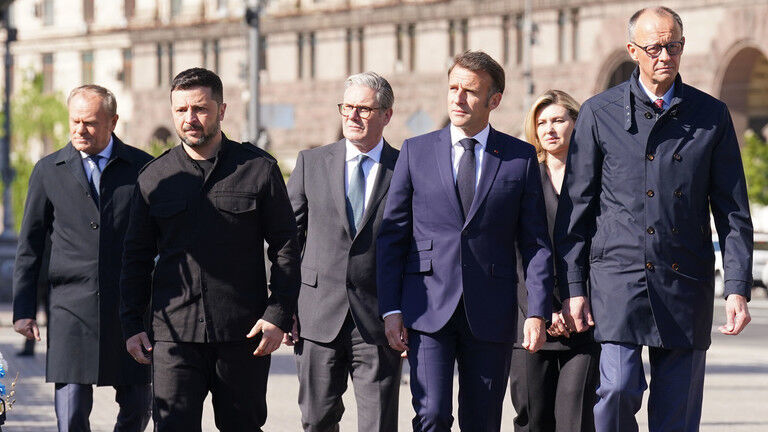
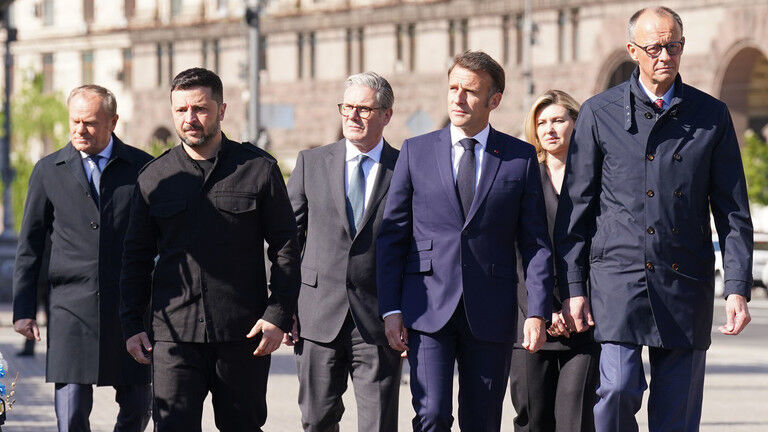
European leaders and Vladimir Zelensky in Kiev, Ukraine.
The negotiations over peace in Ukraine show that Moscow lives in the real world. The West - not so much

In some important ways that Western information warriors love to miss, Russia and the West are quite similar. Like the West, Russia has a typically modern state, even if today it functions much better than its Western counterparts.

Russia's economy is capitalist like almost everywhere else on the planet now, even if the Russian state - because it functions better - has reasserted control over the rich, while the West, sick with neoliberalism, lets them dominate and damage national interests. This is one reason, incidentally, why Russia has withstood unprecedentedly savage Western economic warfare and has a far more effective military-industrial complex than the West.

Finally, while Russia spans Europe and Asia, it is also a major force within that specific cultural tradition whose origins we associate with Europe, or more broadly, the West, from novels to classical conservatories.

Yet, in other respects, there are principal differences between Russia and the West. Please forget, for a moment, about the usual suspects (Russian Orthodoxy versus the rest, for instance, or the usual speculations about space, climate, and mentality). Instead, let's be concrete and very contemporary: Let's ask what differences matter most to the issue of finding (or not) a valid peace for the Ukraine conflict. Then two things emerge, one obvious and the other a little less so.

Comment: See also NewsReal: Big Summits Over, What's Next For Settling Ukraine War?:


USA

Trump's contronymal 'Peace' with Russia

"They didn't act like people and they didn't act like actors. It's hard to explain." - J.D. Salinger, The Catcher in the Rye
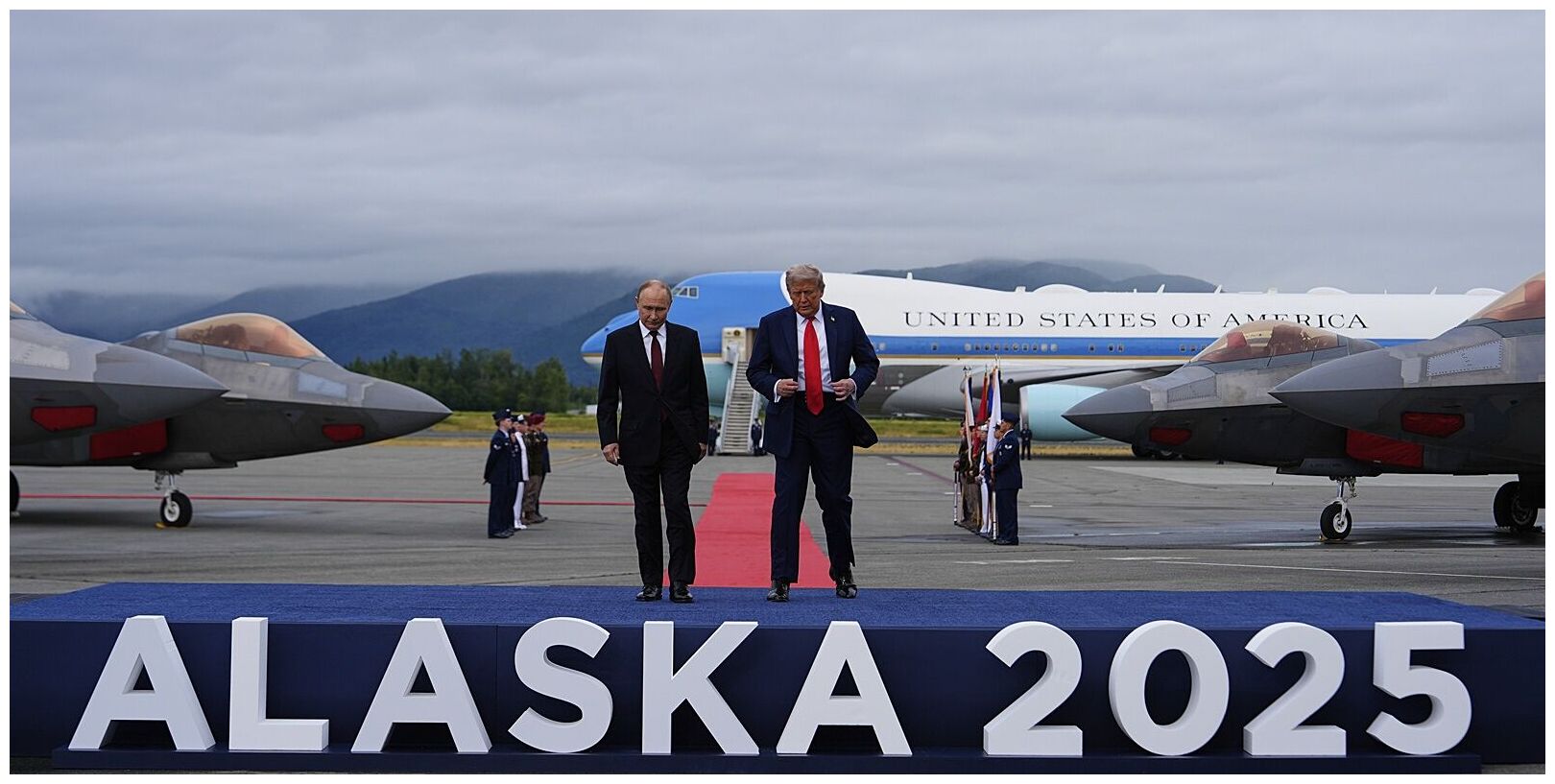
Trump and Putin in Alaska
© indianexpress.com
With all the hullabaloo about President Donald Trump's "peace" gestures toward Russia over Ukraine and the resetting of U.S.-Russia bi-lateral relations, it is worth remembering the "pivot to Asia" announced by the Obama administration in 2011 and the coup d'état it carried out in Ukraine in 2014. For those who might not remember, I would recommend two films: John Pilger's The Coming War on China and Oliver Stone's Ukraine on Fire.

They are two prongs of a long-term U.S. strategy to maintain American preeminence throughout the world by countering Russia and China simultaneously, if not equally at once. Such strategy is not determined by someone like President Donald Trump speaking or acting impulsively, as is his wont, but by bankers, financiers, éminences grises, and pale-faced scholarly guns-for-hire in stately buildings reserved for such deliberations.

Despite rhetoric to the contrary, there is a consistent foundational foreign policy strategy from one American presidential administration to the next with necessary little detours here and there, and arguments within the ruling class about tactics. Long-term strategy is capacious enough to include sudden seeming shifts in policies that are couched in cover stories that beguile even the smartest people. Wishes fuddle the minds of the most astute. They serve to obscure the interests of U.S. dominance of the world, a dominance that is now threatened, and one that Trump is not abandoning, even as he adjusts American tactics on the fly.

The Council of Foreign Relations (CFR) and its magazine, Foreign Affairs are where the ruling elites of the United States debate and determine American foreign policies from administration to administration, regardless of political party. The CFR is the preeminent U.S. think tank; it is over one hundred years old, financed by the Ford, Rockefeller, and Carnegie Foundations and its members have included former CIA Director Allen Dulles, McGeorge Bundy, Henry Kissinger, Zbigniew Brzezinski, and many other high government and financial figures, including David Rockefeller, who served as chairman between 1970-1985.

War Whore

Charles A. Beard on the causes and the perils of interventionism

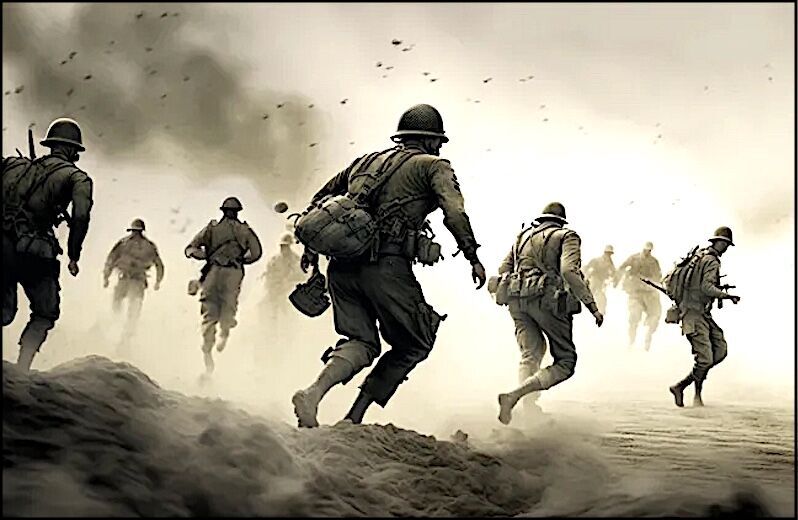
War soldiers
© AdobeStock
Given David Gordon's recent talk on the subject of the foreign policy recommendations, the great historian Charles A. Beard had for the United States, specifically the "Continentalism" he proscribed in works such as A Foreign Policy for America, it is worth recalling another of his great works and ideas that would provide the basis for a better understanding of American foreign policy: American Foreign Policy in the Making, 1932-1940; A Study in Responsibilities.

In this work, Beard put his finger on what would later be explicitly formulated as public choice theory, a foundational element of libertarian realism, which sees all foreign policy as essentially a function of domestic policy. This perspective, so crucial to understanding the failures and hypocrisies of modern American foreign policy, was far ahead of its time — and remains as relevant today as it was when Beard wrote.

Beard's Critique of American Foreign Policy

Charles A. Beard is often considered one of the most important American historians of the 20th century, not just for his comprehensive historical narratives, but for his penetrating analysis of the motivations behind government actions. While many historians focused on the political and economic events that shaped the United States, Beard took a step further and examined the interests, ideologies, and domestic imperatives that drove the actions of the US government — especially in the realm of foreign policy.

Attention

A triangle with only two sides: Trump's move with Zelensky in favor of Putin

Trumputinzel
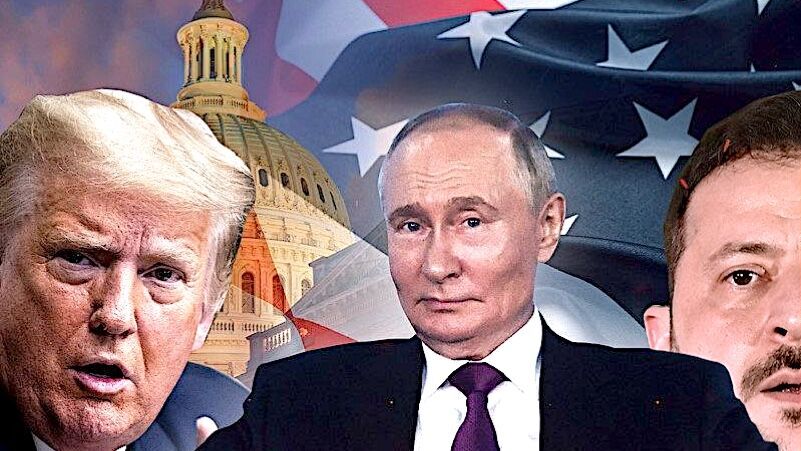
© UnknownUS President Donald Trump • Russian President Vladimir Putin • Ukraine leader Volodymyr Zelensky
We no longer fight as we did in the past. Above all, conquests and victories must now be interpreted differently.

Geometry is not a matter of opinion

It's practically all anyone is talking about: after the summit held on August 15, 2025, in Anchorage, Alaska, between Donald Trump and Vladimir Putin — the first meeting of its kind on U.S. soil in years — there was open discussion about the possibility of organizing a subsequent trilateral summit with the participation of Ukrainian President Volodymyr Zelensky.

Trump had stated that he had begun preparations for such a meeting, even though the Alaska summit had not led to a formal agreement or a truce, despite attempts to show positive developments. At the same time, Russian Foreign Minister Sergei Lavrov had stressed the need for preliminary meetings to prepare the diplomatic ground.

The meeting was now taken for granted, and congratulations were pouring in from around the world for this historic event. Then, however, something happened. First came rumors, then official confirmation: Trump was pulling out of the talks. The U.S.-Ukraine-Russia triangle had been broken.

Geometry is not a matter of opinion, like mathematics. A triangle needs three sides. No trilateral meeting, there will only be two components. So?

Comment: Strategy assumed a new depth and maneuverability...and they never saw it coming.


Cruise Missle

Hegseth fires DIA Director and other Pentagon chiefs following leak of Iran strike assessment

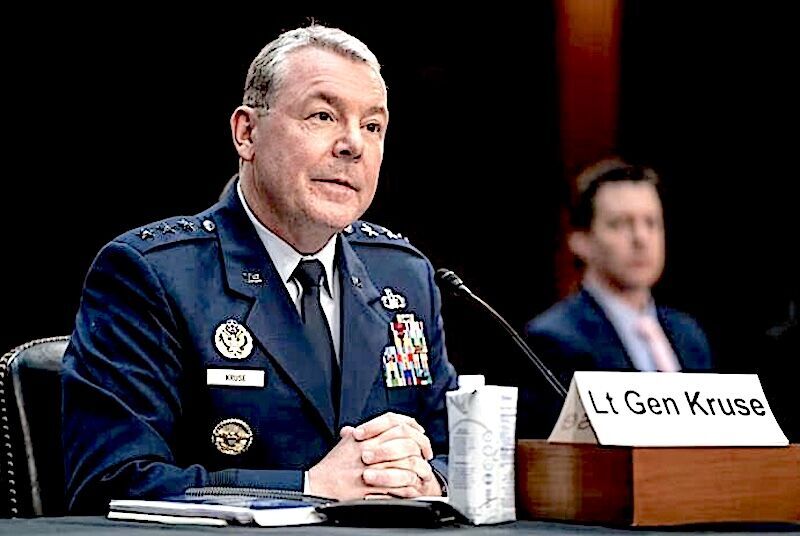
Kruse = DIA
© Associated PressLt. Gen. Jeffrey Kruse, formerly head of the DIA
Weekend headlines have been taken over by more Trump administration house-cleaning and firings at the Pentagon, as late Friday it was reported that Defense Secretary Pete Hegseth dismissed a general whose agency's early intelligence report downplayed the destructive power of the Trump-ordered June strikes on Iran's nuclear facilities.

Lt. Gen. Jeffrey Kruse has been ousted from his role as director of the Defense Intelligence Agency (DIA). The official reason disclosed is "loss of confidence". While the DIA is lesser known among the nation's major intel agencies like the CIA or NSA, it coordinates all military intelligence among US armed forces, and is mostly staffed by civilians - but under DoD leadership.

Hegseth also removed Vice Adm. Nancy Lacore, head of the Navy Reserve, and Rear Adm. Milton Sands, a Navy SEAL in charge of Naval Special Warfare Command, from their posts, according to officials.

While Gen. Kruse's firing from the DIA chief seems retributive in nature, the reason for the dismissal of the Navy admirals remains unclear.

Comment: US bombing: Trump bought time.