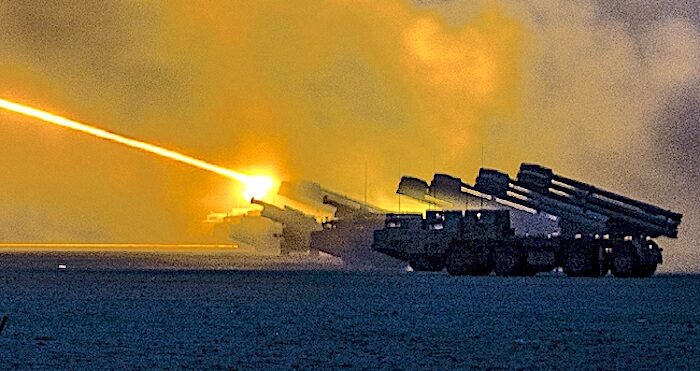
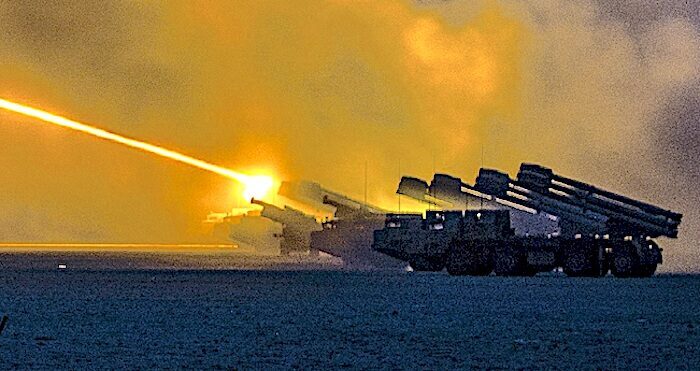
© US Army /Sgt. James Lefty LarimerHIMARS/High Mobility Artillery Rocket Systems (US) and BM-30 Smerch rocket systems (Kuwait) in live-fire exercise 2019 in Kuwait
Last Sunday when the remaining Ukrainian soldier withdrew from
Lysychansk, Ukrainian President Volodymyr
Zelensky said evacuating his troops from the city
"where the enemy has the greatest advantage in fire power, was the right call, but means only one thing... That we will return thanks to our tactics, thanks to the increase in the supply of modern weapons."
While many in the West would like that to be true,
the reality is very different: there is no basis upon which to hope for a future offensive to drive Russian troops out of conquered territories.The most likely result for the Ukrainian Armed Forces (UAF) if they continue fighting the Russians is that
more of Zelensky's troops will be killed, more Ukrainian cities will be turned to rubble, and more territory Kyiv will lose to the invaders. A sober analysis of the capacity of the of the two armed forces, an assessment of the military fundamentals that have historically proven decisive on the battlefield, and an examination of the sustainability potential for both sides, make it plain that
Russia will almost certainly win a tactical victory.Ukrainian Presidential Advisor
Oleksiy Arestovych said that, to the contrary, the withdrawals in Severodonetsk and Lysychansk weren't defeats at all, but instead "successful" in that he claimed
they allowed Ukraine to "buy time for the supply of Western weapons and the improvement of the second line of defense, to create conditions for our offensive actions in other areas of the front." This is a common belief in the West but one not borne out by the facts.





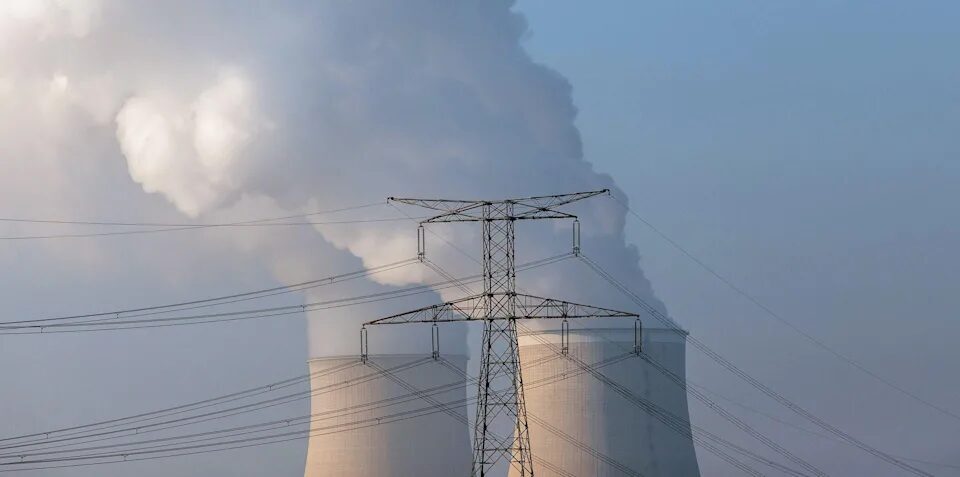














Comment: Russian gas was cheap, clean-burning, and the best possible option for European countries. But the anti-Russian, green lunatic ideology swept all of that away. Now reality is setting in.