Puppet MastersS


Stock Down

Silicon Valley Bank crisis: The liquidity crunch we predicted has now begun and the FED is largely to blame

Silicon Valley Bank
There has been an avalanche of information and numerous theories circulating the past few days about the fate of a bank in California know as SVB (Silicon Valley Bank). SVB was the 16th largest bank in the US until it abruptly failed and went into insolvency on March 10th. The impetus for the collapse of the bank is tied to a $2 billion liquidity loss on bond sales which caused the institution's stock value to plummet over 60%, triggering a bank run by customers fearful of losing some or most of their deposits.

There are many fine articles out there covering the details of the SVB situation, but what I want to talk about more is the root of it all. The bank's shortfalls are not really the cause of the crisis, they are a symptom of a wider liquidity drought that I predicted here at Alt-Market months ago, including the timing of the event.

First, though, let's discuss the core issue, which is fiscal tightening and the Federal Reserve. In my article 'The Fed's Catch-22 Taper Is A Weapon, Not A Policy Error', published in December of 2021, I noted that the Fed was on a clear path towards tightening into economic weakness, very similar to what they did in the early 1980s during the stagflation era and also somewhat similar to what they did at the onset of the Great Depression. Former Fed Chairman Ben Bernanke even openly admitted that the Fed caused the depression to spiral out of control due to their tightening policies.

Attention

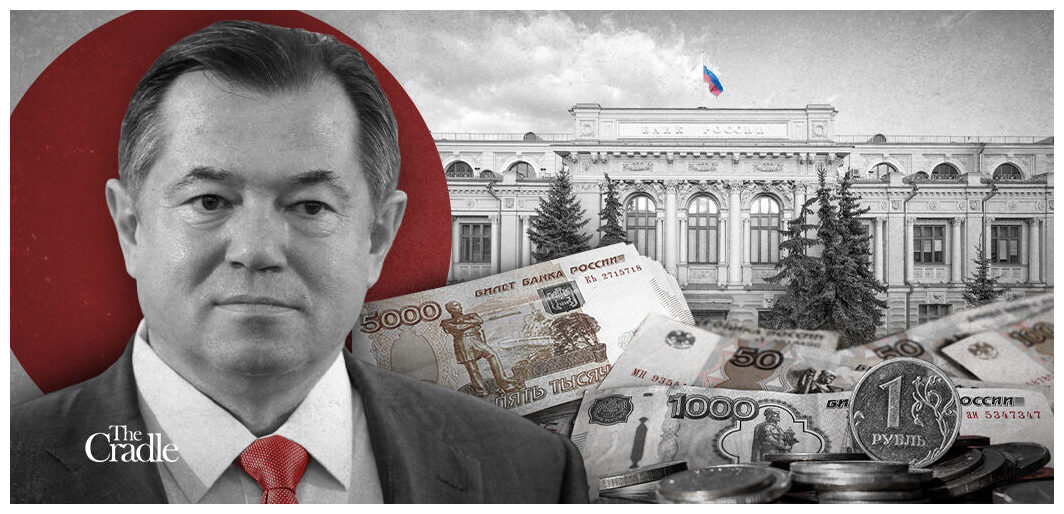
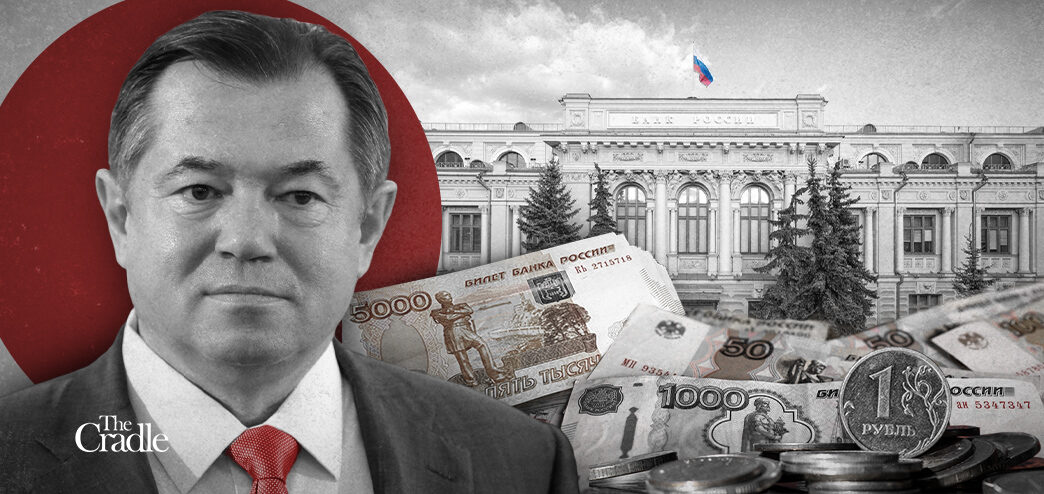
Sergey Glazyev: 'The road to financial multipolarity will be long and rocky'

In an exclusive interview with The Cradle, Russia's top macroeconomics strategist criticizes Moscow's slow pace of financial reform and warns there will be no new global currency without Beijing.
Sergey Glazyev
© The Cradle
The headquarters of the Eurasian Economic Commission (EEC) in Moscow, linked to the Eurasia Economic Union (EAEU) is arguably one of the most crucial nodes of the emerging multipolar world.

That's where I was received by Minister of Integration and Macroeconomics Sergey Glazyev - who was previously interviewed in detail by The Cradle - for an exclusive, expanded discussion on the geoeconomics of multipolarity.

Glazyev was joined by his top economic advisor Dmitry Mityaev, who is also the secretary of the Eurasian Economic Commission's (EEC) science and technology council. The EAEU and EEC are formed by Russia, Belarus, Kazakhstan, Kyrgyzstan, and Armenia. The group is currently engaged in establishing a series of free trade agreements with nations from West Asia to Southeast Asia.

Our conversation was unscripted, free flowing and straight to the point. I had initially proposed some talking points revolving around discussions between the EAEU and China on designing a new gold/commodities-based currency bypassing the US dollar, and how it would be realistically possible to have the EAEU, the Shanghai Cooperation Organization (SCO), and BRICS+ to adopt the same currency design.

Glazyev and Mityaev were completely frank and also asked questions on the Global South. As much as extremely sensitive political issues should remain off the record, what they said about the road towards multipolarity was quite sobering - in fact realpolitik-based.

Glazyev stressed that the EEC cannot ask for member states to adopt specific economic policies. There are indeed serious proposals on the design of a new currency, but the ultimate decision rests on the leaders of the five permanent members. That implies political will - ultimately to be engineered by Russia, which is responsible for over 80 percent of EAEU trade.

It's quite possible that a renewed impetus may come after the visit of Chinese President Xi Jinping to Moscow on March 21, where he will hold in-depth strategic talks with Russian President Vladimir Putin.


Attention

Betting all on hegemony; Risking all, to stave off ruin

Vaxx Scam
© REUTERS/Phil Noble
Just occasionally, a window is opened onto the truth of how the 'system' works. Momentarily, it stands naked in its degeneracy. We avert our eyes, yet, it is a revelation (though it shouldn't be). For, we see clearly how tawdry has been the attire which clothed it. 'Liberalism's' seeming success - almost wholly an ephemeral PR production - serves only to make its underlying internal contradictions more obvious; more 'in your face' - much less credible.

This unravelling speaks to a failure to satisfactorily resolve liberal modernity's inherent contradictions. Or, rather its unravelling derives from the choice to resolve a waning legitimacy, through an ever more totalistic and ideological reaching for hegemony.

One such window has been the sordid affair of the UK pandemic lockdowns - as revealed by a paper trail leak of 100,000 ministerial WhatsApp messages, managing the lockdown project.

What did they show (in the words here of pro-government leading political commentators)? An ugly picture of how a western Establishment interacts in adolescent sniping at each other, and in its utter disdain for the populace.

Bullseye

Echoes of Maidan: Georgia's huge Western-funded NGO sector and regular outbreaks of violent protest, is there a link?

Georgia
© David Mdzinarishvili/Anadolu Agency via Getty ImagesPeople gather to stage a demonstration against the bill on foreign influence transparency in Tbilisi, Georgia on March 9, 2023.
What lies behind this week's scenes in Tbilisi and why was Russia again used as a scapegoat?

Tbilisi's main street, Rustaveli Avenue, was blocked for several days this week as thousands of people chanted anti-government slogans in front of the parliament building and sang the Georgian national anthem. Even more protesters gathered at the square in the evenings. By nightfall, the enraged crowd was throwing firecrackers, stones, and Molotov cocktails at the police, attempting to take down an iron fence and storm the parliament. The police used water cannons to promptly put out the fires and showered the crowds with water, at the same time spraying tear gas to disperse those present.

What led to this violent confrontation is perhaps difficult to understand from the perspective of a Western reader. It wasn't a "civil society" uprising in the sense you might find, for example, in a country like France. Instead, it was organized by people whose livelihoods were threatened by the proposed legislation.

Comment: See also: 2nd night of mass protests over foreign agent bill in Georgia, US & EU hypocritically warn against 'Kremlin-inspired law'


Bullseye

'Humiliating': Germany is not a sovereign nation - Moscow

gas leak
© Swedish Coast Guard/Getty ImagesBerlin was "humiliated" by Washington during the Nord Stream sabotage controversy, senior security official Nikolay Patrushev has said
Germany is facing an inevitable economic decline after losing its access to Russian energy, but cannot do anything about it because it is not a sovereign nation, the secretary of the Russian National Security Council has claimed.

"Germany tried for many years to build its economy on a combination of cheap Russian energy and advanced German technologies. Like no one else, it realizes that the terrorist attack against the [Nord Stream pipelines] will definitely cause the German economy to decline further," Nikolay Patrushev said in an interview published in Argumenti i Fakti newspaper on Monday.

The advantages that German businesses enjoyed by getting access to Russian fuel has long irritated the governments of the US and the UK, he continued. But Berlin is not at liberty to continue cooperating with Moscow, "because the German nation is not independent."

Comment: Germany stands to lose even more if the US has its way with the looming anti-China sanctions: Alastair Crooke: EU's Von der Leyen to meet Biden to discuss addressing 'China threat' - be worried!


Pirates

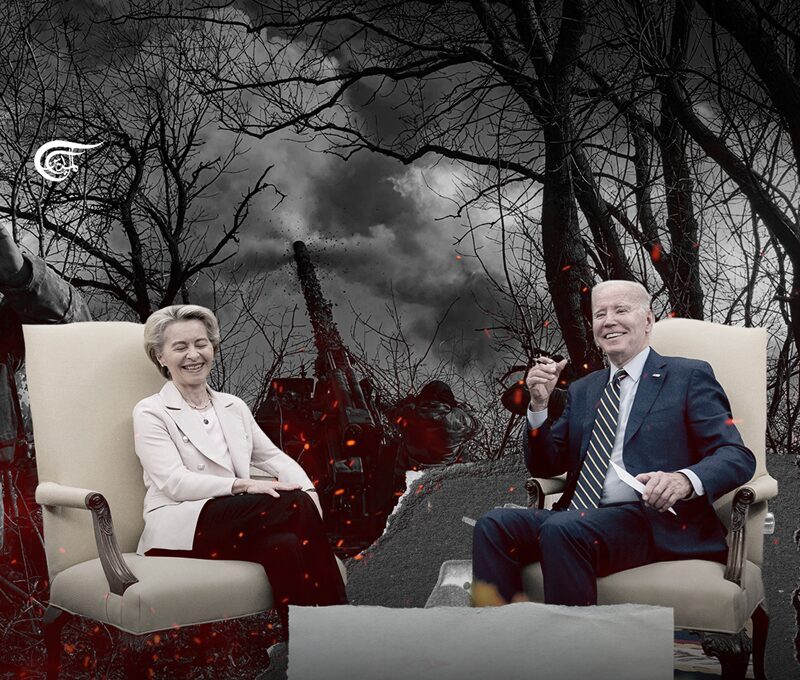
Alastair Crooke: EU's Von der Leyen to meet Biden to discuss addressing 'China threat' - be worried!

von der leyen biden
NATO is quietly 'moving on' from Ukraine -- towards Cold War with China while the US is cooking an 'unprecedented' sanctions-led Cold War on Beijing.
In a recent interview, Nicholas Burns, the US Ambassador to China, after labelling China the 'threat', bluntly said: "We're the leader in this [Indo-Pacific] region. [And We're] staying". The interviewer, US Congressman Mike Gallagher, described America's new Cold War as no polite tennis match, but an existential struggle for life in the 21st century.

President Xi's earlier attempt to reach a 'new détente' with the US during the November G20 at Bali -- effectively an attempt to explore whether a minimum modus vivendi with US were possible -- is over.

The hysteria over the Chinese balloon; the increasing evidence that Ukraine is descending to a débacle for the Biden Administration in the Bakhmut area; and the coarse threats of 'consequences' for China were it to support Russia militarily (and at the very moment when Washington was promising more weapons for Taiwan), were too much for Beijing.

Comment: See also: Iran-Saudi détente spells a 'catastrophe for US hegemony' - Analyst

And check out SOTT radio's: NewsReal: Enter The Dragon: China Sides With Russia Against America


Dollar Gold

Making common, golden sense of the next senseless bank crisis

JerPow
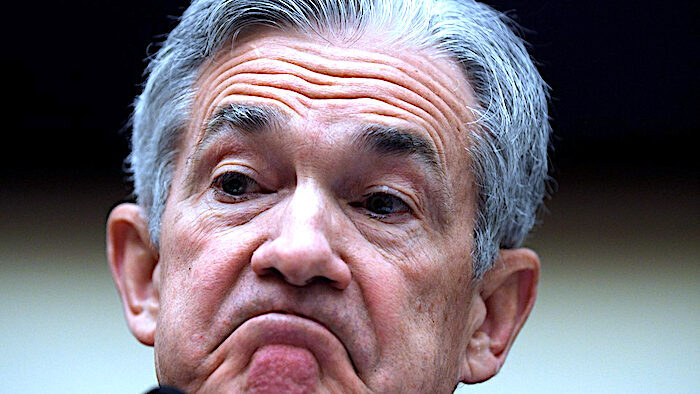
© Mary Calvert/ReutersFed Chair Jerome Powell
The latest headlines, of course, are all pointing toward the ripple effect of Silicon Valley Bank (SVB), and they should be.

This banking metaphor for the tech sector in particular and the previously described disaster in California as a whole or the matter of banking risk as a theme, require understanding and attention, provided below.

Once we get past a forensic look at the data and forces which explain SVB's demise, we quickly discover that SVB is itself just a symbol of a much larger financial (and banking) crisis which ties together nearly all of the major macro forces we've been tracking since Powell began his QE to QT quest to be Volcker-reborn.

That is, we confirm that everything comes back to the Fed and bond market in general and the UST market in particular. But as I've argued for years, and will say again now: The bond market is the thing.

By the end of this brief report, we also discover that SVB is just the beginning; contagion inside and outside of the banking sector is about to get worse. Or stated more bluntly: "We aint seen nothing yet."

But first, let's look at the banks in Silicon Valley...

Comment: See also:


Stop

As casualties mount, why there's a growing backlash against the methods used to conscript Ukrainian men for war

graves
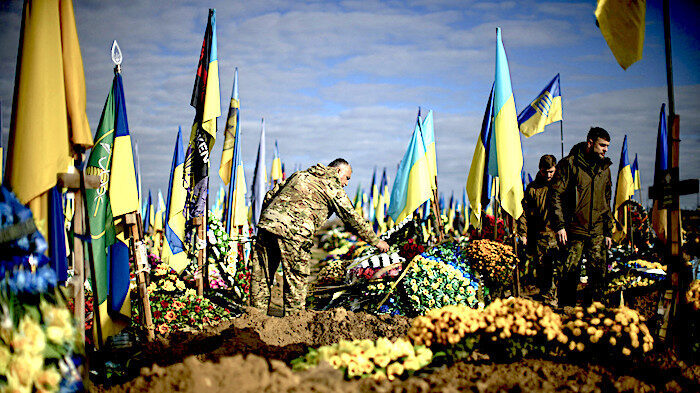
© Francisco Seco/APFlowers at the graves in Kharkiv, Ukraine
Ukraine's general mobilization process has become shrouded in scandal as the authorities become increasingly desperate in their hunt for new recruits...

Last year, military conscription became an issue in both Russia and Ukraine. However, the extent has been completely different in the two countries. While in Russia the mobilization was partial, lasting barely more than a month and affecting around 300,000 people, according to official figures - a significant part of whom already had military experience - a completely different picture has developed in Ukraine.

Kiev instituted a general conscription drive which has been in force for more than a year. The exact number of those taken to the armed forces during this time is not known for certain and the process has been accompanied by numerous scandals.

Cases where law enforcement officers have applied force when handing out conscription notices and illegally delivered men to enlistment offices have given rise to public discontent. However, the Ukrainian authorities clearly have no intention of pausing enlistment because the situation remains critical at some sections of the front.

The Armed Forces of Ukraine (AFU) are losing their grip on fortified areas around Artyomovsk (Bakhmut), and taking huge numbers of casualties, according to the Guardian and other media outlets. Meanwhile, Kiev continues to issue mobilization summonses and is sending people without proper training.

Stop

China foresees end of Ukraine war this summer: Report

Xi and group
© XinhuaChinese President Xi Jinping
A fascinating new report in Nikkei Asia has unearthed and detailed the findings of an elite Chinese state-linked think tank which reports directly to the People's Liberation Army. Nikkei in the context of examining the timing and motives behind China's 12-point peace plan said that Chinese military experts are predicting the Russia-Ukraine war will end this summer.

To review, the 12-point plan urged implementation of a ceasefire and the resumption of negotiations toward a permanent peaceful settlement, and was unveiled on the one-year Feb.24 anniversary of the war. But the Nikkei report asserts there's specific rationale driving Beijing:
The reason for China's sudden change can be traced back to a report issued two months earlier by a top think tank in Beijing. The Academy of Military Sciences [AMS] reports directly to the People's Liberation Army. Although it cannot be found on a map, the institution is located in Beijing's Haidian district, which itself is home to the ruins of Yuanmingyuan, a palace destroyed by Western armies in the 19th century.
The report goes on the detail how central and important the AMS is as a military think tank (a kind of 'Chinese Rand Corporation' in terms of influence), issuing recommendations directly to the Communist Party's Central Military Commission, which is the PLA's top decision-making body.

Comment: China envisions a peace settlement. Washington sees what it wants to see and aims to that end.


Stop

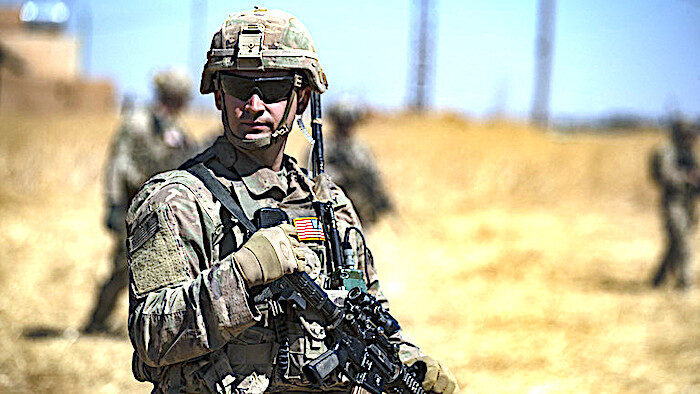
US progressives and MAGA Republicans joined forces to end the illegal occupation of Syria - but came up short

soldier
© Delil Souleiman/AFPTal Abyad • Syria
On March 8, Representative Matt Gaetz introduced a resolution that would have forced congressional oversight to be applied to the continuation of America's military occupation of Syria.

In total, 47 Republicans joined with 56 Democrats - primary members of the Congressional Progressive Caucus (CPC) - in favor of the legislation. It also had support from Robert Ford, who was the Obama administration's ambassador to Syria and formerly a major hawk in favor of ousting Syrian President Bashar al-Assad.

"Syria is my leadoff hitter. We're going to take a trip around the globe. We may go to Yemen. We may have stops in Niger. We may have stops in Sudan. Maybe ultimately, we'll end in Ukraine," Gaetz told The Intercept about the bill, implying it would not be the last of its kind in ending American interventionism around the globe.

Despite this unexpected bipartisan support, it was still shot down by the overwhelming majority of status quo hawks in Congress, representing a major lost opportunity for Washington to fall in line with international law - and its own domestic law. As Ford noted in his letter to Congress:
"There is no definition of what the 'enduring' defeat of ISIS would look like, and Washington owes our soldiers serving there in harm's way a serious debate about whether their mission is, in fact, achievable."