
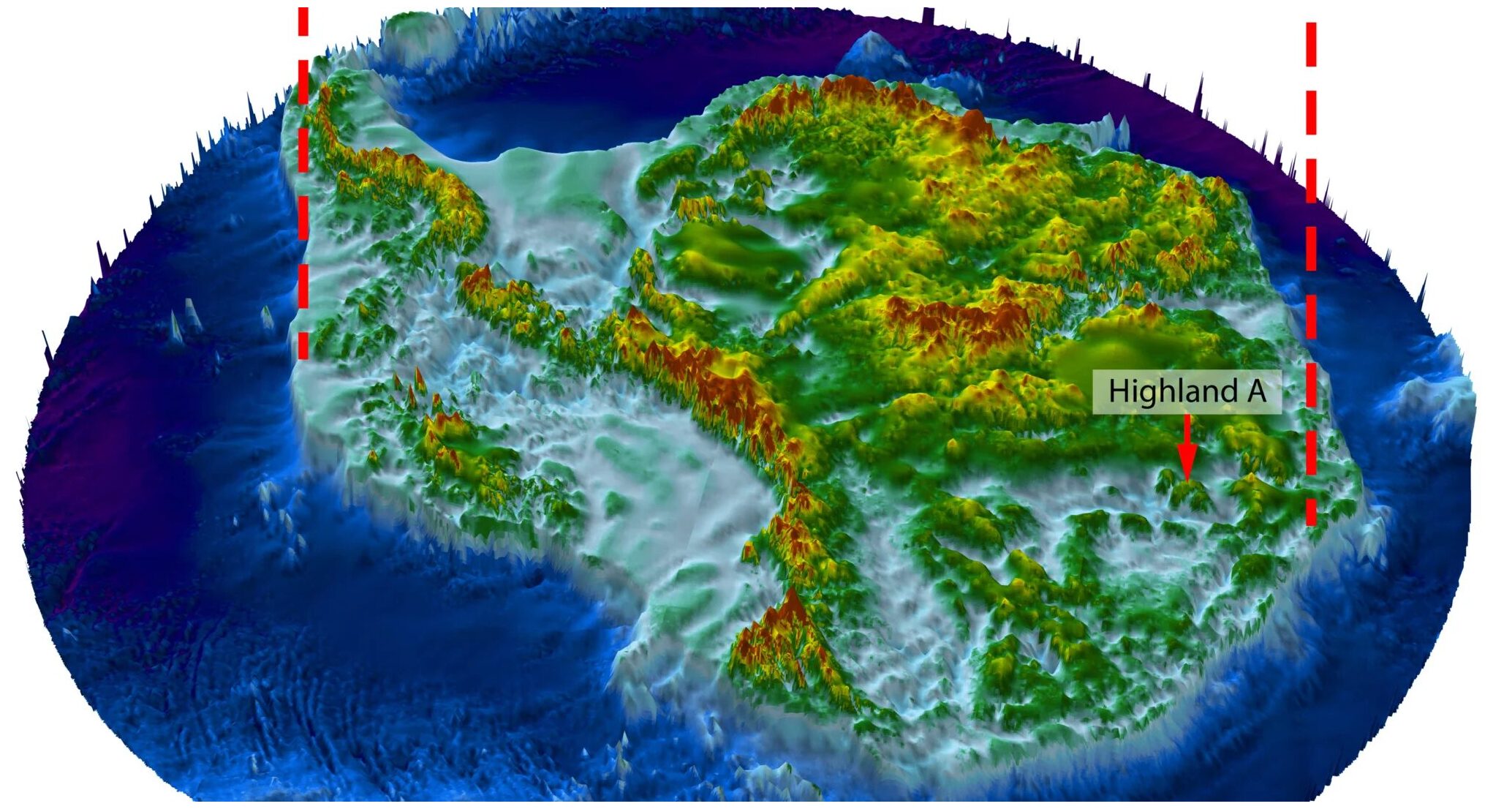
© Stewart Jamieson
This newly discovered landscape consists of ancient valleys and ridges, not dissimilar in size and scale to the glacially-modified landscape of North Wales, UK.
With ice-penetrating radar and satellite data, Durham University glaciologist Stewart Jamieson and colleagues mapped the topographic features of the landscape hidden beneath the East Antarctic Ice Sheet, to get a better understanding of how the ice sheet has fluctuated over time.
The researchers say preserved landscapes like this provide a rare opportunity to examine past ice conditions, but warming temperatures mean we are on track to return to the climate conditions that existed before the landscape was frozen, and it is possible that the East Antarctic Ice Sheet will retreat enough to change the landscape for the first time in at least 14 million years.
"The land underneath the East Antarctic Ice Sheet is less well known than the surface of Mars," explained study author Professor Stewart Jamieson in a statement. "And that's a problem because that landscape controls the way that ice in Antarctica flows, and it controls the way it might respond to past, present and future climate change."



















Comment: Notably that the current solar cycle is considered to be weaker than expected, and seems to be peaking much earlier than expected: Solar maximum could hit us harder and sooner than we thought
See also:
- Did Earth 'Steal' Martian Water?
- Seismic signals from Space: Intriguing correlation between earthquakes and cosmic radiation discovered
And check out SOTT radio's: