Science & TechnologyS


Cassiopaea

First supernova detected, confirmed, classified and shared by AI

New artificial intelligence tool removes humans from entire search, discovery process.
A deep-space image of the galaxy where the supernova occurred.
© Legacy Surveys / D. Lang (Perimeter Institute) for Legacy Surveys layers and unWISE / NASA/JPL-Caltech / D. Lang (Perimeter Institute)A deep-space image of the galaxy where the supernova occurred.
A fully automated process, including a brand-new artificial intelligence (AI) tool, has successfully detected, identified and classified its first supernova.

Developed by an international collaboration led by Northwestern University, the new system automates the entire search for new supernovae across the night sky — effectively removing humans from the process. Not only does this rapidly accelerate the process of analyzing and classifying new supernova candidates, it also bypasses human error.

The team alerted the astronomical community to the launch and success of the new tool, called the Bright Transient Survey Bot (BTSbot), this week. In the past six years, humans have spent an estimated total of 2,200 hours visually inspecting and classifying supernova candidates. With the new tool now officially online, researchers can redirect this precious time toward other responsibilities in order to accelerate the pace of discovery.

"For the first time ever, a series of robots and AI algorithms has observed, then identified, then communicated with another telescope to finally confirm the discovery of a supernova," said Northwestern's Adam Miller, who led the work. "This represents an important step forward as further refinement of models will allow the robots to isolate specific subtypes of stellar explosions. Ultimately, removing humans from the loop provides more time for the research team to analyze their observations and develop new hypotheses to explain the origin of the cosmic explosions that we observe."

"We achieved the world's first fully automatic detection, identification and classification of a supernova," added Northwestern's Nabeel Rehemtulla, who co-led the technology development with Miller. "This significantly streamlines large studies of supernovae, helping us better understand the life cycles of stars and the origin of elements supernovae create, like carbon, iron and gold."

Miller is an assistant professor of physics and astronomy at Northwestern's Weinberg College of Arts and Sciences and a member of the Center for Interdisciplinary Exploration and Research in Astrophysics (CIERA). Rehemtulla is an astronomy graduate student in Miller's research group.

Info

Researchers identify largest ever solar storm in tree rings  

Solar Storm
© NASAArtist illustration of events on the sun changing the conditions in Near-Earth space. Suggested imagery from NASA, as recommended by our researchers.
An international team of scientists have discovered a huge spike in radiocarbon levels 14,300 years ago by analysing ancient tree-rings found in the French Alps.

The radiocarbon spike was caused by a massive solar storm, the biggest ever identified. A similar solar storm today would be catastrophic for modern technological society - potentially wiping out telecommunications and satellite systems, causing massive electricity grid blackouts, and costing us billions of pounds.

The academics are warning of the importance of understanding such storms to protect our global communications and energy infrastructure for the future.

Collaboration

The collaborative research, which was carried out by an international team of scientists, is published today (Oct 9) in The Royal Society's Philosophical Transactions A: Mathematical, Physical and Engineering Sciences and reveals new insights into the Sun's extreme behaviour and the risks it poses to Earth.

A team of researchers from the Collège de France, CEREGE, IMBE, Aix-Marseille University and the University of Leeds measured radiocarbon levels in ancient trees preserved within the eroded banks of the Drouzet River, near Gap, in the Southern French Alps.

The tree trunks, which are subfossils - remains whose fossilisation process is not complete - were sliced into tiny single tree-rings. Analysis of these individual rings identified an unprecedented spike in radiocarbon levels occurring precisely 14,300 years ago. By comparing this radiocarbon spike with measurements of beryllium, a chemical element found in Greenland ice cores, the team proposes that the spike was caused by a massive solar storm that would have ejected huge volumes of energetic particles into Earth's atmosphere.

Edouard Bard, Professor of Climate and Ocean Evolution at the Collège de France and CEREGE, and lead author of the study, said: "Radiocarbon is constantly being produced in the upper atmosphere through a chain of reactions initiated by cosmic rays. Recently, scientists have found that extreme solar events including solar flares and coronal mass ejections can also create short-term bursts of energetic particles which are preserved as huge spikes in radiocarbon production occurring over the course of just a single year."

Bug

Dividing the labor in ants, wasps, bees — and us

ant colony
Social insects and humans share the trait of divvying up tasks, as do some fish. Researchers find that it emerges naturally, and it often doesn't take a boss to keep things in order.

For humans, division of labor has become a necessity: No person in the world has all the knowledge and skills to perform all the tasks that are required to keep our highly technological societies afloat. This has made us entirely dependent on each other, leaving us individually vulnerable. We really can't make it on our own.

From archaeological findings, we can reconstruct more or less how this situation evolved. Initially, everyone was doing more or less the same thing. But because food was shared among people living in hunter-gatherer groups, some were able to specialize in tasks other than finding food, such as fashioning tools, treating illnesses or cultivating plants. These skills enriched the group but made the specialists even more dependent on others. This further reinforced cooperation among group members and pushed our species to even higher levels of specialization — and prosperity.

Sun

The Sun's magnetic poles are disappearing

The sun is about to lose something important: Its magnetic poles.

Recent measurements by NASA's Solar Dynamic Observatory reveal a rapid weakening of magnetic fields in the polar regions of the sun. North and south magnetic poles are on the verge of disappearing. This will lead to a complete reversal of the sun's global magnetic field perhaps before the end of the year.
Sun's dipolar magnetic field.
© NSF/AURA/NSO.An artist's concept of the sun's dipolar magnetic field.
If this were happening on Earth, there were be widespread alarm. Past reversals of our planet's magnetic field have been linked to calamities ranging from sudden climate change to the extinction of Neanderthals. On the sun, it's not so bad.

"In fact, it's routine," says Todd Hoeksema, a solar physicist at Stanford University. "This happens every 11 years (more or less) when we're on the verge of Solar Maximum."

Vanishing poles and magnetic reversals have been observed around the peak of every single solar cycle since astronomers learned to measure magnetic fields on the sun. Hoeksema is the director of Stanford's Wilcox Solar Observatory (WSO), that is observing its fifth reversal since 1980.

Nebula

Highest-energy pulsar ever seen could indicate new physics

An illustration of the Vela pulsar
© Science Communication Lab for DESYAn illustration of the Vela pulsar with particles accelerated and launched out at near light speed by its magnetic field.
The surprising detection of light 200 times more powerful than previous observations from the nearby pulsar Vela indicates hidden physics around dead stars.

Astronomers have spotted the highest-energy outburst of light from a pulsar ever seen. The discovery could indicate new physics around these incredibly dense, rapidly spinning dead stars.

The team, including scientists from France's National Center of Scientific Research (CNRS), made observations of the Vela pulsar — which, at 1,000 light-years from Earth, is one of the closest pulsars ever detected — with the four telescopes that make up the gamma-ray-hunting High Energy Stereoscopic System (HESS).

This revealed the gamma-ray output of the Vela pulsar to be around 200 times more powerful than that of average pulsars. The results are described in a paper published Oct. 5 in the journal Nature Astronomy.

Comment: See also:


Question

Puzzling objects found far beyond Neptune hint at second Kuiper belt

Icy bodies at Solar System's edge found during target hunt for NASA spacecraft.
Kuiper Belt
© Getty ImagesAn artist's interpretation of what the sun might look like from the Kuiper Belt.
There just doesn't seem to be enough of the Solar System. Beyond Neptune's orbit lie thousands of small icy objects in the Kuiper belt, with Pluto its most famous resident. But after 50 astronomical units (AU) — 50 times the distance between Earth and the Sun — the belt ends suddenly and the number of objects drops to zero. Meanwhile, in other solar systems, similar belts stretch outward across hundreds of AU. It's disquieting, says Wesley Fraser, an astronomer at the National Research Council Canada. "One odd thing about the known Solar System is just how bloody small we are."

A new discovery is challenging that picture. While using ground-based telescopes to hunt for fresh targets for NASA's New Horizons spacecraft, now past Pluto on a course out of the Solar System, Fraser and his colleagues have made a tantalizing, though preliminary, discovery: about a dozen objects that lie beyond 60 AU — nearly as far from Pluto as Pluto is from the Sun. The finding, if real, could suggest that the Kuiper belt either extends much farther than once thought or — given the seeming 10-AU gap between these bodies and the known Kuiper belt — that a "second" belt exists.

The discovery, being prepared for publication and not yet peer reviewed, is supported by measurements from New Horizons itself, which at 57 AU continues to streak beyond the edge of the known Kuiper belt. Many of its instruments are in hibernation, but a dust counter has run continuously during the mission. Dust is a telltale sign of colliding planetary bodies, and so the New Horizons team expected the amount of dust to fall off steeply after the probe left the Kuiper belt, where it had rendezvoused with an object called Arrokoth. Instead, "The number of impacts is not declining," says Alan Stern, the mission's principal investigator and a planetary scientist at the Southwest Research Institute. "And the simplest explanation for that is that there is more stuff out there that we haven't detected."

Satellite

Satellite TV company Dish Network receives world first fine for space junk

space debris around earth
© ESA / AFPComputer-generated image of the more than 12 000 objects that are monitored in orbit, 11 500 pieces of which are in low Earth orbit, which is at an altitude of between 800 and 1500 kilometres.
The company failed to fulfil its pledge to retire a satellite at 300 km above its operational arc but instead opted for 120 km, posing "orbital debris concerns".

US authorities have issued the first-ever fine for space debris to a TV company that failed to properly dispose of a satellite, officials said on Monday (2 October).

Dish Network was fined €142,440 for "failing to properly deorbit" a satellite named EchoStar-7, which has been in space since 2002, according to a statement from the Federal Communications Commission (FCC).

"This marks a first in space debris enforcement by the Commission, which has stepped up its satellite policy efforts," the FCC added.

Dish was fined after it moved the satellite to a lower altitude than had been agreed at the end of its operational life which the FCC said "could pose orbital debris concerns".

Info

Shock fractures in quartz and the Younger Dryas impact at Abu Hureyra (near Gobekli Tepe)

Impact Event
© Prehistory Decoded
Researchers associated with the comet research group have just published four new papers on micro-fractures in quartz, and how they can be used to diagnose cosmic impacts. The first paper is a detailed study linking shocked quartz to airbursts. The next three below apply this new understanding to the Younger Dryas impact specifically at Abu Hureyra, which is about 100 miles south of Gobekli Tepe.

The journal is also new - "Airbursts and cratering impacts". It was set up so that papers rejected by the "impact mafia" can still be fairly reviewed and published. The impact mafia is a determined group of researchers who are expert in the more well-established science of large ground impacts where the existence of a large crater makes the diagnosis of an impact obvious. By requiring the same kind of evidence for the diagnosis of all cosmic impacts, they are effectively preventing the diagnosis of lower-energy impact events, for example small ground impacts or large airbursts that significantly affect the ground, i.e. precisely the kind of impacts central to the Younger Dryas impact hypothesis. Inevitably, this leads to under-reporting of these smaller impact events. Parallels with the "Clovis first mafia" are apt.

Seismograph

Tree ring tales: A massive, two-fault earthquake may have struck the Pacific Northwest 1,100 years ago

seattle skyline mt ranier
© Donald Miralle / Getty ImagesResearchers studied tree rings to determine that a single earthquake along two fault zones may have occured near Seattle around 1,100 years ago.
Using tree ring dating, scientists have revealed a massive earthquake — or two in succession — struck the Puget Sound region in the Pacific Northwest almost exactly 1,100 years ago.

The destructive event demonstrates that the area — which contains Seattle, Tacoma and Olympia, Washington — could be susceptible to more extreme earthquakes than previous research had indicated.

Scientists already knew that multiple quakes shook the region between 780 and 1070 C.E., but they could not precisely date each one — for some, they could pinpoint only a wide window of more than 100 years. The new study, published last week in the journal Science Advances, gets much more specific: Researchers say two fault zones near Seattle ruptured within a six-month period between 923 and 924 C.E. Whether these faults ruptured at the same time, or spread a couple of months apart, the resulting quakes would each have been more than magnitude 7.3, per the paper.

Rose

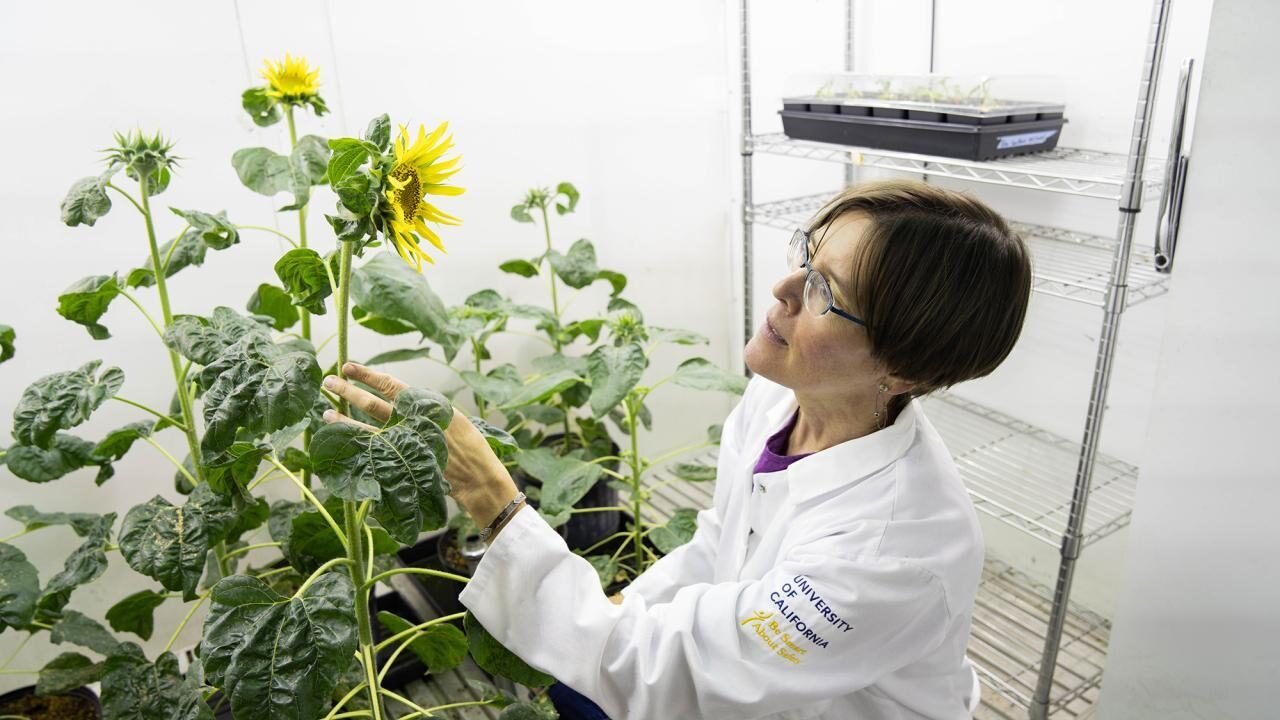
Are plants cognitive, intelligent beings?

Venus flytrap
As panpsychism (the idea that all life forms are conscious to some extent) takes hold in science, it ruffles some fields more than others. Think of what it is doing to botany...

Well, we don't have to imagine. The University of Heidelberg warned this week that the belief that plants do things we commonly associate with animals is straying beyond the science:
Plants are often attributed with abilities similar to those known in the animal or human world. Trees are said to have feelings and can purportedly care for their offspring, like mothers. In an article in the review journal Trends in Plant Science, 32 international plant and forest researchers followed up on such assertions.

Led by Prof. David G. Robinson, professor emeritus for cell biology at the Center for Organismal Studies (COS) of Heidelberg University, the researchers analyzed the claims in two popular publications on forests and reached the conclusion that conjecture is equated with fact. They warn against "anthropomorphizing" plants.

Heidelbert University, "'Do not anthropromorphize plants,' say plant and forest researchers,"
— September 30, 2023, PhysOrg.
(The paper "Mother trees, altruistic fungi, and the perils of plant personification," requires a subscription)