Science & TechnologyS


Mars

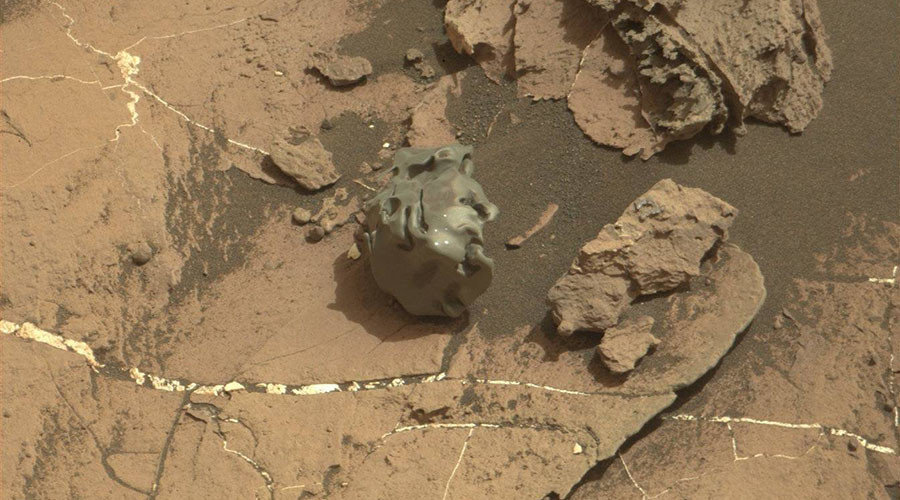
Small smooth metallic meteorite spotted by Mars rover

Smooth object on Mars
© JPL-Caltech / MSSS / NASA
NASA'S Mars Curiosity rover has found a minuscule metallic meteorite, dubbed the 'Egg Rock', on the surface of the red planet.

The snap of the peculiar space rock was captured by Curiosity on October 31 and shared by scientists at Arizona State University, who are working with NASA.

It's believed the meteorite consists of nickel iron, according to the researchers who analyzed the images taken via the ChemCam Remote Micro-Imager device.

Snowflake

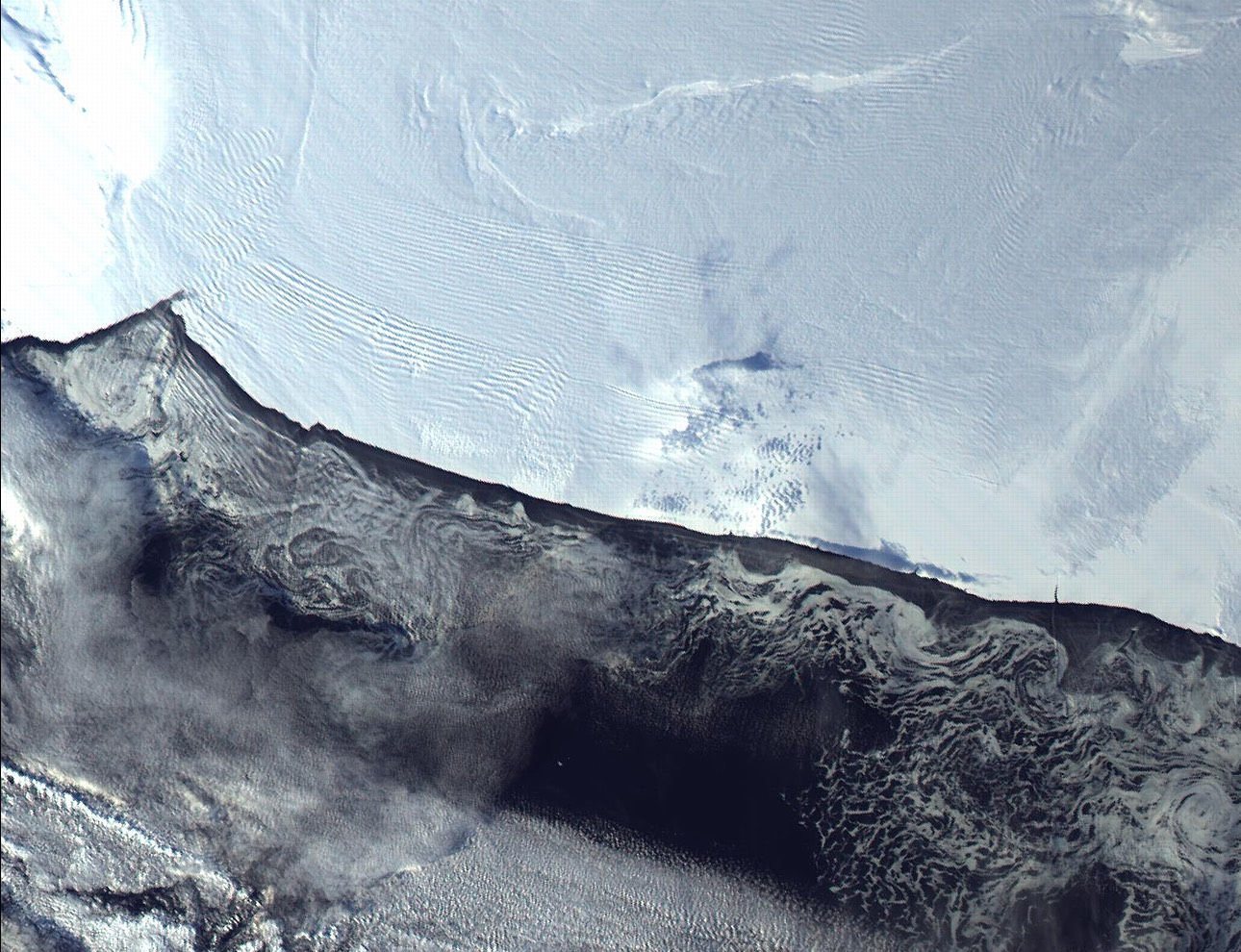
Weird 'gravity' waves above Antarctica caused by ice vibrations

Ross Ice Shelf
© Jacques Descloitres, NASA - MODIS Land Science TeamThe Ross Ice Shelf is the world's largest ice shelf and an enormous raft-like extension of the West Antarctic Ice Sheet.
Peculiar atmospheric waves that have puzzled scientists since they were spotted in Antarctica a few years ago, above the massive Ross Ice Shelf, may have a source: Tiny vibrations in the ice are traveling miles into the sky to create huge atmospheric ripples.

Stretching between Antarctica and the Ross Sea, the Ross Ice Shelf is the world's largest body of ice. It is an estimated 182,000 square miles (472,000 square kilometers), or approximately the size of California, New Hampshire and Vermont combined.

Since ice thickness is one factor that determines the size of the resulting atmospheric ripples, scientists could someday use measurements in the air disruptions to monitor the Ross Ice Shelf, said lead study author Oleg Godin, a professor of physics at the Naval Postgraduate School in Monterey, California.

Comment: For more examples of gravity waves in nature, see:


Gem

Encoded Bling: Diamonds Could Store Huge Amounts of Data

diamond data storage images
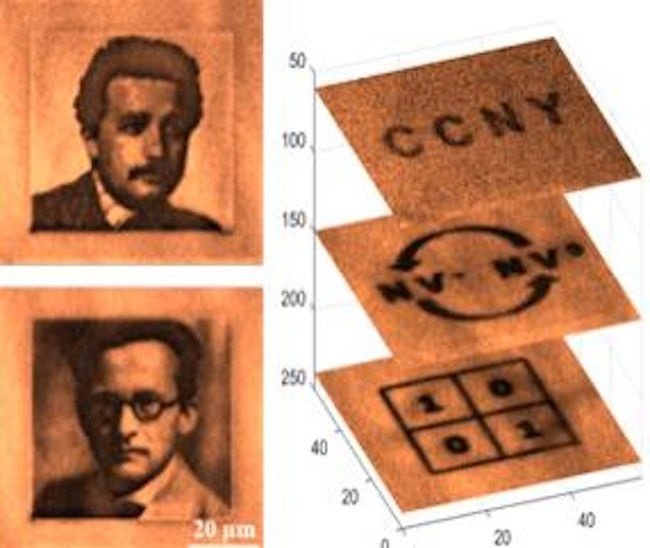
© Meriles Group, City College of the City University of New YorkThis figure shows a demonstration of rewritable 3D optical data storage in diamond.
Diamonds may decorate some of the most coveted pieces of bling, but these precious stones could have more practical (though admittedly less sparkly) uses one day: The jewels could be used as a way to store vast amounts of data using atom-size flaws ordered in 3D arrays, according to a new study.

For decades, artificially grown diamonds, which are as hard as their gem-quality counterparts, have been used in industrial drills and saws and in durable coatings for biomedical implants.

Recently, scientists have explored creating defects in diamonds for potential use in quantum computers. Previous research suggests such machines could carry out more calculations in an instant than there are atoms in the universe.

Comment: See also:


Robot

Chinese security robot comes equipped with a taser and can access the cloud

chinese robot
While debate surrounds the threat of autonomous "killer robots," the mechanized replacement of humans continues across the workforce.

The industrial robotics industry is logging record sales worldwide, and there appears to be no sign of a slowdown. As you can see in the graphic below, 2015 sales surged 12% over a previous record year to reach almost 1/4 million units.
robot statistics graph

Magnify

Vindicated at last? New study suggests Paul Kammerer's scientific 'fraud' was authentic discovery of epigenetic inheritance

Paul Kammerer, epigenetic inheritance
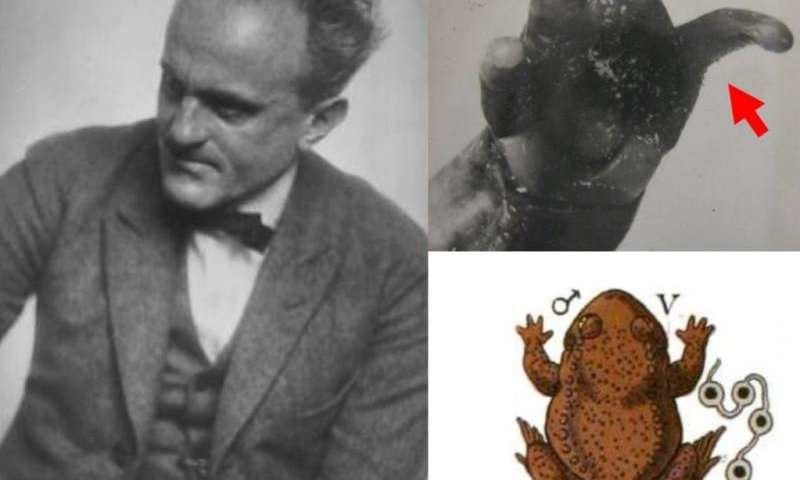
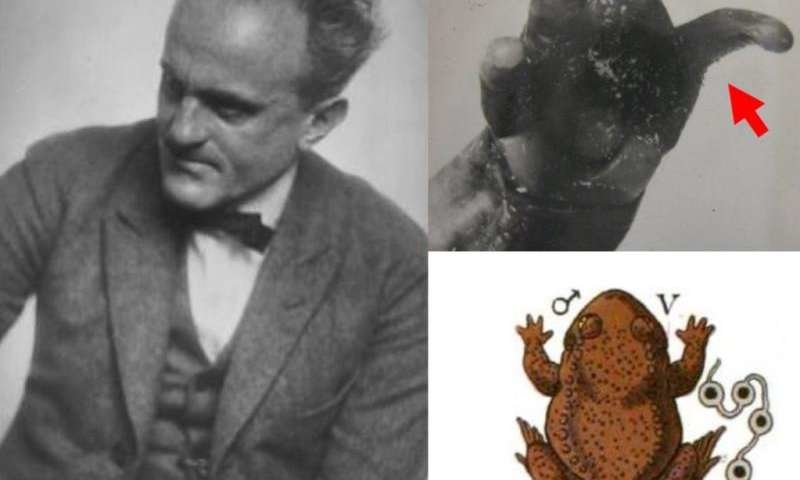
© Universidad de ChileAt left, the controversial scientist Paul Kammerer. Upper right: An image of the fingers of an experimental male midwife toad, showing a rugose nuptial pad (red arrow). Lower right: A schematic illustration from a paper by Kammerer of an experimental water-breeding male midwife toad.
Paul Kammerer committed suicide in 1926 after being accused of fraud in his famous experiments of "inheritance of acquired traits" with the midwife toad. A new study shows how recent advances in molecular epigenetics and re-examination of his descriptions suggest the experiments were actually authentic.

The alleged scientific fraud by Paul Kammerer is perhaps one of the most controversial mysteries in the history of biology. In the early 20th century, he was a famous evolutionary scientist, hailed as a "new Darwin" in the pages of the New York Times. His experiments provided impressive evidence that environmental life experiences could have a direct, inheritable effect on progeny, as maintained by his intellectual predecessor Lamarck, and by Darwin himself. In one of his most famous experiments, Kammerer had shown how a normally terrestrial species, the midwife toad, could be made to live and mate in water when kept in an artificially heated environment. These modified "water" toads laid eggs that grew into toads with an innate preference to live and mate in water, even when raised in normal, unheated environments. In successive generations of water toads, Kammerer reported that male toads developed nuptial pads on their fingers. These are rough, dark-colored thickenings of skin that are usually absent in midwife toads, but present in other water-loving species, which use them to grasp females during copulation. Additionally, Kammerer crossed one of his modified "water" males with a normal, untreated land female, obtaining 100% water toads in the first generation, and about three-quarters water toads in the second generation. Thus, modified traits were being inherited according to Mendel's rules of genetics, the same that most of us were taught in high school.

Comment:


Jet1

China unveils fifth-generation J-20 stealth fighter in fly over at air show

China J-20 stealth fighter
© Reuters
China has showcased its new J-20 stealth fighter in southern Guangdong Province's city of Zhuhai in a spectacular fly over at Air Show China, the country's biggest meeting of aircraft makers and buyers.

Two J-20s, China's fifth-generation jets, swept over hundreds of spectators at the show's opening ceremony in a 60-second flyby on Tuesday. The J-20 is a long-range radar-evading fighter jet equipped with air-to-air missiles. China has reportedly already produced six prototypes of the new stealth fighter, which is expected to add greatly to China's offensive and defensive capabilities.

The J-20, manufactured by Chengdu Aircraft Industries Corporation, is an original Chinese project. China carried out the first test flight of the J-20 back in 2011, but it made its public debut at today's airshow. It is expected to be deployed with the Chinese Air Force within the next two to three years.

Bizarro Earth

What could go wrong? Brazilian scientists planning to unleash GM mosquitoes into the wild

GM mosquito
© Reuters
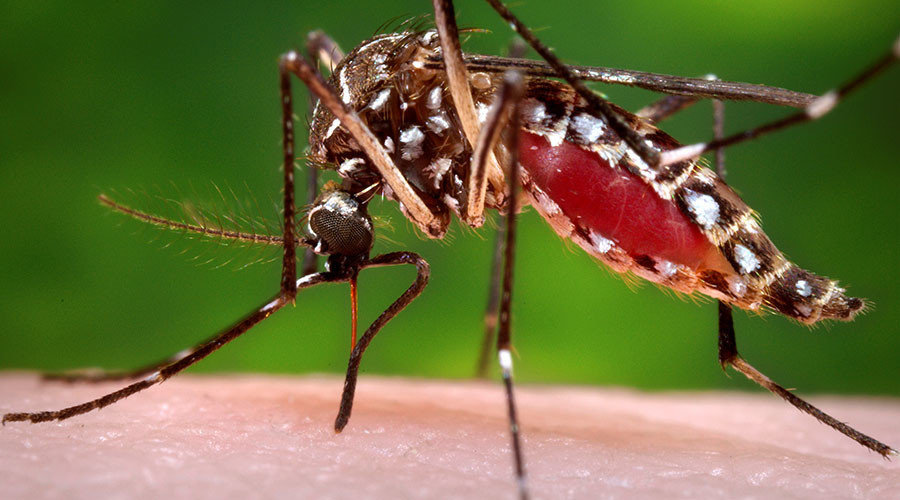
Scientists are planning to wipe out a host of dangerous diseases by unleashing millions of genetically modified mosquitoes into the wild so they will have sex with their deadly cousins. And then kill them.

The mosquito species Aedes aegypti carries a number of viruses and diseases, including dengue fever, chikungunya, Zika and yellow fever.

Now scientists in Brazil are preparing to release mutant bugs that will mate with female mosquitos and spawn babies with a genetic flaw that causes them to die off quickly.

British biotech firm Oxitec is behind the genetically modified (GM) insects, that will be produced in a factory before being released into the wild.

Comment:
Glaring Concerns Surround GE Mosquitoes:

The Oxitec mosquitoes are unlike any that exist in nature. They've been genetically altered to carry a "genetic kill switch," such that when they mate with wild female mosquitoes, their offspring inherits the lethal gene and cannot survive.

To achieve this feat, Oxitec has inserted protein fragments from the herpes virus, E. coli bacteria, coral, and cabbage into the insects, dubbed OX513A. The GE mosquitoes have proven lethal to native mosquito populations.

In the Cayman Islands, for instance, 96 percent of native mosquitoes were suppressed after more than three million GE mosquitoes were released in the area, with similar results reported in Brazil.

But as we've seen in the past with genetically modified organisms (GMOs), when you tinker with nature, it often comes back to bite you. There are several glaring problems with assuming these GM bugs are safe for the human population. For starters:
  • The potential exists for these genes, which hop from one place to another, to infect human blood by finding entry through skin lesions or inhaled dust.
  • Such transmission could potentially wreak havoc with the human genome by creating "insertion mutations" and other unpredictable types of DNA damage.
  • According to Alfred Handler, a geneticist at the Agriculture Department in Hawaii, mosquitoes can develop resistance to the lethal gene and might then be released inadvertently.
  • Todd Shelly, an entomologist for the Agriculture Department in Hawaii, said 3.5 percent of the insects in a laboratory test survived to adulthood, despite presumably carrying the lethal gene.
  • Tetracycline and other antibiotics are now showing up in the environment, in soil and surface water samples. These GM mosquitoes were designed to die in the absence of tetracycline (which is introduced in the lab in order to keep them alive long enough to breed).


  • Comet 2

    NASA's 'Intruder Alert' system spots asteroid on near-collision course with Earth

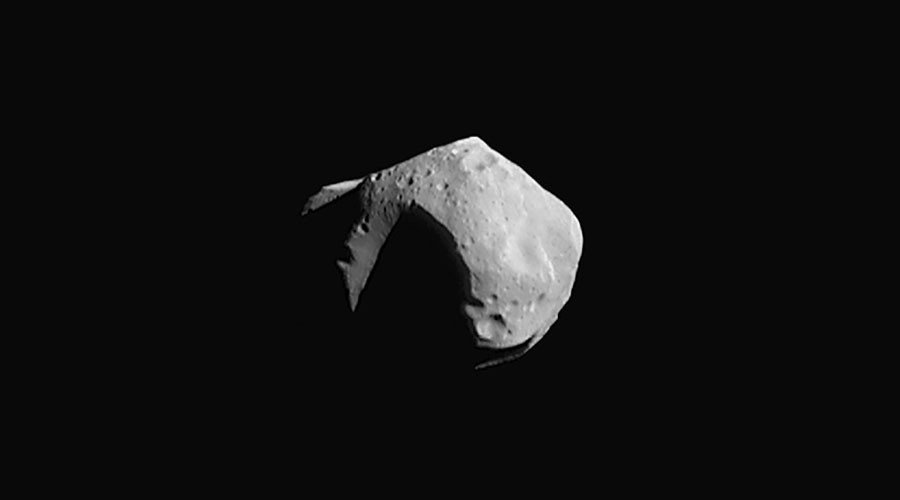
    253 Mathilde, a C-type asteroid
    © NASA / Wikipedia253 Mathilde, a C-type asteroid
    A large chunk of space rock is coming dangerously close to the vicinity of the Earth, but scientists are sure it won't collide with our planet, thanks to a new NASA tool designed to detect potentially hazardous space fly-bys.

    The incoming rock was detected by the NASA-funded Panoramic Survey Telescope & Rapid Response System (Pan-STARRS) on Maui, Hawaii, on October 26. A new early-warning system, named Scout, promptly analyzed the data on the rock and concluded that the object went in the direction of Earth, but would miss it by about 500,000km (310,000 miles).

    "The NASA surveys are finding something like at least five asteroids every night," NASA Jet Propulsion Lab astronomer Paul Chodas said.

    Comment: Astronomers find 5,000 new Near-Earth Objects in last 6 years


    Beaker

    Startup creates first-ever epigenetics test to assess male fertility but is the science sound?

    father and baby
    How many sperm do you have and how well do they swim? That's been the gold standard forever. Unfortunately, that's a very unsophisticated view of a very complex problem.
    That's how Dr. Richard Scott, a fertility specialist in New Jersey, describes the current state of fertility tests for men.

    Historically, the blame for a couple's inability to conceive was placed primarily on the mother. Today, we know that in as many as 40 percent of the time the man is the sole cause or a contributing cause of a couple's inability to conceive naturally. Yet this hasn't translated into any improvements in technologies that help men understand their infertility issues. For example, fertility in the United States is a massive industry pulling in $4.5 billion annually, but almost all of the diagnostic tests and treatments are intended for women. As Scott points out, all modern medicine can do for men with potential fertility issues is evaluate his sperm for number and motility. However, sometimes even when both factors are normal, a man's sperm can still struggle to get the job done.

    Comment: The following articles may give clues as to the higher rates of male infertility:


    Comet

    Astronomers find 5,000 new Near-Earth Objects in last 6 years

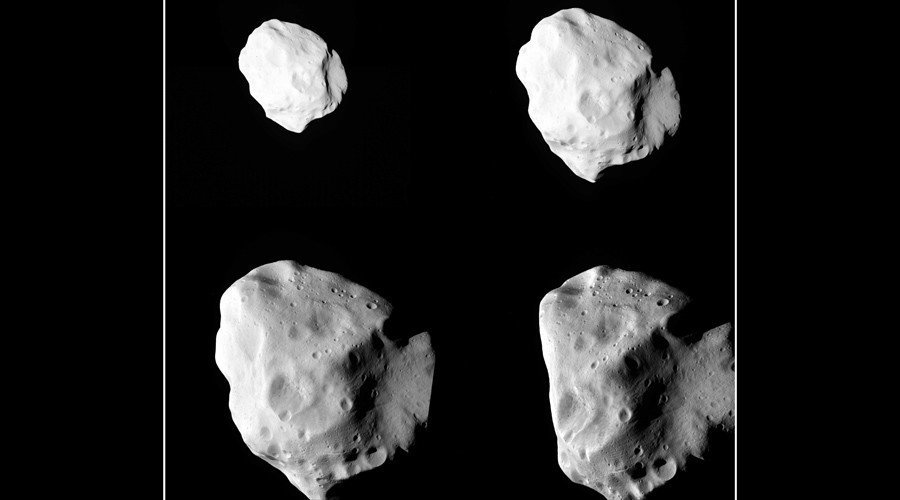
    ESA discovers more NEOs
    © ESA 2010 MPS for OSIRIS Team MPS/UPD/LAM/IAA/RSSD/INTA/UPM/DASP/IDA
    Astronomers have identified an increasing number of asteroids which "pose a threat" to Earth, according to the European Space Agency.

    Near-Earth Objects, or NEOs, are asteroids or comets whose orbits are close to ours, meaning there is a risk they could hit Earth.

    Ranging in size from meters to tens of kilometres, astronomers are discovering more and more asteroids that could threaten our planet. Since 2010, an additional 5,000 have been discovered, bringing the total known number of NEOs to 15,000.


    Comment: Meteor fireball activity has also increased dramatically in recent years, supported by NASA's own space data.


    "The rate of discovery has been high in the past few years, and teams worldwide have been discovering on average 30 new ones per week," Ettore Perozzi of the ESA's NEO Coordination Centre in Italy said in a statement.

    "A few decades back, 30 were found in a typical year, so international efforts are starting to pay off. We believe that 90% of objects larger than 1000 m have been discovered, but - even with the recent milestone - we've only found just 10% of the 100 m NEOs and less than 1% of the 40 m ones."

    Comment: Last month a 18,000 MPH Asteroid Almost Causes Mass Extinction and Nobody Saw it Coming, how's that for 'Space Situational Awareness'.

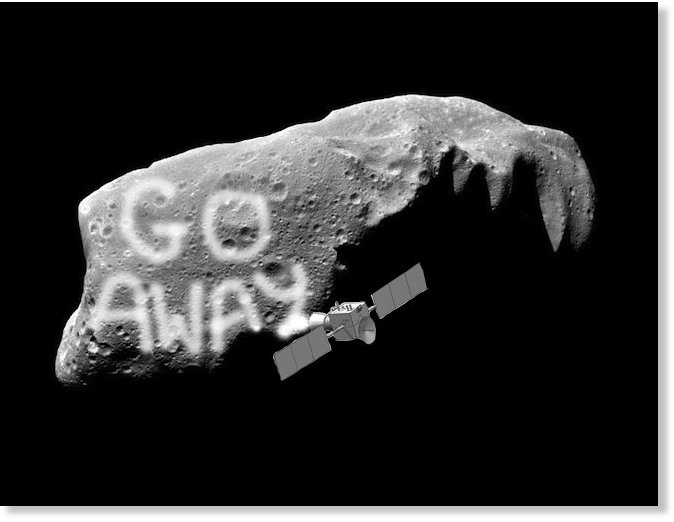
    Recently NASA created a 'Planetary Defense Coordination Office' with a view to track meteors headed toward Earth, and "redirect" potentially dangerous asteroids as part of a long-term planetary defense goal.

    However, asteroid 'redirection' or 'deflection' remains just theoretical. A more accurate way of looking at it is that NASA is funding deflection and redirection of the topic of space threats by 'getting the message out' that 'everything is just fine'.

    Nasa's killer asteroids plan
    NASA's plan to prevent global catastrophe from asteroids?