Science & TechnologyS


Info

Birds play an important role in maintaining rare plant species

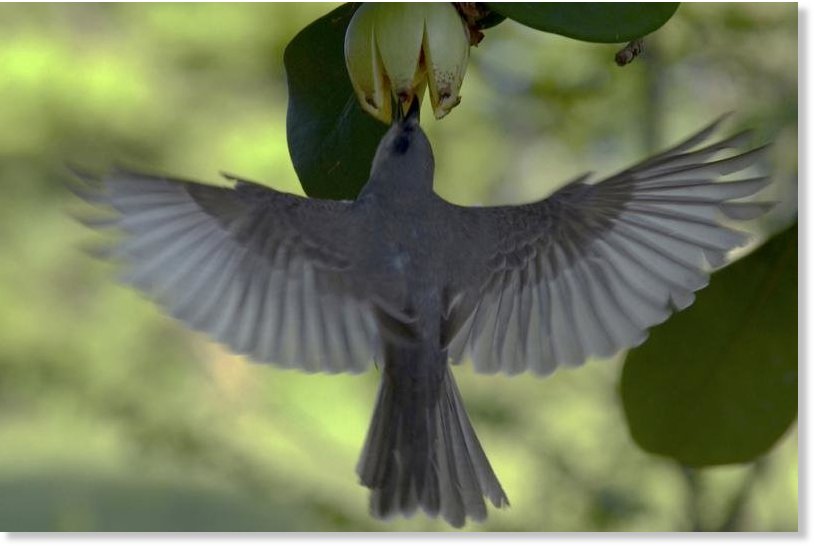
Bird eating fruit
© Tomás Carlo, Penn StateBird eating fruit
Outside of human influences, why do rare plant species persist instead of dwindling away to extinction? It's a question that has plagued ecologists for centuries. Now, for the first time, scientists at Penn State and Universidad Nacional del Comahue, Argentina, demonstrate that fruit-eating birds play an important role in maintaining rare plant species.

"We show that fruit-eating birds, just by their food-gathering behavior, help to structure the diversity of forests," said Tomás Carlo, associate professor of biology, Penn State. "This is important because higher plant diversity is associated with increased provision of ecosystem services, such as nutrient cycling and the production of food and water."

According to Carlo, when birds eat fruits, they help plants to reproduce by spreading their seeds around.

"A couple years ago, I found some rare seeds in one of my seed traps in Puerto Rico, and I said to myself, 'Why are these birds eating this?" Carlo said. "This is improbable. These birds are surrounded by the fruits of common species and yet a sizable proportion of their diet includes fruits of rare species.'"


Brain

English? Portuguese? Doesn't matter -- the brain decodes languages in the same manner

portuguese sign
When the brain reads or decodes a sentence in English or Portuguese, its neural activation patterns are the same, researchers at Carnegie Mellon University have found.

The study is the first to demonstrate that different languages have similar neural signatures for describing events and scenes. By using a machine-learning algorithm, the research team was able to understand the relationship between sentence meaning and brain activation patterns in English and then recognize sentence meaning based on activation patterns in Portuguese.

The findings can be used to improve machine translation, brain decoding across languages, and, potentially, second language instruction. Marcel Just, professor of psychology at Carnegie Mellon, explains:

Blue Planet

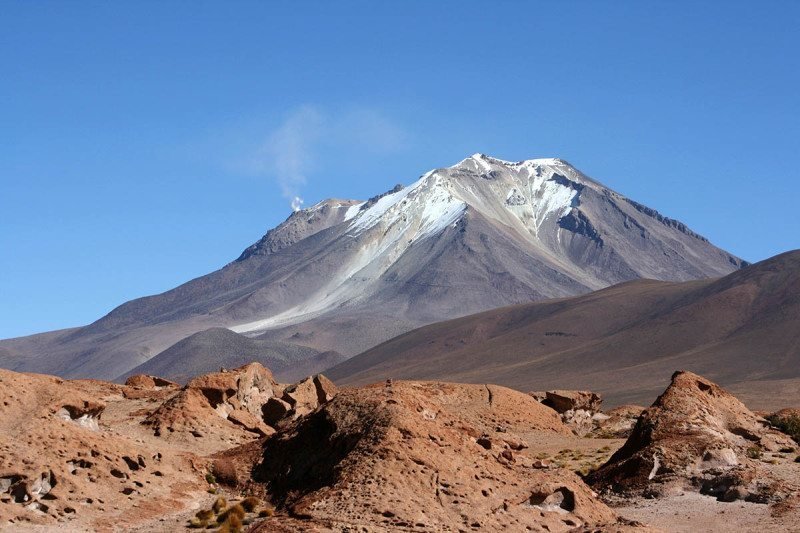
Massive lake discovered beneath inactive Bolivian volcano

Uturuncu volcano
© Michael Sayles/AlamyLandscape showing the Uturuncu volcano
Our planet is blue inside and out. A massive reservoir of water has been discovered deep beneath a volcano in the Andes, and Earth's interior may be dotted with similar wet pockets lurking below other major volcanoes.

The unexpected water, which is mixed with partially melted magma, could help to explain why and how eruptions happen.

This water may also be playing a role in the formation of the continental crust we live on, and could be further evidence that our planet has had water circulating in its interior since its formation.

Deep Earth in a lab

Jon Blundy of the University of Bristol, UK, and his colleagues made the discovery while studying a huge "anomaly" 15 kilometres beneath the currently dormant Uturuncu volcano in the Bolivian Andes. The anomaly, called the Altiplano-Puna magma body, slows down seismic waves and conducts electricity, unlike surrounding magma.

Brain

US military experimenting with brain stimulation to improve performance of drone operators

brain stimulation military
© Richard A. McKinley, USAF
Many military jobs are mentally draining, so much so that US military scientists have developed a device to improve the cognitive abilities of servicemen by sending electrical pulses to specific parts of the brain's cortex to help neurons fire.

Scientists at Wright-Patterson Air Force Base in Ohio found in their study that personnel's performance drops soon after they start work if the job is too stressful.

"Within the air force, various operations such as remotely piloted and manned aircraft operations require a human operator to monitor and respond to multiple events simultaneously over a long period of time," the study says.

Jet5

Hypersonic flight is coming: Can the US lead the way?

Artist's rendering of Lockheed Martin's SR-72 concept vehicle
© Lockheed Martin Corp.Artist's rendering of Lockheed Martin's SR-72 concept vehicle, which the company says could potentially fly six times faster than the speed of sound.
The world is at the start of a renaissance in supersonic and hypersonic flight that will transform aviation, but the effort will need steady commitment and funding if the United States wants to lead the way, congressional leaders and industry officials said at a forum late last month.

"What's exciting about aerospace today is that we are in a point here where suddenly, things are happening all across the board in areas that just haven't been happening for quite a while," said former U.S. Air Force Maj. Gen. Curtis M. Bedke.

"There was a period where engine technology had just sort of stagnated — a point where all materials technology was going along at about the same pace," Bedke added. "There just wasn't much happening. But suddenly, in all sorts of areas that apply to aerospace, things are happening." [NASA's Vision of Future Air Travel (Images)]

Black Cat

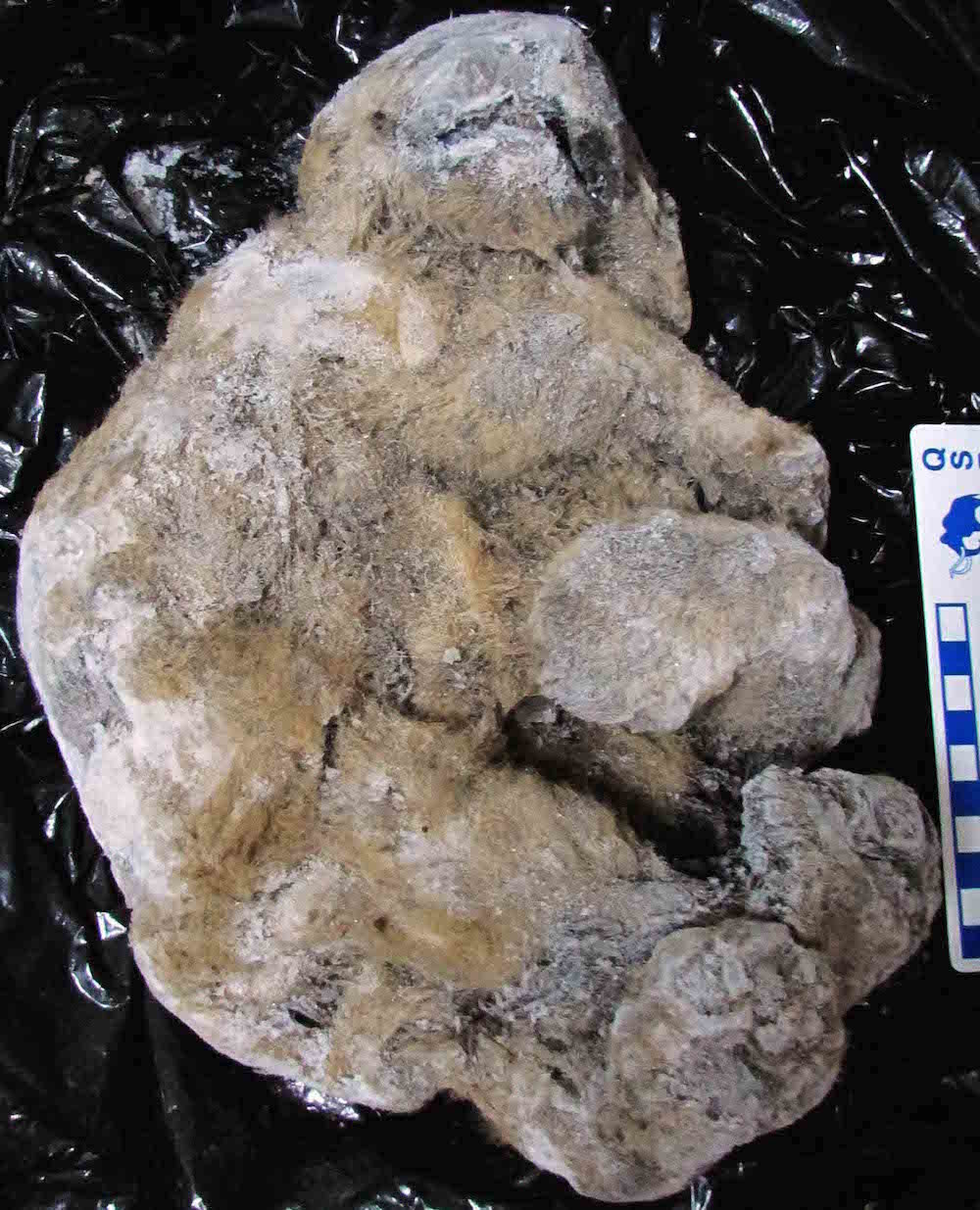
Ancient cave lion cubs found crushed and frozen in Russia

Uyan Cave Lion Remains
© Olga PotapovaThe ancient cave lion cub named Uyan is so well preserved that researchers could tell that its mother fed it milk a few hours before it died.
For more than 30,000 years, northern Russia's cold permafrost has preserved the small bodies of two furry and wide-pawed cave lion cubs, one of them in almost pristine condition, a new study found.

The two mummified cubs, nicknamed Uyan and Dina after the Uyandina River where they were found, were just about 1 week old when they died, likely crushed by "extensive collapse of the sediments in the den," the study's researchers wrote in a summary of their research. The report was presented as a poster here on Wednesday (Oct. 26) at the 2016 Society of Vertebrate Paleontology meeting.

"They were squished to death," said study co-researcher Olga Potapova, the collections curator at the Mammoth Site of Hot Springs, South Dakota.

The last known cave lion lived in what is now Alaska about 14,000 years ago, Potapova said. Little is known about the development of cave lions from cubs into adults, making the finding an extraordinary one, because it tells researchers about how these ancient cubs grew in comparison with their modern-day relatives, the lion (Panthera leo).

Comment: Related articles:


Cassiopaea

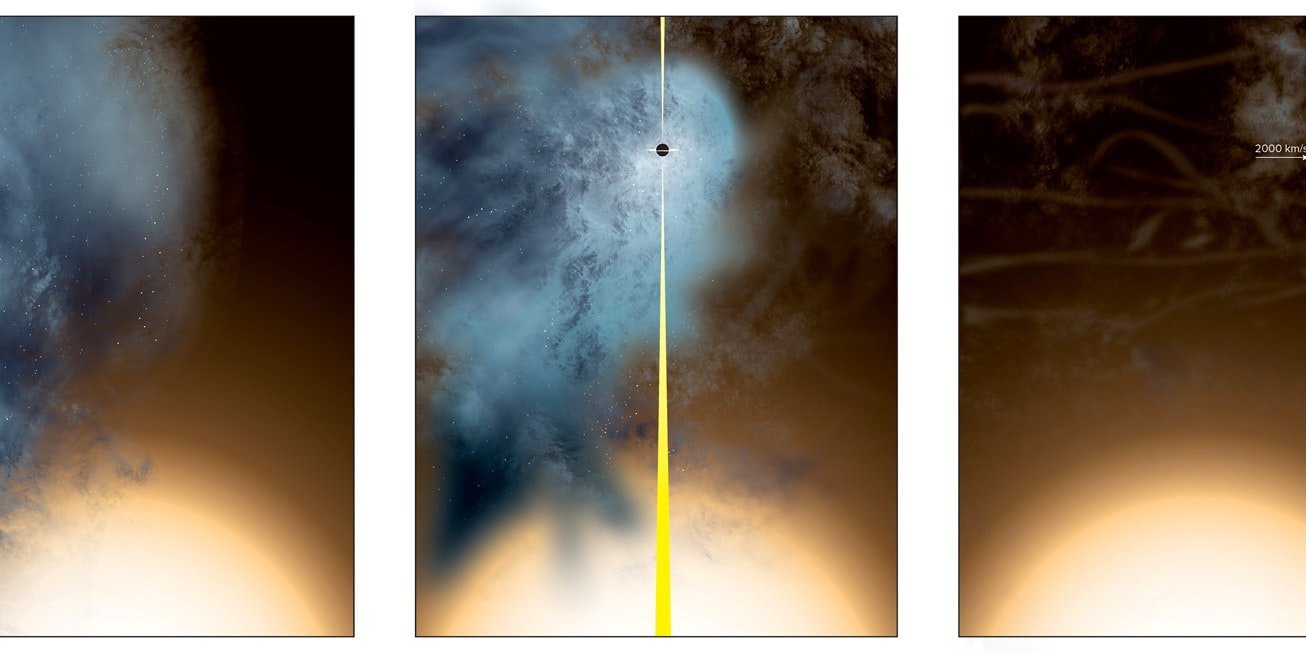
A rogue, supermassive black hole is streaking across the universe

naked black hole
© NRAO/AUI/NSF
Black holes are mysterious cosmic monsters, shrouded in a thick veil of gas and dust. They lurk in the heart of galaxies, waiting to gobble up stars that get too close, before belching deadly x-rays in satisfaction. However, astronomers recently spotted a strange black hole, streaking through space.

At first glance, this rogue specimen just seemed out of place, but upon further study, astronomers realized they had stumbled upon the remains of a grisly cosmic scene. Unlike most black holes, the subject in question — dubbed B3 1715+425 — was not in the center of a galaxy. Even more surprisingly, it appeared to be "naked", meaning it was devoid of a black hole's typical stellar shroud.

"We've not seen anything like this before," James Condon, an astronomer at the National Radio Astronomy Observatory and lead author of the study, said in a news release.

Bizarro Earth

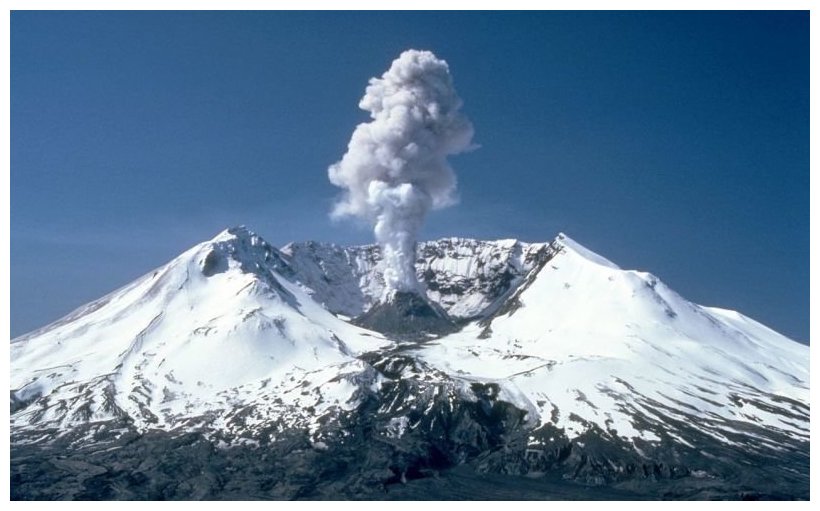
Mount St Helens is getting weirder

Mt. Saint Helens
© Wikimedia CommonsA plume of steam and ash billowing out of Mt. Saint Helens in 1982, two years after the most destructive eruption in US history.
Picture a volcanic eruption: fiery lava and smoke billowing skyward as a towering mountain empties its over-pressurized belly of a hot meal. At least, that's how most of us think it works. So you can imagine volcanologists' surprise when they discovered that Mount St. Helens, which was responsible for the deadliest eruption in US history, is actually cold inside.

Apparently, it's stealing its fire from somewhere else.

Mount St. Helens is one of the most active volcanoes of the Cascade Arc, a string of eruptive mountains that runs parallel to the Cascadia subduction zone from northern California to British Columbia. It's also one of the strangest. Most major volcanoes of the Cascade Arc sit neatly along a north-south line, where the wedging of the Juan de Fuca tectonic plate beneath the North American plate forces hot mantle material to rise. Mount St. Helens, however, lies to the west, in a geologically quiescent region called the forearc wedge.

"We don't have a good explanation for why that's the case," said Steve Hansen, a geoscientist at the University of New Mexico in Albuquerque.

Seeking answers, Hansen recently led a seismic mapping survey of Mount St. Helens. In the summer of 2014, his team deployed thousands of sensors to measure motion in the ground around the volcano. Then, they drilled nearly two dozen holes, packed the holes full of explosives, triggered a handful of minor quakes, and watched as seismic waves bounced around beneath the mountain. "We're looking at what seismic energy propagates off in the subsurface," Hansen explained. "It's a bit like a CAT scan."

Monkey Wrench

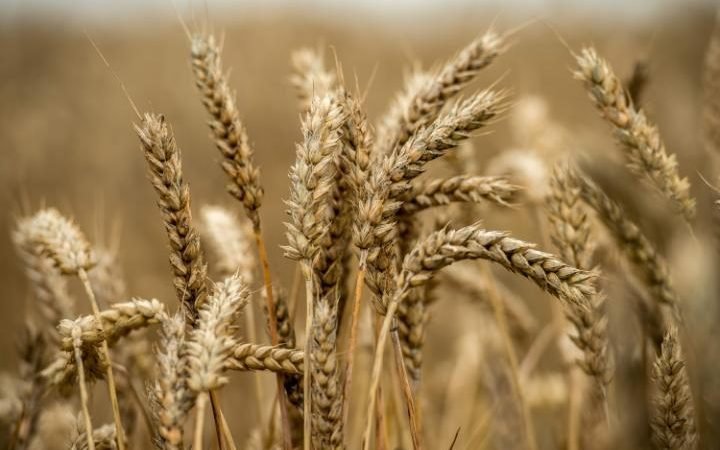
More GMO contamination: Genetically modified wheat could be grown in Britain beginning next Spring

GMO wheat
© The TelegraphGM wheat trials could begin next year
Genetically modified wheat could be grown in Britain from next spring after scientists applied to the Department for the Environment for permission to begin trials which could boost grain yields by up to 40 per cent, in a 'world's first' experiment.

Researchers at the universities of Essex, Lancaster and Rothamsted Research have proven that it is possible to engineer wheat plants so they photosynthesise more efficiently, and so produce bigger grains.

Greenhouse tests have already shown it is possible to grow GM plants which have yields which are up to 40 per cent higher than usual crops, but now scientists are keen to find out whether the same effect can be achieved in the field.

If successful it would mark a 'step change' in wheat production and silence the critics who claim genetic modification will never increase yields following 20 years of failed attempts.

Comment: GMOs are NOT the future of food
Organic agriculture's recently recognized benefits for improving food security don't depend on a boost from genetically modified (GM) technology. While the chemically-based systems that GM requires could be cleaned up with organic techniques, there's no clear reason to degrade organic standards to accept the downsides that come with biotech-produced crops as they are currently managed.

Recently, there have been renewed efforts to pressure organic agriculture to abandon one of its foundational principles and accept genetically modified crops. While there may be nothing inherently wrong with contemplating a theoretical overlap between biotech crop genetics and organic farming systems, there's not a compelling set of reasons to do so, either.
  • GMO's: The "Sound Science" of deception

    So, people are hungry because there is not enough food. "Sound science" and technology are needed to grow more food and the owners of the seed patents, proprietary chemicals, the grain processors and meat packers will give the technology and food to those who need it? Sure.

    People are hungry because they are poor and they are poor because the corporate system has outsourced their jobs, ruined their local economy and taken their land away.

    Farmers cannot feed people when seeds are patented and cost more than they are worth.

    Farmers cannot feed people when the crop protection chemicals they must use poison the water and the air.

    Farmers cannot feed people when local markets are destroyed by a global food system and when the "sound science" they are told will make them profitable and help them feed the hungry turns out to be a lie.

    GMO's are safe and they hold the promise of feeding the world. Really? On very rare occasions the "sound science" gets debunked by those behind the science.
    GMO's will not feed the world "If anyone tells you that GM is going to feed the world, tell them that it is not... To feed the world takes political and financial will." - Steve Smith, head of GM company Novartis Seeds UK (now Syngenta), public meeting on proposed local GM farm scale trial, Tittleshall, Norfolk, UK, 29 March 2000.


Map

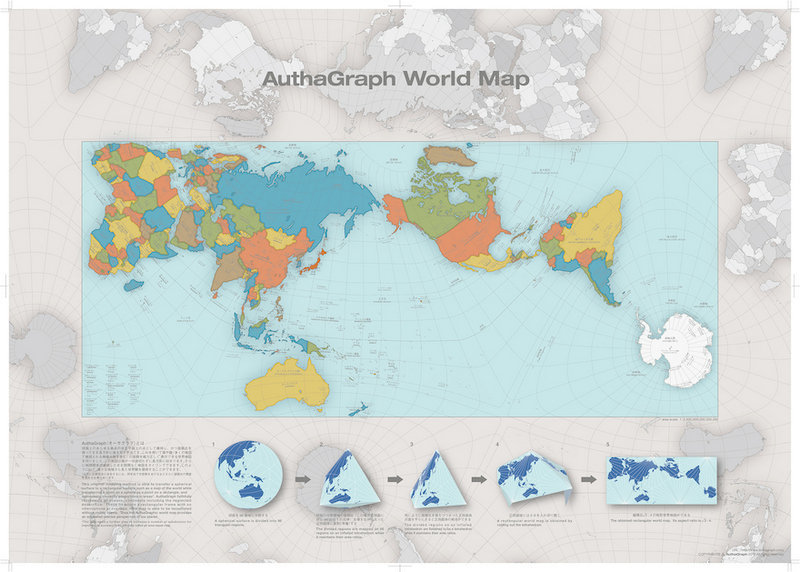
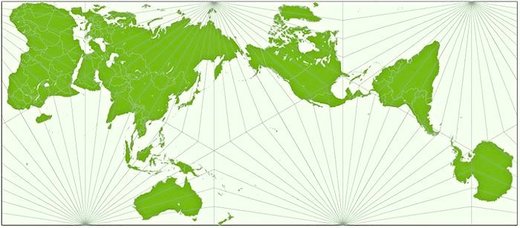
Japanese 'origami' cartography leaves design world spinning - world map accurate in 2D and 3D

authagraph map
How the world looks flat.
A Japanese artist has put cartography back on the design map by creating a near perfect chart of the world - a spherical globe that can be un folded into a flat rectangular map without distorting the size of continents or oceans.