
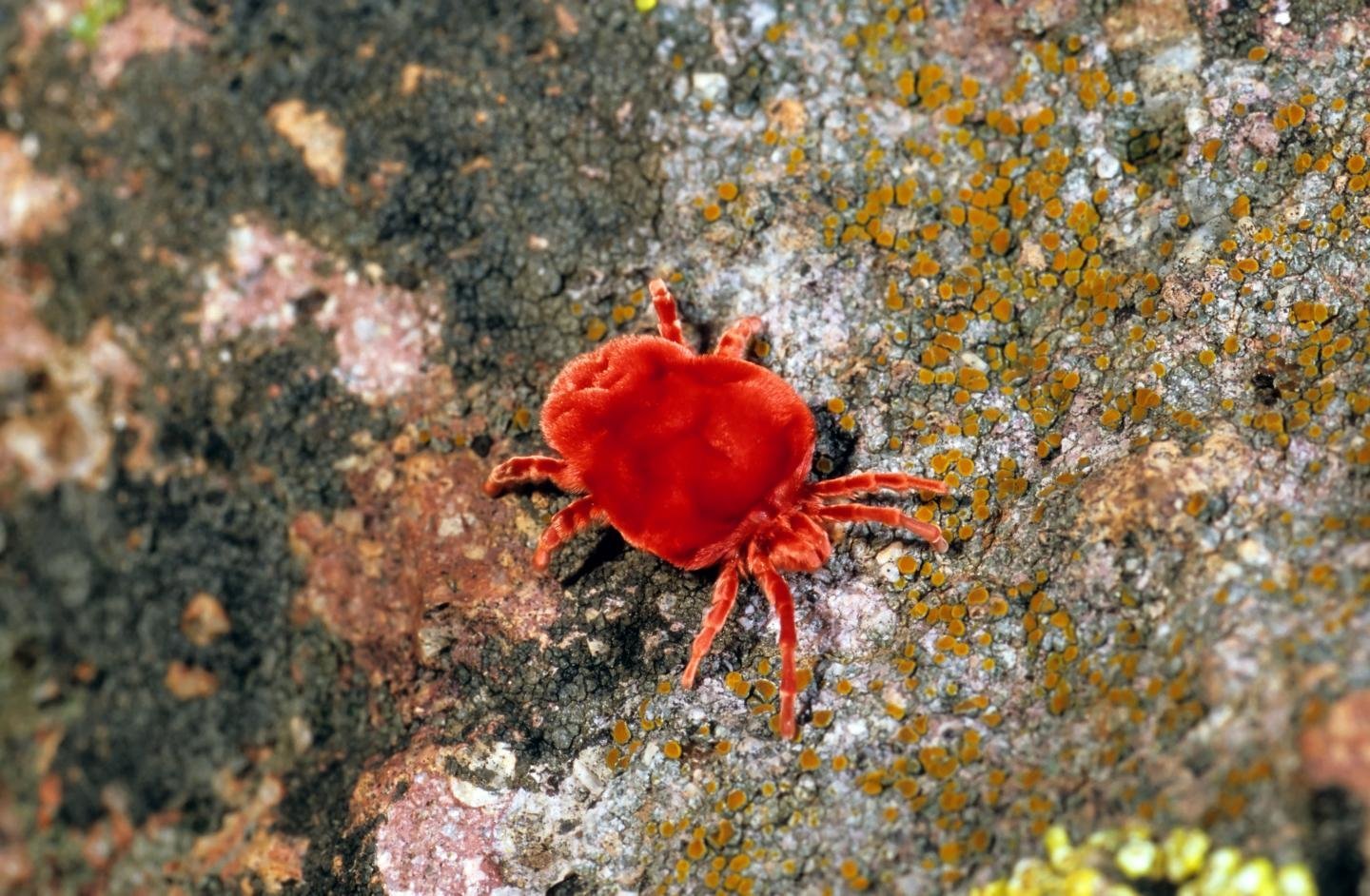
© Stuart Wilson /Science Source / GettyA red velvet spider mite. Spider mites have been found to proliferate on crops treated with neonicotinoid pesticides.
The pesticide has garnered negative attention recently, in part because of a spider mite outbreak it caused in New York. In 2005, neonicotinoid pesticides were sprayed on the trees in Central Park to combat the invasive Asian long-horned beetles living in the elm trees, as well as emerald ash borers, another invasive insect.
The insecticide did kill the invasive insects, but had the unforeseen consequence of causing a boom in spider mites, red plant eating mites that eat hundreds of species of plants. Mites poke holes in leaves to feed, and they did this to the trees in the park so much that they began to drop leaves.
Ada Szczepaniec, an agricultural etymologist at Texas A&M University, investigated the outbreak. Her study found that it was not just the elms, but also crops such as corn and soybeans that had been sprayed by the pesticide also showed spider mite outbreaks. When investigating soybeans, she found that exposure to the neonicotinoid pesticides altered their genes involved with the cell wall and defense against pests, and changed them in such a way that the plant became more vulnerable to infestation. Other researchers noticed correlation as well, and recorded spider mite outbreaks on corn and other crops.
















Comment: And It seems as though we are well along in this process as per this climate science blog: