Science & TechnologyS


Satellite

Great valley discovered on Mercury, the shrinking of a one-plate planet

Mercury elevation model
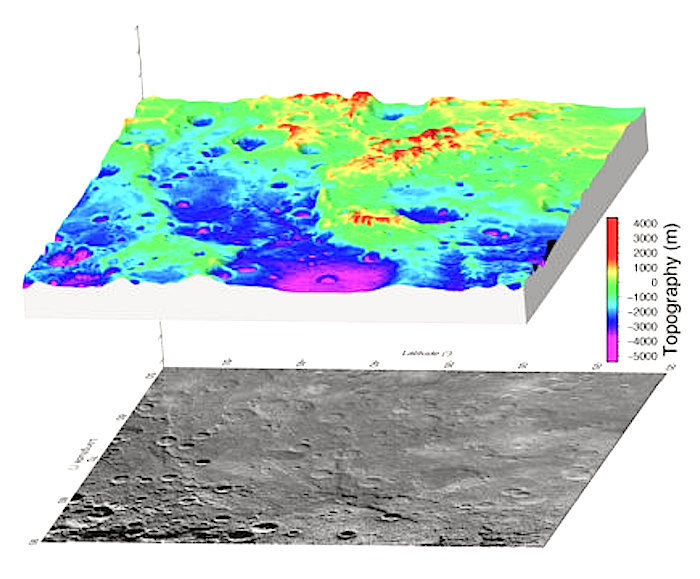
© NASA/Johns Hopkins University Applied Physics LaboratoryA high-resolution digital elevation model derived from stereo images obtained by NASA's MESSENGER spacecraft has revealed Mercury's great valley shown here in this 3D perspective view.
Scientists have discovered a new large valley on Mercury that may be the first evidence of buckling of the planet's outer silicate shell in response to global contraction. The researchers discovered the valley using a new high-resolution topographic map of part of Mercury's southern hemisphere created by stereo images from NASA's MESSENGER spacecraft. The findings were reported in a new study published in Geophysical Research Letters, a journal of the American Geophysical Union.

The most likely explanation for Mercury's Great Valley is buckling of the planet's lithosphere -- its crust and upper mantle -- in response to global contraction, according to the study's authors. Earth's lithosphere is broken up into many tectonic plates, but Mercury's lithosphere consists of just one plate. Cooling of Mercury's interior caused the planet's single plate to contract and bend. Where contractional forces are greatest, crustal rocks are thrust upward while an emerging valley floor sags downward.

Network

China launches world's longest super-secure quantum communication line

quantum communication line
© Jose Miguel Gomez / Reuters
China has launched a quantum communication line 712 kilometers in length that is meant to safely transmit sensitive information. It is expected to be extended to 2,000 kilometers soon.

The line connecting Hefei, the capital of Anhui Province, and Shanghai, a coastal trade hub, has 11 trusted nodes along its length, Xinhua news agency reported on Sunday.

It transmitted a secure video conference between the two cities in one of its first test communications.

The line, already three years in the making and yet to be finished, will ultimately connect Shanghai to China's capital, Beijing, and run through another major city, Jinan, with a total of 32 relay points. The entire project was expected to be finished in November, but the completion date has been moved back until at least the end of the year.

Galaxy

EM Drive violates Newton's Third Law, but works anyway according to peer-reviewed paper

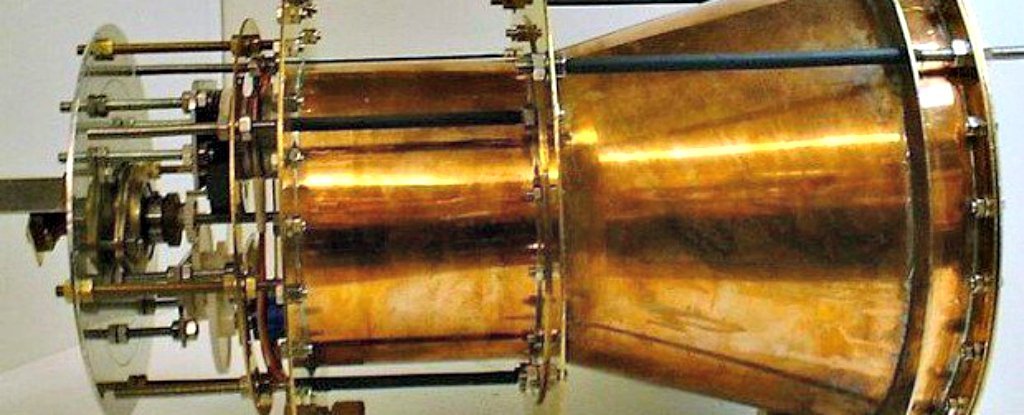
EM drive
After months of speculation and leaked documents, NASA's long-awaited EM Drive paper has finally been peer-reviewed and published. And it shows that the 'impossible' propulsion system really does appear to work. The NASA Eagleworks Laboratory team even put forward a hypothesis for how the EM Drive could produce thrust - something that seems impossible according to our current understanding of the laws of physics.

In case you've missed the hype, the EM Drive, or Electromagnetic Drive, is a propulsion system first proposed by British inventor Roger Shawyer back in 1999.

Instead of using heavy, inefficient rocket fuel, it bounces microwaves back and forth inside a cone-shaped metal cavity to generate thrust. According to Shawyer's calculations, the EM Drive could be so efficient that it could power us to Mars in just 70 days. But, there's a not-small problem with the system. It defies Newton's third law, which states that everything must have an equal and opposite reaction.

According to the law, for a system to produce thrust, it has to push something out the other way. The EM Drive doesn't do this.

Yet in test after test it continues to work. Last year, NASA's Eagleworks Laboratory team got their hands on an EM Drive to try to figure out once and for all what was going on.

And now we finally have those results.

The new peer-reviewed paper is titled "Measurement of Impulsive Thrust from a Closed Radio-Frequency Cavity in Vacuum", and has been published online as an open access 'article in advance' in the American Institute of Aeronautics and Astronautics (AIAA)'s Journal of Propulsion and Power. It'll appear in the December print edition.

Pi

Parallel Worlds exist and interact with our world, Physicists say

New theory says parallel worlds exist and interact with our world!
Multiverse_1
© Unknown
Quantum mechanics, though firmly tested, is so weird and anti-intuitive that famed physicist Richard Feynman once remarked, "I think I can safely say that nobody understands quantum mechanics." Attempts to explain some of the bizarre consequences of quantum theory have led to some mind-bending ideas, such as the Copenhagen interpretation and the many-worlds interpretation.

Now there's a new theory on the block, called the "many interacting worlds" hypothesis (MIW), and the idea is just as profound as it sounds. The theory suggests not only that parallel worlds exist, but that they interact with our world on the quantum level and are thus detectable. Though still speculative, the theory may help to finally explain some of the bizarre consequences inherent in quantum mechanics, reports RT.com.

Comment: See also:


Chalkboard

Mathematician claims one in 500 chance of extinction next year

Earth
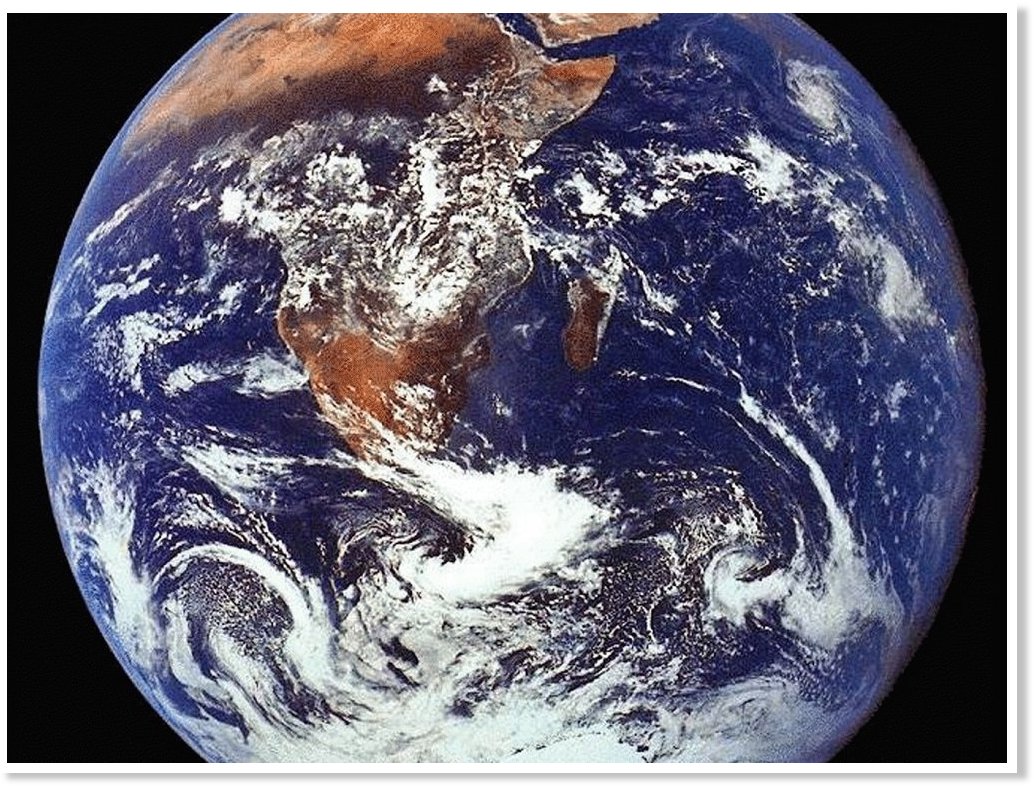
© NASAThe calculation is based on the Doomsday Argument.
The human race faces a one in 500 chance of extinction in the next year, an expert mathematician has claimed.

Dr Fergus Simpson, a mathematician at the University of Barcelona's Institute of Cosmos Sciences, said there was a 0.2 per cent chance of a "global catastrophe" occurring in any given year over the course of the 21st Century.

The calculation is based on the Doomsday Argument, which it is claimed can predict the number of future members of the human species given an estimate of the total number of humans born so far.

"Our key conclusion is that the annual risk of global catastrophe currently exceeds 0.2 per cent," Dr Simpson wrote in an academic paper called Apocalypse Now? Reviving the Doomsday Argument, accessed through Cornell University's online library.

"In a year when Leicester City FC were crowned Premier League champions, we are reminded that events of this rarity can prove challenging to anticipate, yet they should not be ignored," he added.

According to Dr Simpson's calculations, around 100 billion people have already been born and a similar number will be born in the future before the human race expires.

He estimated there was a 13 per cent chance humanity would fail to see out the 21st Century.

This is a more optimistic conclusion than previous studies, with British Astronomer Royal Sir Martin Rees suggesting there was a 50 per cent probability of human extinction by the year 2100 in his 2003 book Our Final Hour.

Microscope 1

Beyond the DNA: Scientists complete comprehensive map of the human epigenome

methylated DNA molecule
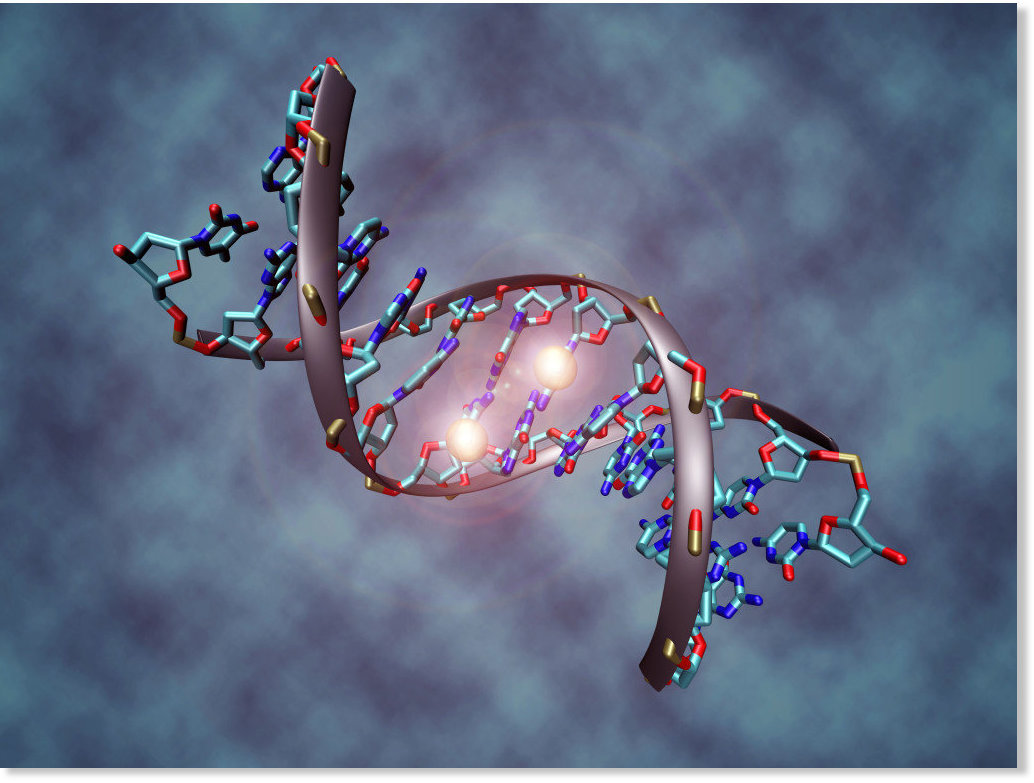
© Christoph Bock/CeMMThis is a methylated DNA molecule. DNA methylation plays an important role for epigenetic gene regulation in development and cancer.
Scientists have established comprehensive maps of the human epigenome, shedding light on how the body regulates which genes are active in which cells. Over the last five years, a worldwide consortium of scientists has established epigenetic maps of 2,100 cell types. Within this coordinated effort, the CeMM Research Center for Molecular Medicine contributed detailed DNA methylation maps of the developing blood, opening up new perspectives for the understanding and treatment of leukemia and immune diseases.

One of the great mysteries in biology is how the many different cell types that make up our bodies are derived from a single cell and from one DNA sequence, or genome. We have learned a lot from studying the human genome, but have only partially unveiled the processes underlying cell determination. The identity of each cell type is largely defined by an instructive layer of molecular annotations on top of the genome -- the epigenome -- which acts as a blueprint unique to each cell type and developmental stage.

Unlike the genome the epigenome changes as cells develop and in response to changes in the environment. Defects in the factors that read, write, and erase the epigenetic blueprint are involved in many diseases. The comprehensive analysis of the epigenomes of healthy and abnormal cells will facilitate new ways to diagnose and treat various diseases, and ultimately lead to improved health outcomes.

Info

New Zealand's 'unusual' earthquake raises complex questions

New Zealand 7.8 earthquake map
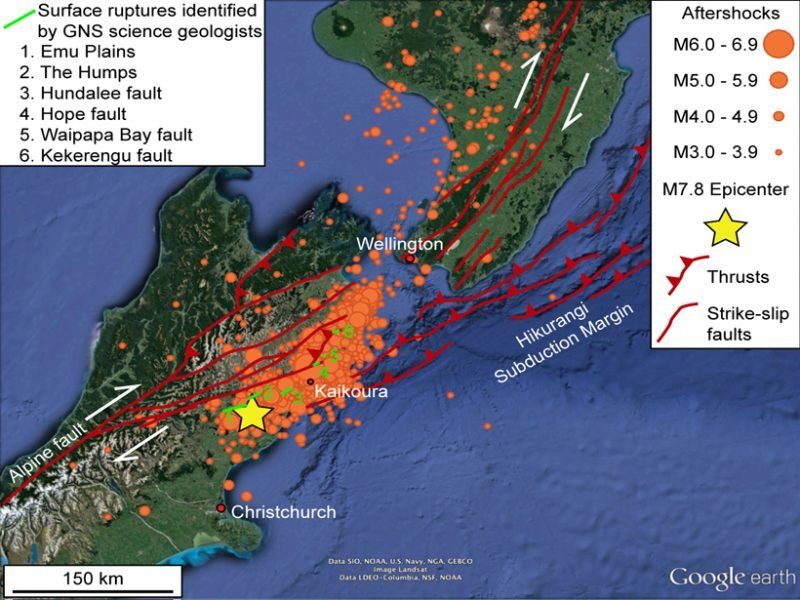
© Google Earth/ GNS ScienceThe 2016 Kaikoura earthquake was a magnitude 7.8 (Mw) earthquake in the South Island of New Zealand that occurred two minutes after midnight on 14 November 2016 NZDT (11:02 on 13 November UTC).

A devastating earthquake has hit New Zealand, but this unusual event, with long duration slip on several faults, will also provide an astounding data set for understanding a complex tectonic region.


New Zealand was rocked by a magnitude 7.8 earthquake on Monday 14th November. This event had unusual aspects of slip distribution, duration, and kinematics, from which we will learn a lot about earthquake mechanics as data are collected. The event that started ~100 km north of Christchurch with displacements less than 1 m, propagated northward, creating the largest surface displacements (so far observed) near the northern termination of the earthquake rupture, at the northeast tip of the South Island.

At this early stage, based on preliminary data released by the New Zealand monitoring partnership GeoNet, I find three properties of the earthquake particularly intriguing:

1. Slip distribution.

The large surface displacement at the northern end of the rupture explains why aftershocks are concentrated in the north, and why areas north of the rupture, such as Wellington, experienced more damage than Christchurch, which is closer to but south of the epicenter.

The earthquake adds insight to the discussion of whether an earthquake knows its size when it nucleates - this earthquake started small, and only reached large slip late in its propagation. The USGS estimates the greatest displacements were over 100 km from the epicenter.

Therefore, as suggested in recent findings by Meier et al., there seems to have been no way to expect the large size of this earthquake from its small early slip. The question remains, why did the earthquake start small and get larger?

Comment: See also:


Meteor

Three UAE detection stations declared fully operational after meteor hits Abu Dhabi

meteor
© The NationalDetection stations on line in UAE.
Three meteor detection stations have been set up across the Emirates, the UAE Space Agency said on Sunday.

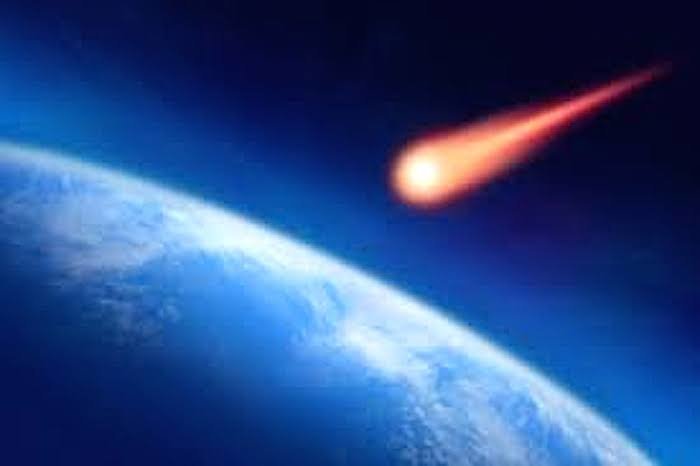
The UAE Astronomical Camera Network (UACN) is designed to track coordinates of meteors and orbital debris, calculating trajectories in case of local impact, and it monitored one such meteorite that landed on the outskirts of Abu Dhabi in September. The camera network will also contribute to discovering new meteor showers and following the movements of those already anticipated.

The first meteor detection station, dubbed UACN1, was setup in the Remah area of Al Ain in January. UACN2 was established in the Razeen area, 100km east of Abu Dhabi, and went into operation in August. The last station was completed in October, after which the network became fully operational. Its location has not been disclosed.

According to the UAE Space Agency, each station contains 17 astronomical cameras that automatically start recording video and taking imagery upon detection of meteors.


Eye 1

Newly discovered photoreceptor is 50 times more efficient than the human eye

New receptor protein
© Josiah Garber/FotoliaA new receptor protein, LITE-1, was found among a family of taste receptors in invertebrates, meaning that these animals may actually have a taste perception of light.
An international team of scientists led by the University of Michigan has discovered a new type of photoreceptor -- only the third to be found in animals -- that is about 50 times more efficient at capturing light than the rhodopsin in the human eye.

The new receptor protein, LITE-1, was found among a family of taste receptors in invertebrates, and has unusual characteristics that suggest potential future applications ranging from sunscreen to scientific research tools, the team noted in findings scheduled to be published Nov. 17 in the journal Cell.

"Our experiments also raise the intriguing possibility that it might be possible to genetically engineer other new types of photoreceptors," said senior study author Shawn Xu, a faculty member of the U-M Life Sciences Institute, where his lab is located.

The LITE-1 receptor was discovered in the eyeless, millimeter-long roundworms known as nematodes, a common model organism in bioscience research.

"LITE-1 actually comes from a family of taste receptor proteins first discovered in insects," said Xu, who is also a professor in the Department of Molecular and Integrative Physiology at the U-M Medical School. "These, however, are not the same taste receptors as in mammals."

Xu's lab previously demonstrated that although they lack eyes, the worms will move away from flashes of light. The new research goes a step further, showing that LITE-1 directly absorbs light, rather than being an intermediary that senses chemicals produced by reactions involving light.

"Photoreceptors convert light into a signal that the body can use," Xu said. "LITE-1 is unusual in that it is extremely efficient at absorbing both UV-A and UV-B light -- 10 to 100 times greater than the two other types found in the animal kingdom: opsins and cryptochromes. The next step is to better understand why it has these amazing properties."

Galaxy

Studies indicate pull on Pluto's 'icy heart' shifted dwarf planet's axis

Picture of PLuto
© NASA
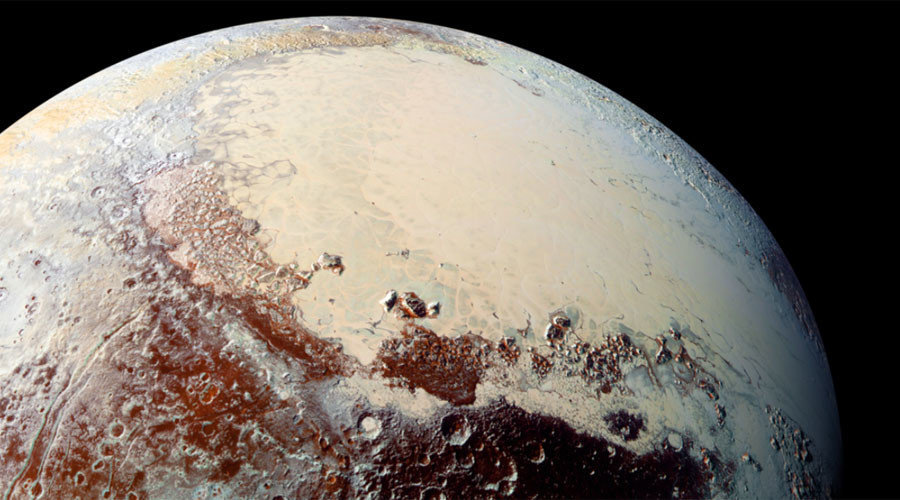
Contents of a large crater on Pluto could be the reason for a "gravitational anomaly" which sees a heart shaped region on the dwarf planet line up almost exactly opposite its largest moon, scientists believe.

The icy dwarf planet's enchanting heart-shaped Sputnik Planitia plain, a suspected impact zone, has fascinated astronomers and scientists for decades.

Two separate studies using data from the NASA New Horizons exploratory mission and published in the journal Nature suggest that what lies inside the unusual heart-shaped formation has been caught in a gravitational pull, shifting Pluto's axis.