Science & TechnologyS


Question

Scientists may have identified mysterious, metallic sound coming from the Mariana Trench

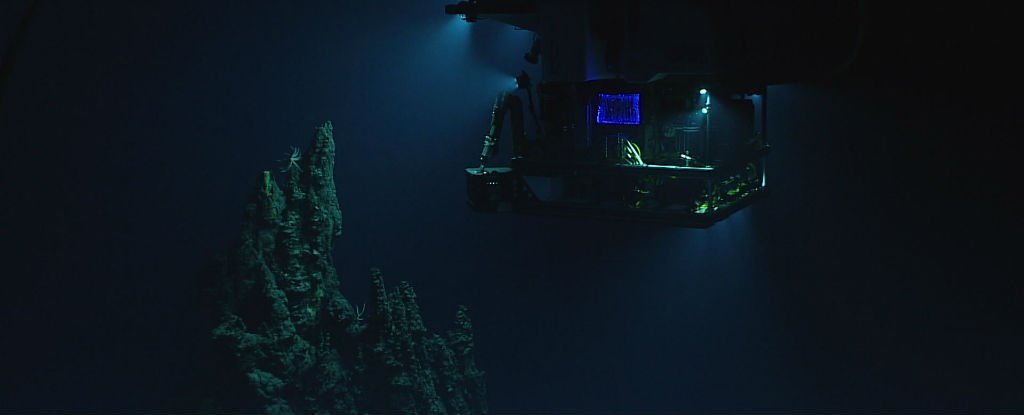
Deep-sea rover exploring the Mariana Trench
© NOAADeep-sea rover exploring the Mariana Trench.
An otherworldly noise that was recorded near the Mariana Trench could be a never-before-heard whale call.

Dubbed the "Western Pacific Biotwang," this newly discovered call might be from a minke whale — a type of baleen whale — according to the researchers who documented the vocalization.

Regardless of what species it is, this whale has range: The call includes sounds that span frequencies that reach as low as 38 hertz and as high as 8,000 hertz. Humans can hear sounds between 20 and 20,000 Hz. [Listen to the New Whale Call from the Mariana Trench]

"It's very distinct, with all these crazy parts," Sharon Nieukirk, senior faculty research assistant in marine bioacoustics at Oregon State University, said in a statement. "The low-frequency moaning part is typical of baleen whales, and it's that kind of twangy sound that makes it really unique. We don't find many new baleen whale calls."


Comment: Deep-sea audio recordings reveal Pacific Ocean's noisy Mariana Trench, surprising scientists


Frog

Rainbow snake, tiny frog among new Mekong species

tylototriton newt
© AFP Photo/Porrawee POMCHOTEA new species of newt called the tylototriton anguliceps in Chiang Rai, Thailand

A rainbow-headed snake, a tiny frog and a lizard with dragon-like horns are among more than 150 new species confirmed by scientists last year in the ecologically diverse but threatened Mekong region, researchers said on Monday.

Winding its way from the Tibetan plateau through the mountains and jungles of Southeast Asia, the Mekong river helps sustain one of the most diverse regions on the planet.

Each year scientists announce new species, after an often lengthy identification process, highlighting how much more there is to learn about the region.

But there are fears many species may die out before even being discovered in an area of the world that is rapidly developing, where rule of law is notoriously shaky and wildlife smuggling rampant.

"The Greater Mekong region is a magnet for the world's conservation scientists because of the incredible diversity of species that continue to be discovered here," Jimmy Borah, from WWF's Greater Mekong team said.

"They are racing against time to ensure that these newly discovered species are protected."

Blue Planet

As above, so below: Scientists discover molten 'jet stream' inside Earth

X-ray earth's magnetic core
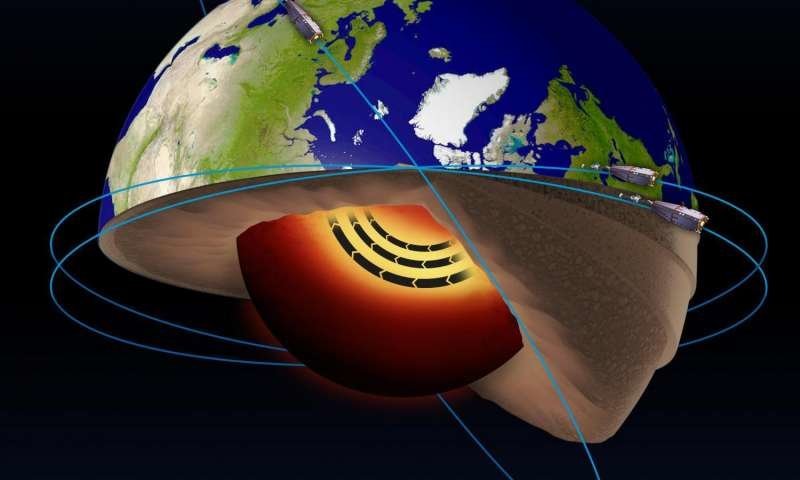
© European Space Agency Swarm's three satellites provide a high-resolution picture of the Earth's magnetic field.
A jet stream within the Earth's molten iron core has been discovered by scientists using the latest satellite data that helps create an 'x-ray' view of the planet.

Lead researcher Dr Phil Livermore, from the University of Leeds, said: "The European Space Agency's Swarm satellites are providing our sharpest x-ray image yet of the core. We've not only seen this jet stream clearly for the first time, but we understand why it's there."

"We can explain it as an accelerating band of molten iron circling the North Pole, like the jet stream in the atmosphere," said Dr Livermore, from the School of Earth and Environment at Leeds.

Because of the core's remote location under 3,000 kilometres of rock, for many years scientists have studied the Earth's core by measuring the planet's magnetic field - one of the few options available.

Previous research had found that changes in the magnetic field indicated that iron in the outer core was moving faster in the northern hemisphere, mostly under Alaska and Siberia.

Robot

Giant manned robot can walk and move hands

manned robot
© lim_hyun_kuk / Instagram
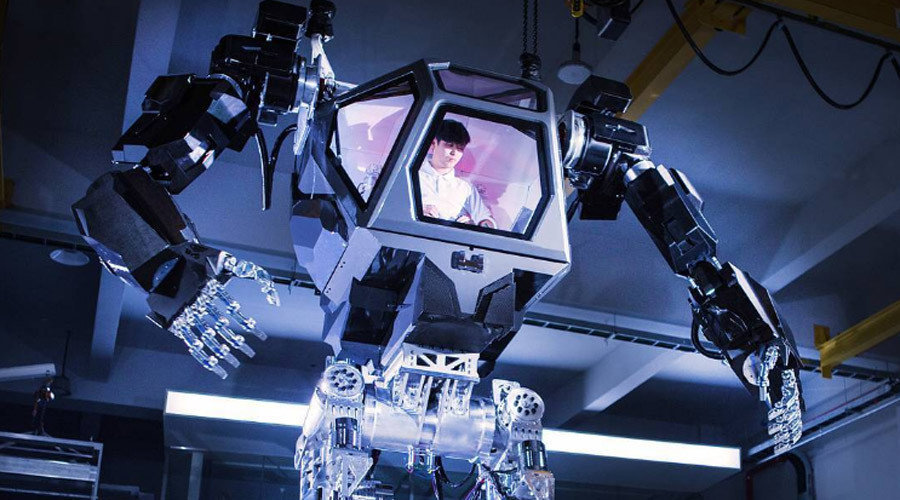
Video of a walking manned robot, undergoing work-in-progress motion tests in South Korea, has emerged online. The machine can be seen tested to move hands and take steps, repeating operator's actions.

The Seoul-based Korea Future Technology company has conducted walking tests for the 4 meter tall, 1.5 ton robot. The machine, resembling those appearing in the Avatar movie, is controlled by a pilot, sitting inside, and repeats his actions.

Comment: More on Kuratas here: Weaponry to Control the Populace? Japan Unveils Armed Super-Robot


Telescope

Eye of Africa: ISS astronaut snaps bizarre Sahara desert formation

Eye of Africa
© ESA
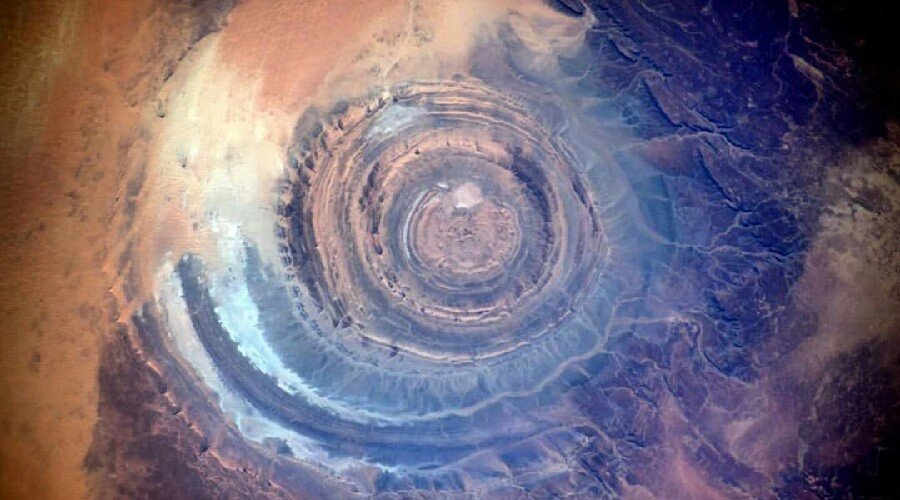
A stunning image showing off the wondrous spirals of the 'Eye of Africa', also known as the Richat structure, has been captured by French ESA astronaut Thomas Pesquet aboard the International Space Station (ISS).

The incredible structure, located in the Sahara desert in Mauritania, has a diameter of 50km (31 miles) and was originally thought to be a meteorite-impact crater. Scientists now believe, however, it was formed through erosion.

The phenomenal circular feature has long been a favorite among space photographers.

Jet2

New photos reveal Russian advanced Sukhoi T-50 fighter plane test-flying

Russian advanced T-50 fighter plane
© knaapo.ru
New pictures of the Russian cutting-edge T-50 prototype fifth-generation fighter jet have been published on the planemaker's official website.

The images were unveiled by the producing Komsomolsk-on-Amur Aircraft Plant and apparently show a first flight of a prototype model of the T-50 (T-50-8). The plane is being developed by one of Russia's leading aviation companies, the Sukhoi, to replace its Sukhoi Su-27 fighter currently in service.

The respective test prototype accomplished its first flight on November 17, the BMPD blog, focusing on the defense industry, reported, though the information was not officially confirmed.

Galaxy

New dwarf galaxy detected orbiting the Milky Way

Galaxy
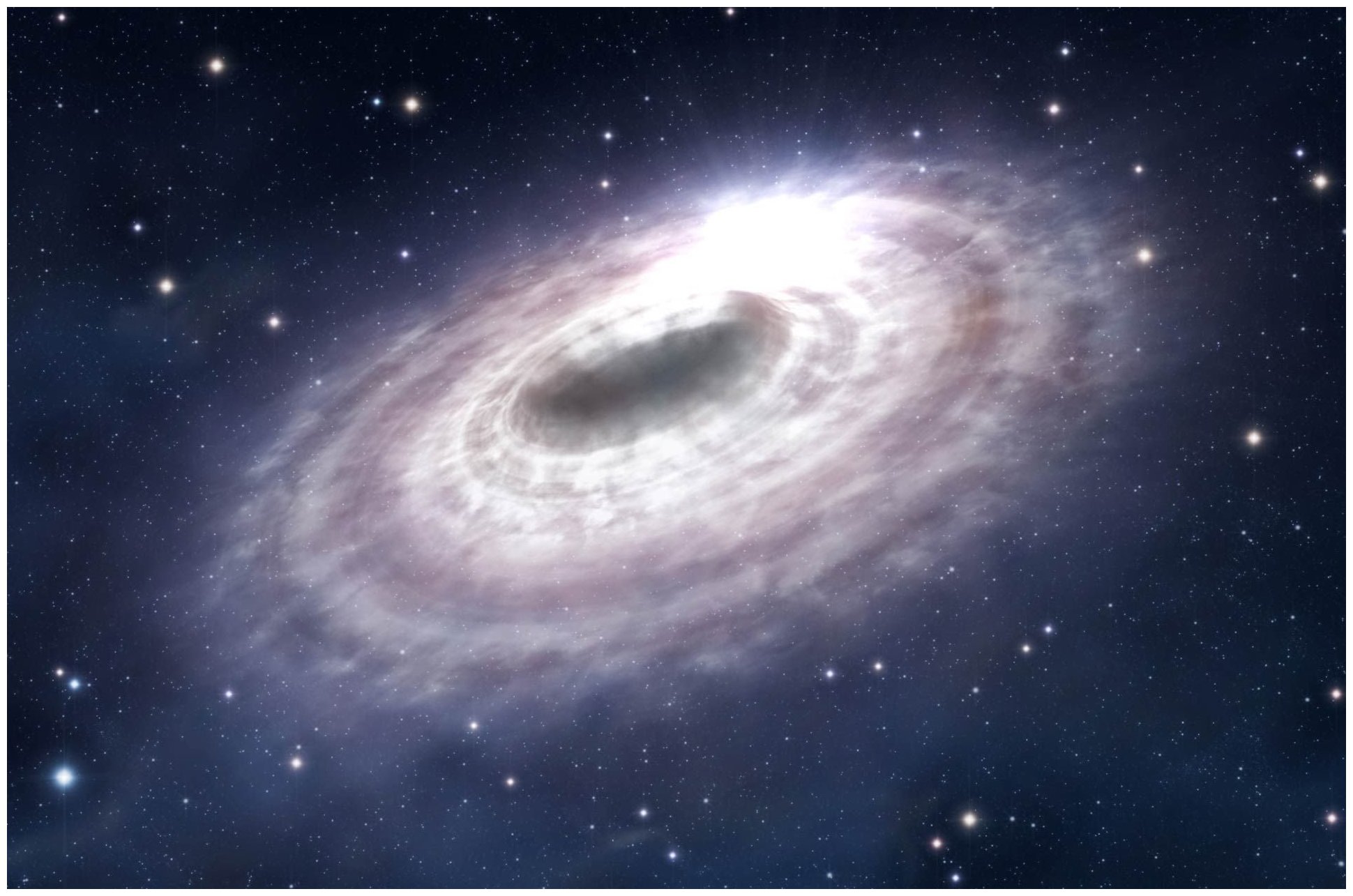
© Sci-NewsAn artist’s rendering of the disc of material around Milky Way black hole Sagittarius A*.
The Milky Way (Earth's galaxy) is not alone in the vastness of intergalactic space. Several nearby objects exert gravitational forces upon it, and there may be up to 50 of these objects out there.

A new object has been detected by astrophysicists from Tohoku University (Japan). This object is orbiting the Milky Way. The object has been detected using the advanced Subaru Telescope. At present, the best description of the object is a miniature (or dwarf) galaxy. A dwarf galaxy is a small galaxy composed of anything from 100 million up to several billion stars; while this seems big it is a far smaller number than the Milky Way's 200 - 400 billion stars.

The outside object is too small to be classed as a 'real galaxy' and scientists are debating whether 'dwarf galaxy' is a better descriptor. In terms of size, the Milky Way, according to latest estimates is some 100,000 light years in diameter. In contrast, the orbiting dwarf galaxy is probably only around 124 light years in diameter. It is located over 280,000 light years away from Earth. There is no other information about Virgo's origins.

The detection via the Subaru Telescope is very faint (absolute magnitude of -0.8 in the optical waveband), even accounting for the telescope's power. The Subaru Telescope is a 8.2-metre flagship telescope of the National Astronomical Observatory of Japan. It is located at the Mauna Kea Observatory on Hawaii. The telescope structure includes an instrument called the Hyper Suprime-Cam, and it was this device that detected the ultra-faint dwarf galaxy.

Fish

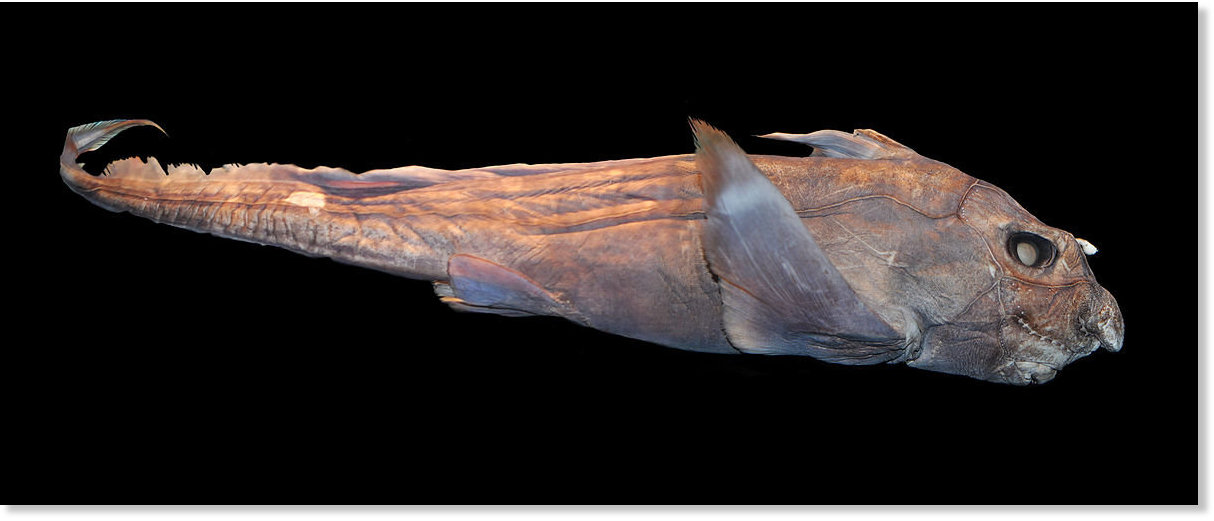
Mysterious 'ghost shark' filmed for first time ever

Pointynose blue chimaera
© Citron/CC-BY-SA-3.0Pointynose blue chimaera
Remote cameras accidentally catch images of the phantasmal creature with a sex organ on its forehead, far from the waters previously believed to be its home.

It's like the plot of a Michael Crichton book. The disturbing-looking pointy-nosed blue chimaera, also known as a "ghost shark," has been caught alive on video for the first time, purely by accident.

Researchers at the Monterey Bay Aquarium Research Institute repeatedly captured footage of numerous species while on dives up to 6,700 feet (2,042 meters) below the sea off the coast of southern California, central California and the Hawaiian islands, in 2009. The footage and an accompanying paper in "Marine Biodiversity Records" came out in October, but the video just started to pick up steam this past week.

The institute wasn't looking specifically for the creatures -- the bluish, pointy-nosed sharks simply happened to be caught on camera on six separate occasions during remotely operated vehicle deep-sea surveys.


Rocket

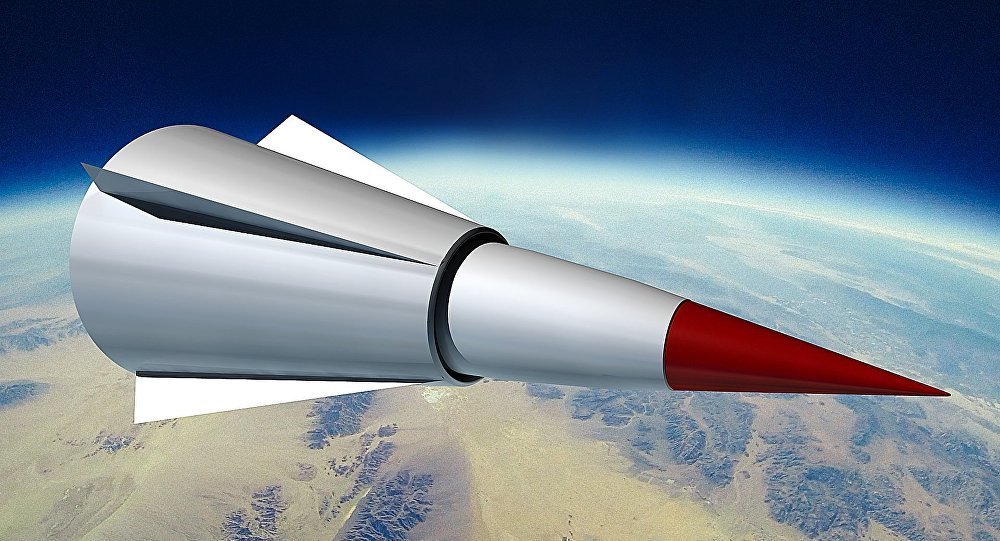
New Russian hypersonic aircraft able to break through missile defense systems

hypersonic missile
© Wikipedia
Russian scientists are working on hypersonic aircraft that will be able to penetrate enemy missile defense, RIA Novosti wrote, citing Boris Satovsky, a project director at the military research agency Future Research Fund in Moscow.

Boris Satovsky said that the ongoing technological progress was producing ever new types of weapons, including those based on highly maneuverable hypersonic elements
"Thanks to their outstanding technical characteristics, such systems will be able to break through virtually every existing missile defense system, thus ensuring global military-strategic parity in the next 30-40 years," Boris Satovsky told RIA.
According to media reports, this year Russia has twice tested a hypersonic glider meant to replace traditional warheads for new generations of intercontinental ballistic missiles, including the heavy Sarmat ICBM.

Brain

Researchers use neurofeedback to tap into brain activity associated with confidence

brain activity
© solarseven/Shutterstock.com
There may be a way to tap into people's brain activity to boost their confidence, a new study suggests.

In the study, the researchers used a technique called decoded neurofeedback, which involves scanning people's brains to monitor their brain activity, and using artificial intelligence to detect activity patterns that are linked with feelings of confidence.

Then, whenever these patterns are detected, people are given a reward — in this case, participants were given a small amount of money.

The researchers found that by doing this, they could boost participants' confidence when they were doing a task in a laboratory, regardless of how well they actually performed the task. What's more, the same technique could be used to decrease confidence, if people were rewarded when their brain activity showed a pattern that was linked to low confidence, according to the researchers.