Science & TechnologyS


Microscope 2

Scientists discover why viruses evolved to affect men more severely than women

laboratory, microscope
© Kim Kyung-Hoon / Reuters
Viruses, it turns out, have most likely evolved to affect men in more severe ways than women: tuberculosis, papillomavirus, and others have that in common. Now a fresh study has discovered the surprising reason why that might be.

And it's not because pathogens are sexist. Part of the explanation could be the differences in the two sexes' immune systems. But scientists at the Royal Holloway University of London believe they've made a breakthrough in identifying the main reason - that women are more valuable hosts for the viruses.

The differences in severity are stark. As it turns out, men are 1.5 times more likely to die of tuberculosis than women, twice more likely to develop Hodgkin's lymphoma from the Epstein-Barr virus as well - and a whopping five times more likely to develop cancer if infected with the papillomavirus.

As the researchers point out, we may have the wrong idea about how a virus spreads and what really drives it. The answer, they say, lies in women's capacity to create life: they're simply more valuable to the virus than men.

Health

Virtual reality physical therapy improves manual dexterity

finger movement
The old saying "the left hand doesn't know what the right hand is doing" might not be as accurate as you think, according to researchers at Tel-Aviv University.

Their study found that when people practiced finger movements with their right hand while watching their left hand on 3D virtual reality headsets, they could use their left hand more efficiently after the exercise.

The work provides a new strategy to improve physical therapy for people with limited strength in their hands.

BRAIN TRICKS

Lead author Roy Mukamel, a professor of psychology at Tel Aviv University, said:
"We are tricking the brain. This entire experiment ended up being a nice demonstration about how to combine software engineering and neuroscience."
Following the completion of baseline tests to assess the initial motor skills of each hand, 53 participants strapped on virtual reality headsets, which showed simulated versions of their hands. During the first experiment, the participants completed a series of finger movements with their right hand while the screen showed their virtual left hand moving instead.

Fireball 2

Comet Research Group replies to Robert Schoch's theory on the end of the last ice age

comet_impact
Dr. Robert M. Schoch, Ph.D., of Boston University, is a thought provoking scientist with an open-minded approach to new ideas. Unfortunately his interest in disruptive theories has never extended itself to the Younger Dryas Boundary hypothesis, as he details on his webpage in a critique titled "Controversies Concerning the End of the Last Ice Age."

His objection to the published science and data of the Comet Research Group is curious, since our work validates much of his unpublished speculation concerning catastrophe at the Pleistocene-Holocene transition. This dynamic is disappointing because those working to reveal the true record should find some common cause. Unfortunately, Schoch has never reached out to our researchers in order to work through and address his criticisms.

So, the CRG is taking the opportunity here on the Tusk and elsewhere to rebut Dr. Schoch's critique in the hope that he will carefully re-consider his position, which seems entirely based on the faulty work of our critics — which are his too.
Comet Research Group: Rebuttal to "Controversies Concerning the End of the Last Ice Age"

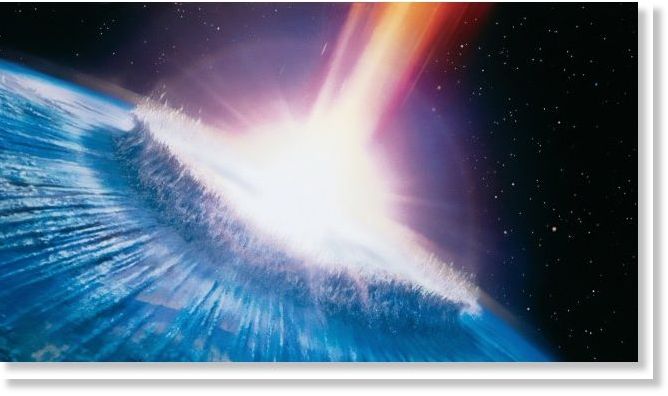
The Younger Dryas impact hypothesis proposes that a massive swarm of fragments from a giant comet hit Earth approximately 12,800 years ago, triggering bitterly cold ice-age conditions, while contributing to the extinction of millions of animals and to a human population decline across the Northern Hemisphere. The debris from the multiple comet impacts created the Younger Dryas boundary layer (abbreviated as "YDB"), which contains more than a dozen items, called "proxies," all of which have been found in previously known impact events. These proxies include melted iron spherules, melted glass spherules, high-temperature chunks of melted glass, nanodiamonds, carbon spherules (some containing nanodiamonds), iridium, osmium, platinum, charcoal, and aciniform carbon, a form of soot. Although many of those individual proxies, such as charcoal and soot, can be produced by normal terrestrial processes other than impacts, the entire suite of proxies listed above is only known to occur in cosmic impact events, and cannot be produced in any other natural way. That is an important distinction to remember. To repeat, individual proxies may have other sources than impacts, but there is no evidence of any kind that all of those proxies together are produced at one time by anything other than a cosmic impact. For more information on the impact hypothesis and these proxies, see our website.

Info

Breakup of supercontinent Pangea cooled mantle and thinned crust

Ancient Earth
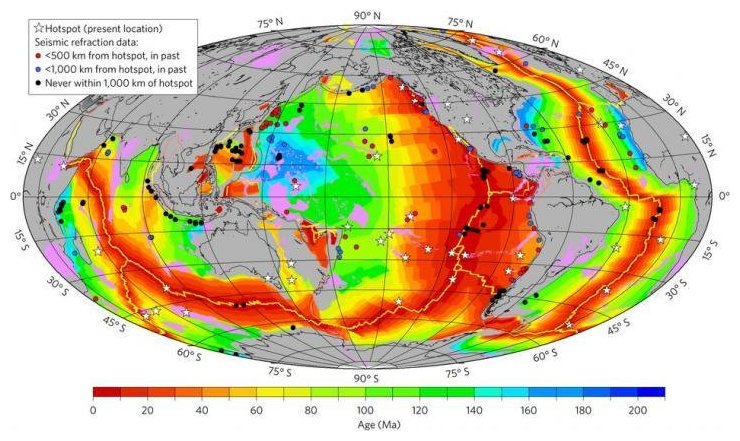
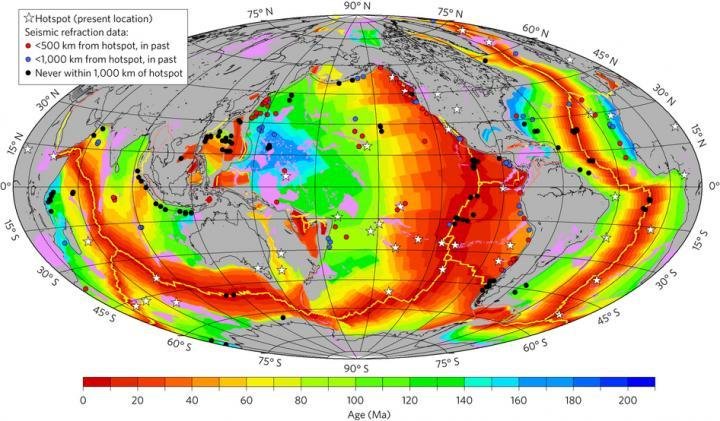
© The University of Texas at Austin Jackson School of GeosciencesResearchers at the University of Texas Institute for Geophysics used the location of seismic refraction data (circles) and mantle hotspots (white stars) to examine whether mid-plate volcanism substantially influenced the thickness of aged ocean crust. The modern mid-ocean ridge system is marked by a yellow line. Areas in violet outline large igneous provinces.
The oceanic crust produced by the Earth today is significantly thinner than crust made 170 million years ago during the time of the supercontinent Pangea, according to University of Texas at Austin researchers.

The thinning is related to the cooling of Earth's interior prompted by the splitting of the supercontinent Pangaea, which broke up into the continents that we have today, said Harm Van Avendonk, the lead author of the study and a senior research scientist at The University of Texas Institute for Geophysics. The findings, published in Nature Geosciences on Dec. 12, shed light on how plate tectonics has influenced the cooling of the Earth's mantle throughout geologic history.

"What we think is happening is that the supercontinent was like an insulating blanket," Van Avendonk said. "So when these continents started opening up and the deeper mantle was exposed, more or less, to the atmosphere and the ocean it started cooling much faster."

All authors are from the University of Texas Institute for Geophysics (UTIG), a research unit of the Jackson School of Geosciences.

The mantle is the very hot, but mostly solid, layer of rock between the Earth's crust and core. Magma from the mantle forms oceanic crust when it rises from the mantle to the surface at spreading centers and cools into the rock that forms the very bottom of the seafloor. Since about 2.5 billion years ago, the mantle has been cooling --a phenomenon that doesn't influence the climate on the surface of the Earth and has nothing to do with the issue of short-term man-made climate change. This study suggests that since the breakup of Pangea, the cooling rate of the mantle has increased from 6-11 degrees Celsius per 100 million years to 15 to 20 degrees per 100 million years. Since cooler mantle temperatures generally produce less magma, it's a trend that's making modern day ocean crust thinner.

Nebula

'Brightest supernova ever' result of rapidly spinning supermassive black hole destroying star

Supermassive black hole
© ESO, ESA/Hubble, M. Kornmesser Artist's impression
In June last year, astronomers witnessed a brilliant cosmic flash thought to be the most powerful supernova on record - an explosion of intense brightness that at its peak was 20 times brighter than the total light output of the entire Milky Way.

But new observations suggest that this freak cosmic event - called ASASSN - 15lh - wasn't a supernova after all, but something even rarer: the death throes of a star that came too close to a supermassive black hole, and was torn apart by it.

Ordinarily, when a star with enough mass reaches the end of its natural life, it becomes a supernova, caused by either running out of fuel or accumulating too much matter.

These are the biggest explosions in space, so ASASSN - 15lh's extreme luminosity - twice as bright as the previous record holder - fascinated the space community.

But of course, stars - like people - only reach the end of their natural lifespan if something else doesn't happen to them along the way, and that's what seems to have happened to the star at the heart of ASASSN - 15lh, according to a team led by astronomer Giorgos Leloudas from the Weizmann Institute of Science in Israel.

"We observed the source for 10 months following the event and have concluded that the explanation is unlikely to lie with an extraordinarily bright supernova," says Leloudas.

"Our results indicate that the event was probably caused by a rapidly spinning supermassive black hole as it destroyed a low-mass star."


Comment: See also:


Comet

NASA: Humans woefully unprepared for surprise asteroid or comet strike

comet strike earth, asteroid
© Mopic / Alamy/AlamyLarge and potentially dangerous asteroids and comets are extremely rare, scientists said – ‘But on the other hand they are the extinction-level events.’
Humans are woefully unprepared for a surprise asteroid or comet, a Nasa scientist warned on Monday, at a presentation with nuclear scientists into how humans might deflect cosmic dangers hurtling toward Earth.

"The biggest problem, basically, is there's not a hell of a lot we can do about it at the moment," said Dr Joseph Nuth, a researcher with Nasa's Goddard Space Flight Center.

Speaking at the annual meeting of American Geophysical Union, Nuth noted that large and potentially dangerous asteroids and comets are extremely rare, compared to the small objects that occasionally explode in Earth's sky or strike its surface. "But on the other hand they are the extinction-level events, things like dinosaur killers, they're 50 to 60 million years apart, essentially. You could say, of course, we're due, but it's a random course at that point."

Chalkboard

NASA working with Stephen Hawking to develop nano-starship capable of traveling at 20% the speed of light

nano starship
© Breakthrough / YouTube
The US space agency and a team of scientists, including Stephen Hawking, is developing a nano-starship made from a single silicon chip that can travel one-fifth the speed of light.

In theory the miniature spacecraft could arrive at Earth's closest star system, Alpha Centauri, in 20 years - 100-times faster than a conventional spacecraft can achieve.

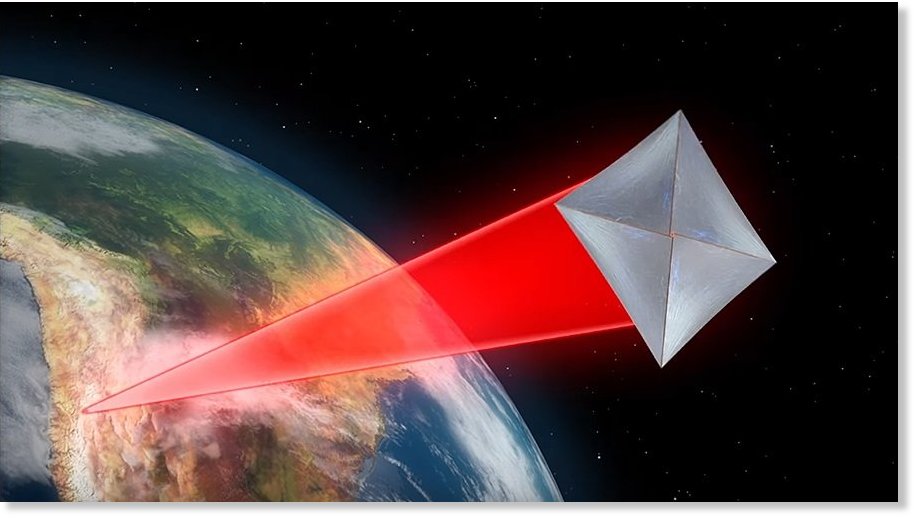
Hawking announced the ground-breaking project back in April which aims to slash interstellar space exploration times by using lasers to propel a nano-spacecraft the size of a postage stamp, called StarChip.

However, a 1cm-sized ship in space faces some major obstacles, in particular, radiation, according to researchers at NASA and the Korea Institute of Science and Technology (KAIST) who are working on the project.

Microscope 2

Discovery: Mutated fish that have become 8,000 times more resistant to toxic waste

golden fish
© Andrew Whitehead/UC DavisThe Future of Fish
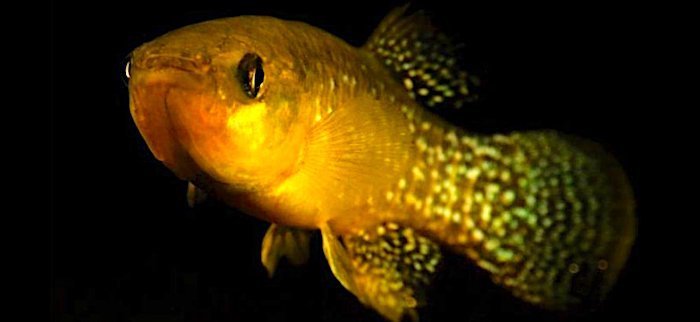
Researchers have discovered that a fish living off the east coast of the US has evolved to be 8,000 times more resilient to toxic waste than normal fish. The small striped 'mud minnow', or killifish, is known for living in heavily polluted estuaries such as New Jersey's Newark Bay and Virginia's Elizabeth River. And scientists have now shown that it survives thanks to an extreme mutation that lets them endure toxic waste.

The killifish is a favourite among aquarium owners for its small size and beautiful colours. It's also a favourite for ecologists as an indicator species, acting as an aquatic canary in polluted environments. "You see killifish at these sites that are extremely tolerant of some very nasty chemical pollutants," environmental toxicologist Andrew Whitehead from the University of California, Davis, told National Geographic.

The mix of dioxins, polychlorinated biphenyl (PCB), and heavy metals in these sites were anywhere up to 8,000 times the level that would make most killifish go belly-up. Just like Blinky the three-eyed fish from the Simpsons, these fish were thriving in a toxic soup. Unlike good old Blinky, there was nothing physically different about these populations. Their genes told a different story, however.

Microscope 2

Wake-up call for criminal justice system: Forensic evidence largely unsupported by sound science

forensic science
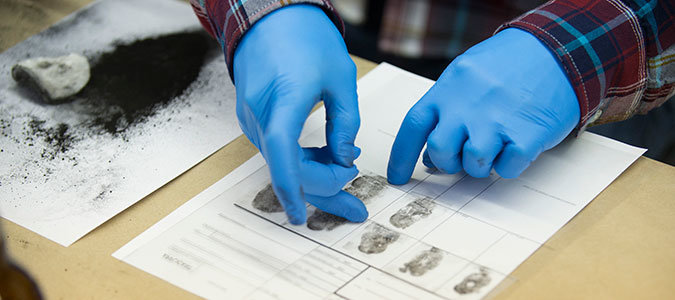
Forensic science has become a mainstay of many a TV drama, and it's just as important in real-life criminal trials. Drawing on biology, chemistry, genetics, medicine and psychology, forensic evidence helps answer questions in the legal system. Often, forensics provides the "smoking gun" that links a perpetrator to the crime and ultimately puts the bad guy in jail.

Shows like "CSI," "Forensic Files" and "NCIS" cause viewers to be more accepting of forensic evidence. As it's risen to ubiquitous celebrity status, forensic science has become shrouded in a cloak of infallibility and certainty in the public's imagination. It seems to provide definitive answers. Forensics feels scientific and impartial as a courtroom weighs a defendant's possible guilt - looking for proof beyond a reasonable doubt.

But the faith the public and the criminal justice system place in forensic science far outpaces the amount of trust it deserves.

For decades, there have been concerns about how the legal system uses forensic science. A groundbreaking 2009 report from the National Academy of Sciences finally drew the curtain back to reveal that the wizardry of forensics was more art than science. The report assessed forensic science's methods and developed recommendations to increase validity and reliability among many of its disciplines.

Comment: See also:


Comet 2

One of the rarest crystals on Earth has been found in a Russian meteorite

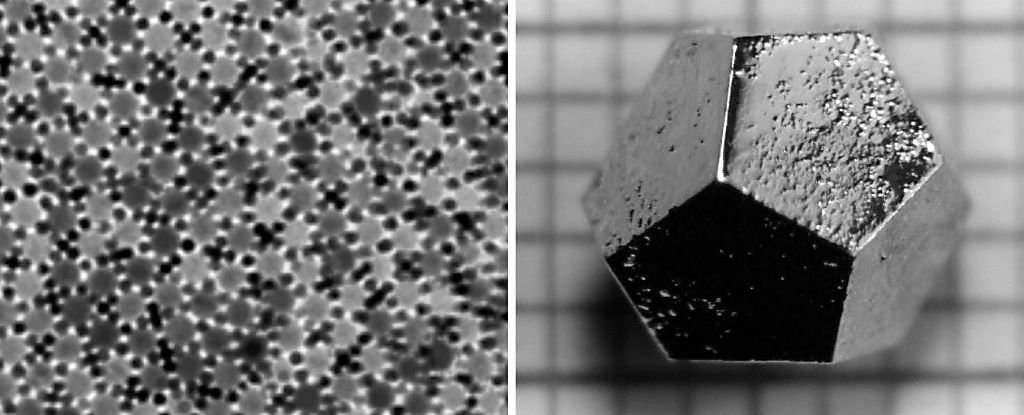
Quasicrystal atomic structure (L): Talapin et al; Synthetic quasicrystal (R)
© US Department of EnergyQuasicrystal atomic structure (L): Talapin et al; Synthetic quasicrystal (R)
Physicists have uncovered an ultra-rare quasicrystal in a piece of Russian meteorite, and it's only the third time ever that we've seen one of these strange materials in nature.

Originating in outer space, these crystals aren't just incredible because of how rare they are - their atomic structure is so peculiar, for decades their existence was dismissed as "impossible", and they cost the scientist who first discovered them his job.