Science & TechnologyS


Saturn

Beginning the final chapter: NASA's 'Cassini' makes first plunge to orbit Saturn's rings

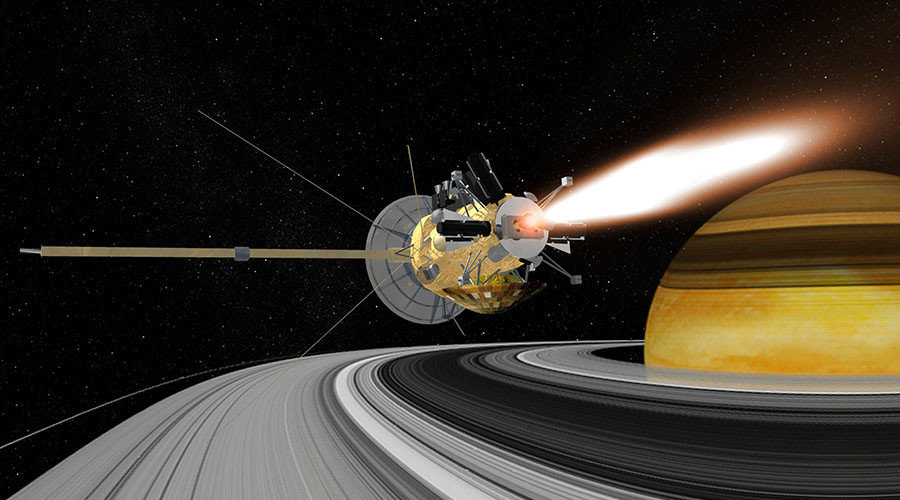
Cassini will end its mission by plumetting into Saturn
© ReutersCassini will end its mission by plummeting into Saturn.
NASA's Cassini spacecraft has made its first dive past one of Saturn's outer rings, beginning the final chapter of its mission.

Cassini skimmed Saturn's F ring, the outermost of the planet's visible rings, at a distance of 11,000km (6,800 miles) according to NASA, beginning the first of 20 orbits during which it will study the rings.

"It's taken years of planning, but now that we're finally here, the whole Cassini team is excited to begin studying the data that comes from these ring-grazing orbits," project scientist Linda Spilker said.

Christmas Tree

Study finds plants are capable of associative learning, an ability thought exclusive to animals

plant intelligence
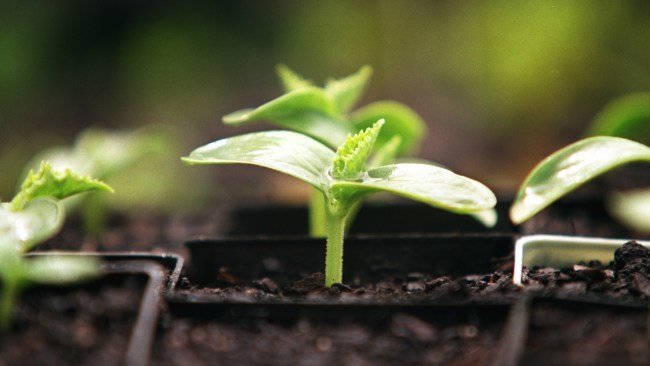
Plants can learn about their environment by linking events, researchers from The University of Western Australia have found.
A new study led by The University of Western Australia has demonstrated for the first time that plants can learn about their environment by making links between events, an ability thought to be exclusive to animals.

The international research team, led by Research Associate Professor Monica Gagliano from UWA's Centre for Evolutionary Biology, in collaboration with researchers from the Universities of Oxford and Zurich, set out to prove plants were capable of associative learning.

The study, published in the online journal Scientific Reports, was inspired by Pavlov's experiments with dogs, one of the most revealing studies in the history of behavioural research, which demonstrated that behaviour could be changed using conditioning.

Through a range of behavioural experiments, the team was able to provide convincing evidence that plants were capable of learning a particular association between the occurrence of one event and the anticipation of another.

Comment: See also:


Galaxy

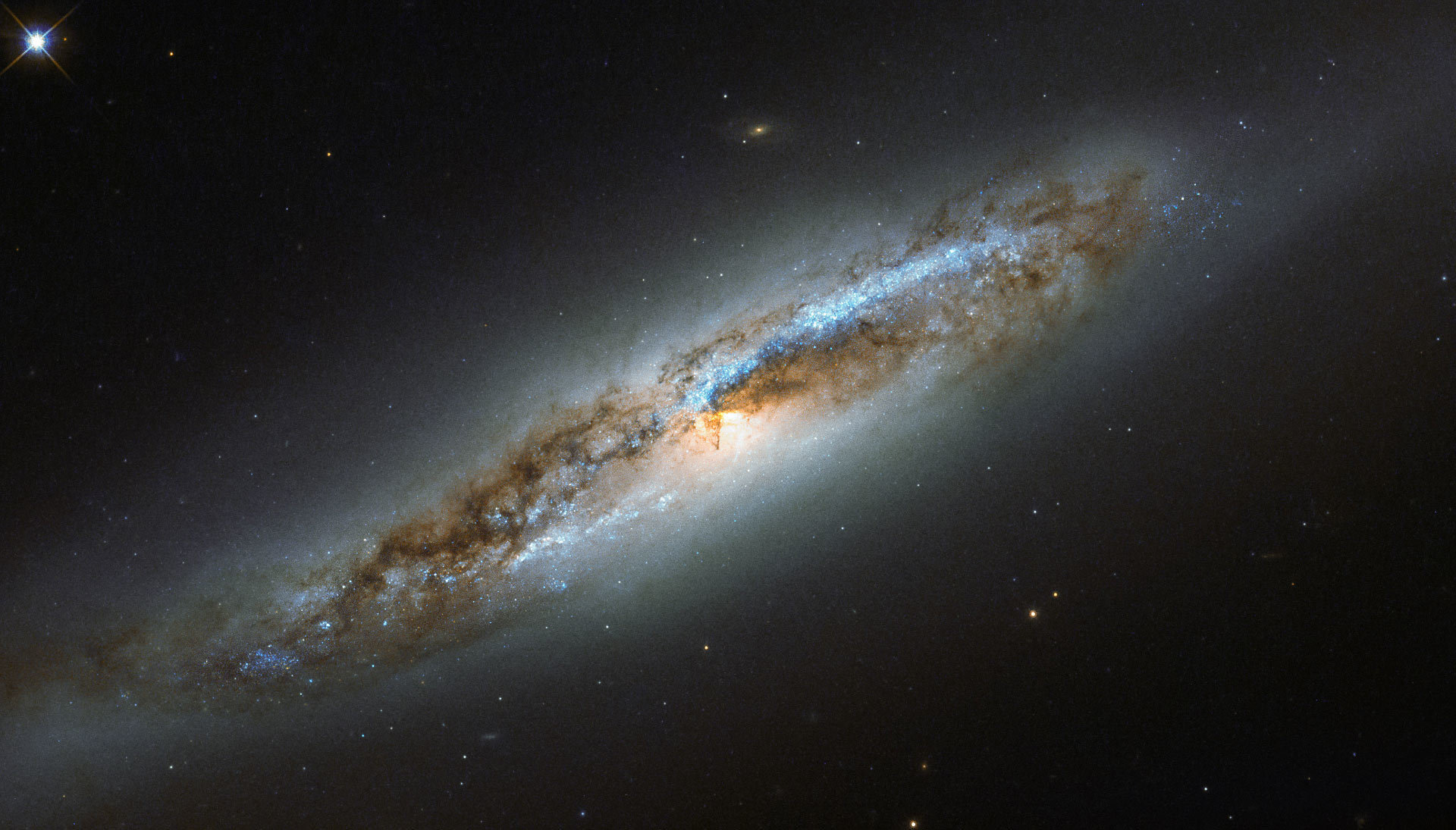
The NASA/ESA Hubble Space Telescope has taken a colorful photo of NGC 4388

NGC 4388
© NASANGC 4388
NGC 4388 is a highly inclined spiral galaxy located in the constellation Virgo at a distance of 59 million light-years.

It was discovered on April 17, 1784 by British astronomer Sir Wilhelm Herschel.

Also known as LEDA 40581 and IRAS 12232+1256, NGC 4388 is one of the brightest galaxies in the Virgo Cluster, a group of more than 2,000 galaxies.

NGC 4388 has a bright energetic nucleus and so is classified as an active galaxy.

Rocket

Rocket men: For tech's biggest billionaires, space exploration is the ultimate status symbol

Rocket
Forget gilded mansions and super yachts. Among the tech elite, space exploration is now the ultimate status symbol.
The explosion could be felt 30 miles away. At 9.07am on 1 September, a SpaceX rocket containing 75,000 gallons of liquid oxygen and rocket-grade kerosene ignited into a fireball that could be seen from orbit, billowing black smoke into the gray sky around its Cape Canaveral launch pad.

On board was a $200m, 12,000lb communications satellite - part of Facebook CEO Mark Zuckerberg's Internet.org project to deliver broadband access to sub-Saharan Africa.

Zuckerberg wrote, with a note of bitterness, on his Facebook page that he was "deeply disappointed to hear that SpaceX's launch failure destroyed our satellite". SpaceX founder Elon Musk told CNN it was the "most difficult and complex failure" the 14-year-old company had ever experienced.

It was also the second dramatic explosion in nine months for SpaceX, following a "rapid unscheduled disassembly" of a booster rocket as it attempted to land after a successful mission to the International Space Station.

Sun

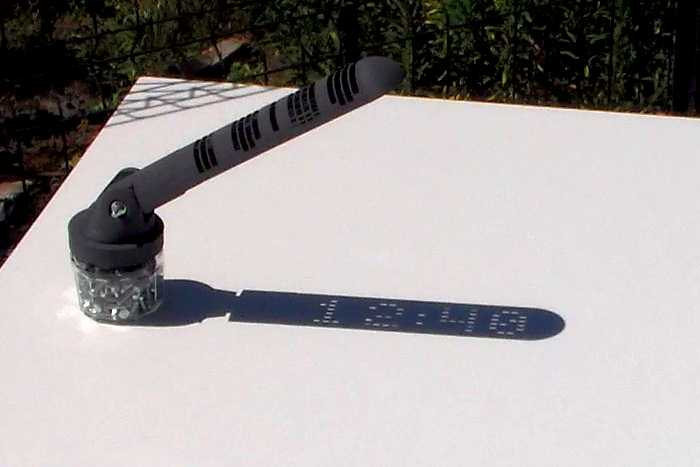
It took thousands of years, but we finally have a digital sundial

Digital sun dial
Digital sun dial
From around 1500 BCE, right up to the 14th century, many of our ancestors figured out the time using a sundial - you know, those triangular devices that cast a shadow on a dial below, revealing what hour it was.

They might not be as accurate as the clocks we have today, but sundials still work based on the simple premise of the Sun's predictable shift in position as our planet spins. And now a French engineer has finally brought the device into the digital age, creating a 3D-printed sundial that displays the time in '80s-style digital-style numbers.

Okay, so it's not technically digital. But a Earth spins on its axis and the position of the Sun shifts in our sky, the beams of light travel through an intricate network of tiny holes printed onto the sundial, to display a digital-style time readout on the moving shadow.

You can see the sundial in action below:

Bulb

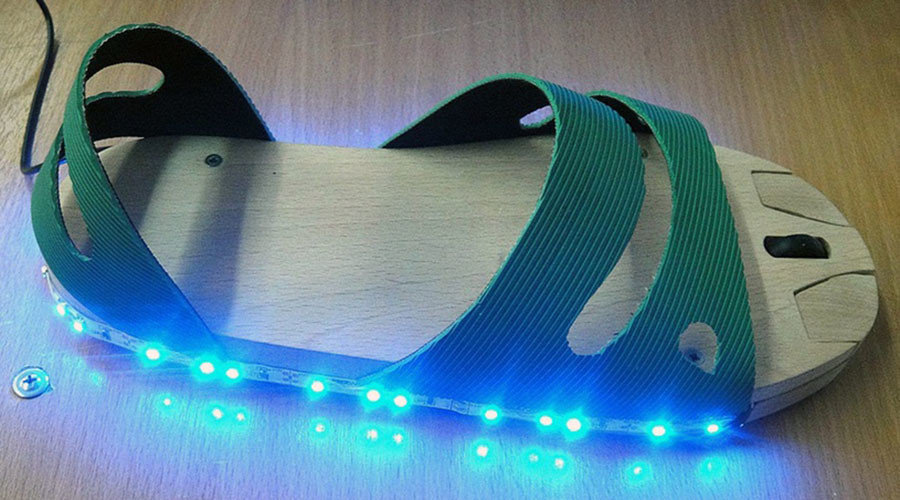
Russian teen desperate to help a schoolmate invents LED 'mouse-sandal' for people who have no hands

mouse-sandal
© Galina Sokolova Mouse-sandal equipped with LED ribbon allows people to work on computer by using only feet
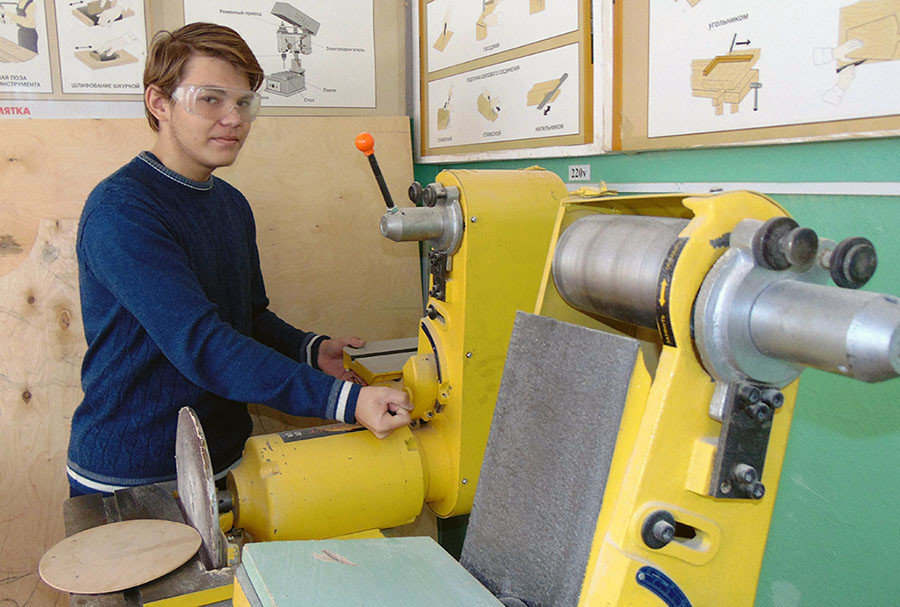
A high-school student in the remote Russian town of Kushva has invented a computer mouse for people who have no hands. The hands-free device is a sandal with control board from a normal mouse inside, and a LED ribbon outside to help spot it in the dark.

The mouse-sandal is said to be easy to use. Sergey Halyavin, the young inventor, first tested it himself, and only two weeks later, he could easily play computer games, Oblgazeta.ru reported.

"The idea of a device that would help work on the computer with one's feet came to me in 2015," the teen told ura.ru.

Sergey said he was desperate to help a schoolmate, who is suffering from a musculoskeletal condition and is unable to work on the computer, using a normal mouse.

mouse-sandal inventor Sergey Halyavin
© Galina Sokolova Sergey Halyavin, a Russian high school student, invented the mouse-sandal to help his schoolmate suffering from a musculoskeletal disorder

Laptop

Amazon will provide CIA with cloud computing

CIA and amazon
The intelligence community is about to get the equivalent of an adrenaline shot to the chest. This summer, a $600 million computing cloud developed by Amazon Web Services for the Central Intelligence Agency over the past year will begin servicing all 17 agencies that make up the intelligence community. If the technology plays out as officials envision, it will usher in a new era of cooperation and coordination, allowing agencies to share information and services much more easily and avoid the kind of intelligence gaps that preceded the Sept. 11, 2001, terrorist attacks.

For the first time, agencies within the IC (intelligence community) will be able to order a variety of on-demand computing and analytic services from the CIA and National Security Agency. What's more, they'll only pay for what they use.

The vision was first outlined in the IC Information Technology Enterprise plan championed by Director of National Intelligence James Clapper and IC Chief Information Officer Al Tarasiuk almost three years ago. Cloud computing is one of the core components of the strategy to help the IC discover, access and share critical information in an era of seemingly infinite data.

Sherlock

Researchers develop pesticide biosensor

pesticida pesticides
© REUTERS/Sukree Sukplang
When does too much of something become a bad thing? That's the question Dr. Jonathan Claussen, assistant professor at Iowa State University's Department of Mechanical Engineering, and his team of researchers aim to help farmers answer when it comes to pesticide use.

Claussen and his team created a flexible, low cost and disposable biosensor that can detect pesticides in soil. This biosensor is made of graphene, a strong and stable nanoparticle, and provides instantaneous feedback, as opposed to the time and money it would otherwise take to send a sample to a lab and await results.

The growing interest in biodetection from consumers and the food industry itself has reached a global audience. Detecting genetically modified organisms and pesticides in very low concentrations with smart phones will one day be a reality.

USDA's National Institute of Food and Agriculture (NIFA) supported the project with an Agriculture and Food Research Initiative (AFRI) grant as part of the Nanotechnology Program.

The biosensor is made by first printing graphene ink onto paper. A laser then traces over the ink to improve its electrical conductivity by welding together flakes of the graphene ink, making a nanostructured surface that is three dimensional.

Microscope 1

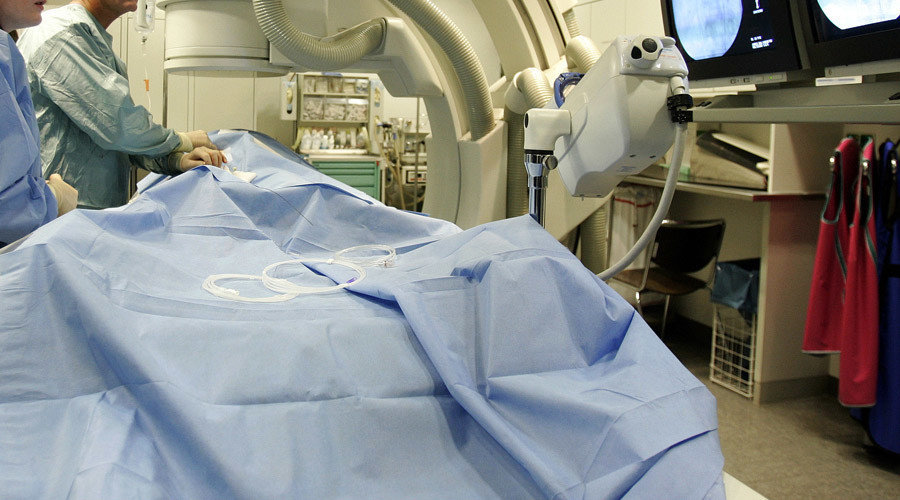
Counter-intuitive prostate cancer treatment shows great promise, doctors still 'figuring out how this works'

medical treatment cancer
© Alexandra Beier / Reuters
An experimental prostate cancer therapy could revolutionize treatment. By "shocking" tumors with large amounts of testosterone and then depriving it of the same hormone, doctors from Johns Hopkins University halted the progression of the disease.

A man with advanced prostate cancer decided to try an unconventional method, and he's probably glad he did. Doctors from Johns Hopkins University School of Medicine in Baltimore "shocked" his tumors with large amounts of testosterone, and he has been cancer free since.

The study was led by Professor Sam Denmeade, who told the Telegraph: "We are still in the early stages of figuring out how this works and how to incorporate it into the treatment paradigm for prostate cancer."

However, if the results from the test hold up through future testing, it could completely change how prostate cancer is treated. Traditionally, prostate cancer is treated by depriving the cancer of testosterone, because it was thought that the male hormones stimulate and fuel cancer cells, EurekaAlert! reported.

Brain

Neuroscience as a tool of war

neuroscientists
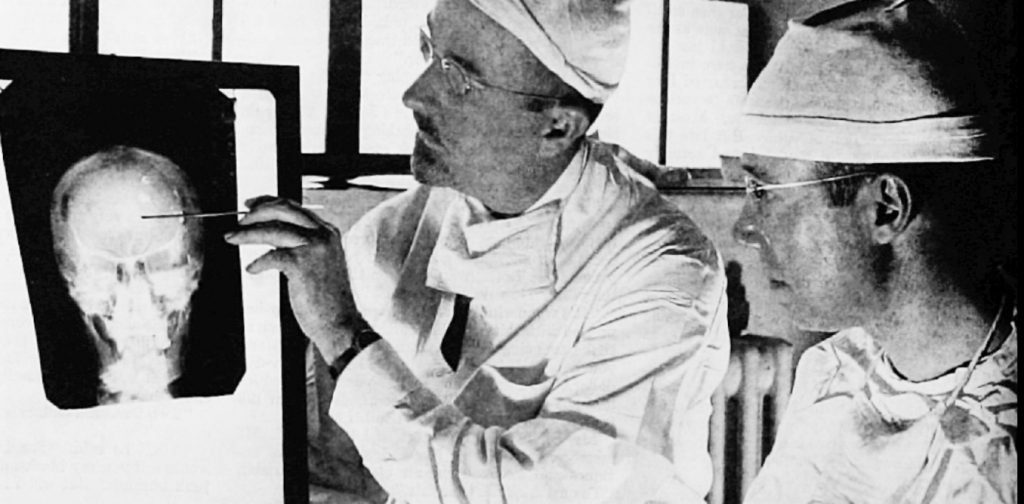
© Saturday Evening Post/Harris A. EwingA discipline neither good nor evil.
What could once only be imagined in science fiction is now increasingly coming to fruition: Drones can be flown by human brains' thoughts. Pharmaceuticals can help soldiers forget traumatic experiences or produce feelings of trust to encourage confession in interrogation. DARPA-funded research is working on everything from implanting brain chips to "neural dust" in an effort to alleviate the effects of traumatic experience in war. Invisible microwave beams produced by military contractors and tested on U.S. prisoners can produce the sensation of burning at a distance.

What all these techniques and technologies have in common is that they're recent neuroscientific breakthroughs propelled by military research within a broader context of rapid neuroscientific development, driven by massive government-funded projects in both America and the European Union. Even while much about the brain remains mysterious, this research has contributed to the rapid and startling development of neuroscientific technology.

And while we might marvel at these developments, it is also undeniably true that this state of affairs raises significant ethical questions. What is the proper role - if any - of neuroscience in national defense or war efforts? My research addresses these questions in the broader context of looking at how international relations, and specifically warfare, are shaped by scientific and medical expertise and technology.