Science & TechnologyS


Robot

Who will be the next Einstein - artificial intelligence?

Artintell
© whiteMocca | Shutterstock.com
Forget the Terminator. The next robot on the horizon may be wearing a lab coat.

Artificial intelligence (AI) is already helping scientists form testable hypotheses that enable experts to run real experiments, and the technology may soon be poised to help businesses make decisions, one scientist says.

However, that doesn't mean the machines will be taking over from humans entirely. Instead, humans and machines have complementary skillsets, so AI could help researchers with the work they already do, Laura Haas, a computer scientist and director of the IBM Research Accelerated Discovery Lab in San Jose, California, said here Wednesday (Dec. 7) at the Future Technologies Conference. [Super-intelligent Machines: 7 Robotic Futures]

"The machine will come to be a strong partner to humans," akin to the android Data on the TV series Star Trek: The Next Generation, Haas said.

Info

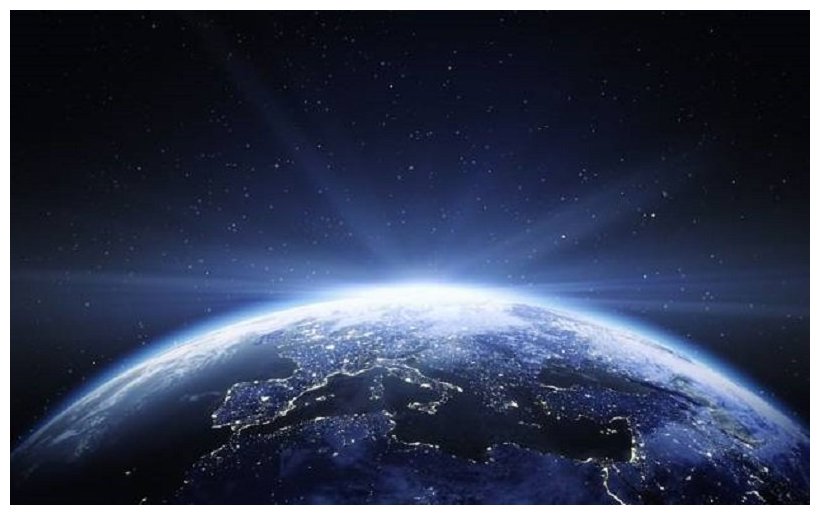
Hot hydrogen atoms in upper layer of Earth's atmosphere discovered by researchers

Earth's Atmosphere
© News NationHot hydrogen atoms found in Earth's atmosphere.
Washington: Hot hydrogen atoms exist in thermosphere, the upper layer of the atmosphere of the Earth, scientists have discovered. According to researchers, this discovery changes the current understanding of the distribution of the hydrogen (H) as well as its interaction with other atmospheric constituents.

The H atoms are easily able to overcome the gravitational force of a planet and manage to permanently escape into interplanetary space due to their light weight.

Researchers said that Mars has lots the majority of its water because of the ongoing escape of the H atoms.

H atoms play a crucial role in the physics that govern the upper atmosphere of the Earth. They also act as an important shield for technological assets of the societies, such as the numerous satellites in low earth orbit, against the harsh space environment.

"Hot H atoms had been theorised to exist at very high altitudes, above several thousand kilometres, but our discovery that they exist as low as 250 kilometres was truly surprising," said Lara Waldrop, Assistant Professor from University of Illinois' Coordinated Science Laboratory in the US.

"This result suggests that current atmospheric models are missing some key physics that impacts many different studies, ranging from atmospheric escape to the thermal structure of the upper atmosphere," said Waldrop.

Brain

Elon Musk's Neural Lace: Connect to the internet just by thinking about it

active brain neurons
Anyone familiar with scientist and inventor extraordinaire Elon Musk knows that he has some visionary ideas for the future.

For example, his Hyperloop transport system, which will be able to move people and cargo at speeds of unto 800 mph, could revolutionize transportation. He is also the founder of Space X, the company behind building interplanetary rockets that will, according to Musk, transport everything required to build a colony on Mars. His reusable interplanetary transport system (ITS) will move 100 people at a time to the off-world base once it is ready for occupation.

The latest creation from Elon Musk is the one that should have you worried.

If you thought the Apple Watch was a bit much, wait until you hear about this.

The next creation from Musk is "Neural Lace," a computer interface implanted directly into the human brain. As one example, it could allow users to connect to the internet merely by thinking about it.
It could either be passive, representing an implanted, glorified smartphone, or it could be active and directly communicate back and forth with our mind by interfering with our brain's thought patterns. Musk is a firm believer that artificial intelligence (AI) will outmaneuver our own in the future, and this could be seen as a way of allowing us to "team up" with it - to keep pace with it, so we aren't left behind. (source)
It wouldn't even have to be surgically implanted.

Microscope 1

Ayahuasca found to stimulate the brain, helping fight against Down's Syndrome and Alzheimer's

Ayahuasca ceremony
© Lunae Parracho / Reuters
The hallucinogenic drink ayahuasca stimulates the brain, helping it fight Alzheimer's and Down syndrome, according to a new study.

Ayahuasca has been studied before for its ability to fight depression, but in the latest research, published in PeerJ, one of the main substances present in the drink, harmine, was exposed to human neural cells.

"It has been shown in rodents that antidepressant medication acts by inducing neurogenesis. So we decided to test if harmine, an alkaloid with the highest concentration in the psychotropic plant decoction ayahuasca, would trigger neurogenesis in human neural cells," one of the study's authors, Vanja Dakic, told Science Daily.

The results found that the protein encoding gene DYRK1A, which is over-activated in patients suffering from Alzheimer's and Down syndrome, was prevented from working when exposed to the substance.

Snowflake Cold

Unfrozen: Greenland was once ice-free for 280,000 years

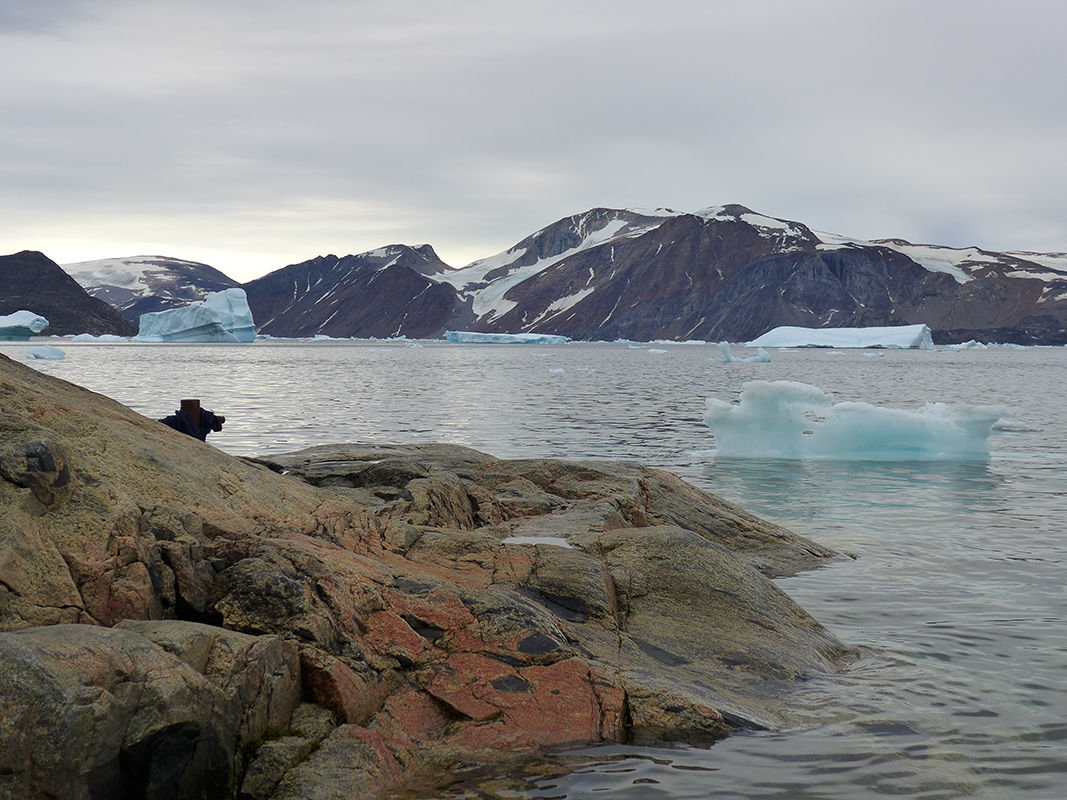
Kullorsuaq, western Greenland.
© Margie Turrin/Lamont-Doherty Earth ObservatoryIcebergs discharged from Allison Glacier float near Kullorsuaq, western Greenland.

More than a million years ago, frosty Greenland was ice-free, its bare bedrock exposed for 280,000 years, researchers have found.

During this exposed stint, the island's overall ice cover could have dropped by more than 90 percent, the scientists reported today (Dec. 7) in the journal Nature.

Previous studies have reported that Greenland's ice shrank in the distant past, but this study is the first to explain how long a span Greenland may have endured without its usual frozen cover. This discovery hints that its surface ice was more variable than once thought — which does not bode well for its future stability in a warming world, the researchers said.

As valuable as moon rocks

The researchers gathered their data from isotopes — atoms of the same element but with a different number of neutrons — extracted from bedrock minerals. The isotopes, beryllium 10 and aluminum 26, are produced only by cosmic rays, which means that they only occur when the rock that holds them is exposed; as such they can offer clues about when rocks were bare of ice, and for how long.

Comment: This article on Live Science is a bit controversial as far as their view of Earth changes goes. It appears that the scientists who produced the data, along with the site itself, are quite blinded to simple questions this data raises because of their belief in man-made global warming.

The elephant in the room is obviously WHY a landmass at high latitude has over a very long period of time consistently frozen and then melted. After all, there was no mass burning of fossil fuels or dangerous levels of methane created by industrial animal farming.

There is data showing that the Earth simply goes through cyclical periods of warming and cooling. These periods are also interspersed with planetary cataclysms such as space object impacts and airbursts, unstable geological activity, disruptions in the Gulf Stream, natural disasters. Science's uniformitarian view of history and change cannot allow for such events though, because science is a symbol of man's control over nature and so those in the ivory towers of scientific and educational institutions hold the power of ancient priests.

To admit to the lack of control over cyclical catastrophes and the precariousness of life on Earth would rob the scientific establishment of its power over the people and rob the government of a placid and docile, easily controlled and subjugated public.


Sun

'Great American Eclipse' coming August 21, 2017

Phases of a total solar eclipse.
© Rick Fienberg / TravelQuest Int'l. / Wilderness TravelPhases of a total solar eclipse
On Aug. 21, 2017, the first total solar eclipse to cross over the continental United States in nearly four decades will occur — and the American Astronomical Society (AAS) has launched a new website and small grants program to engage skywatchers in the viewing experience.

The eclipse, which has also been called the "Great American Eclipse," or "All-American Eclipse," will darken skies from Oregon to South Carolina along a stretch of land that's about 70 miles (113 kilometers) wide. This event is the first total solar eclipse "to touch the U.S. mainland since 1979, and the first to span the continent since 1918," AAS officials said in a statement.

Cloud Lightning

Perhaps lightning powers the wind

Lightning
Weather on Earth is thought to be driven by solar influences on the atmosphere. As Earth rotates beneath the Sun, gases and dust absorb radiation in varying degrees. Heat causes the air to expand and lose density, creating low pressure regions. Denser cold air naturally flows into low pressure, creating convection. Most weather systems, on Earth or elsewhere, are thought to rely on that kinetic explanation: winds blow when cooler, denser air flows into warmer, buoyant air.

However, rather than neutral dust motes building up raindrops due to condensation, ions attract water molecules in the atmosphere. Dust hanging in the air acquires electric charge, making it more attractive to water vapor, because Earth possesses a vertical clear-air electric field of 50 - 200 volts per meter.

Since water molecules are tiny electric dipoles, they are attracted to each other, so they clump together due to Earth's "fair weather field." Charged, polarized water droplets are levitated in an electric field between the ionosphere and the ground, therefore cloud height varies because of changes in the atmospheric field. It is sometimes reported in various science journals that lightning from global thunderstorms creates Earth's electric field. In an Electric Universe, it is charged clouds that short-circuit the atmospheric insulator over many kilometers, generating lightning. Vertical winds in thunderstorms provide evidence that clouds are electrically driven.

Attention

High levels of recently deposited cosmic dust found on rooftops in 3 major European cities

View of Paris
© Charles Platiau / Reuters
Tiny particles dating back to the birth of the solar system some 4.6 billion years ago have been discovered on rooftops in Paris, Oslo and Berlin.

Previously, the space debris was only found in Antarctica and deep parts of the ocean, but this is the first time, cosmic dust has appeared in major cities.

Scientists looked through 300 kilograms of grime from the gutters of roofs in the three cities and used magnets to extract the particles, which also contain minerals consisting of magnetic materials. In the process, researchers discovered 500 cosmic dust grains.

The particles, which are roughly 0.01 millimetres in size, fell to earth after forming. Researchers hope that by analyzing the dust, scientists will be able to understand how the early solar system evolved.

Comment: They won't spit it out for you, so allow us: the major increase in meteor fireballs hitting the atmosphere is leaving its mark. Cosmic. The increase in cosmic dust-loading of Earth's atmosphere has climate consequences... For a comprehensive analysis of this dangerous situation see Earth Changes and the Human-Cosmic Connection.


Health

Israeli biomedical company successfully transplants lab-grown bones in human patients

bonus biogroup, lab grown bones
An Israeli biomedical company has reported that they have successfully grown bone tissue in a laboratory environment, and then transplanted it into the bodies of eleven human patients.

According to Reuters the Israeli company Bonus Biogroup announced successful clinical trial results, after extracting fat cells from the bodies of eleven patients and creating a semi-liquid bone graft that they brand as 'BonoFill.' The patients had suffered bone loss in the jaw, and the BonoFill material was successfully used to repair the damaged areas. The company reported a successful result for all eleven patients.

Microscope 1

Study finds Caesareans alter human evolution

newborn baby
© Ahmed Saad / ReutersThe research found a 20 percent increase in the procedure being required
Caesarean sections are affecting evolution, according to new research which claims the surgery is allowing for an increase in women born with a narrow pelvis.

The number of cases in which a baby is unable to fit down the mother's birth canal has increased 20 percent worldwide from 30 in 1,000 to 36 in 1,000 since the procedure became commonplace in the '50s, according to research from the University of Vienna.

"Women with a very narrow pelvis would not have survived birth 100 years ago. They do now and pass on their genes encoding for a narrow pelvis to their daughters," Dr Philipp Mitteroecker from the university told the BBC.

One in three babies born in the US are through caesarean section according to the World Health Organization (WHO), with the UK slightly lower at one in four.