Science & TechnologyS


Solar Flares

Planet-eating death star discovered by astronomers

sun eats planet
© NASA / Reuters
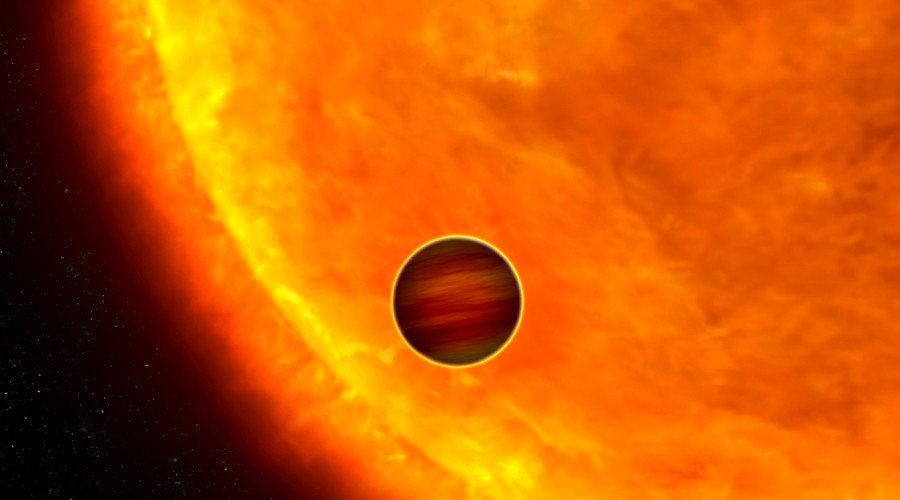
A sun in a far off galaxy has been digesting its orbiting planets, according to new research. The contents of HIP68468's 'belly' led scientists to believe the star had quite the appetite.

Taking a cue from the famous "Death Star" in the Star Wars film saga, HIP68468 is theorized to have destroyed planets that veered into its path due to an orbit much closer than Earth is to the our own sun. Unlike the "Death Star" though, the planets were engulfed by it and became part of its composition.

HIP68468's composition "points to a history of ingesting planets," according to the research, published in the journal Astronomy & Astrophysics.

"It doesn't mean that the sun will 'eat' the Earth any time soon," said the report's co-author, Jacob Bean, assistant professor of astronomy and astrophysics at University of Chicago, explaining how the planet contains "four times more lithium than would be expected for a star that is 6-billion-years old."

"Our discovery provides an indication that violent histories may be common for planetary systems, including our own," Bean says.

Rocket

Hawaii: US Navy conducts missile tests off Kauai

Missile on launch pad
© Leah Garton/Missile Defense AgencyThe Missile Defense Agency and sailors aboard USS John Paul Jones (DDG 53) successfully fired a salvo of two SM-6 Dual I missiles against a complex medium-range ballistic missile target on Dec. 14, 2016 off Hawaii.
The Missile Defense Agency and Navy continued testing the versatility of the SM-6 missile with a salvo of two missiles fired at a ballistic missile target in the "terminal" or final phase of flight early this morning off Hawaii. The Pearl Harbor destroyer USS John Paul Jones fired the defensive missiles after a target missile was launched from the Pacific Missile Range Facility on Kauai just after midnight. The target missile represented a medium-range ballistic missile — something the U.S. military is increasingly concerned about.

The SM-6 Dual 1 missiles fired by the John Paul Jones can be used for either increasingly sophisticated and lethal cruise missiles that come in low and ballistic missiles in the terminal phase of their arc. The Aegis sea-based missile defense element utilizes Aegis cruisers and destroyers to defend against short- to medium-range ballistic missiles in the midcourse of flight as well as in the terminal phase, which is short and begins once the missile reenters the atmosphere, MDA said.

Tornado1

Study warns tornadoes in Europe are an underestimated threat

tornado germany
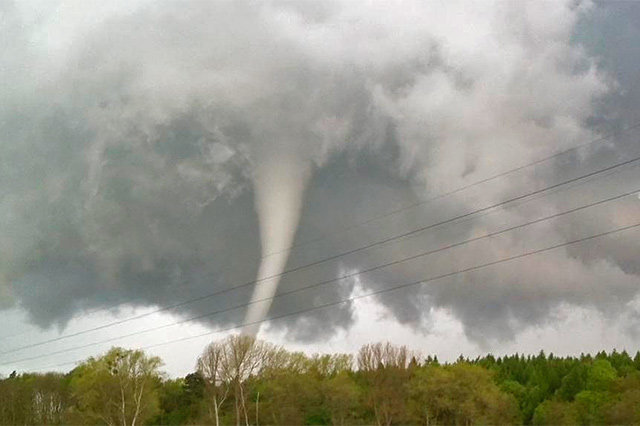
F3 tornado near Rostock, Germany.
A new research paper warns that although tornadoes in Europe cause injuries, fatalities, and damages, their threat is not widely recognized and is underestimated. To increase awareness of tornadoes and their threat to the continent, authors of the paper propose a strategy that includes a collaboration between meteorological services and development of national forecasting and warning systems.
A team of researchers led by Bogdan Antonescu and David M. Schult analyzed the social and economical impact of tornadoes in Europe using reports from the European Severe Weather Database (ESWD) between 1950 and 2015.

Although the reported frequencies and intensities of tornadoes in Europe are lower compared with the United States, tornadoes do occur in Europe and they are associated with injuries, fatalities and damages.

Arrow Down

US shale boom has already 'peaked' says former govt geoscientist - industry 'now in decline'

fracking gas well
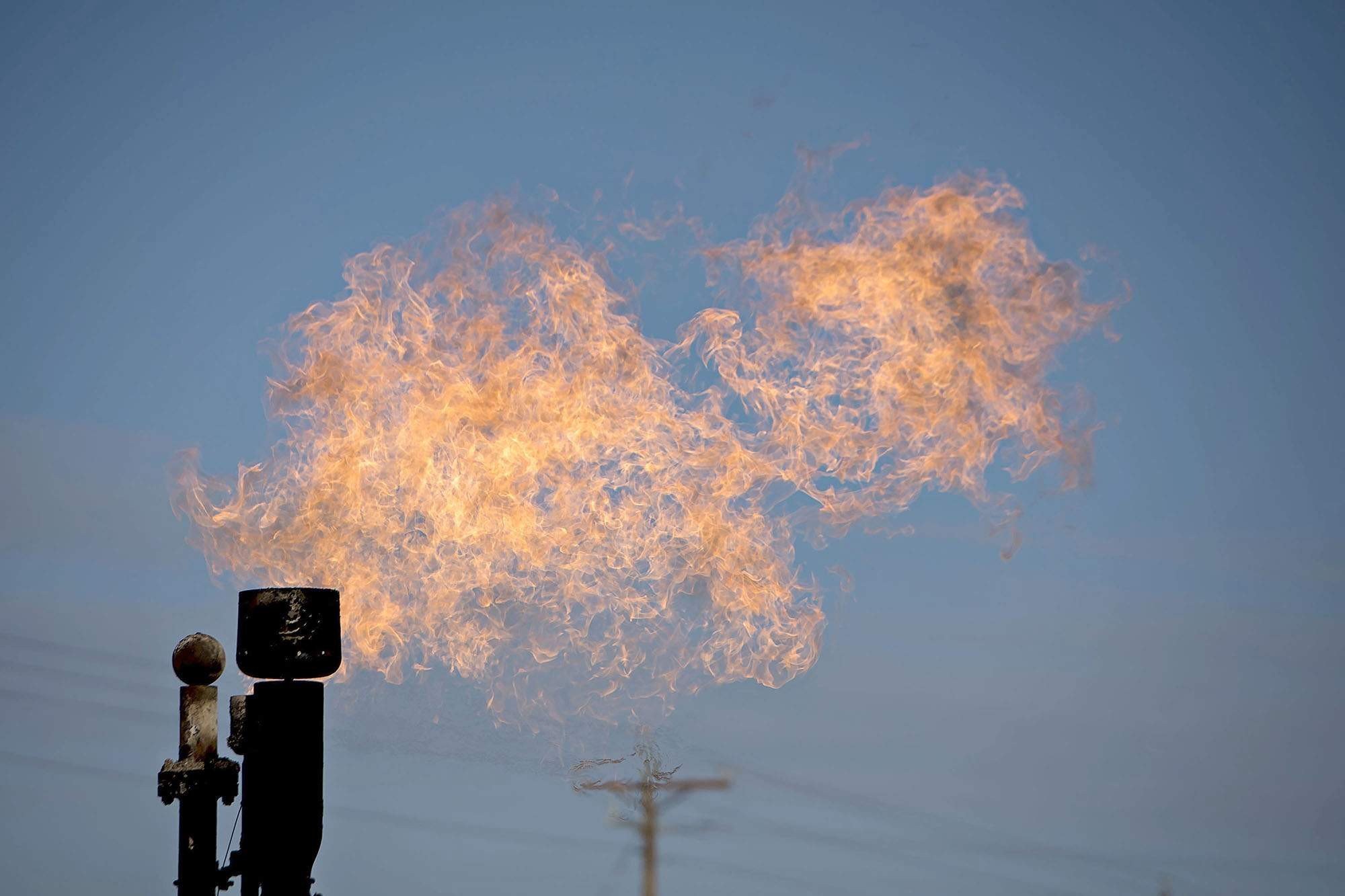
© Daniel Acker/Bloomberg News
Fracking revolution now in decline

A former Canadian government geoscientist has just published new research showing that US shale oil and gas production has peaked, and is unlikely to increase substantially for the foreseeable future.

The two new reports find that US forecasts of oil and gas abundance are over-hyped, unrealistic, and ignore mounting evidence of an industry in decline.

On Monday, the Post Carbon Institute published two new studies by Dr J. David Hughes, a former research manager for 32 years at the Geological Survey of Canada, where he headed up research on unconventional gas and coal.

Hughes found that the US Energy Information Administration's (EIA) optimistic forecasts of US shale oil and gas production are "highly unlikely to be realized."

US shale oil production peaked in March 2015, and has since declined a million barrels a day. US shale gas production peaked in February 2016, and since declined 2.1 billion cubic feet per day.

Comment: The oil shortage is like a manufactured crisis.


Cloud Precipitation

Giant 'rivers in the sky' could cause extinction-level floods

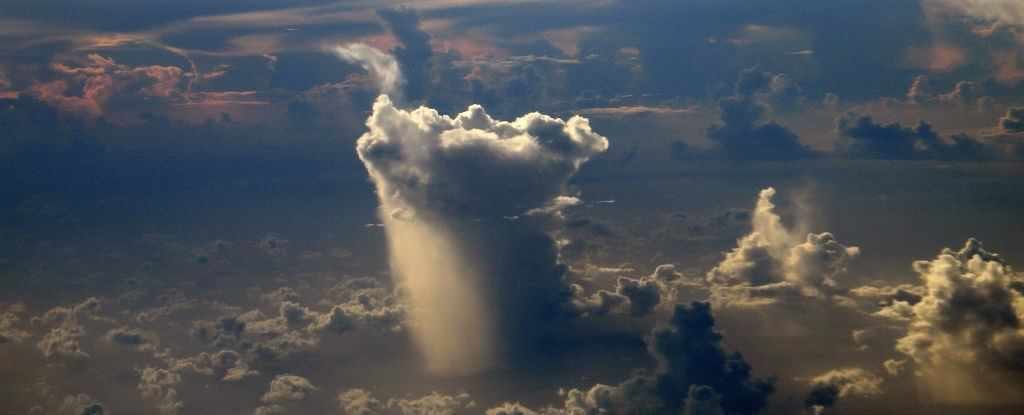
Rain cloud burst

Atmospheric rivers have claimed their first victims.


Atmospheric rivers - narrow corridors of concentrated moisture suspended in the atmosphere - were responsible for the mysterious mass die-off of wild Olympia oysters in San Francisco Bay in 2011, scientists have found.

This is the first documented case of these 'rivers in the sky' - which can hold 15 times more water than the Mississippi River - directly harming an entire population, and they're expected to increase in frequency, intensity, and unpredictability as the global climate warms.

"Extreme events are predicted to be more prevalent under climate change," the University of California, Davis team reports.

"We highlight a new mechanism by which precipitation extremes appear to affect a sensitive species, contributing to the near 100 percent mass mortality of wild oysters in northern San Francisco Bay."

If you're not familiar with the natural phenomenon of atmospheric rivers, they're relatively narrow regions in the atmosphere that are responsible for most of the horizontal transport of water vapour outside of the tropics.

These suspended moisture plumes are, on average, 400 to 600 km wide, and in California, they can deliver up to half of the state's annual precipitation in just 10 to 15 days.

While most atmospheric rivers are mild, the ones containing the largest amounts of water vapour and the strongest winds can create extreme rainfall and floods, inducing catastrophic mud slides and drops in salinity.

They have been linked to all seven declared floods on California's Russian River between 1996 and 2007, and all 10 of Britain's largest floods since the 1970s.

Comment: See also:


Ice Cube

The ice is cracking in Antarctica: 'Pyramids' have been spotted, secret past emerging?

Antarctica pyramids
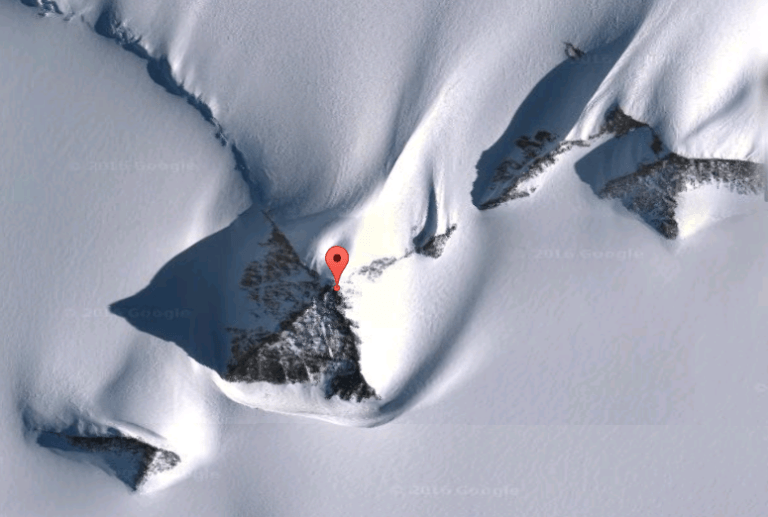
© Google Maps, 81°57’41.15″W 79°58’38.32″S
There are secrets in Antarctica. You can sense them from thousands of miles away.

And they are starting to come out.

A giant crack in the ice has freed an iceberg the size of a small U.S. state, and it will ignite the climate change/global warming debate; but this change will also offer unique perspective on the geological history that has never before been known. Ice is accumulating rapidly in one part of the continent, but melting in the other. According to Live Science:
Mysterious 'Crater' in Antarctica Has Ominous Cause:

A "crater" in Antarctica once thought to be the work of a meteorite impact is actually the result of ice melt, new research finds.


The hole, which is in the Roi Baudouin ice shelf in East Antarctica, is a collapsed lake — a cavity formed when a lake of meltwater drained — with a "moulin," a nearly vertical drainage passage through the ice, beneath it, researchers found on a field trip to the area in January 2016.

"That was a huge surprise," Stef Lhermitte, an earth science researcher at Delft University of Technology in the Netherlands and at the University of Leuven in Belgium, said in a statement. "Moulins typically are observed on Greenland. And we definitely never see them on an ice shelf."

Microscope 2

World first: London woman gives birth with help from ovarian tissue frozen before she reached puberty

frozen ovarian tissue successful birth
A London woman is believed to be the first in the world to give birth with the help of ovarian tissue that was frozen before she reached puberty. The tissue was removed from her body ahead of chemotherapy treatment needed to treat a blood disorder.

Moaza Al Matrooshi gave birth to a healthy baby boy on Tuesday, but her path to motherhood wasn't easy.

The 24-year-old was born with beta thalassaemia, an inherited blood disorder that is fatal if left untreated. She needed chemotherapy as a child, which damages the ovaries, before receiving a bone marrow transplant from her brother.

At the age of nine, long before most girls are faced with reproductive decisions, Al Matrooshi had her right ovary removed in an operation in Leeds, where the tissue was frozen.

Syringe

A blood test may hold the key to longevity

Blood Test
© AndresrA blood test may hold the key to your longevity.
If you're curious if you'll be alive in five years — and who isn't? — a blood test may provide the answer.

A new study suggests that an inflammatory marker found in middle-aged adults may be a more reliable predictor of longevity than other previous methods. Inflammatory markers are known to be associated with cancer, chronic heart disease, strokes and other serious conditions. The greater the inflammation, the more serious the disease.

In this study, a team of researchers from France and the United Kingdom collected data between 1997 and 1999 on more than 6,500 men and women ages 45 to 69.

Scientists looked at inflammation markers including interleukin-6 (IL-6), C-reactive protein (CRP) and alpha1-acid glycoprotein (AGP).

Subjects were followed to 2015 to see if they had died. In prior research, AGP was found to be the strongest predictor of death within five years. This new research, just published in the Canadian Medical Association Journal, found that IL-6 is a better predictor of dying in the short and long term. More study is needed. But the findings may be beneficial when coming up with individual health plans.

"Research on biomarkers is progressing fast, and it is important to undertake checks like in the one in our study, to shape future research on biomarkers," said Professor Archana Singh-Manoux, from University College London.


Brain

Scientists confirm Darwinism is broken

human evolution picture
© Wikimedia Commons Photo
Darwinian theory is broken and may not be fixable. That was the takeaway from a meeting last month organized by the world's most distinguished and historic scientific organization, which went mostly unreported by the media.

The three-day conference at the Royal Society in London was remarkable in confirming something that advocates of intelligent design (ID), a controversial scientific alternative to evolution, have said for years. ID proponents point to a chasm that divides how evolution and its evidence are presented to the public, and how scientists themselves discuss it behind closed doors and in technical publications. This chasm has been well hidden from laypeople, yet it was clear to anyone who attended the Royal Society conference, as did a number of ID-friendly scientists.

Maybe that secrecy helps explain why the meeting was so muffled in mainstream coverage.

Comment: Another idea on the topic: Origin of Life: The 5th OPTION


Einstein

Einstein wrong? - Speed of light is not a constant claims new theory

Theory of Relativity
© iStockphoto
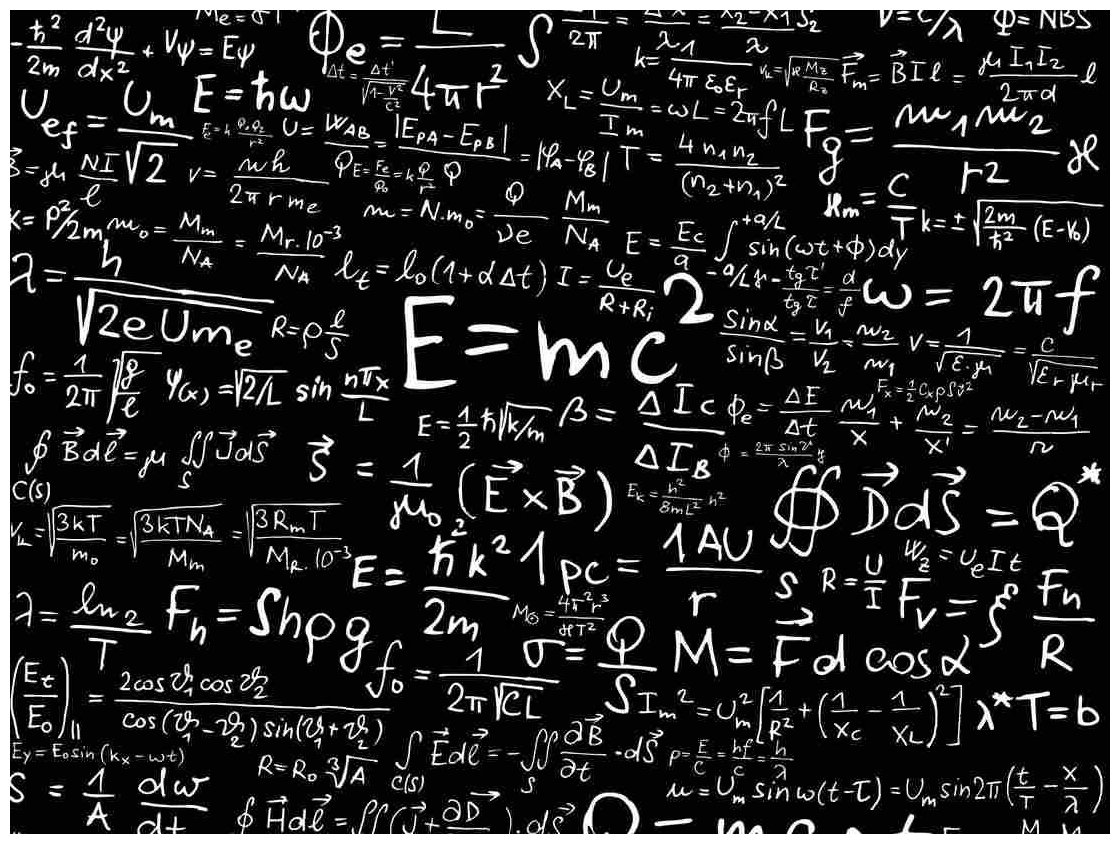
A potentially divisive theory suggests Einstein may have been wrong to say the speed of light is a constant - and the claims could soon be tested with a new generation of space telescopes.

Since it was first proposed more than 100 years ago, Einstein's theory of general relativity has been one of the fundamental theories upon which our understanding of the Universe is built. His groundbreaking theory relies on the notion that the speed of light is always a constant value - but a controversial new theory has been proposed that has the potential to turn this idea on its head.

Not only does the paper say Einstein was wrong about the speed of light, it also describes - for the first time - how can this notion can be tested in the future.

Professor João Magueijo from Imperial College London, and Dr Niayesh Afshordi from the University of Waterloo in Canada built the theory on a question about the very early Universe, which has plagued cosmologists for centuries.

In terms of the density of stars and galaxies, the Universe looks generally consistent over huge distances, which means light must have travelled far enough to reach every corner - otherwise there would be dense patches and light patches.

This has previously been explained by a theory called inflation, that says at the very start of the Universe there was a period of incredibly rapid growth. The new theory does away with inflation.