Science & TechnologyS


Info

Breath analysis can reveal various diseases

Breathing Yoga
© f9photos/iStockYour breath might be bad, but it's also amazing.
Your terrible breath is trying to tell you something—and not just that it's time to crack open a bottle of Listerine. Within that cloud of onion and stale tuna fish odors are hundreds of chemical compounds, which combine in your mouth to create a ratio as unique as a fingerprint. By analyzing that ratio, researchers have come up with a powerful new way to detect the signatures of various diseases, from prostate cancer to Parkinson's.

Today in the journal American Chemical Society Nano, researchers unveil a sensor array that identifies and captures the unique "breathprint" of 17 different diseases. The researchers hope that their array, which uses artificial intelligence to match up the varying levels and ratios of 13 key chemical compounds found in human breath to different diseases, will pave the way for a versatile medical diagnostic tool. After sampling the breath of more than 1,400 people, they found that their technique was able to discriminate among diseases with 86 percent accuracy.

The science behind the scent of a person's breath lies within the suite of organic chemical compounds that we routinely expel into the air with every laugh, yell or sigh. These compounds often come marked with the signs of biochemical changes wrought by specific diseases—a phenomenon that forms the basis of modern breath diagnostics. The problem is, there's a lot of background noise to sift through: In a cloud of exhaled breath, you'll typically see hundreds of these compounds.

Ancient physicians dating back to 400 BC knew there was something to be gleaned from sniffing a sick person's breath. The famed Greek physician Hippocrates, among others, used to smell his patients' breath to find out what ailed them. (Even worse, some physicians used to smell their patients' urine or stool.) We've gotten slightly more sophisticated since then; breath analysis has been successfully employed to diagnose cirrhosis of the liver, diabetes and colorectal cancer. There's even a dedicated Journal of Breath Research.

But previously, such efforts have mainly been used to detect a single disease. In the new study, Hossam Haick, a nanotech expert at Technion—Israel Institute of Technology, and several dozen international collaborators aimed to lay the groundwork for a general diagnostic tool to identify the breath signatures of many diseases, including kidney failure, lung cancer, Crohn's disease, MS, prostate and ovarian cancer, and more. Their array first assesses each compound's relative abundance within a person's breath, and then compares disease signatures against healthy individuals.

Question

Mystery of 'alien megastructure' star still baffles astronomers

Boyajian's star
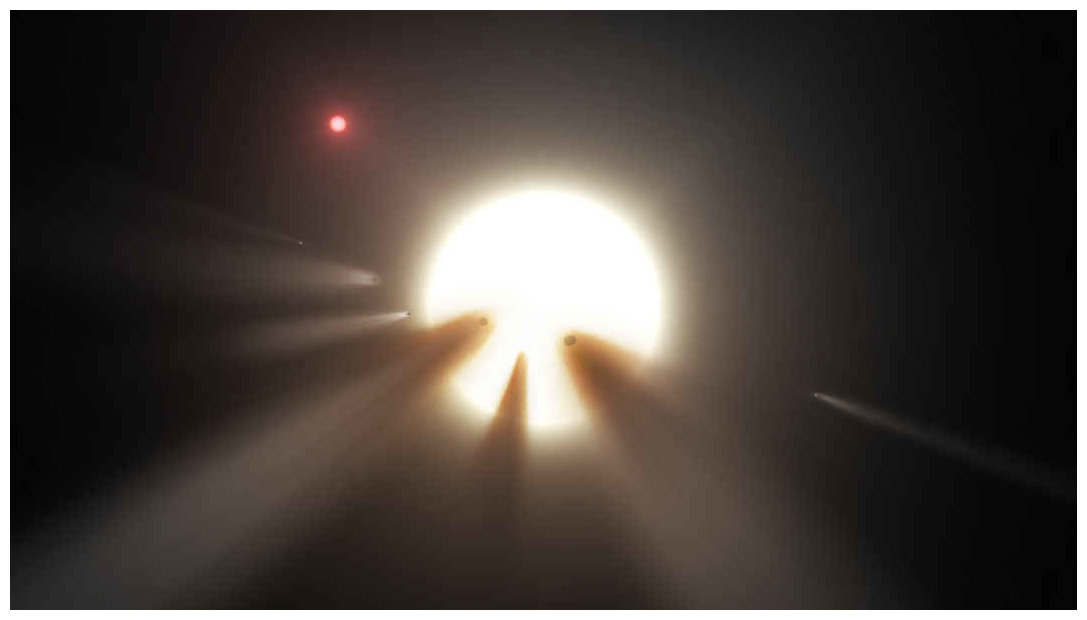
© NASA/JPL-CaltechThis artist's illustration shows comet fragments crossing the face of a star, one possible explanation for the strange dimming exhibited by "Boyajian's star."
San Francisco — Astronomers may have to think a little harder to solve the mystery of Boyajian's star.

In September 2015, Yale University's Tabetha Boyajian and her colleagues reported that the star KIC 8462852 has dimmed dramatically multiple times over the past seven years, once by an astounding 22 percent.

NASA's planet-hunting Kepler space telescope spotted these dimming events. But the brightness dips of "Boyajian's star," as it has come to be known, were far too significant to be caused by an orbiting planet, so astronomers began thinking of alternative explanations.

Researchers have come up with many possible causes for the dimming, including a swarm of broken-apart comet fragments, variability in the activity of the star itself, a cloud of some sort in the interstellar medium between Kepler and Boyajian's star, and, most famously, an orbiting "megastructure" built by an alien civilization to collect stellar energy.

Researchers are testing these hypotheses to the extent possible. For example, the $100 million Breakthrough Listen initiative is using the Green Bank Telescope in West Virginia to hunt for signals coming from Boyajian's star, which lies about 1,500 light-years from Earth.

Fish

Antarctica in technicolor: Mesmerizing footage of wildlife below sea ice revealed

beneath Antarctica's thick ice
© chris pash / YouTube
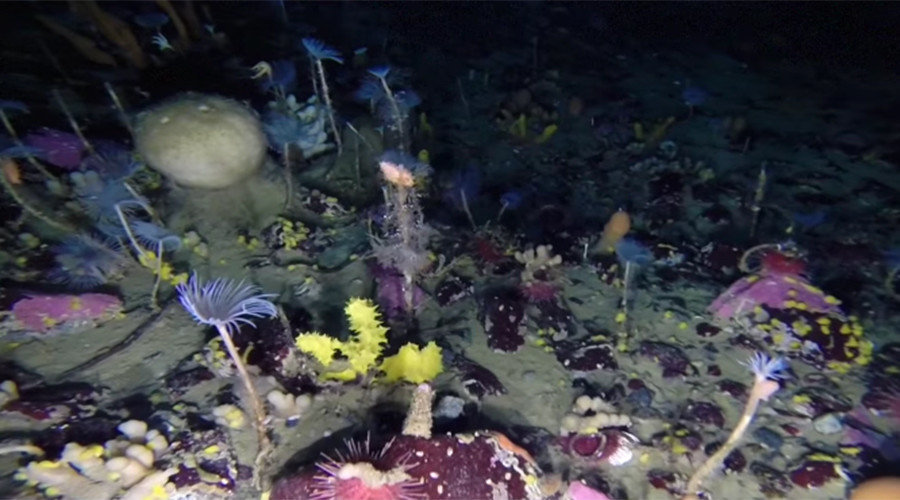
Rarely-seen footage of the world beneath Antarctica's thick ice has been captured thanks to a group of scientists and their robot.

The Australian Antarctic Division (AAD) was retrieving a data recorder from O'Brien Bay, near the Casey Research Station in East Antarctica when they made their discovery. The group used a Remotely Operated Vehicle (ROV) to send a camera and a light down to record the job.

It was only when the camera and data recorder were back above water that the team realized what they had captured.

Beneath the thick sheets of white ice and snow, a trippy colorful world of sea creatures can be found.

People 2

Sex evolved to help future generations fight infection

 Daphnia, waterflea
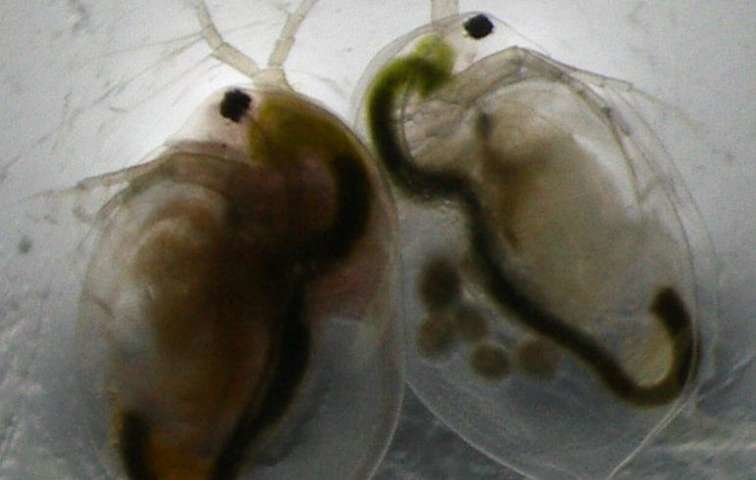
© University of StirlingThe scientists examined 6,000 Daphnia, waterflea, as part of the study.
Why does sex exist when organisms that clone themselves use less time and energy, and do not need a mate to produce offspring? Researchers at the University of Stirling aiming to answer this age-old question have discovered that sex can help the next generation resist infection.

Populations that clone themselves are entirely female and do not need sex to reproduce. As sex requires males, and males do not produce offspring themselves, an entirely clonal population should always reproduce faster than a sexual one.

Yet while some animal and plant species can reproduce without sex, such as komodo dragons, starfish and bananas, sex is still the dominant mode of reproduction in the natural world.

Scientists know that sex allows genes to mix, allowing populations to quickly evolve and adapt to changing environments, including rapidly evolving parasites.

Fish

Deep sea monsters: Russian sailor tweets amazing pictures of strangest fish he's caught

Child looking in large aquarium
© Menahem Kahana / AFP
Scaly, horned, sharp-toothed with strange red or yellow eyes - these aren't fantastic beasts from the Harry Potter world, but real creatures caught by a Russian sailor. And social media are completely abuzz.

The photos which sometimes look like drawings of some absurd creatures, have been released by Roman Fedortsov, a sailor who works on a trawler in the Barents Sea.

They fished out some very bizarre creatures that actually live in depths of the sea.

Igloo

DNA helps Inuits survive Arctic cold

Inuit Village
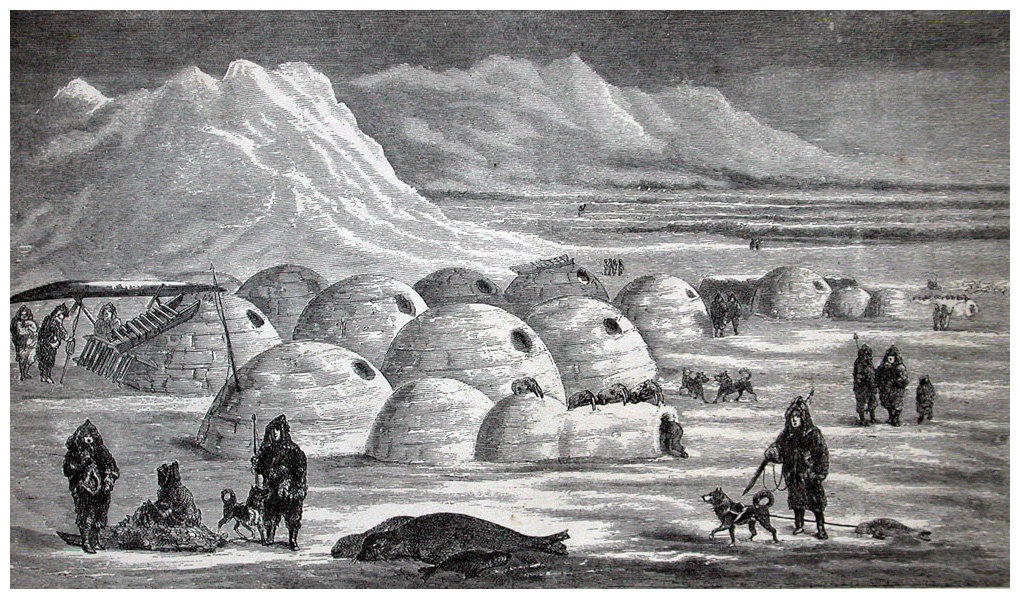
© UC BerkeleySeals and walruses were part of the traditional diet of the Inuit, as seen in this illustration of a native village on Canada’s Baffin Island, from the book Arctic Researches and Life Among the Esquimaux (1865) by Charles Francis Hall.
In the Arctic, the Inuits have adapted to severe cold and a predominantly seafood diet. After the first population genomic analysis of the Greenland Inuits ( Fumagalli, Moltke et al.2015, Science), a region in the genome containing two genes has now been scrutinized by scientists: TBX15 and WARS2. This region is thought to be central to cold adaptation by generating heat from a specific type of body fat, and was earlier found to be a candidate for adaptation in the Inuits.

Now, a team of scientists led by Fernando Racimo, Rasmus Nielsen et al. have followed up on the first natural selection study in Inuits to trace back the origins of these adaptations.

To perform the study, they used the genomic data from nearly 200 Greenlandic Inuits and compared this to the 1000 Genomes Project and ancient hominid DNA from Neanderthals and Denisovans. The results, published in the advanced online edition of Molecular Biology and Evolution, provide convincing evidence that the Inuit variant of the TBX15/WARS2 region first came into modern humans from an archaic hominid population, likely related to the Denisovans.

"The Inuit DNA sequence in this region matches very well with the Denisovan genome, and it is highly differentiated from other present-day human sequences, though we can't discard the possibility that the variant was introduced from another archaic group whose genomes we haven't sampled yet." - said Fernando Racimo, lead author of the study.

Brain

How does the brain make sense of garbled speech?

brain on dopamine
When you are suddenly able to understand someone despite a thick accent, or finally make out the lyrics of a song, your brain seems to be re-tuning to pick out words that were previously incomprehensible.

Now, neuroscientists at University of California, Berkeley have observed this re-tuning in action by recording directly from the surface of a person's brain as the words of a previously unintelligible sentence suddenly pop out after the subject is told the meaning of the garbled speech. The re-tuning takes place within a second or less, they found.

The findings, published in Nature Communications, confirm hypotheses that neurons in the auditory cortex that pick out aspects of sound associated with language, the components of pitch, amplitude and timing that distinguish words or smaller sound bits called phonemes, continually tune themselves to pull meaning out of a noisy environment.

SIGNALS POP OUT

First author and UC Berkeley graduate student Chris Holdgraf, said:
"The tuning that we measured when we replayed the garbled speech emphasizes features that are present in speech. We believe that this tuning shift is what helps you 'hear' the speech in that noisy signal. The speech sounds actually pop out from the signal."

Bizarro Earth

Earthquake faults retain a 'sense of memory'

Chilean Earthquake Damage
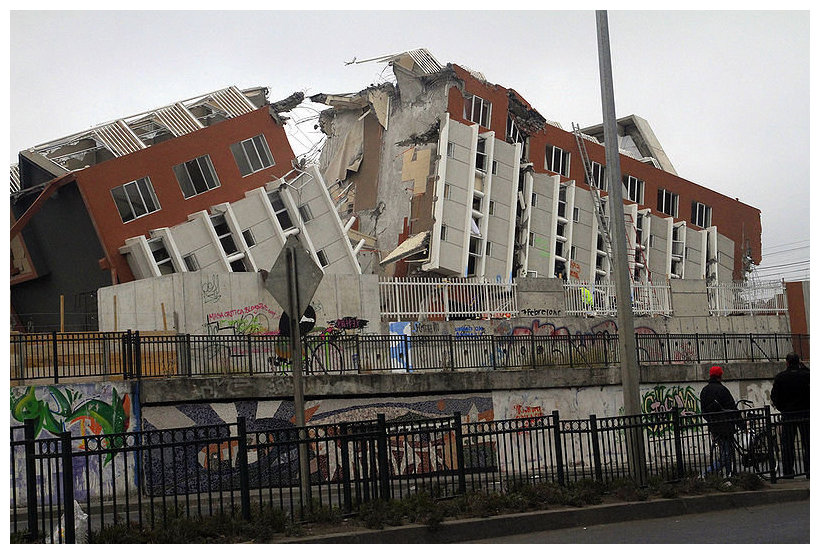
© Creative CommonsThis 20 story building in Concepción, Chile, collapsed and fell on its back as a result of the 8.8. Richter earthquake that struck Chile on Feb. 27, 2010.
Why do earthquakes sometimes occur in clusters? This question has baffled geologists for years, but now there is an answer following a new computer model.

The computer model has been devised by researchers from Northwestern University. The model has shown that earthquake faults retain, geologically speaking, a 'sense of memory.'

According to seismologist Professor Seth Stein, in communication with Digital Journal: "if it's been a long time since a large earthquake, then, even after another quake happens, the fault's 'memory' sometimes isn't wiped out, so there's still a good chance of having another."

In these circumstances an earthquake cluster is more likely to occur and thus "earthquake clusters imply that faults have a long-term memory." This 'memory' arises as a result of an earthquake resulting in a significant strain on a fault. This means that some strain remains after a big earthquake has occurred and this can cause another earthquake to follow.

Info

Waking microbes up is key to killing them says new research

Image of bacteria
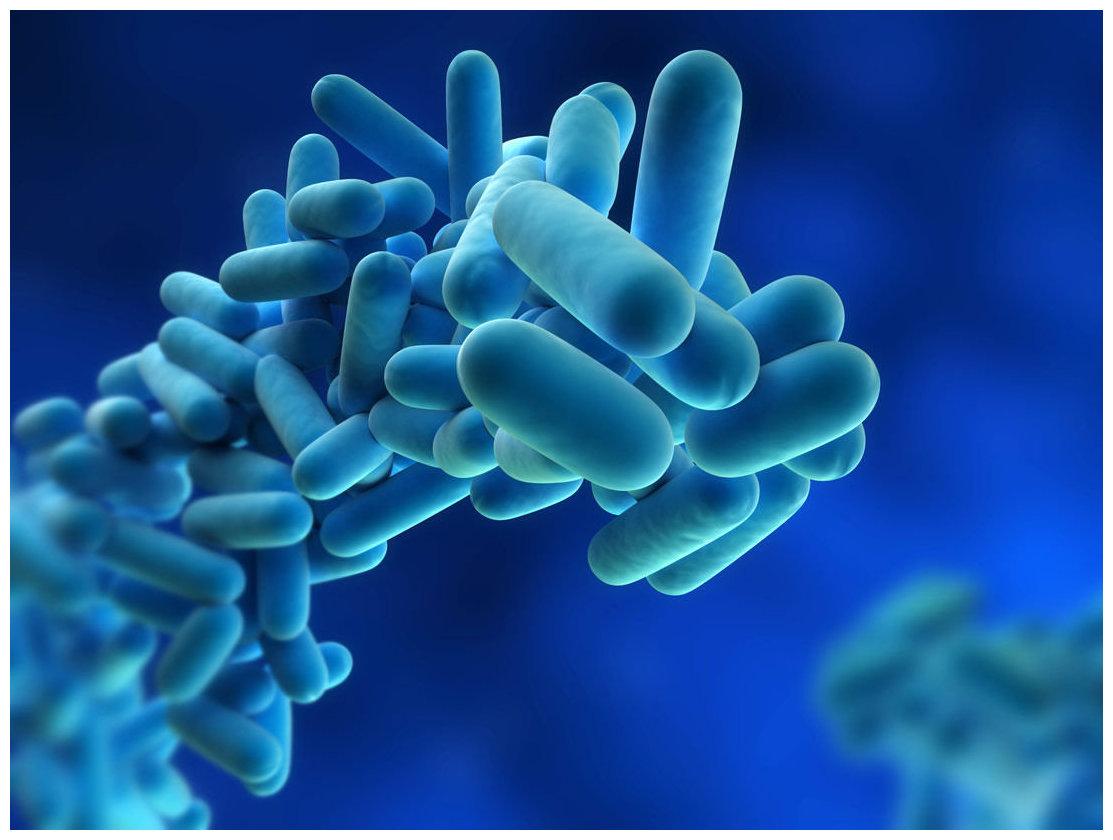
© Creative CommonsRepresentative image of bacteria.
Many pathogenic bacteria are hard to kill because they are resistant to antibiotics. Other bacteria are resistant because they enter into a state of dormancy. Waking microbes up is key to killing them, researchers argue.

On this basis a group of microbiologists have been working on a means to prevent bacteria from entering a state of dormancy. This involves devising a compound that will disrupt the cellular mechanisms that allow dormancy to begin.

The compound is based on a oxygen-sensitive toxin antitoxin system. Once an organism is active it is easier to kill; specifically most antibiotics work on bacteria that are growing and dividing.

According to Professor Thomas K. Wood, of Penn State University several "environmental stress factors often turn on a bacterial mechanism that creates a toxin that makes the cell dormant and therefore antibiotic resistant."

Bacteria that are contained within biofilms (a community of organisms protected by a 'slime like' film) are the hardest to kill and many are in a dormant state. Biofilms can form in the human gut and by cycling through dormant and non-dormant states pathogens can resist being killed by natural bodily mechanisms like bile, as well as from antibiotics. The focus on biofilms is important given their involvement in many types of infections in people.

Igloo

New study says moderate cold kills more people than extreme heat

Thermometer
© Watts Up with That
Science is a wonderful thing. As time moves on, in a single direction, Science, as an endeavor, discovers new things and improves our lives.

With a "hat tip" to the inestimable Jane Brody, health journalist at the NY Times who covers the story here, we are reminded of the study [free .pdf] from Antonio Gasparrini et al. which was published in The Lancet, July 25, 2015, with the [way too long] title:

"Mortality risk attributable to high and low ambient temperature: a multicountry observational study".

The bottom-line finding, the take home message, might surprise even readers here at WUWT, quoted in the side-bar of the journal article:

Interpretation:
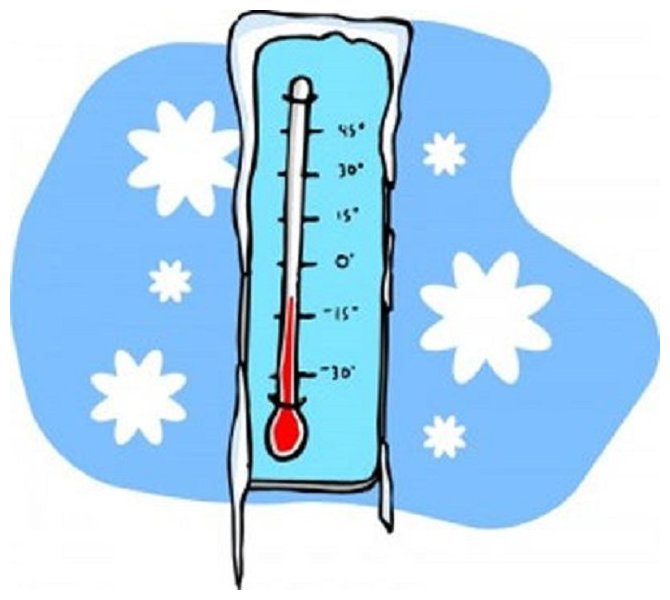
We report that non-optimum ambient temperature is responsible for substantial excess in mortality, with important differences between countries. Although most previous research has focused on heat-related effects, most of the attributable deaths were caused by cold temperatures.

Despite the attention given to extreme weather events, most of the effect happened on moderately hot and moderately cold days, especially moderately cold days.
This evidence is important for improvements to public health policies aimed at prevention of temperature-related health consequences, and provides a platform to extend predictions on future effects in climate-change scenarios. [extra emphasis mine - kh]