Science & TechnologyS


Info

Fastest burst of radio waves detected by astronomers

Radio Waves
© YouTube
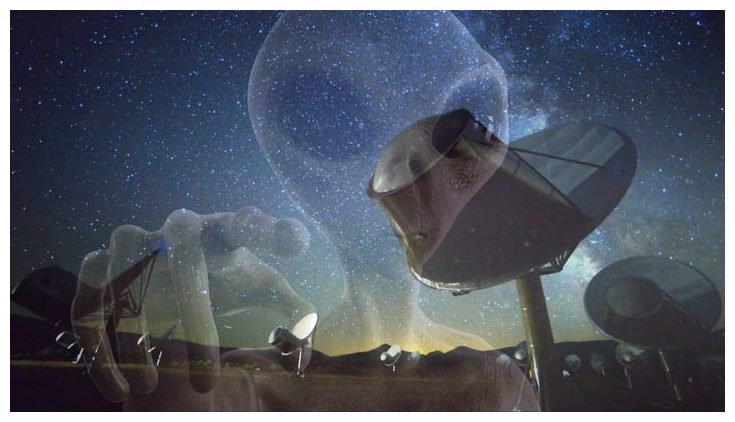
We like to think we know a lot about space. We can identify the chemical composition of an exoplanet's atmosphere from light-years away, simulate conditions on an alien planet, and we almost figured out time travel using black holes. All of that only scratches the surface, though-we still don't know what dark matter is, if there's alien life out there, or even what's causing these incredibly powerful, extremely short bursts of radio waves that we've been detecting for years. The latter is especially intriguing though-especially considering astronomers have just discovered the brightest radio burst yet.

Fast radio bursts (FRBs) were only discovered in 2007, and though we've detected over 30 of them, no one knows for sure where they come from or why they're so powerful. Neutron stars, pulsars, and black holes have all been put forward as candidates, but all we know is that the source packs an incredible amount of power.

"While astronomers don't know all that much about FRBs-only tens of bursts have ever been detected-we can infer some intriguing details about them," said Danny Price, who works for the Breakthrough Listen Project.

Nuke

Defense Ministry: Russia's next-gen hypersonic and nuclear weapons 'not a bluff, but new reality'

MiG-31 takes off with Kinzhal missile attached
© Russia's Ministry of DefenseMiG-31 takes off with Kinzhal missile attached
Russia's Deputy Defense Minister has hinted at an early start to the mass production of the boost-glide Avangard hypersonic systems and has shared new details about Russia's other recently-unveiled, seemingly futuristic weapons.

"This is not a bluff, but a reality," Yury Borisov told Russian Ministry of Defense news outlet, Krasnaya Zvezda.

During his March 1 address to the Federal Assembly, President Vladimir Putin had already announced a number of technological breakthroughs, developed over recent years to maintain the balance of power in the wake of the US anti-ballistic missile shield expansion.

The hypersonic Avangard boost-glide system, which has been presented only in a CGI video, has been already "thoroughly tested,"according to Borisov. The device is a sort of payload delivery system, to be fitted into upper stages of strategic ballistic missiles.

Bizarro Earth

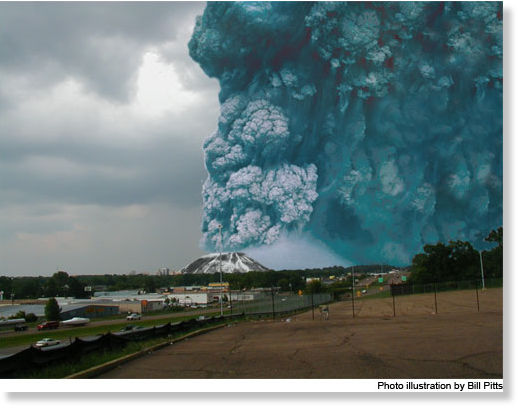
Flashback Jackson, Mississippi's hidden volcano

Image
© Bill PittsIllustration
I grew up in a family of "Rockhounds" and amateur geologists; my parents were among the founding members of the Mississippi Gem & Mineral Society. Therefore, my childhood memories don't include a day that I "learned about the volcano." It was always a part of my world, a ghost from the past.

I accepted the fact that I had a volcano underfoot but, for me, the awareness ended there. Growing up with this knowledge, I never thought to question it. Various adult sources placed the throat of the volcano at Fossil Gulch on the Nature Trail in what was then known as Riverside Park, now Lefleur's Bluff State Park in Jackson. Others adults told me that Millsaps College had the eminence of being located directly over the mouth. But try as I could, I never spotted what remained of the volcano's cone; there was no indication of danger underfoot. In my childish imagination, I anticipated a cataclysmic eruption. Needless to say, I was disappointed.

Image
© Bill Pitts
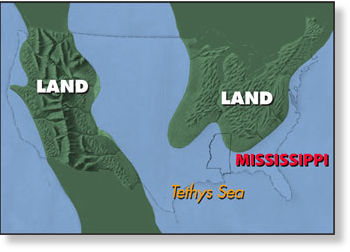
This memory receded with age as other more immediate matters took its place. Then, while finding out why the waters of the Alligator Pond at Leroy Percy State Park are a constant 88° F year-round for another article, I was reminded of our hidden volcano. Dr. David Dockery, Director of the Surface Geology Division of the Mississippi Department of Environmental Quality, Office of Geology, mentioned the Jackson gas field that was discovered in the 1930s. This field, he said, tapped "the Jackson Gas Rock...a reef that grew over the old volcano." The ghost had returned.

Galaxy

Imaging a galaxy's rapid molecular outflow

HubbleMergingGalaxies
© NASA/HSTA Hubble image of the merging galaxies NGC 6240. Like other luminous mergers, this one hosts a rapid flow of molecular gas. Astronomers have now imaged the carbon monoxide gas in the central regions and found it forms jet-like outflows driven by activity around the black holes.
A merger between galaxies can trigger intense radiation from bursts star formation and from the accretion of gas onto the two supermassive black holes at their centers. Astronomers have observed a strong statistical correlation between the masses of these black holes and other properties of the galaxies like their velocity structure or luminosity, and have concluded that there must be a connection.

Feedback of some kind seems most likely to explain these correlations, and astronomers have been working to identify its source and nature. One prominent suggestion for feedback is an outflow of molecular gas; once turned on, it would deplete the galaxy of the raw material needed for making new stars and from further enhancing the black hole's mass. Evidence for molecular outflows has been reported in far infrared lines of molecules, but these spectral results lack the convincing spatial information needed to associate the activity with the nuclei themselves.

CfA astronomer Junko Ueda is a member of a team of fifteen astronomers who used the ALMA submillimeter telescope facility, with its superb spatial imaging capabilities, to study the outflow in the luminous galaxy NGC6240, known to be a luminous merger in its late stages. Its double nuclei, separated by a modest two thousand light-years, has already been seen at wavelengths from the X-ray to the radio. The astronomers used one of the spectral lines from the abundant molecule carbon monoxide to probe the inner region of the galaxy. The line also revealed the presence of gas motions of up to two thousand kilometers per second, consistent with a powerful wind driving a massive flow of material out of the galaxy.

Robot

Robotic Racism: Bias extends to humanoids

robots
© Donald Iain Smith/Getty Images
A new study by the University of Canterbury has found humans hold biases against darker-colored robots, suggesting diversity could soon be an issue in the world of AI.

Researchers sought to examine whether we ascribe race to robots based on the color of the materials they are made with, and whether this leads us to project racial biases on robots. "We examined if people automatically ascribe a race to robots such that we might say that some robots are 'White' while others are 'Asian' or 'Black'," the researchers wrote.

The study, carried out in partnership with the university's Human Interface Technology Lab (HIT Lab NZ) and psychology department, examined whether humans hold the same biases when it comes to robots as they do with humans. They wanted to see if we think of robots as being of a certain race based on their color.

Bulb

Researchers able to sew atomic lattices together seamlessly

Patches sewn crystals
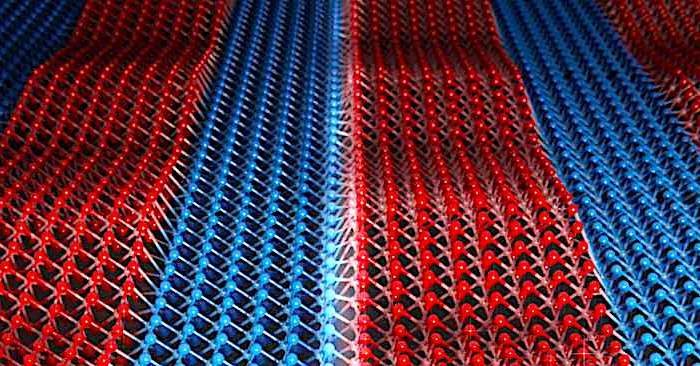
© Park et alScientists reveal a technique to 'sew' two patches of crystals seamlessly together at the atomic level to create atomically-thin fabrics.
Joining different kinds of materials can lead to all kinds of breakthroughs. It's an essential skill that allowed humans to make everything from skyscrapers (by reinforcing concrete with steel) to solar cells (by layering materials to herd electrons).

In electronics, joining different materials produces heterojunctions - the most fundamental components in solar cells, LEDs and computer chips. The smoother the seam between two materials, the more easily electrons flow across it, which is essential for how well electronic devices function. But they're made up of crystals - rigid lattices of atoms - and they don't take kindly to being mashed together.

In a study published March 8 in Science, Cornell University and University of Chicago scientists revealed a technique to "sew" two patches of crystals seamlessly together to create atomically thin fabrics.

The team wanted to do this by stitching different fabric-like, three-atom-thick crystals. "Usually these are grown in stages under very different conditions; grow one material first, stop the growth, change the condition, and start it again to grow another material," said Jiwoong Park, professor of chemistry at the University of Chicago, and a senior author on the study.

Info

Genes influence empathy says new study

Trump
© Chip Somodevilla/Getty ImagesDonald Trump's talking points perhaps reflect a lack of empathy, but could his genes be partly to blame?
At a meeting in February with survivors of a Florida high school mass shooting, US president Donald Trump was photographed holding a list of aides memoire which included the prompt, "I hear you".

The need to remind himself to at least appear sympathetic to the feelings of children who had witnessed their school mates being shot by a man with an assault rifle was interpreted by many - if not most - as indicating that Mr Trump was somewhat deficient in the empathy department.

And perhaps he is - but if so he might not be fully to blame.

A new study based on questionnaire responses matched to genetic samples obtained from 46,000 people suggests that genes are at least partially responsible for a person's ability to feel and express empathy.

The study, published in the journal Translational Psychiatry, was conducted by a team headed by Varun Warrier of the Autism Research Centre at Cambridge University in the UK, in conjunction with US genetics company 23andMe.

Warrier and his colleagues made use of data obtained by the popular business. Each customer completed a questionnaire designed to reflect empathy potential, based on a self-report measure developed by other University of Cambridge researchers 15 years ago. The questionnaire delivers a standardised result on a scale known as the Empathy Quotient (EQ).

Microscope 1

Printing matter from the air? Nanotube membrane start-up thinks big

nanotube technology
© Mario Anzuoni / Reuters
Alumni from MIT and Yale universities have perfected nanotube technology which could eventually allow humans to 3d-print pretty much anything we desire, including creating carbon-free fuel "out of thin air."
"This technology gives us a level of control over the material world that we've never had before," said Mattershift Founder and CEO Dr. Rob McGinnis, in a press release. "For example, right now we're working to remove CO2 from the air and turn it into fuels. This has already been done using conventional technology, but it's been too expensive to be practical. Using our tech, I think we'll be able to produce carbon-zero gasoline, diesel, and jet fuels that are cheaper than fossil fuels."
New York-based Mattershift has successfully created large-scale carbon nanotube (CNT) membranes that combine or separate individual molecules as and when required. CNTs have been around for a while; they were first discovered in 1991, but were prohibitively expensive to produce. Until now, that is.

Comment: More on nanotube technology:


Galaxy

Hubble telescope's latest: Spectacular dance of two galaxies' merger gives birth to new stars

spiral galaxy
© NASA. ESA, Hubble Heritage TeamA rose made of two galaxies
NASA has published a photo of two spiral galaxies twisting and embracing each other until they ultimately collide.

The two galaxies featuring in the newly released picture by the Hubble Space Telescope, are part of a system that goes by the name of Arp 256, which is around 350 million light years from Earth and lies in the constellation Cetus, or the Whale.

This is what the European Space Agency (ESA) wrote below the image:

"The galaxies are ablaze with dazzling regions of star formation: The bright blue fireworks are stellar nurseries, churning out hot infant stars."

Robot

To the delight of DARPA US military plans to have more robots than humans by 2025 - what could possibly go wrong?

U.S. Army’s official Robotic and Autonomous Systems
A graphic from the U.S. Army’s official Robotic and Autonomous Systems (RAS) strategy
While cyborg soldiers and fully automated weapons have long been fodder for futuristic sci-fi thrillers, they are now a reality and, if the Pentagon gets its way, will soon become the norm in the U.S. military. As Defense One reported last Thursday, the Army had just concluded a live-fire exercise using a remote-controlled ground combat vehicle complete with a fully automated machine gun. The demonstration marked the first time that the Army has used a ground robot providing fire in tandem with human troops in a military exercise and, as Defense One noted, "it won't be the last."

Indeed, last week's exercise represents just the latest step in the Pentagon's relatively quiet tip-toe into converting the U.S. Armed Forces to a machine-majority force. Faced with low recruitment and an increased demand for soldiers, the Department of Defense is seeking to solve that problem altogether while also increasing the military's firepower and force in combat.

Though unmanned aerial vehicles (UAV), better known as drones, are the most well known of these devices, the Pentagon has been investing heavily - for decades - in a cadre of military robots aimed at dominating air, sea, and land. In 2010, the Pentagon had already invested $4 billion in research programs into "autonomous systems" and, since then, its research wing - Defense Advanced Research Projects Agency, better known as DARPA - has been spending much of its roughly $3 billion annual budget funding robotic research intended for use in military applications.

Comment: DARPA is just full of lovely new plans and developments for "modernizing" war and the Security State. The list just goes on and on...