Science & TechnologyS


Satellite

Astronaut Scott Kelly has different DNA than twin brother after one year in space

kelly twins astronauts
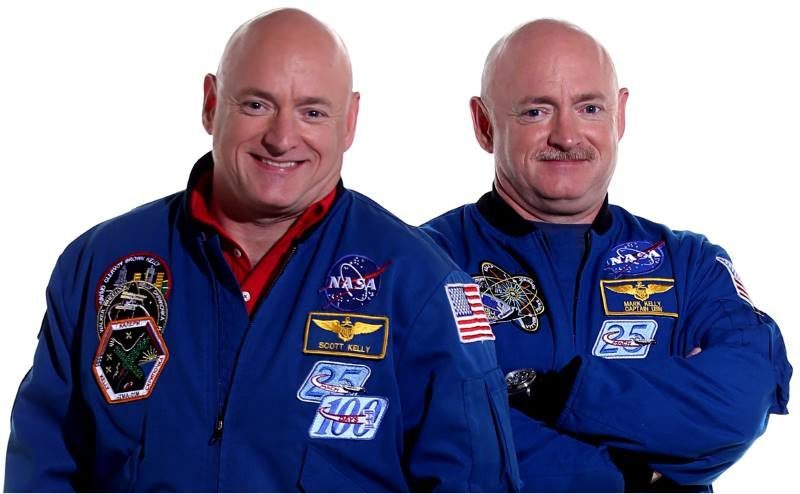
© Tony CenicolaNASA's twin astronauts Scott, left, and Mark Kelly. Scott spent a year in space while Mark stayed on Earth as a control subject. Researchers looked at the effects of space travel on the human body.
The Twin Study propelled NASA into the genomics era of space travel. It was a ground-breaking study comparing what happened to astronaut Scott Kelly, in space, to his identical twin brother, Mark, who remained on Earth. The perfect nature versus nurture study was born.

The Twins Study brought ten research teams from around the country together to accomplish one goal: discover what happens to the human body after spending one year in space. NASA has a grasp on what happens to the body after the standard-duration six-month missions aboard the International Space Station, but Scott Kelly's one-year mission is a stepping stone to a three-year mission to Mars.

If the results of the Twins Study are like a play, Act 1 began at NASA's Human Research Program (HRP) 2017 Investigators' Workshop (IWS), where the ten teams presented their preliminary findings. Reports included data on what happened to Scott Kelly, physiologically and psychologically, while he was in space, and compared the data to Mark Kelly, as a control subject on Earth. The 2018 IWS is Act 2, where findings from 2017 were corroborated, with some additions. Researchers also presented what happened to Scott after he returned to Earth, again while making comparisons to Mark. Act 3 will be debuted later in 2018 when an integrated summary publication is expected to be released.

Nebula

The big bang was not the beginning

big bang
© Marcel Christ/Gallerystock
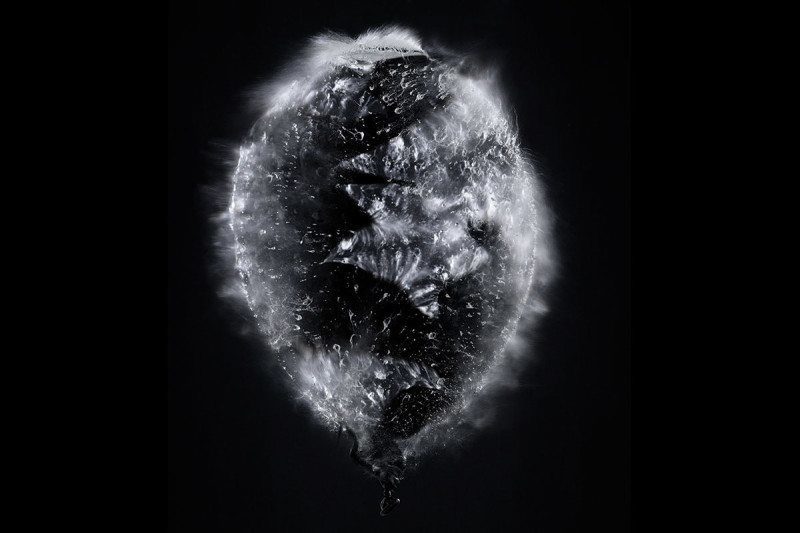
First hints are emerging of a universe that existed before our own: an alien world of chaos where time, space and geometry were yet to form

We are told it was big, yet it was probably unimaginably small. We are told there was a bang, yet there was apparently no sound, and no space for anything to explode into. Some think it might have happened multiple times, so even its definite article is in doubt.

Although everyone has heard of the big bang, no one can say confidently what it was like. After all, recounting the beginning of time is about finding not just the right words, but the right physics - and ever since the big bang entered the popular lexicon, that physics has been murky.

Perhaps no longer, thanks to an unusual way of delving into our universe's backstory that has emerged over the past few years. In this view, the essence of space and time can exist beyond the confines of the cosmos, but in a state of roiling chaos we would not recognise. The big bang is not a hard-and-fast beginning, but a moment of profound transformation - one quite different from anything most of us could have imagined.

Comment: See also:


Galaxy

Hawking's Paradox: A brief history of Stephen Hawking and his legacy

Stephen Hawking 1
© Gemma Levine/Getty
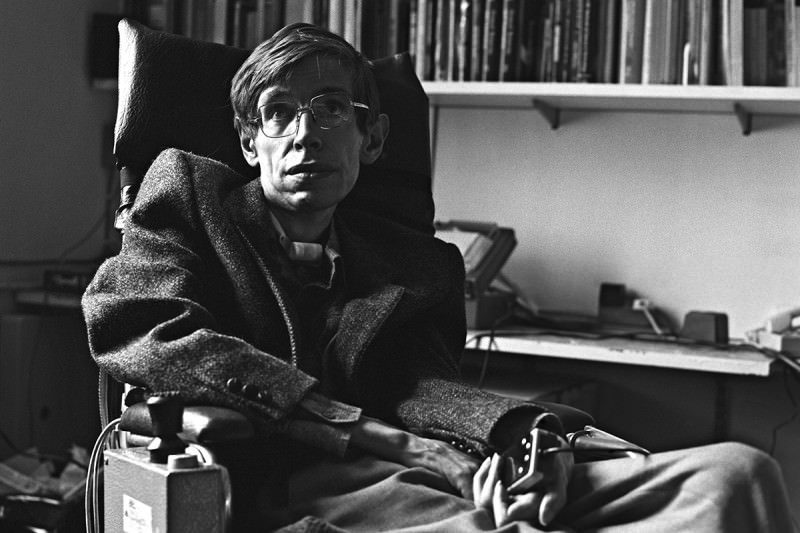
Stephen Hawking, the world-famous theoretical physicist, has died at the age of 76.

Hawking's children, Lucy, Robert and Tim said in a statement: "We are deeply saddened that our beloved father passed away today.

"He was a great scientist and an extraordinary man whose work and legacy will live on for many years. His courage and persistence with his brilliance and humour inspired people across the world.

"He once said: 'It would not be much of a universe if it wasn't home to the people you love.' We will miss him for ever."

The most recognisable scientist of our age, Hawking holds an iconic status. His genre-defining book, A Brief History of Time, has sold more than 10 million copies since its publication in 1988, and has been translated into more than 35 languages. He appeared on Star Trek: The Next Generation, The Simpsons and The Big Bang Theory. His early life was the subject of an Oscar-winning performance by Eddie Redmayne in the 2014 film The Theory of Everything. He was routinely consulted for oracular pronouncements on everything from time travel and alien life to Middle Eastern politics and nefarious robots. He had an endearing sense of humour and a daredevil attitude - relatable human traits that, combined with his seemingly superhuman mind, made Hawking eminently marketable.

But his cultural status - amplified by his disability and the media storm it invoked - often overshadowed his scientific legacy. That's a shame for the man who discovered what might prove to be the key clue to the theory of everything, advanced our understanding of space and time, helped shape the course of physics for the last four decades and whose insight continues to drive progress in fundamental physics today.

Comment: Though Hawking had his blind spots (like when it comes to climate change), his contributions to his field are notable and his warnings about our precarious future are not to be taken lightly. See also:


Saturn

If Earth ever receives signals from alien civilization, they will probably already be dead

milky way
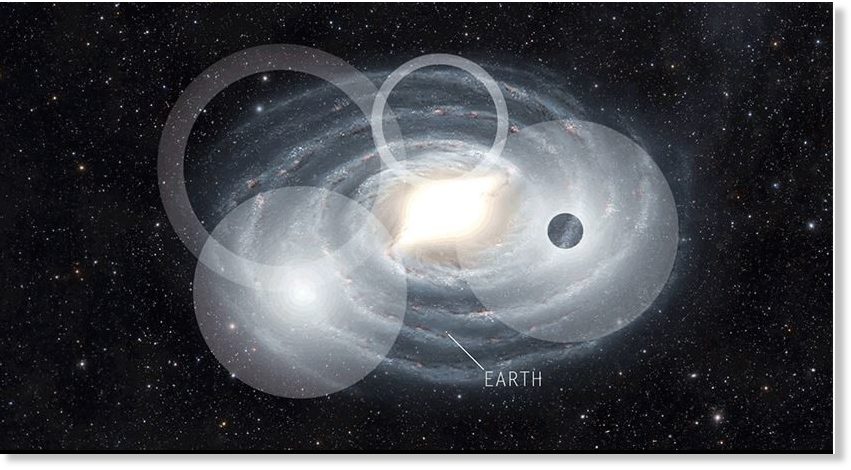
© GEOFF MARCYElectromagnetic signals (blue circles) from alien civilizations will continue traveling through the Milky Way even after the aliens are gone. The appearance of a doughnut hole represents when a civilization dies out.
If signals from an alien civilization ever reach Earth, odds are the aliens will already be dead.

In an effort to update the 1961 Drake Equation, which estimates the number of detectable, intelligent civilizations in the Milky Way, physicist Claudio Grimaldi and colleagues calculated the area of the galaxy that should be filled with alien signals at a given time (SN Online: 11/1/09).

The team, which includes Frank Drake (now a professor emeritus at the SETI Institute in Mountain View, Calif., and the University of California, Santa Cruz), assumed technologically savvy civilizations are born and die at a constant rate. When a civilization dies out and stops broadcasting, the signals it had sent continue traveling like concentric ripples on a pond. Part of the Milky Way should be filled with these ghost signals.

Brain

Nature plus nurture: How biology breaks the 'cerebral mystique'

brain
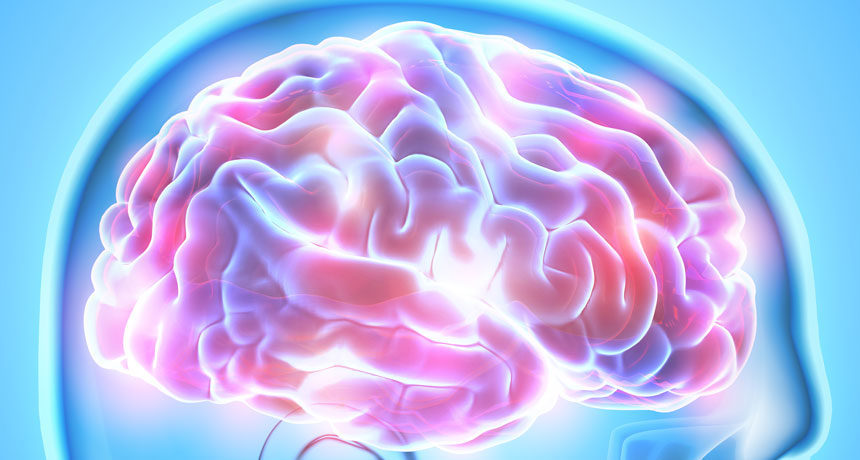
© yodiyim/iStockphotoChanging minds: Many people view the brain as special and separate from the rest of the body. Alan Jasanoff argues that this "cerebral mystique" is the wrong way to think about the brain.
The Biological Mind explores how the brain, body and environment make us who we are

At a small eatery in Seville, Spain, Alan Jasanoff had his first experience with brains - wrapped in eggs and served with potatoes. At the time, he was more interested in finding a good, affordable meal than contemplating the sheer awesomeness of the organ he was eating. Years later, Jasanoff began studying the brain as part of his training as a neuroscientist, and he went on, like so many others, to revere it. It is said, after all, to be the root of our soul and consciousness. But today, Jasanoff has yet another view: He has come to see our awe of the organ as a seriously flawed way of thinking, and even a danger to society.

In The Biological Mind, Jasanoff, now a neuroscientist at MIT, refers to the romanticized view of the brain - its separateness and superiority to the body and its depiction as almost supernatural - as the "cerebral mystique." Such an attitude has been fueled, in part, by images that depict the brain without any connection to the body or by analogies that compare the brain to a computer. Admittedly, the brain does have tremendous computing power. But Jasanoff's goal is to show that the brain doesn't work as a distinct, mystical entity, but as a ball of flesh awash with fluids and innately in tune with the rest of the body and the environment. "Self" doesn't just come from the brain, he explains, but also from the interactions of chemicals from our bodies with everything else around us.

Comment: We may not be just our brains, but like a car, it's worth learning how it operates to get the best use out of it.


Robot

Nissan unveils technology that can interpret signals from the brains of drivers

Nissan tech for driver's brains
© Nissan
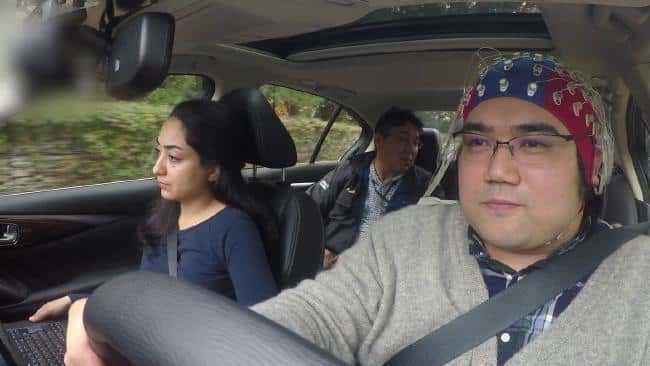
Nissan claims to have developed a car that can read its driver's mind.

Software adapted from the medical profession is translating a driver's thoughts into action to improve vehicle responsiveness. The technology will be unveiled at the Consumer Electronics Show in Las Vegas next week.

The software monitors brain wave activity to anticipate intended movement, be that turning the steering wheel or hitting the brakes. Nissan says the system can react between 0.2-0.5 second faster than the driver without being considered intrusive.

The B2V technology is meant to make driving more enjoyable in a semi-autonomous world by speeding up reaction times and having vehicles that constantly adapt to their owner's driving style.

Sun

Massive X-class solar storm set to hit Earth tomorrow, potential trouble for satellites, power grid

solar flare
© NASA
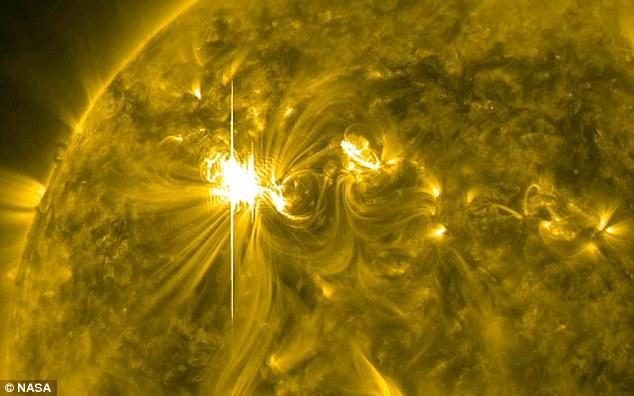
A solar storm caused by an X-Class solar flare facing directly towards earth is likely to hit tomorrow. The brunt of the activity will be in the higher latitudes, however the aurora it generates could result in Northern Lights as far south as Michigan and Maine, as well as parts of Scotland and Northern England.


Telescope

Astronomers suspect the Milky Way's excess gamma rays are emitted from dying stars

gamma-ray sky
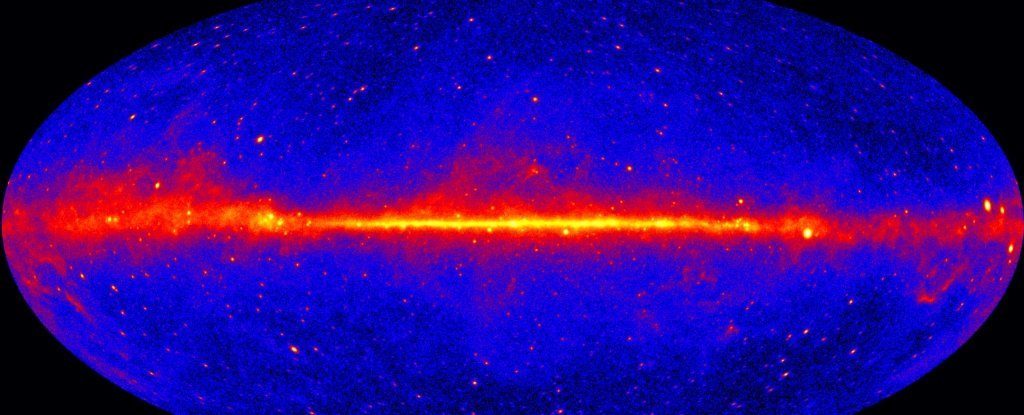
© NASA/DOE/Fermi LAT CollaborationThe Fermi view of the gamma-ray sky.
Astronomers have found that a strange excess of gamma rays coming from the heart of the Milky Way isn't the product of dark matter after all. They argue it's actually coming from a profusion of very old stars that we have yet to identify.

Dark matter can't be detected, and its hypothetical presence can only be inferred by its effect on the space around it. For example, if there's more mass in a region of space than there should be, it's usually attributed to dark matter. That doesn't mean it exists, but it's a useful explanation until a better one comes along.

Something else that has been attributed to dark matter is what astronomers call the gamma-ray excess. It's exactly what it sounds like. Gamma rays are the highest-energy electromagnetic waves in the Universe, produced by the most intense objects - such as pulsars, neutron stars, colliding neutron stars, black holes, and supernovae.

When NASA's Fermi telescope took a gamma-ray picture of the Milky Way over five years, after all known gamma-ray sources were subtracted, we ended up with a gamma-ray glow in the heart of the Milky Way that couldn't be accounted for.

Microscope 1

Bone density scans show Archaeopteryx was capable of active flight

Archaeopteryx flight
© ESRFDennis Voeten indicates the bone wall thickness of the 'Chicken Wing' specimen of Archaeopteryx on the top computer screen for comparison against the bone walls of a primitive pterosaur on the bottom screen. A three-dimensional model of the 'Chicken Wing' is held up, the referred bone cross section is that of the humerus, the uppermost arm bone visible most right on the 3-D-printed model.
The question of whether the Late Jurassic dino-bird Archaeopteryx was an elaborately feathered ground dweller, a glider, or an active flyer has fascinated palaeontologists for decades. Valuable new information obtained with state-of-the-art synchrotron microtomography at the ESRF, the European Synchrotron (Grenoble, France), allowed an international team of scientists to answer this question in Nature Communications. The wing bones of Archaeopteryx were shaped for incidental active flight, but not for the advanced style of flying mastered by today's birds.

Was Archaeopteryx capable of flying, and if so, how? Although it is common knowledge that modern-day birds descended from extinct dinosaurs, many questions on their early evolution and the development of avian flight remain unanswered. Traditional research methods have thus far been unable to answer the question whether Archaeopteryx flew or not. Using synchrotron microtomography at the ESRF's beamline ID19 to probe inside Archaeopteryx fossils, an international team of scientists from the ESRF, Palacký University, Czech Republic, CNRS and Sorbonne University, France, Uppsala University, Sweden, and Bürgermeister-Müller-Museum Solnhofen, Germany, shed new light on this earliest of birds.

Palette

Researchers develop ultra-white coating by mimicking beetle scales

white beetle
© Olimpia OnelliCyphochilus beetle.
Researchers have developed a super-thin, non-toxic, lightweight, edible ultra-white coating that could be used to make brighter paints and coatings, for use in the cosmetic, food or pharmaceutical industries.

The material - which is 20 times whiter than paper - is made from non-toxic cellulose and achieves such bright whiteness by mimicking the structure of the ultra-thin scales of certain types of beetle. The results are reported in the journal Advanced Materials.

Bright colours are usually produced using pigments, which absorb certain wavelengths of light and reflect others, which our eyes then perceive as colour.

To appear as white, however, all wavelengths of light need to be reflected with the same efficiency. Most commercially-available white products - such as sun creams, cosmetics and paints - incorporate highly refractive particles (usually titanium dioxide or zinc oxide) to reflect light efficiently. These materials, while considered safe, are not fully sustainable or biocompatible.