Science & TechnologyS


Info

Elephants are strangely resistant to cancer, genetic clues could help humans

Two elephants
A research team peering into the relatively underexplored "junk" DNA of mammals has found more clues as to elephants' extraordinary ability to evade cancer - and determined that the genes responsible for mitigating damage in elephant cells can also be found in humans.

Most of the world's mammals are prone to cancer, but elephants are strangely resistant. They're not completely immune, but compared to humans, they get it surprisingly rarely - especially considering that they have 100 times the number of cells that humans do.

Cancer occurs when a cell randomly mutates during division, so the fact that only around 1 in 20 elephants develops cancer, compared to 1 in 5 humans, is extremely curious.

Researchers had been trying to figure out why this was the case for decades, but it was only a few years ago that a team of researchers narrowed this incredible trait down to an overabundance of a gene called p53, which suppresses tumours. African elephants have 40 copies of p53. Humans have just one.

Beaker

Experiments shed new light on composition of prehistoric oceans

prehistoric oceans
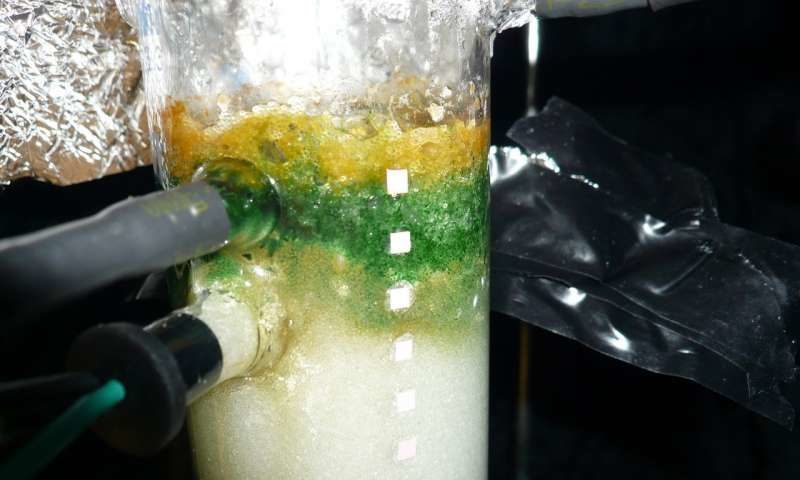
© Iowa State University's College of Liberal Arts and SciencesGraduated cylinder model of the ocean. The green shows cyanobacteria and the brown shows the oxidized iron.
A new experiment by Iowa State University's Elizabeth Swanner that evaluates the reduction of iron in prehistoric oceans may reinterpret the conditions under which iron-rich sedimentary rock is formed.

Swanner, an assistant professor of geological and atmospheric sciences, was part of an international research team including researchers from the University of Tuebingen in Germany and the Chinese Academy of Sciences in Beijing. The team modeled the prehistoric ocean, similar to that of the Archean Era 2.5 billion years ago within a graduated cylinder.

"We really only wanted to simulate it in the vertical dimension, so we used a graduated cylinder and modified it," Swanner said.

Arrow Up

No, they weren't bluffing: Russia's new 'hypersonic missile' put through military tests

Russia’s new hypersonic missile put through military tests (VIDEO)
© Russia's Ministry of Defense
A video showing a new set of tests of the cutting-edge hypersonic Kinzhal missile has been released by the Russian Defense Ministry. President Vladimir Putin earlier said the weapon is designed to penetrate any possible defenses.

The footage features a pair of MiG-31 aircraft carrying a single Kinzhal on its under-fuselage pylons. The planes take off and launch the 'Kinzhal' (Russian for "dagger") missiles during high-altitude flight.

The video shows the very moment of the missile launch. The projectile can be seen detaching from the plane's belly, shooting off the engine shroud and swiftly blasting away, leaving only a trail in the skies.

Comment: See: The Saker: Political implications of Russia's new weapons

Also check out SOTT radio's: Behind the Headlines: Putin The World To Rights: Russia's New Nuclear Weapons And The End of 'Unipolarity'


Jet1

Russian MoD: Russian Mig-31 Test-Firing the Hypersonic Missile

The Russian Aerospace Forces conducts test launch of a Kinzhal hypersonic aviation and missile system
© Russian Defence MinistryThe Russian Aerospace Forces conducts test launch of a Kinzhal hypersonic aviation and missile system
The Russian Aerospace Forces conducted successful launch of the hypersonic aviation and missile system dubbed Kinzhal ("Dagger"), the Russian Defense Ministry said in a statement.

"MiG-31 jet of the Russian Aerospace Forces conducted a test launch of hypersonic aviation and missile system Kinzhal in a set district. The launch was successful, the hypersonic missile hit the designated target at the field," the statement read.

Alarm Clock

Do you live in Europe and is your digital clock running slow?

digital clock
Clocks will gradually go back to the correct time if left alone - but it could take weeks

If it is, it is not the cold weather but a political dispute that is causing it...


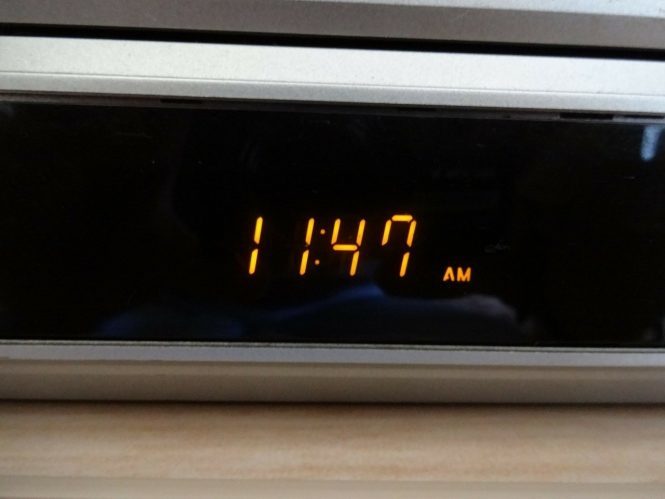
You may not have noticed it until now - or not been bothered by it - but digital clocks on many ovens, electric alarm clocks and other devices are running about six minutes slow.

It is not your device or the cold weather that is at fault but the electricity coming into your house - it is being slowed down and it is happening to millions of others across Europe.

The problem, amazingly, lies in Kosovo and Serbia where a power dispute since January has affected the frequency at which Europe's synchronised high voltage electricity network runs and made clocks run slow.

To keep time, digital clocks on ovens and non-battery electric clocks are set by the frequency of the electric current and count the pulses, normally 50 Hz, but electricity supply problems in Kosovo and Serbia meaning it is running a fraction slower, at 49,996 Hz.

Comment: Press release:
Continuing frequency deviation in the Continental European Power System originating in Serbia/Kosovo: Political solution urgently needed in addition to technical

Published: 06/03/2018

Brussels

​​The Continental European (CE) Power System -a large synchronized area stretching from Spain to Turkey and from Poland to Netherlands; encompassing 25 countries- is experiencing a continuous system frequency deviation from the mean value of 50 Hz, and this since mid of January 2018.

The power deviations are originating from the control area called Serbia, Macedonia, Montenegro (SMM block) and specifically Kosovo and Serbia.

The power deviations have led to a slight decrease in the electric frequency average.

This average frequency deviation, that has never happened in any similar way in the CE Power system, must cease. The missing energy amounts currently to 113 GWh. The question of who will compensate for this loss has to be answered.

The decrease in frequency average is affecting also those electric clocks that are steered by the frequency of the power system and not by a quartz crystal: they show currently a delay of close to six minutes.

ENTSO-E, the association of the European TSOs, is exploring all technical options to address the deviation issue with the concerned TSOs.

As there is also a political dimension with impact on the functioning of the electricity system, ENTSO-E is urging European and national governments and policy makers to take swift action. These actions need to address the political side of this issue, supporting ENTSO-E's and the TSOs' actions to deliver a technical solution.

Frequently asked questions

What is a synchronous area?

A synchronous electricity grid is a wide area grid covering different countries or region which operates at a synchronized frequency and is electrically tied together during normal system conditions. In Continental Europe, the synchronized frequency is of 50 Hz.

Which countries are part of the Continental Europe synchronous area?

The area is made of 25 countries and covers most of Europe's continent. Here is a link to the map of the interconnected European Power system: ​Download the map​.

By how much has the frequency decreased?

You can find updated information on the decrease in the average frequency and the time deviation it causes on the website of the Swiss TSO, Swissgrid, that is in charge of monitoring the frequency for the Continental Europe. https://www.swissgrid.ch/swissgrid/en/home/experts/topics/frequency.html

When does security of supply get affected?

For the system to properly function the frequency cannot go below 47.6 and above 52.4 Hz. At the extreme values of 47.5 (under frequency) and 52.5 (over frequency) all connected generation and devices would automatically disconnect. The average frequency of the period since mid-January 2018 until today was around 49.996 Hz.

Where can I see the current frequency?

The transmission system operators in charge of monitoring the frequency in the Continental Europe area are the Swiss TSO, Swissgrid and the German TSO, Amprion. They act as Coordination Centers for the synchronous, continental European Grid. You can see the actual measurement of frequency at the website: ​ https://www.swissgrid.ch/swissgrid/en/home/experts/topics/frequency.html

How are devices like clocks impacted by the frequency average decrease and when would the impact stop?

Some clocks are based on the frequency of the power system, and thus run late when the frequency decreases, or run too fast, when the system is in over-frequency. Such clocks are typically radio-, oven clocks or clocks for programming the heating system. These types of electric clocks show now a delay around six minutes. The clocks can be taken back to normal manually, with a second reset needed once the Continental European power system recovers its normal frequency. Alternatively, the clocks will get all back to normal when the deviation has ceased and the frequency is restored to normal.

How and when can the situation be put back to normal?

The first step is to cease the deviation. The second step is to compensate for the missing amount of energy. It is foreseen to solve step 1 this week, while the timeline for step 2 has yet to be decided. Taking the system back to normal could take a few weeks.

Why do you mention in your press release a political issue and solution?

The political disagreements opposing the Serbian and Kosovar authorities have led to the observed electricity impact. If no solution can be found at political level, a deviation risk could remain.


Fireball 2

Report says NASA preparing spacecraft to nuke dangerous asteroids

asteroid bennu
© NASA/Goddard/University of ArizonaTechAsteroid Bennu
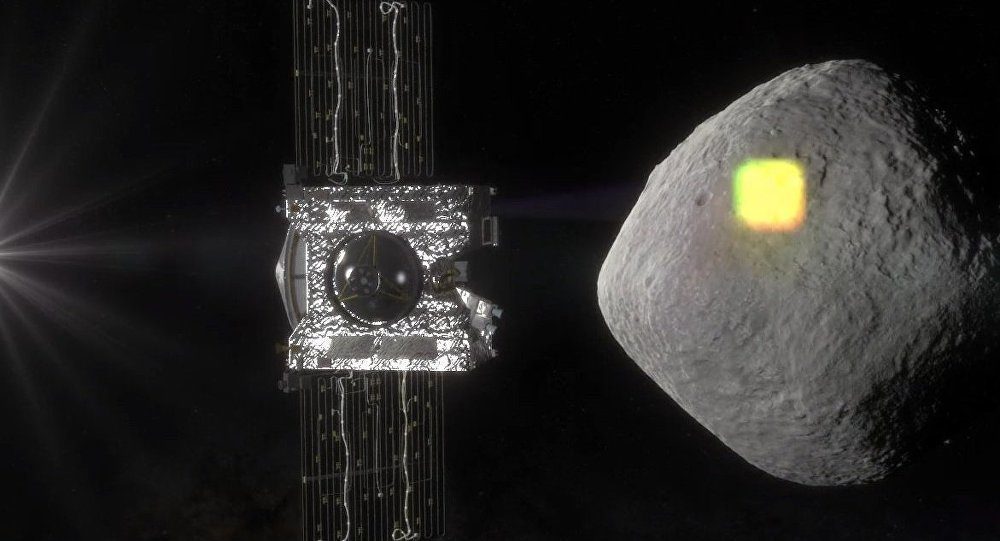
With the chances of a huge asteroid hitting Earth and wiping out the human race looking unnervingly real, NASA and the National Nuclear Security Administration (NNSA) have put their heads together to develop a new spacecraft to deflect a potentially deadly space boulder heading towards our planet.

Aptly called HAMMER (Hypervelocity Asteroid Mitigation Mission for Emergency Response), the new spacecraft would either collide with an incoming asteroid to change its course away from Earth, or blow it up with a nuclear weapon, technology weblog ExtremeTech wrote.

As part of this effort, NASA has sent the OSIRIS-REx probe to a near-Earth asteroid called Bennu to collect a 2.1-ounce sample from its surface and bring it back to Earth later this year.

Einstein

Nobel Prize-winning physicist says time travel is possible

Worm Hole
© YouTube
Last year, Kip S. Thorne collected a Nobel Prize (along with Rainer Weiss and Barry C. Barish) for his work on gravitational waves. Now, Thorne may have made a new breakthrough: a theoretical method for traveling through time. It involves black holes, a wormhole, and the stretching of space and time.

The idea involves creating a wormhole whose two ends are respectively situated near Earth and the surface of a black hole. Because black holes stretch and distort space-time, time moves much more slowly there.

According to Thorne, this is the key: "If you have wormholes then if you move the mouth of one wormhole down near the surface of a black hole time flows very slowly there compared to the rate of flow of time back here on earth. So the two mouths get out of sync. The mouth of the wormhole sits down the surface of the black hole and it sits there with only a few hours passing while up here on Earth a billion years pass."

Beaker

Common slug inspires researchers to create hydrogel adhesive to seal wounds

hydrogels
© Harvard University
A Band-Aid adhesive bandage is an effective way to stop bleeding from skin wounds, but an equally viable option for internal bleeding does not yet exist. Surgical glues are often used inside the body instead of traditional wound-closure techniques such as stitches, staples, and clips, because the glues reduce the patient's time in the hospital and lower the risk of secondary injury or damage at the wound site.

An effective surgical glue needs to be strong, flexible, nontoxic, and able to accommodate movement, yet no adhesives currently available have all of those properties. To address that lack, researchers at the Wyss Institute for Biologically Inspired Engineering at Harvard University have developed a new super-strong hydrogel adhesive inspired by the glue secreted by a common slug that is biocompatible, flexible, and can stick to dynamically moving tissues even in the presence of blood.

Bulb

New hybrid panel can harvest energy from sunlight and raindrops

raindrops
© Split Second Stock/iStock
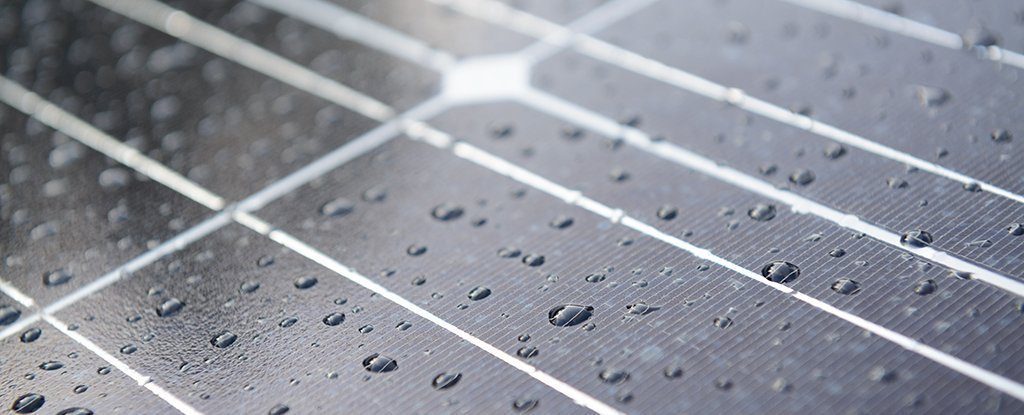
As advanced and efficient as our solar panels are becoming, they're still pretty much useless when rain clouds arrive overhead. That could soon change thanks to a hybrid cell that can harvest energy from both sunlight and raindrops.

The key part of the system is a triboelectric nanogenerator or TENG, a device which creates electric charge from the friction of two materials rubbing together, as with static electricity - it's all about the shifting of electrons.

TENGs can draw power from car tyres hitting the road, clothing materials rubbing up against each other, or in this case the rolling motion of raindrops across a solar panel. The end result revealed by scientists from Soochow University in China is a cell that works come rain or shine.

"Our studies demonstrate a new concept in [the] utilisation of energy during various weather conditions," write the researchers in their published paper.

Roses

Indian engineer shows how to grow a 100-year-old forest in your backyard... in just 10 years

backyard forest
Most of the world we live in today was once forest, our natural habitat for millions of years.

Now surrounded by cities and agriculture, humans are no longer living in their "natural" habitat, argues a forest-building engineer named Shubhendu Sharma. But we can recreate little chunks of that habitat in just ten years our own backyards, workplaces and public spaces, he explains in the Ted Talk below:

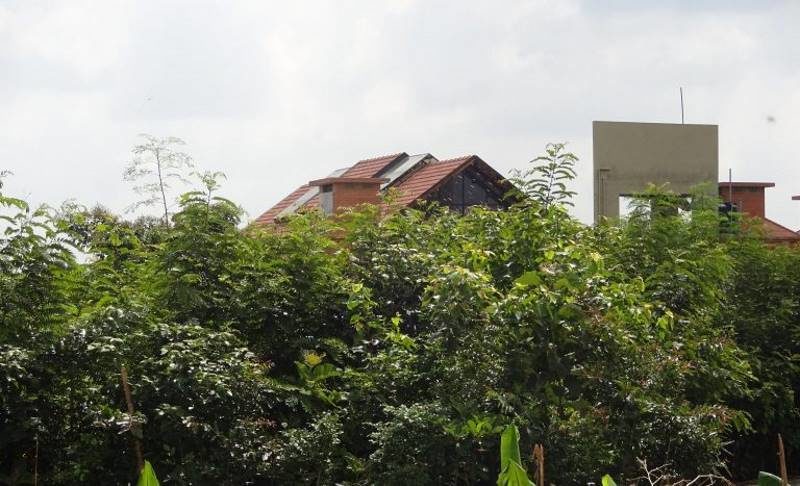
Shubhendu Sharma was an industrial engineer for Toyota hired to offset some of the carbon emissions of the company's factories. His solution was to plant mini forests right next door. Since then his company Afforest has helped "build" 75 such forests in 25 cities across the world.

Comment: Check out this 2016 TED Talk by Sharma: