Science & TechnologyS


Info

Google testing 72-qubit computer in plans to demonstrate quantum supremacy for the first time

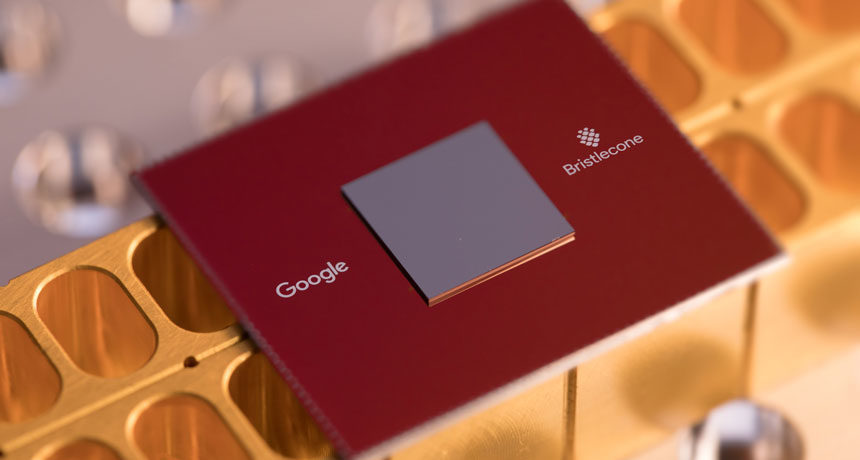
Google 72-qubit quantum chip
QUANTUM UPGRADE Google’s 72-qubit quantum chip (shown) could become the first to perform a calculation impossible for traditional computers.
Quantum computers are bulking up.

Researchers from Google are testing a quantum computer with 72 quantum bits, or qubits, scientists reported March 5 at a meeting of the American Physical Society - a big step up from the company's previous nine-qubit chip.

The team hopes to use the larger quantum chip to demonstrate quantum supremacy for the first time, performing a calculation that is impossible with traditional computers (SN: 7/8/17, p. 28), Google physicist Julian Kelly reported.

Achieving quantum supremacy requires a computer of more than 50 qubits, but scientists are still struggling to control so many finicky quantum entities at once. Unlike standard bits that take on a value of 0 or 1, a qubit can be 0, 1 or a mashup of the two, thanks to a quantum quirk known as superposition.

Comment: See also:


Galaxy

Galactic cosmic rays hitting Earth are 'bad and getting worse'

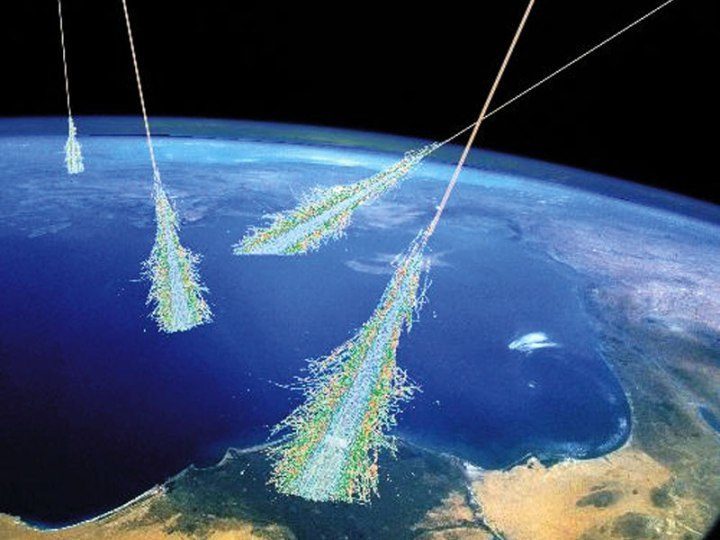
A Cosmic Ray Shower in Earth’s atmosphere
© Simon Swordy (U. Chicago)A Cosmic Ray Shower in Earth’s atmosphere.
Astronauts on the International Space Station may be at risk during long missions

Cosmic rays are bad-and they're getting worse. That's the conclusion of a new paper just published in the research journal Space Weather. The authors, led by Prof. Nathan Schwadron of the University of New Hampshire, show that radiation from deep space is dangerous and intensifying faster than previously predicted.

The story begins four years ago when Schwadron and colleagues first sounded the alarm about cosmic rays. Analyzing data from the Cosmic Ray Telescope for the Effects of Radiation (CRaTER) instrument onboard NASA's Lunar Reconnaissance Orbiter (LRO), they found that cosmic rays in the Earth-Moon system were peaking at levels never before seen in the Space Age. The worsening radiation environment, they pointed out, was a potential peril to astronauts, curtailing how long they could safely travel through space.

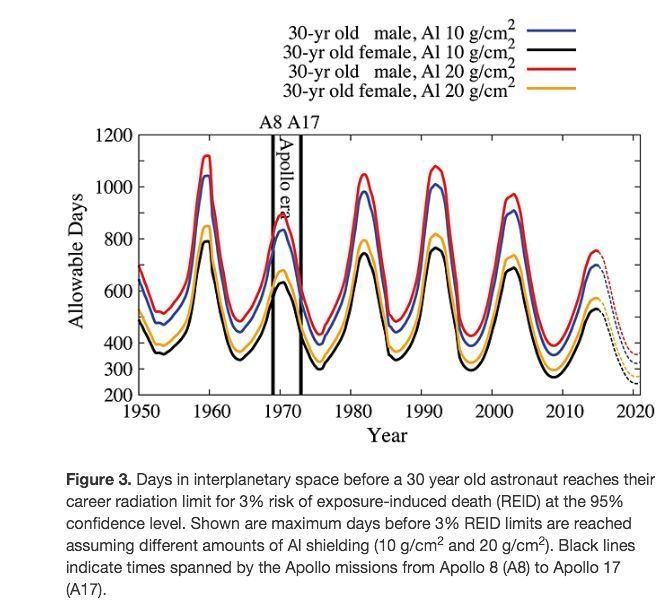
This figure from their original 2014 paper shows the number of days a 30-year old male astronaut flying in a spaceship with 10 g/cm2 of aluminum shielding could go before hitting NASA-mandated radiation limits:

Cosmic rays mission duration

Comment: For related articles on cosmic rays and how they are affecting us see also: For further information read Earth Changes and the Human Cosmic Connection by Pierre Lescaudron and Laura Knight Jadczyk.


Beaker

Scientists identify marker of biological age in human urine

antibiotics brain function
Researchers find that a substance indicating oxidative damage increases in urine as people get older. The study, published today in open-access journal in Frontiers in Aging Neuroscience, also describes a way to easily measure levels of this marker in human urine samples.

Just take a look around: we all know people who look young for their age, or folks who seem prematurely wizened. Even in an individual, different parts of the body can age at different speeds. By examining how chronological age lines up with biological age across the population, researchers are starting to pin down how these two measures should sync up -- and what it means for how long we have left when they don't.

The new marker potentially provides a method to measure how much our body has aged -- our biological rather than chronological age. This could help predict our risk of developing age-related disease, and even our risk of death.

Galaxy

Scientists observe a new quantum particle with properties of ball lightning

quantum ball lightning
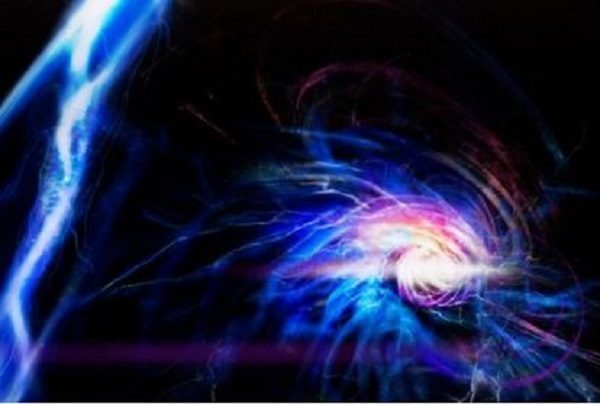
© Heikka ValjaThis is an artistic impression of a quantum ball lighting.
Scientists at Amherst College and Aalto University have created, for the first time a three-dimensional skyrmion in a quantum gas. The skyrmion was predicted theoretically over 40 years ago, but only now has it been observed experimentally.

In an extremely sparse and cold quantum gas, the physicists have created knots made of the magnetic moments, or spins, of the constituent atoms. The knots exhibit many of the characteristics of ball lightning, which some scientists believe to consist of tangled streams of electric currents. The persistence of such knots could be the reason why ball lightning, a ball of plasma, lives for a surprisingly long time in comparison to a lightning strike. The new results could inspire new ways of keeping plasma intact in a stable ball in fusion reactors.

'It is remarkable that we could create the synthetic electromagnetic knot, that is, quantum ball lightning, essentially with just two counter-circulating electric currents. Thus, it may be possible that a natural ball lighting could arise in a normal lightning strike,' says Dr Mikko Möttönen, leader of the theoretical effort at Aalto University.

Comment: Mystery of ball lightning solved?


Beaker

Biostasis: DARPA wants to 'freeze' injured soldiers on the battlefield

Human body
© Shutterstock
When troops are injured on the battlefield, time is of the essence: How long it takes service members to receive medical care is often the single most important factor in determining whether they live or die.

Now, scientists are looking at new ways to buy some extra time for battlefield injuries, but not by getting medical care to troops faster. Instead, the scientists want to essentially slow down time.

And they're taking a cue from tiny creatures called tardigrades.

A new program from the Defense Advanced Research Projects Agency (DARPA) - the U.S. agency tasked with developing new technologies for the military - aims to develop treatments that literally slow down the body's biochemical reactions, tipping the body into a slowed or suspended state until medical care is available. In other words, the program, called Biostasis, aims to "slow life to save life," according to a DARPA statement.

Archaeology

1.6-billion-year-old 'breath of life' preserved in fossilized microbe mats

fosslized air bubbles
© Stefan BengtsonFossilized bubbles formed by cyanobacteria some 1.6 billion years ago were found in the so-caled Vindhyan supergroup in central India.
A nondescript series of pockmarks in rock is actually the captured breath of microbes from 1.6 billion years ago.

The fossils come from fossilized mats of microbes found in central India. Most of the microbes are cyanobacteria, according to new research published Jan. 30 in the journal Geobiology. These ancient microbes, among the oldest life on Earth, were photosynthesizers - like modern plants, cyanobacteria turned sunlight into energy, exhaling oxygen as a byproduct. Their ancient exhalations oxygenated Earth's atmosphere beginning around 2.4 billion years ago, paving the way for life as we know it today.

Cyanobacteria also excreted minerals that hardened into layered mats called stromatolites. Stromatolites are found in a few places today, notably Shark Bay in Western Australia and in a remote patch of freshwater in Tasmania, but they once dominated Earth's shallow seas. Swedish Museum of Natural History biogeologist Therese Sallstedt and her colleagues studied some of these mats from a thick sedimentary layer called the Vindhyan Supergroup, which may contain fossils of some of the oldest animal life on the planet.

Better Earth

South Atlantic Anomaly: The 'Bermuda Triangle' of space and what's going on there

Anomaly
© Unknown
"We're getting stronger evidence that there's something unusual about the core-mantel boundary under Africa that could be having an important impact on the global magnetic field," says John Tardano professor of geophysics and physics and astronomy at the University of Rochester.

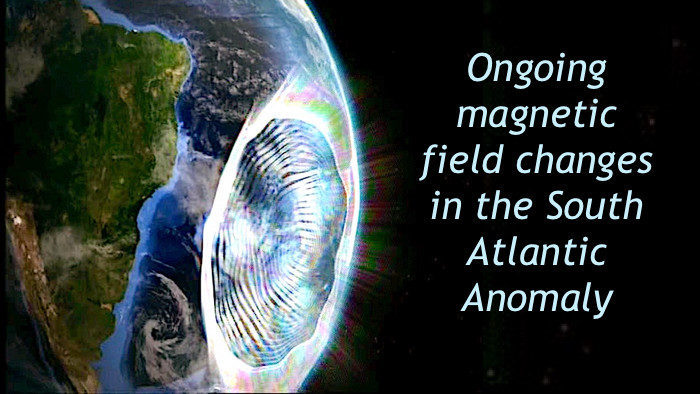
Using new data gathered from sites in southern Africa, University of Rochester researchers have extended their record of Earth's magnetic field back thousands of years to the first millennium. The record provides historical context to help explain recent, ongoing changes in the magnetic field, most prominently in an area in the Southern Hemisphere known as the South Atlantic Anomaly.

"We've known for quite some time that the magnetic field has been changing, but we didn't really know if this was unusual for this region on a longer timescale, or whether it was normal," says Vincent Hare, who recently completed a postdoctoral associate appointment in the Department of Earth and Environmental Sciences (EES) at the University of Rochester, and is lead author of a paper published in Geophysical Research Letters.


Cloud Lightning

Knot the plan: Scientists unravel mysterious ball lightning puzzle...by accident

Ball Lightning
© Heikka ValjaArtistic impression of a quantum ball lightning.
Researchers have shed new light on a decades-old mystery by finally creating ball lightning. The phenomenon is seen only rarely in nature and had never been made before in a lab.

The three-dimensional knot of atoms, which is called a skyrmion, was predicted theoretically over 40 years ago. It has finally been observed in a laboratory by scientists at Amherst College in the United States and Aalto University in Finland.

After the scientists created the knots, which are made up of magnetic spins of atoms in cold quantum gas, they realized it looked strikingly familiar to ball lightning, which is a dramatically long-lived type of lightning.


Comet

Comet Chury: Younger than originally thought

comet chury
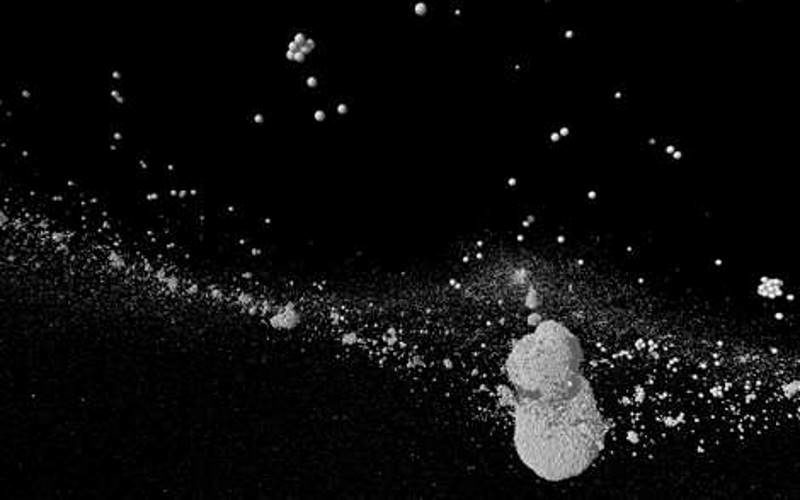
© ESA/Rosetta/Navcam - CC BY-SA IGO 3.0The final stage of a simulation, carried out by the authors, of a catastrophic collision between comets, showing one of the objects formed by re-accretion of debris from the collision, with a shape identical to that of Chury.
Comets which consist of two parts, like Chury, can form after a catastrophic collision of larger bodies. Such collisions may have taken place in a later phase of our solar system, which suggests that Chury can be much younger than previously assumed. This is shown through computer simulations by an international research group with the participation of the University of Bern.

In the computer simulations, the research team investigated what happened after two large comet nuclei violently collided together. "The calculations showed that a large part of the material accumulates in many smaller bodies," explains Martin Jutzi of the Center for Space and Habitability (CSH) at the University of Bern and member of the National Centre of Competence in Research PlanetS. The newly created objects have different sizes and shapes, among them are many elongated bodies, some of which consist of two parts, just like the comet 67P/Churyumov-Gerasimenko, which the University of Bern studied in detail with the Bern mass spectrometer ROSINA on the Rosetta spacecraft.

Comment:


Eye 1

A cure for blindness soon

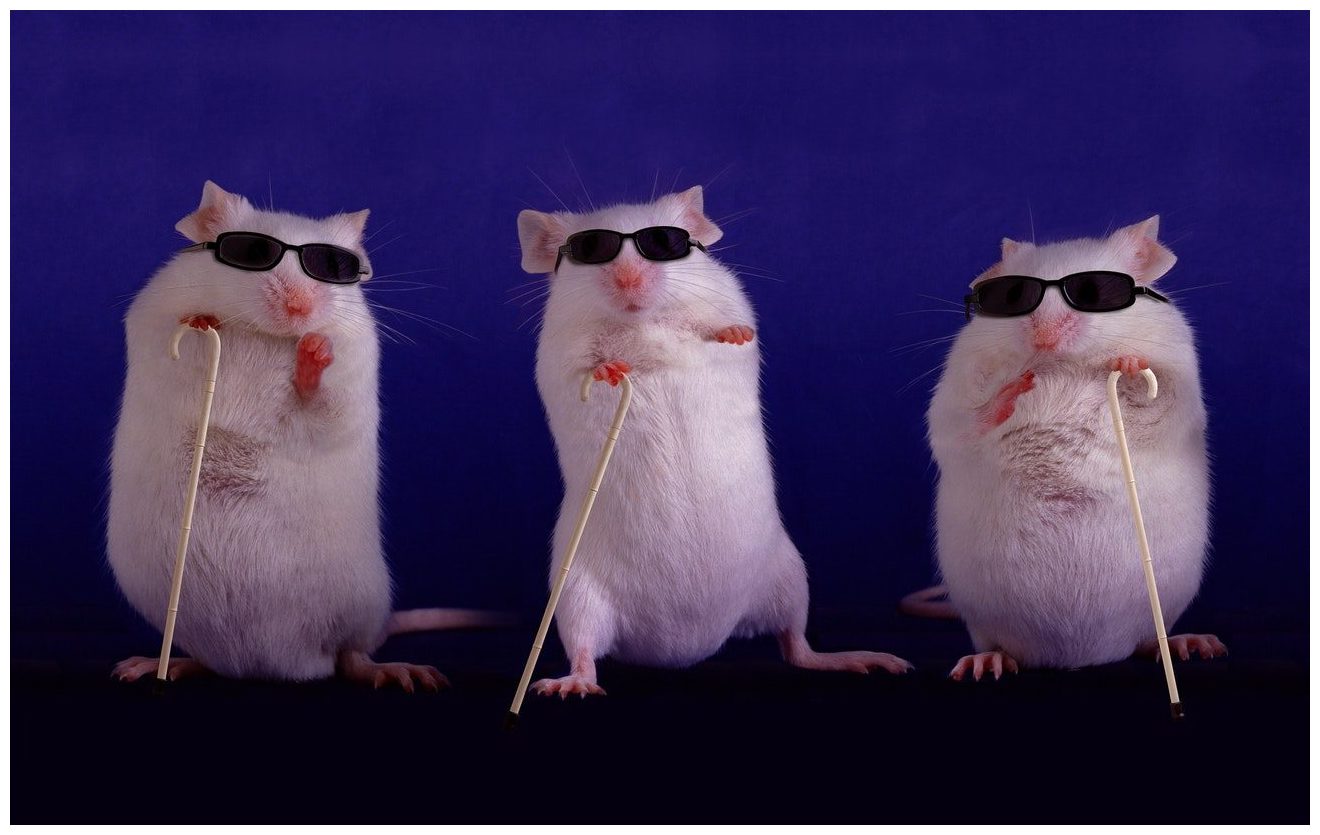
3 Blind Mice
© Fuse/Getty ImagesNot for much longer, perhaps...
Hope for a cure for blindness may no longer be simply wishful thinking following a successful attempt by scientists to restore sight in vision-impaired mice.

In a paper published in the journal Nature Communications, researchers from Fudan University in China report that light sensitivity was restored to blind mice following the implantation of nanowires made from titanium dioxide coated in gold nanoparticles.

A team led by Jing Tang placed the nanowires into the retinas of the mice, using them to reinvigorate damaged photoreceptors.