Science & TechnologyS


Bizarro Earth

Scientists create world's first 3-D thermal image of volcano using drone technology

Stromboli volcano, Italy 3-D image
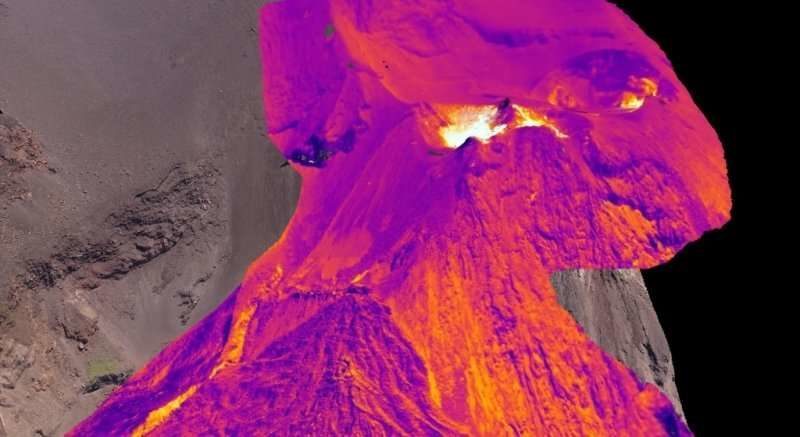
© University of AberdeenThis image of Stromboli was made with high-precision cameras mounted on a drone.
Scientists from the University of Aberdeen have created the world's first 3-D thermal image of an active volcano.

The spectacular image of Stromboli in Italy was made using high-precision cameras mounted to an aerial drone.

It was created by a team of geoscientists from the Universities of Aberdeen and Oslo who are using drone technology to develop a technique that can detect subtle changes in the behaviour of the volcano, providing more accurate information on the likelihood of an eruption.

Seismograph

Powerful 18th century New England earthquake recorded in pond mud

18th century earthquake new england
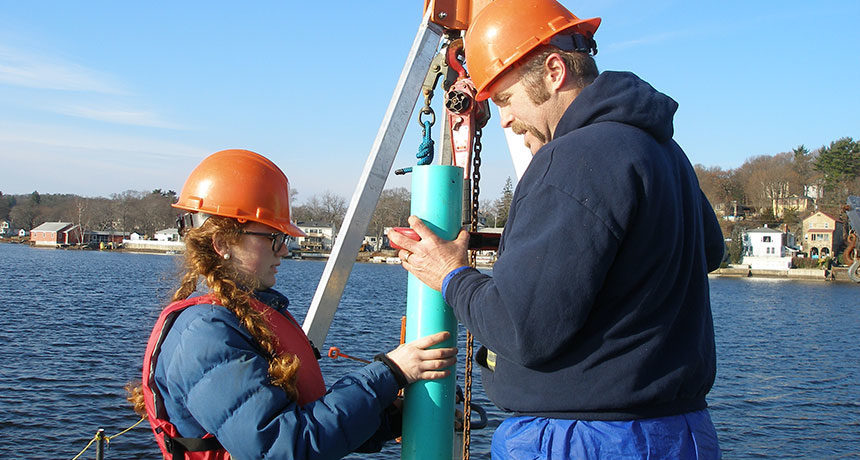
© K. MoneckeResearchers retrieve a sediment core from the bottom of Sluice Pond in eastern Massachusetts. The sediments contain evidence of an 18th century earthquake.
The layers of a sediment core show a change around the time of the 1755 Cape Ann earthquake

The history of New England's most damaging earthquake is written in the mud beneath a Massachusetts pond. Researchers identified the first sedimentary evidence of the Cape Ann earthquake, which in 1755 shook the East Coast from Nova Scotia to South Carolina. The quake, estimated to have been at least magnitude 5.9, took no lives but damaged hundreds of buildings.

Within a mud core retrieved from the bottom of Sluice Pond in Lynn, Mass., a light brown layer of sediment stands out amid darker layers of organic-rich sediment, the researchers report March 27 in Seismological Research Letters. The 2-centimeter-thick layer contains tiny fossils usually found near the shore, as well as types of pollen different from those found in the rest of the core. Using previous studies of the pond's deposition rates, geologist Katrin Monecke of Wellesley College in Massachusetts and her colleagues determined the layer dates to between 1740 and 1810.

Microscope 1

Newly discovered channels in human body could be previously-unknown organ that helps explain spread of cancer

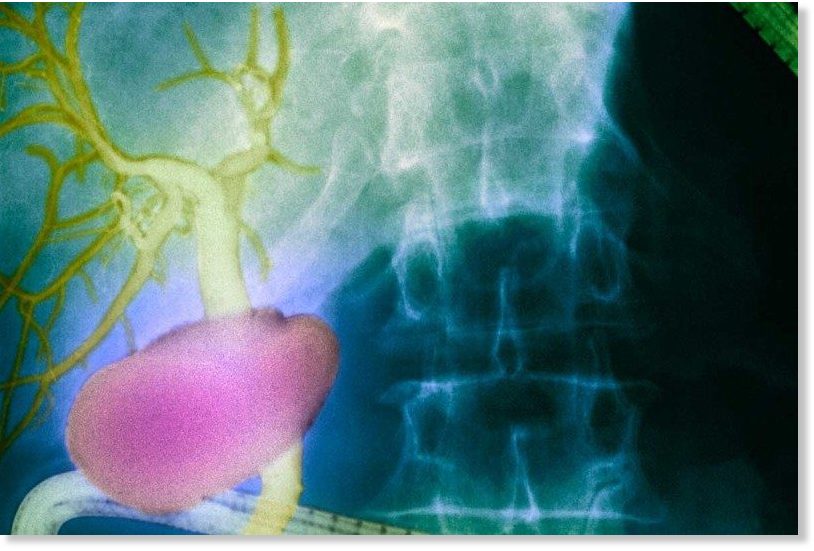
Fluid-filled channels may cushion our organs
© CNRI/SCIENCE PHOTO LIBRARYFluid-filled channels may cushion our organs
A newly discovered network of fluid-filled channels in the human body may be a previously-unknown organ, and it seems to help transport cancer cells around the body.

This discovery was made by chance, from routine endoscopies - a procedure that involves inserting a thin camera into a person's gastrointestinal tract. Newer approaches enable doctors to use this procedure to get a microscopic look at the tissue inside a person's gut at the same time, with some surprising results.

One team had expected to find that the bile duct is surrounded by a hard, dense wall of tissue. But instead, they saw weird, unexplained patterns. They took their findings to Neil Theise, a pathologist at New York University School of Medicine.

Laptop

Kaspersky Lab registers a large number of cyberattacks targeting Russian media websites

Kaspersky lab
© Sputnik/ Kirill Kallinikov
Russian cybersecurity company Kaspersky Lab has registered a large number of cyberattacks using Buhtrap malware that have targeted the websites of major Russian media outlets, the company said Friday.

"Kaspersky Lab has been registering massive attempts to infect the users entering some Russian media websites with Buhtrap banking trojan. As of now there have been hundreds of attempts registered. The attacks target mainly Russia, single attempts have been registered in Ukraine and Kazakhstan," the statement read.

Comment:


Russian Flag

Russia tests new weapons as part of strategic missile forces drills

Russia missile drills
© Ministry of Defence of the Russian Federation
More than 10,000 troops and 1,000 vehicles are taking part in Russian Strategic Missile Forces exercises in the Urals. The drills are testing a number of new weapons, including upgraded 'Yars' intercontinental ballistic missiles.

The joint drills of the Omsk, Vladimir and Orenburg rocket armies are the first time so much modernized weaponry has been taken out for a combat patrol, in the words of Colonel-General Sergey Karakaev, commander of the Strategic Missile Forces.

"It is important for us to find out whether the troops have mastered the new technology, and to what extent it is adapted to the deployment areas," Karakaev told reporters.

War Whore

Persistent Aquatic Living Sensors: The scary plan to militarize ocean life

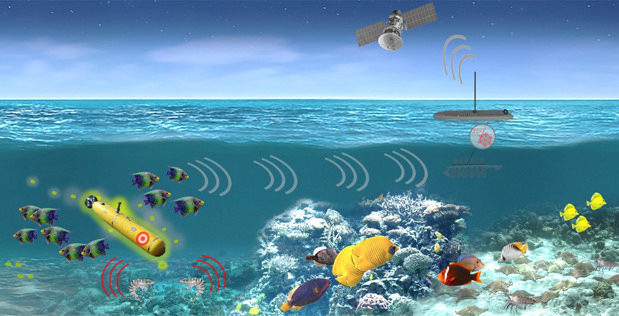
Military ocean life
© earthisland.org By Maia Danks
The US military has plans to create genetically modified marine organisms that can be used as underwater spies for the military. Fantastic as this idea may seem, the Pentagon's research arm, DARPA (or Defense Advanced Research Projects Agency), has actually launched a new program that aims to tap into the "natural sensing capabilities" of marine organisms, who are highly attuned to their surroundings, to track enemy traffic undersea.

Satellite

April 1 (no fooling!) Space station to plummet to Earth, fireballs expected

ChineseSpaceStation
© AP Photo/Beijing Aerospace Control CenterChina's Shenzhou-9 manned spacecraft docks with Tiangong-1 space lab module.
Easter Sunday is typically about rising, but this April 1 everyone will be thinking about falling: China's first space station is expected to plummet back to Earth in a fireball on Sunday.

While the heavens may not be falling figuratively, they literally are. China's 19,000-pound Tiangong-1, or Heavenly Palace-1, will be burning up in the atmosphere in an "uncontrolled reentry," which basically means that scientists can't stop it, over the weekend, although scientists caution that predicting uncontrolled re-entries is notoriously difficult.


Comment: Heads up, everyone!


Cell Phone

IT security specialists claim 45 different smartphones have viruses built into them

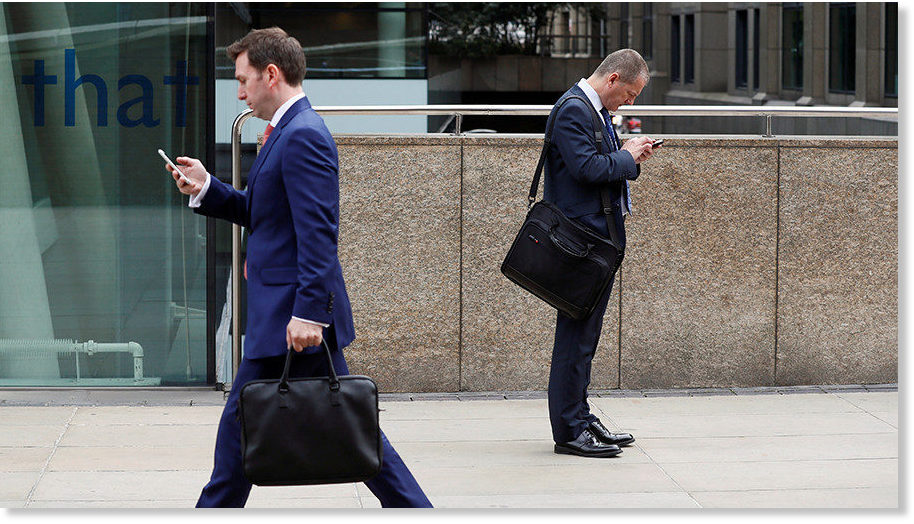
businessmen cell phones
© Stefan Wermuth / Reuters
Experts at the Russian anti-virus service Doctor Web have identified 45 smartphone models with viruses installed at the production stage. This could badly affect hundreds of thousands of smartphone users, according to the firm.

"Users told us that their anti-virus program has found malicious software on their smartphones. We've analyzed the situation and came to the conclusion the software was in the system area where no virus could get from outside but could only be built in during the production phase," Doctor Web director general Boris Sharov told RIA Novosti.

He added that more detailed research revealed malicious software installed at the production phase in 45 models of phones operating on the Android system.

Red Flag

Boeing Aircraft hit by malware attack, company says scale of problem overstated by media

boeing aircraft
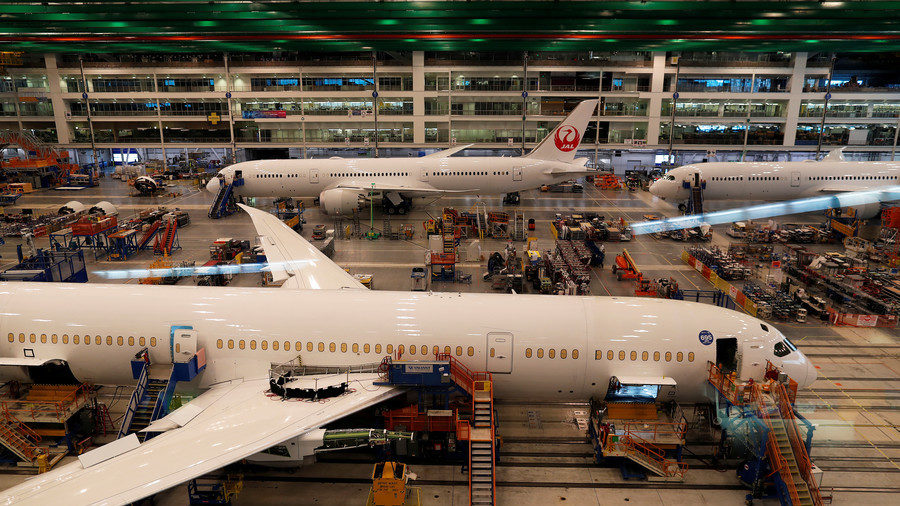
© Randall Hill / ReutersA Boeing 787-10 aircraft being built at Boeing South Carolina in North Charleston
Aircraft maker Boeing has suffered a malware attack, which early reports said could have impacted production or aircraft software. The company's official statement later said only a "limited intrusion" had occurred.

It all started with a daunting internal memo, reportedly sent by the chief engineer at Boeing Commercial Airplane production engineering, Mike VanderWel. The document, first reported on by the Seattle Times, warned employees of a possible shutdown of Boeing facilities due to a rapidly advancing computer virus. The memo reportedly blamed the notorious WannaCry ransomware for the imminent disruption of Boeing production sites and, potentially, its flying software.

"It is metastasizing rapidly out of North Charleston and I just heard 777 (automated spar assembly tools) may have gone down," VanderWel reportedly wrote. Fueling the fears further, he predicted the malware could affect equipment needed to tune aircraft, and that it might "spread to airplane software."

Seismograph

Scientists: The bigger the earthquake, the longer it takes to issue an alert

Bigger earthquake alerts
© Science
Earthquake early warning systems can give people crucial seconds to move to safety-but only if they send the message in time. Now, scientists working on such systems have discovered that the bigger the tremor, the longer it takes to issue an alert-giving people little time to prepare for the big one, but lots of time to brace for a ho-hum event.

All earthquakes start with P waves, which are fast moving and cause little damage. S waves come next, moving more slowly but causing more destruction. Early warning systems measure ground movement during the fast P waves to predict how much shaking the S waves will cause, and then send out an alert.