Science & TechnologyS


Brain

90% accuracy: New mind-reading machine can translate your thoughts and display them as text instantly

Mind control
The new machine can apparently read your mind and translate your thoughts into text instantly
Scientists have developed an astonishing mind-reading machine which can translate what you are thinking and instantly display it as text.

They claim that it has an accuracy rate of 90 per cent or more and say that it works by interpreting consonants and vowels in our brains.

The researchers believe that the machine could one day help patients who suffer from conditions that don't allow them to speak or move.

The machine registers and analyses the combination of vowels and consonants that we use when constructing a sentence in our brains.

Satellite

Faulty Chinese space station burns up in atmosphere upon re-entry

Chinese space station
© Xinhua / Lu Zhe / Global Look PressChinese space station Tiangong-1.
Chinese space station Tiangong-1, whose imminent crash space-watchers have awaited with bated breath, has pierced the Earth's atmosphere over the South Pacific, Chinese state media says. Most of it has reportedly burned up.

The space station made its long-awaited re-entry in the central region of the South Pacific at 8:15 am [00:15 GMT] on Monday, the Chinese news agency Xinhua reported, citing the China Manned Space Engineering Office (CMSEO).

The re-entry has been confirmed by the US military. According to the US Strategic Command's Joint Force Space Component Command (JFSCC), it took place at 5:16 pm PST [0:16 GMT] over the southern Pacific Ocean. The JFSCC said it used its own orbital analysis and reached out to Australia, Canada, France, Germany, Italy, South Korea and the UK to confirm the time of the re-entry.

Comment: Or trying to sling at China in general.


Magnify

NOAA's 'adjustments': The stunning statistical fraud behind the 'Global Warming' scare

Arctic sea ice
© YouTube/Adapt 2030 (screen capture)


Global Warming


The National Oceanic and Atmospheric Administration may have a boring name, but it has a very important job: It measures U.S. temperatures. Unfortunately, it seems to be a captive of the global warming religion. Its data are fraudulent.

What do we mean by fraudulent? How about this: NOAA has made repeated "adjustments" to its data, for the presumed scientific reason of making the data sets more accurate.

Nothing wrong with that. Except, all their changes point to one thing - lowering previously measured temperatures to show cooler weather in the past, and raising more recent temperatures to show warming in the recent present.

Comment: See also:


Beaker

Researchers print 3D structures composed entirely of liquids

water spiral
© Forth et alAn aqueous spiral, 6.8 cm long, thread thickness 100 μm, in silicone oil. Scale bar – 2 mm.
Using a modified 3D printer, Dr. Tom Russell of Lawrence Berkeley National Laboratory and colleagues injected threads of water into silicone oil - sculpting tubes made of one liquid within another liquid.

They printed threads of water between 10 microns and 1 mm in diameter, and in a variety of spiraling and branching shapes up to several meters in length.

"It's a new class of material that can reconfigure itself, and it has the potential to be customized into liquid reaction vessels for many uses, from chemical synthesis to ion transport to catalysis," said Dr. Russell, the corresponding author of a paper published in the journal Advanced Materials.

The material owes its origins to two advances: learning how to create liquid tubes inside another liquid, and then automating the process.

Satellite

Russia, China will merge satellite tracking systems into one global navigation giant

Russia/china satellite
© Evgeny Biyatov/SputnikTechnology merge
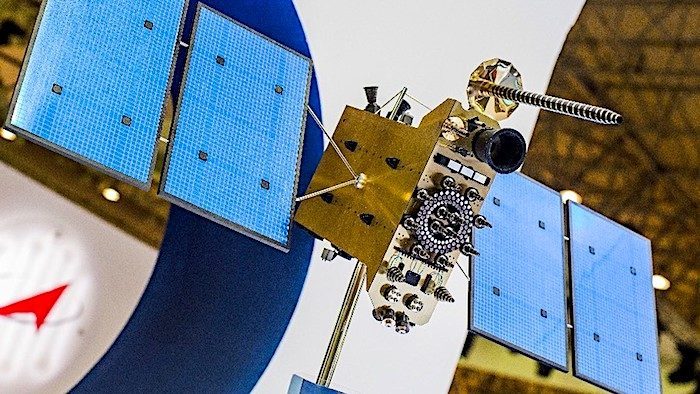
Moscow and Beijing will team up to create an integrated navigation system based on Russia's Global Navigation Satellite System (GLONASS) and the Chinese BeiDou. The system will cover most of Eurasia.

The countries will reportedly negotiate the merger in May at the International Conference on Advanced Technologies in Manufacturing and Materials Engineering in the Chinese city of Harbin, Izvestia daily reports.

The initiative to merge the two separate systems is the result of a proposal made by the Chinese authorities to the Russian Federal Space Agency, Roscosmos. It is intended to create a joint global navigation satellite system, covering the countries of the Shanghai Cooperation Organization, which include China, Kazakhstan, Kyrgyzstan, Russia, Tajikistan, Uzbekistan, India and Pakistan.

The new system will allow the partners to share data on the positions of navigation satellite groups, improve working efficiency in a real-time environment, and to exchange corrections, where necessary. At the same time, Russian GLONASS may significantly broaden its user base. "If the project is implemented, it will allow for an improvement in accuracy for both systems," said a Roscosmos spokesperson, as quoted by the media.

If successful, the project will divide the entire world into two zones of influence by two united systems GLONASS-BeiDou and GPS-Galileo, operated by the US and the European Union, according to Andrey Ionin, a member of the Russian Academy of Cosmonautics.

Satellite

12-hour countdown to re-entry - Chinese space station to disintegrate, hit earth today

Chinese ground control
© AFPChinese ground control
An out-of-control Chinese space station is expected to hit Earth in the next 12 hours. However, experts tracking the decaying orbiter admit they still have no idea exactly where the debris will land.

Launched in 2011, the Tiangong-1 was China's first space station. Ostensibly a pilot mission for the Tiangong-2 space laboratory, the first of China's orbiters hosted two manned missions in 2012 and 2013. It has been slowly losing altitude since malfunctioning in 2016.

In November, experts from the European Space Agency (ESA) listed Spain, Portugal, Italy, Bulgaria and Greece among possible crash sites should any pieces of the craft fail to burn up in the atmosphere. But an update by the agency on April 1 committed to a much wider crash zone between 43ºN and 43ºS. The area includes the continents of Africa and Australia, as well as most of South America and the entire Indian subcontinent.

"With the latest available orbital data and space weather forecasts, the re-entry prediction window stabilized and shrunk further to a time running from the night of April 1 to the early morning of April 2 [UTC]," an ESA statement read.


Comment: See also: April 1 (no fooling!) Space station to plummet to Earth, fireballs expected


Brain

Revolutionary brain-mapping technique creates new blueprint for cortical connections

Mouse braincolorthing
© Zador Lab, CSHLThe large, triangular-shaped central area identifies the primary visual cortex in the mouse. By barcoding 591 neurons in this region, the team used MAPseq to discover patterns of their projections to nearby higher visual cortical areas. Each of the latter is identified in this calibration image, which registers the brain's reaction to two different kinds of visual stimuli (registering in pink and green fluorescence).
Using a revolutionary new brain-mapping technology recently developed at Cold Spring Harbor Laboratory (CSHL), an international team of scientists led by Professor Anthony Zador have made a discovery that will force neuroscientists to rethink how areas of the cortex communicate with one another.

The new technology, called MAPseq, allowed the scientists to determine that neurons in the primary visual cortex communicate with higher visual areas of the cortex much more broadly than previously believed, and according to specific patterns.

The wiring diagram of the cortex determines how information is processed across dozens of cortical areas. "If we don't know how information is combined even at the earliest stages, then we have essentially no shot of figuring out how the brain works." says Justus Kebschull, now a postdoctoral researcher at Stanford University who was instrumental in developing MAPseq as a graduate student in Zador's lab.

Display

Paper-like LCD - thin, flexible, tough and cheap

ORW paper
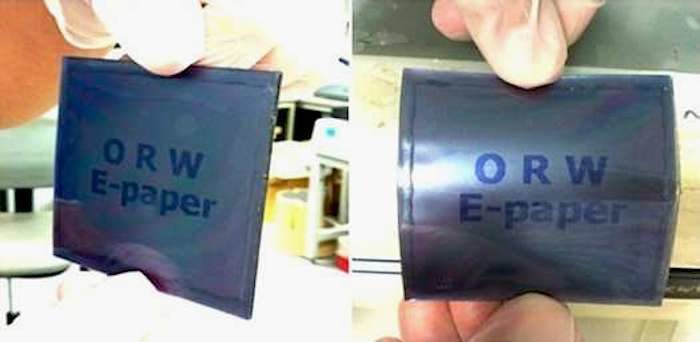
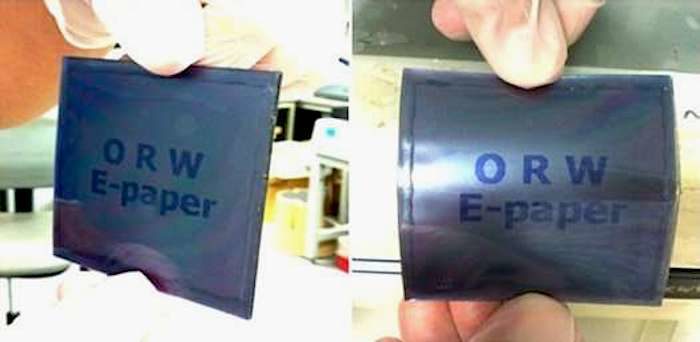
© Credit: Zhang et al.Combined flexible blue optically rewritable LCD
Optoelectronic engineers in China and Hong Kong have manufactured a special type of liquid crystal display (LCD) that is paper-thin, flexible, light and tough. With this, a daily newspaper could be uploaded onto a flexible paperlike display that could be updated as fast as the news cycles. It sounds like something from the future, but scientists estimate it will be cheap to produce, perhaps only costing $5 for a 5-inch screen. The new optically rewritable LCD design was reported this week in Applied Physics Letters.

The team focused on two key innovations for achieving highly flexible designs. The first is the recent development of optically rewritable LCDs. Like conventional LCD displays, the display is structured like a sandwich, with a liquid crystal filling between two plates. Unlike conventional liquid crystals where electrical connections on the plates create the fields required to switch individual pixels from light to dark, optically rewritable LCDs coat the plates with special molecules that realign in the presence of polarized light and switch the pixels. This removes the need for traditional electrodes, reduces the structure's bulk and allows more choices in the type and thickness of plates. Consequently, optically rewritable LCDs are thinner than traditional LCDs, at less than half a millimeter thick, can be made from flexible plastic, and weigh only a few grams. "It's only a little thicker than paper," said Jiatong Sun, a co-author from Donghua University in China.


Hearts

Scientists surprised by monkeys' altruistic behavior even when no one was looking

marmoset
© Getty ImagesWhat explains the marmoset's generosity toward little ones? Not the audience effect, new research finds.
Marmoset monkeys exist on a branch of the evolutionary tree that is distinct from the one that led to humans. But these fellow primates consistently astonish researchers with social behavior that seems, well, pretty highly evolved.

Marmosets engage in rigorously polite patterns of communication and do not talk over or interrupt each other. Though territorial, they are so inquisitive that they will watch videos of marmosets they do not know and learn from them.

Marmosets' social organization and child-rearing practices could have been the model for the phrase, "it takes a village." A dominant male and female breed, and their babies are meticulously looked after by extended family members who then aren't free to breed themselves.

A new study further burnishes the marmoset's reputation for admirable community values. Researchers report that these caregivers share their food more generously with little ones in private than when they're surrounded by the watchful eyes of other community members.

Butterfly

Notebaert Nature Museum hatches rare Comet Moth

comet moth
© Peggy Notebaert Nature MuseumA rare comet moth, also known as a Madagascan moon moth, emerged from its cocoon last week at the Peggy Notebaert Nature Museum.
A brightly colored moth rarely seen in the U.S. (and bigger than a human hand) emerged from its cocoon Friday at Chicago's Peggy Notebaert Nature Museum - but you better get there fast if you want to see it.

The comet moth, also known as a Madagascan moon moth, arrived at the museum in mid-December and spent nearly three months in its cocoon before hatching last week. It is currently on display in the Judy Istock Butterfly Haven but will only be there for a few more days.

"Adult butterflies and moths don't typically have a very long life span," said Doug Taron, the museum's chief curator, adding that comet moths live for about one week. "It's a little shorter than average for not only this species but also [compared to] its close relatives."