Science & TechnologyS


Jet5

Russian MoD: Ten MiG-31 with Kinzhal missiles unveiled by Putin ready for combat use

The crew of the Russian Aerospace Forces MiG-31
© Russian Defence MinistryThe crew of the Russian Aerospace Forces MiG-31 have conducted simulated firing of Kinzhal hypersonic aeroballistic missile with a small radar signature and high maneuverability
Ten MiG-31 interceptors (NATO reporting name: Foxhound) with Kinzhal ("Dagger") hypersonic missiles able to penetrate air defense are on trial combat duty and ready for use, Russian Deputy Defense Minister Yuriy Borisov said.

"MiG-31 is the carrier [of Kinzhal hypersonic missile], this aircraft is the most suitable for speeding up this missile to the required speeds at the right altitudes. To confirm that it is not some kind of exotic thing: today 10 aircraft are on trial combat duty and are ready for use depending on the situation," Russian Deputy Defense Minister Yuriy Borisov told the Zvezda broadcaster.

According to Borisov, it is one of four weapons, about which Russian President Vladimir Putin told in his address to the parliamentarians earlier in the year.

Comment: Borisov also said that Peresvet laser combat system is likely to be shown at a Victory Day parade in Moscow in a span of two or three years, as now it is being upgraded.
"I think it is possible in two or three years, since the work is underway to upgrade the complex. If today it requires rather many support vehicles, it will be quite compact soon. Perhaps, we will show it to the public, too," Borisov said when asked if the laser system would be presented during the Victory Day parade.


Toys

Reviving extinct mammoths will save the planet say global warmists

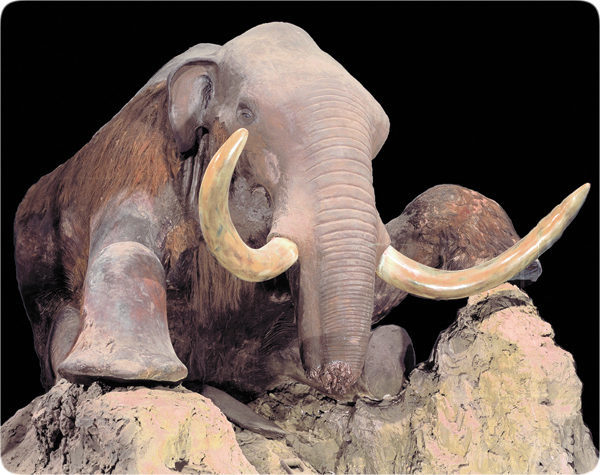
The Berezovka mammoth
Scientists hope to create a genetically engineered elephant-mammoth hybrid and send it to the Arctic to prevent a so-called "methane time-bomb," which could cause widespread environmental devastation.

The team at Harvard University believes the hardy animals could one day be released in the vast tundra and boreal stretches of North America and Eurasia. They plan to publish their first paper on the subject in the coming months, The Telegraph reported.

Scientists fear that the absence of large mammals pressing down and scraping back thick layers of winter snow in the region prevents the cold from penetrating the soil. Combined with warmer summers, the Arctic permafrost is melting. As a result, the frozen soil, packed with leaves and other organic materials that haven't decayed, will become exposed, releasing carbon into the atmosphere in the form of the greenhouse gasses carbon dioxide and methane.

This threat is widely known as the "methane timebomb," which would create levels of carbon equivalent to burning all of the world's forests two-and-a-half times over.


Comment: Because mammoths aren't scraping at the ground the cold won't penetrate? What?? Some mammoths were found with vegetation in their mouths which show that they lived in temperate climates: Of Flash Frozen Mammoths and Cosmic Catastrophes

And, the Arctic is becoming cooler, whereas areas underground/undersea have really been shown to be getting warmer. So any warming is coming from below and therefore has nothing to do with their debunked theories.


Comment: It's both amazing and mortifying how an propagandised, erroneous belief can spiral into a myriad of unfounded assumptions with potentially devastating consequences:


Fire

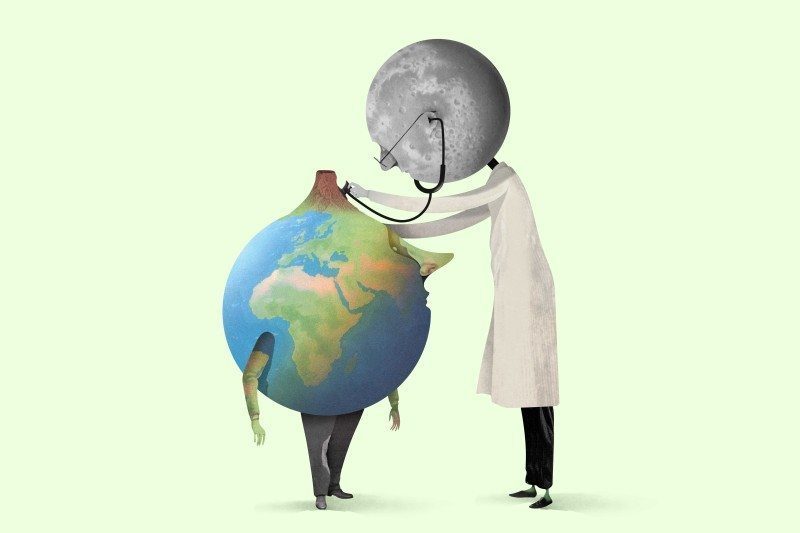
How the moon affects volcanoes

earth moon doctor
© Brett Ryder
Throughout history, people have suspected the moon of messing around with life on Earth's surface. From inducing madness to affecting the growth of plants, most of these connections are as tenacious as they are ill-substantiated. But one area where the moon's influence cannot be disputed is on the seashore. Long before Isaac Newton's theory of gravity provided a physical explanation, the link between the tides and the phases of the moon was obvious to anyone with an eye for patterns.

And if the moon has such a strong effect on liquid water, well then, why shouldn't the ground be equally affected? Philosophers as far back as Pliny the Elder have speculated that the moon's movements across the sky might also be responsible for earthquakes and volcanic eruptions. Statisticians fought over the significance of the connection in the 19th century, and geophysicists of the 1970s and 80s kept the claim alive until lack of evidence finally pushed it out of the mainstream.

The current state of the field can best be summed up by an eye-catching paper published in January by Susan Hough. A seismologist with the United States Geological Survey, she had set out to answer an age-old question: does the timing of powerful earthquakes coincide with the phases of the moon? The abstract ran to one word: No.

Comment: Science is discovering there are multiple factors that contribute to the delicate balance of stability on Earth, a major aspect is the interaction between the bodies within our solar system, which recently been showing ominous signs of change: Also check out SOTT radio's: Behind the Headlines: Earth changes in an electric universe: Is climate change really man-made?


Brain

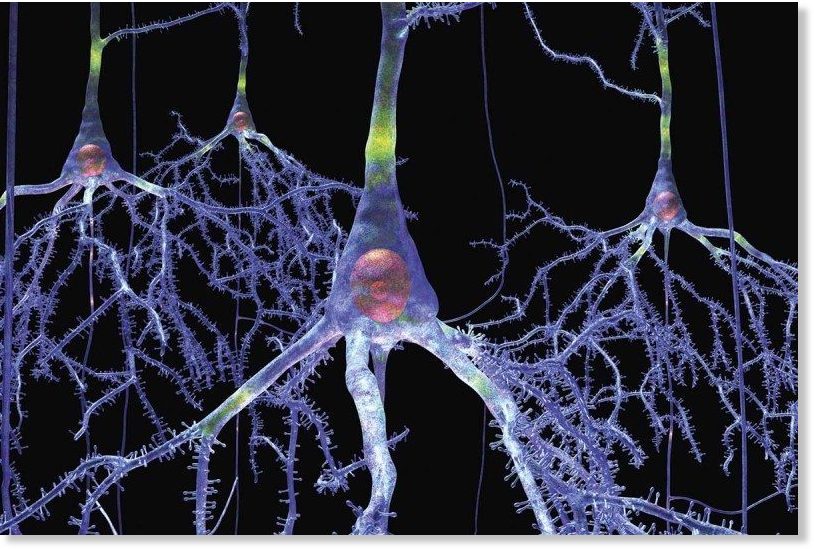
Larger brain cells and faster neurons could be what makes people smarter than others

neural connections
© RUSSELL KIGHTLEY/SCIENCE PHOTO LIBRARYNeurons with more connections may store more memories
What makes some people smarter than others? It could come down to your individual brain cells - the bigger and faster your neurons, the higher your IQ. If confirmed, the finding could lead to new ways to enhance human intelligence.

Most intelligence research to date has identified brain regions involved in certain skills, or pinpointed hundreds of genes that each play a tiny role in determining IQ.

To go a step further, Natalia Goriounova at the Free University Amsterdam in the Netherlands and her colleagues studied 35 people who needed surgery for brain tumours or severe epilepsy. Each took an IQ test just before the operation. Then, while they were under the knife, small samples of healthy brain tissue were removed and kept alive for testing.

The samples all came from the temporal lobe. This brain area helps us make sense of what we see, recognise language and form memories, all of which factor into intelligence.

Galaxy

Astronomers now coming to the conclusion that our understanding of the universe's expansion is wrong

Light from 87 million stars
© ESA/Gaia/DPACLight from 87 million stars shines through dust in our galaxy’s disc
The universe just got even more confusing. Last week, the biggest ever 3D map of our galaxy was released as part of the second batch of data from the European Space Agency's Gaia satellite. The long-awaited measurements revealed the location and brightness of 1.7 billion stars in the Milky Way.

But the first analysis of the data has also crystallised our confusion about the rate of the universe's expansion. We have two ways to determine this rate, expressed in a quantity called the Hubble constant, and they have always come up with different values. Some researchers had hoped that the Gaia data released on 25 April might lessen the divergence, but it has only got worse.

One determination of the Hubble constant comes from the cosmic microwave background (CMB), a relic of the first light in the cosmos after the big bang. Researchers have used the now defunct Planck space observatory to examine this light and figure out how fast the universe was expanding back then. Those values can then be plugged into models of cosmic evolution to predict how fast the universe should be expanding today.

Comment: For some additional theories on the Universe that only reflect our current understanding: Aand on the metaphysical side: Cosmopsychism: Is the universe a conscious mind?


Archaeology

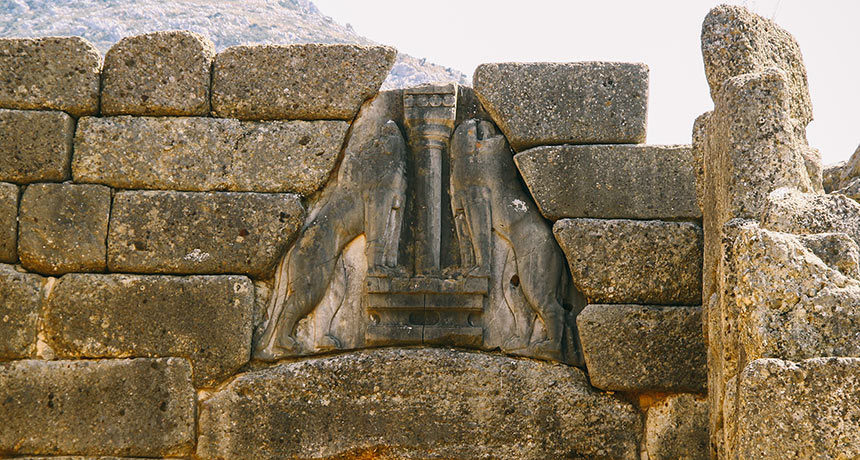
How a backyard pendulum saw may solve a Bronze Age mystery

lions gate Mycenae
© Lulu and Isabelle/ShutterstockAn ancient sculpture known as the Lion Gate relief contains marks in a column (center of image) that may have been made by a pendulum saw. The lions, now headless, stood above the main entrance to the citadel of Mycenae, in what is now Greece.
Researcher's swinging blade offers glimpse into how ancient Mycenaeans built palaces

Nicholas Blackwell and his father went to a hardware store about three years ago seeking parts for a mystery device from the past. They carefully selected wood and other materials to assemble a stonecutting pendulum that, if Blackwell is right, resembles contraptions once used to build majestic Bronze Age palaces.

With no ancient drawings or blueprints of the tool for guidance, the two men relied on their combined knowledge of archaeology and construction.

Blackwell, an archaeologist at Indiana University Bloomington, had the necessary Bronze Age background. His father, George, brought construction cred to the project. Blackwell grew up watching George, a plumber who owned his own business, fix and build stuff around the house. By high school, the younger Blackwell worked summers helping his dad install heating systems and plumbing at construction sites. The menial tasks Nicholas took on, such as measuring and cutting pipes, were not his idea of fun.

Beaker

Latest epigenetic and 'junk' DNA research shows genes don't hold all the answers

Genetics
“It’s probably genetic” seems to be the preferred go-to explanation whenever a doctor or scientist does not know the cause of a chronic disease or condition.
Today, we look at some discoveries that continue to leave the Central Dogma and "junk DNA" in the rear-view mirror. Through the front windshield, we see discoveries about epigenetics coming fast.

New Form of Regulatory DNA

A "mysterious" form of DNA shaped like a four-stranded knot, once thought to exist only in the lab, has been discovered to be active in cell nuclei. Yasemin Saplakoglu reports in Live Science that "many scientists thought that it couldn't possibly exist in human cells," because it loves acidic environment not found naturally in the body. Called an i-motif, the structure has been now reported by Australian scientists in a paper in Nature Chemistry, and the rush is on to see what it does. Saplakoglu thinks "it may play an important role in regulating our genes." Co-author Marcel Dinger sees much more to discover in the forward view:
"There's so much of the genome that we don't understand, probably like 99 percent of it," Dinger said. Seeing DNA folded like this in living cells "makes it possible to decode those parts of the genome and understand what they do." [Emphasis added.]

Cassiopaea

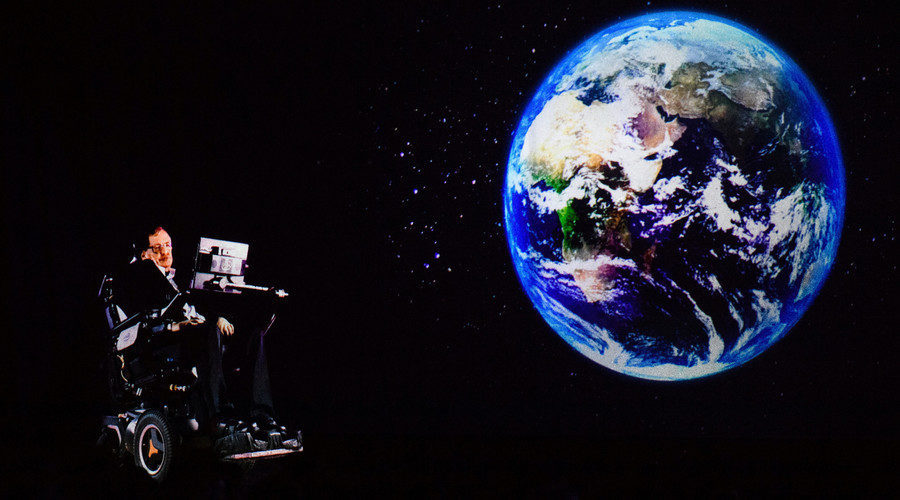
Hawking's final paper presents a multiverse theory unlike any other

Stephen Hawking
© Anthony Wallace / AFP
Stephen Hawking may have died on March 14, but he's still pushing physics forward.

Today, the peer-reviewed Journal of High Energy Physics (JHEP) published Hawking's final theory on the universe's origin, titled "A Smooth Exit from Eternal Inflation?" The famed physicist wrote the paper in collaboration with Thomas Hertog, a professor at Belgium's Catholic University of Leuven (KU Leuven), and it presents a multiverse theory unlike any other.

Here's a (really) simplified explanation of (one) multiverse theory. The Big Bang happened. The universe expanded. In some places, it kept expanding. In others, it stopped. In the places where it stopped, universes formed - ours, and a potentially infinite number of others.

According to Hertog, Hawking was never a big fan of the multiverse theory, but he knew it was hard to avoid.

Comment: Hawking's Paradox: A brief history of Stephen Hawking and his legacy


Gem

Physicists find signs of a time crystal - may lead to improvements in atomic clocks, quantum technologies

crystal of monoammonium phosphate time crystal
© Michael Marsland/Yale UniversityYale physicists looked for a signature of a discrete time crystal within a crystal of monoammonium phosphate.
Yale physicists have uncovered hints of a time crystal-a form of matter that "ticks" when exposed to an electromagnetic pulse-in the last place they expected: a crystal you might find in a child's toy.

The discovery means there are now new puzzles to solve, in terms of how time crystals form in the first place.

Ordinary crystals such as salt or quartz are examples of three-dimensional, ordered spatial crystals. Their atoms are arranged in a repeating system, something scientists have known for a century.

Time crystals, first identified in 2016, are different. Their atoms spin periodically, first in one direction and then in another, as a pulsating force is used to flip them. That's the "ticking." In addition, the ticking in a time crystal is locked at a particular frequency, even when the pulse flips are imperfect.

Info

Life created from stem cells

Life from Stem Cells
© Pixabay
In Henry Greely's book The End of Sex and the Future of Human Reproduction, the professor claims that humans will soon be able to create their own eggs grown from skin cells. Then, based on their genetic makeup, parents can decide which eggs they want to fertilize and develop into children. Well, it turns out the "end of sex" Greely was talking about may be coming sooner than we expected - scientists have created the first synthetic mice embryos using stem cells rather than a sperm and egg, and successfully implanted them into wombs.

The research was meant to investigate the crucial part of pregnancy that happens when an egg develops into a blastocyst: the thin outer sphere of cells that will become the placenta, and a tiny inner sphere of cells that will become the embryo. The scientists found that the stem cells, when properly assembled, will independently organize themselves into an embryo and blastocyst combination (called a blastoid).

According to Nicolas Rivron, one of the authors of the new study: "In a natural embryo, those same stem cells are in three dimensions talking to each other in a language that we barely understand... The embryonic cells were the chatty ones here - they are instructing the placental stem cells to multiply, organise and implant into the uterus."