
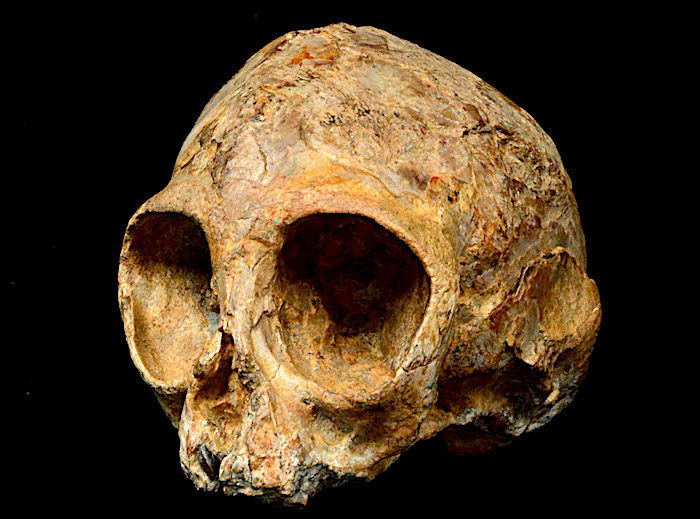
© Fred spoorThis skull belongs to a 16-month-old ape, now called Nyanzapithecus alesi, that died about 13 million years ago.
The 13-million-year-old infant skull, which its discoverers nicknamed "Alesi," was unearthed in Kenya in 2014. It likely belonged to a fruit-eating, slow-climbing primate that resembled a baby gibbon, the researchers said.
Among the living primates, humans are most closely related to the apes, which include the lesser apes (gibbons) and the great apes (chimpanzees, gorillas and orangutans). These so-called hominoids - that is, the gibbons, great apes and humans - emerged and diversified during the Miocene epoch, approximately 23 million to 5 million years ago. (The last common ancestor that humans had with chimpanzees lived about 6 million to 7 million years ago.)
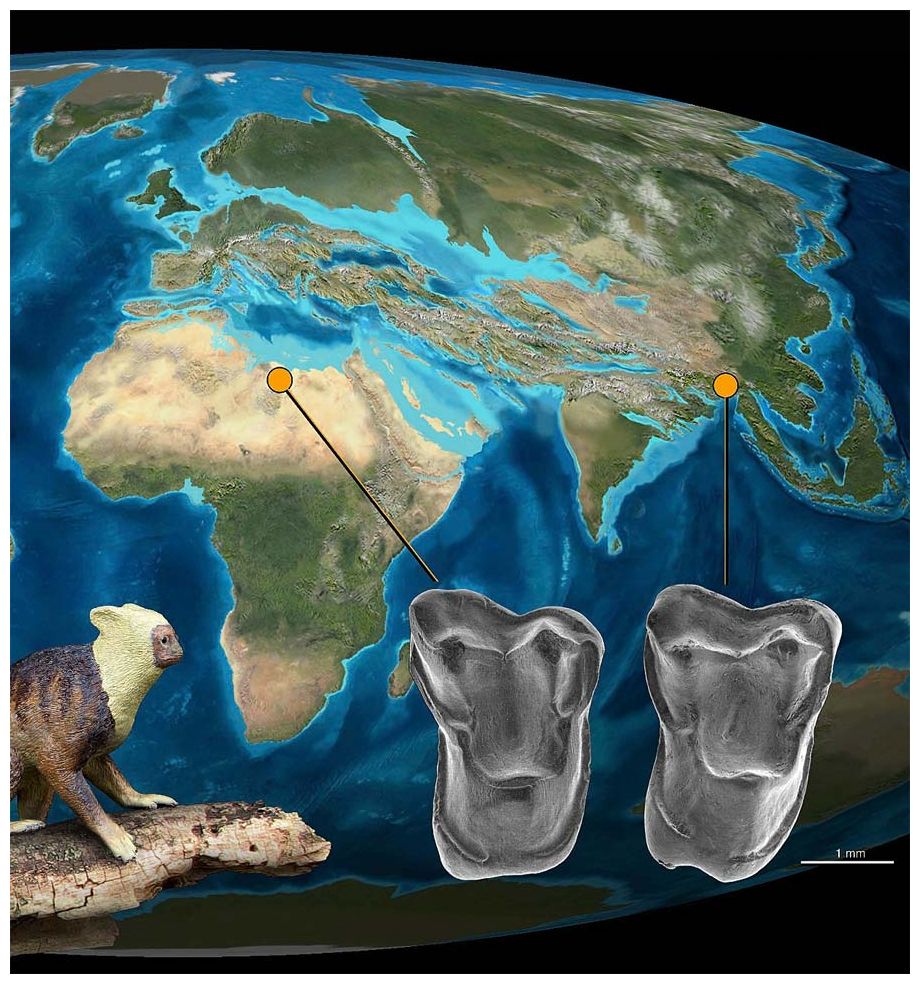
Much remains unknown about the common ancestors of living apes and humans from the critical time when these branches diverged. Fossil evidence from this part of the primate family tree is scarce, and consists mostly of isolated teeth and broken jaw fragments. As such, researchers were not sure what the last common ancestors of living apes and humans might have looked like, and even whether they originated in Africa or Eurasia.















Comment: See Also:
- Human origins are much more diverse than previously thought
- DNA from unknown ancestor lingers in Africa's Yoruba tribe
- Archaeological dig finding early humans in Philippines 700,000 years ago cause researchers to question whether they traveled the seas
- Scientists want to build human cells that are impervious to viruses
- Ground-breaking DNA results on 10,000-year-old fossil reveals Brits were dark skinned, light-eyed and curly-haired
- DNA study confirms indigenous Australians most ancient civilization
- Arrival of Beaker culture 4,500 years ago changed Britain's DNA for ever
Also check out SOTT radio's: The Truth Perspective: Does Racism, Sexism, Homophobia etc. Actually Exist?