Science & TechnologyS


Bizarro Earth

The effect of volcanoes on climate and climate on volcanoes

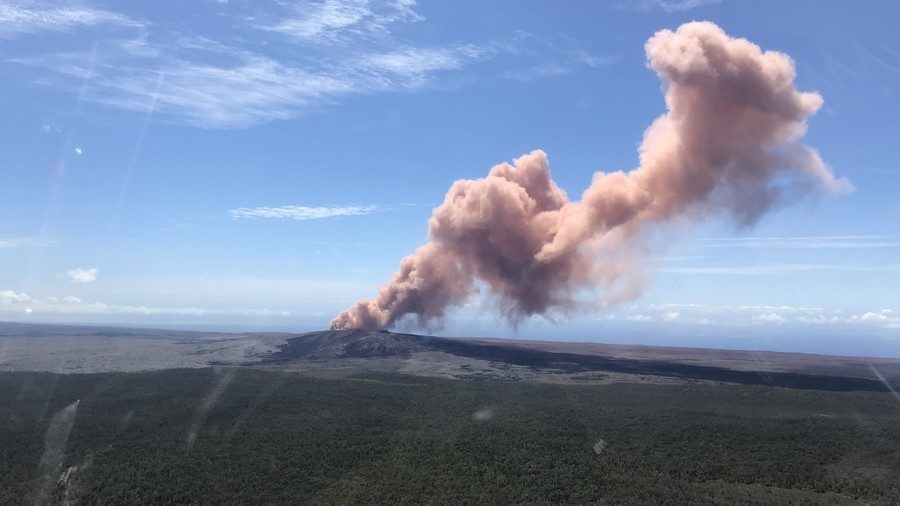
Kilauea volcano
© volcanoes.usgs.gov
The relationship between volcanoes and climate is a very complex one. From reading the media one gets the impression that they are some sort of climatic wild card. They are used to explain the cooling after the Pinatubo eruption, or the Little Ice Age cooling as a detriment to the solar hypothesis. But they are also used to explain the warming leading to mass extinctions in the distant past.

To be able to fulfill such a dual role, scientists take advantage of the different gas emissions from volcanoes. About 50-90 % of the gas emitted by volcanoes is water vapor. The rest is highly variable from one volcano to another, but CO2 can be 1-40 %, SO2 1-25 %, H2S 1-10 %, and HCl 1-10 %, plus a lot of other minor gases. H2S gets quickly oxidized to SO2.


Comment: See also:


2 + 2 = 4

Researchers find that conspiracy theorists are not necessarily paranoid

A new study from psychologists Johannes Gutenberg University of Mainz helps to untangle the relationship between belief in conspiracy theories and paranoia.
tin foil hat tinfoil conspiracy theories
© afxhome
The researchers found that conspiracy theorists are not necessarily paranoid. While paranoid people believe that almost everybody is out to get them, conspiracist believe that a few powerful people are out to get everybody. Their findings were published in the European Journal of Social Psychology.

Comment:


2 + 2 = 4

Survey says: Cocaine delivered to homes quicker than pizza

cocaine
© Mohssen Assanimoghaddam / Global Look Press
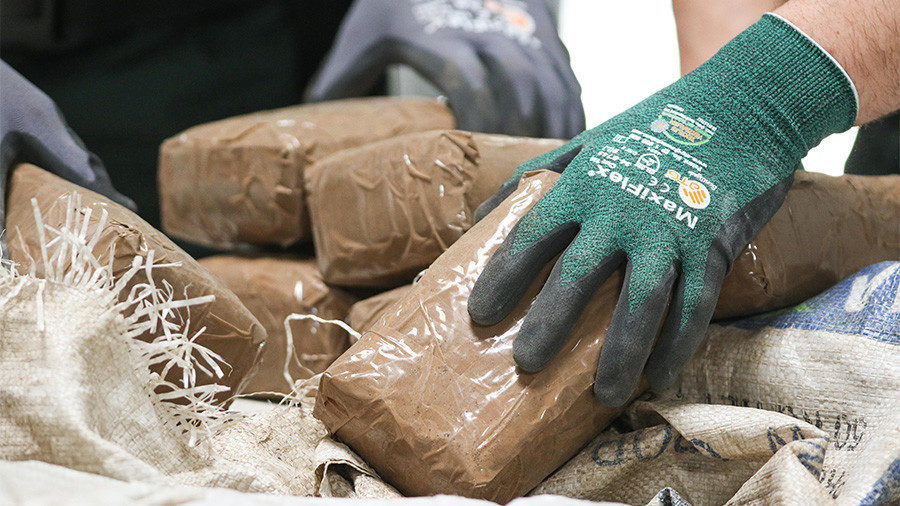
A study run by the 2018 Global Drug Survey has revealed that a third of cocaine sniffers around the world say that home delivery of the drug has become so efficient that you can get it "more quickly than pizza."

The study says that just like other commodities, more and more people expect drugs to be delivered quickly to their door. According to the survey, which examined the lifestyle of 130,000 drug addicts and 15,000 cocaine users in 44 countries, 30.3 percent reported they could get cocaine in just half an hour, while only half of pizza deliveries are made within the same time frame.

Blue Planet

The Secret Life of Trees: The astonishing science of what trees feel and how they communicate

trees
"A tree can be only as strong as the forest that surrounds it."

Trees dominate the world's oldest living organisms. Since the dawn of our species, they have been our silent companions, permeating our most enduring tales and never ceasing to inspire fantastical cosmogonies. Hermann Hesse called them "the most penetrating of preachers." A forgotten seventeenth-century English gardener wrote of how they "speak to the mind, and tell us many things, and teach us many good lessons."

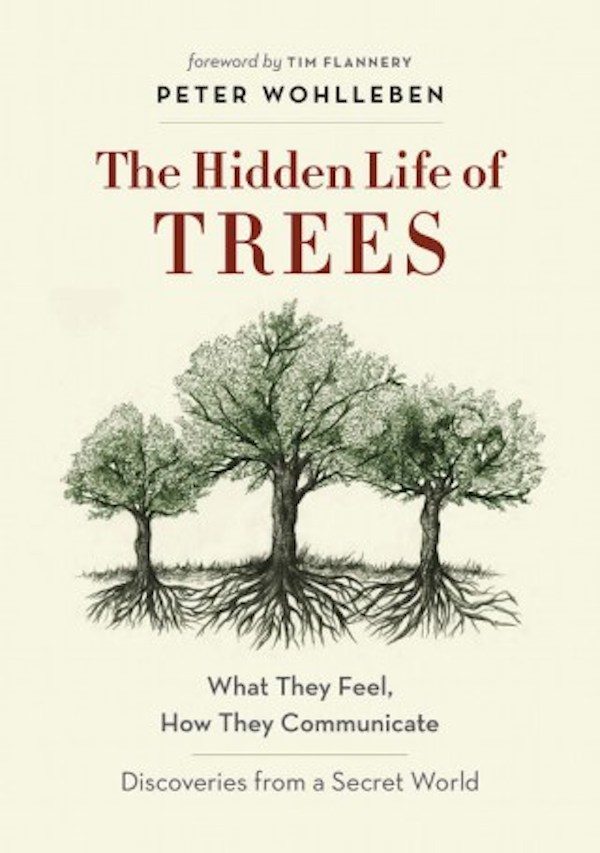
But trees might be among our lushest metaphors and sense making frameworks for knowledge precisely because the richness of what they say is more than metaphorical - they speak a sophisticated silent language, communicating complex information via smell, taste, and electrical impulses. This fascinating secret world of signals is what German forester Peter Wohlleben explores in The Hidden Life of Trees: What They Feel, How They Communicate (public library).

Comment: A forest is much more than what you see: Trees talk to each other & recognize their offspring


Mars

Meet NASA's robot helicopter for Mars

Mars helicopter
© NASA
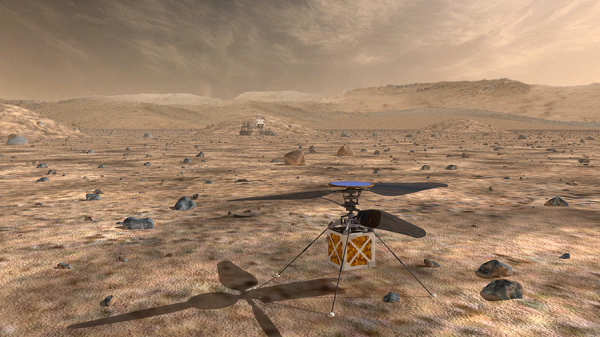
A robot helicopter will fly the skies of Mars as part of the 2020 mission, NASA has announced, hoping to replicate the success of the Wright brothers on the red planet.

The 'marscopter' will be one of the components of the Mars survey mission scheduled to blast off in July 2020, the US space agency announced on Friday. It is supposed to fill in the important gap in observation capability between the ground rovers and orbital imaging probes.

"The ability to see clearly what lies beyond the next hill is crucial for future explorers," said Thomas Zurbuchen, associate administrator at NASA's Science Mission Directorate in Washington, DC. "We already have great views of Mars from the surface as well as from orbit. With the added dimension of a bird's-eye view from a 'marscopter,' we can only imagine what future missions will achieve."

Galaxy

Rogue star Gilese 710 hurtling towards our solar system will arrive sooner than we thought

Gliese 623 A
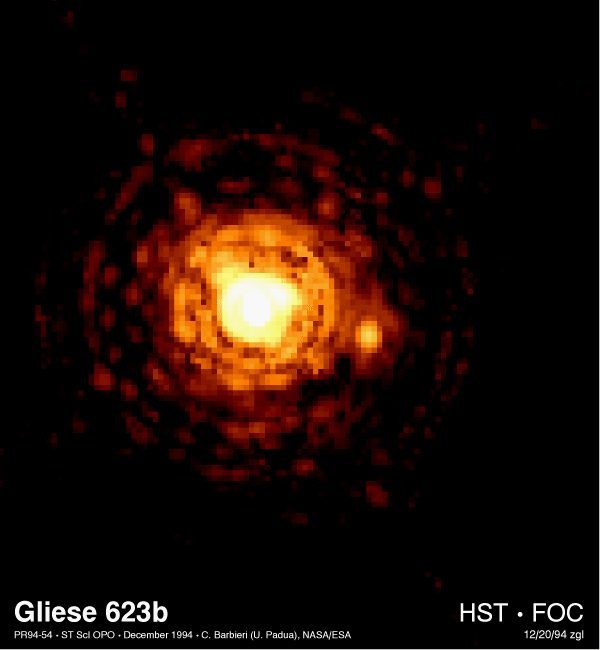
Gliese 710 may be as dim as a red dwarf star, like Gliese 623 A (M2.5V) and B (M5.8Ve) at lower right.
According to new calculations, we may have a little less time to prepare for a star on course to kiss the edges of our Solar System.

Yep. Dwarf star Gliese 710, which we've known about for some time, could now arrive in 1.29 million years, instead of the previously calculated 1.36 million years.

Gliese 710 is what is classified as a rogue star - one that has gone roaming across the galaxy, free of the gravitational chains that normally hold stars in position.

At a speed of 51,499 kilometres per hour (32,000 miles per hour), it's not quite fast enough to be considered a runaway star, but it's still travelling at a hefty clip.

Comment: Whilst the flyby is apparently over a million years away, we should bear in mind that Gilese 710 is a body we know about and the predictions are based on our current models, because it is often the case that we are taken by surprise:


Dig

Earth was warmer 500 million years ago and led to an explosion of life

brachiopod fossils
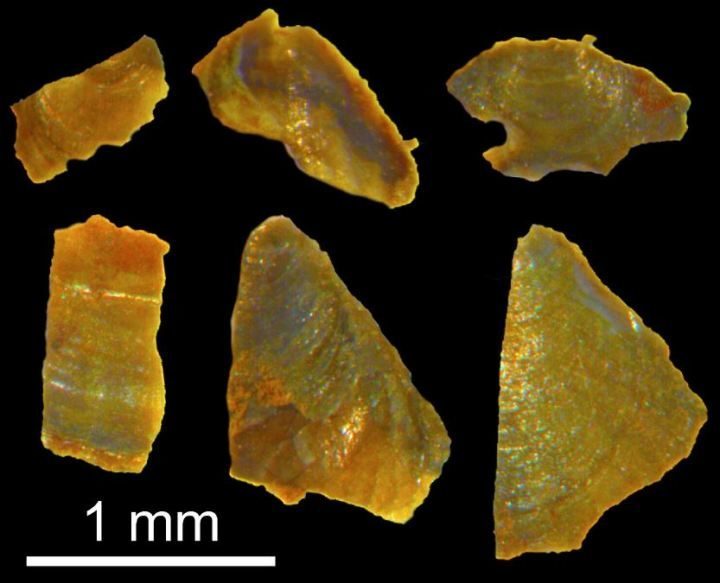
Reflected light microscope images of some of the brachiopod fossils used in this study. They are not very pretty, but they are pretty useful for scientists researching ancient climates.
Tiny fossils unlock clues to Earth's climate half a billion years ago. Sea temperatures of 25C helped fuel an explosion of life on Earth about 500 million years ago on Earth, according to UK scientists.

Scientists from the UK and France have quantified the temperature of Earth's oceans over half a billion years ago by combining fossil data and climate models.
  • Study suggests early animals diversified in a greenhouse world, with a climate similar to that in which the dinosaurs lived
  • Chemical analysis was conducted on tiny fossils shells about 1mm long from blocks of limestone from Shropshire, UK, dated to between 515 - 510 million years old
  • Findings help to expand our knowledge of early animals and the environment in which they lived
Reflected light microscope images of some of the brachiopod fossils used in this study. They are not very pretty, but they are pretty useful for scientists researching ancient climates.

Comment: What seems apparent is that, on earth, life of a particular kind seems to thrive in more temperate climates:

Laura Knight-Jadczyk writes in The Golden Age, Psychopathy and the Sixth Extinction:
Allan & Delair bring serious questions to bear on the mainstream interpretation of our reality and history and do it armed to the teeth with science. The case they make for a Golden Age world prior to the Deluge is compelling and quite unique. Wielding hard data from literally every field of science, they demonstrate that hundreds of thousands of years of ice ages may be a myth created to explain many anomalous findings on earth that uniformitarian science had no other way to explain. This data strongly suggests a completely different planet prior to a worldwide cataclysm that they say occurred in 9500 bc, but the latest research puts the most recent major event back at least another thousand years. They refer to it as the 'Phaeton Disaster'.
See Also:


Health

Self-repairing organs and the new research that could save your life in a heartbeat

heart healing
© Lotte Keijzer
Our cells are more malleable than we thought - and by transforming them inside the body, we can mend broken hearts or even degenerating brains from within

What becomes of the broken-hearted? In cardiac medicine, the answer is usually brutally straightforward: they die. Heart disease is the leading cause of death worldwide and there is often precious little we can do about it. Pacemakers bring some relief and transplants work, but there are nowhere near enough donated hearts to go around. And unlike skin and liver cells, heart muscle cells can't remake themselves. Once they get damaged or die, they are gone forever.

Lab-grown stem cells, once the great hope for mending hearts, have disappointed. But over the past few years, cell biologists have been quietly exploring an alternative approach. Rather than growing cells in a dish and transplanting them, they want to switch their identities inside the body, so that we can heal ourselves from within.

Fish

World's deepest plastic bag found at bottom of Mariana Trench - highlights spread of ocean pollution

mariana Trench plastic pollution
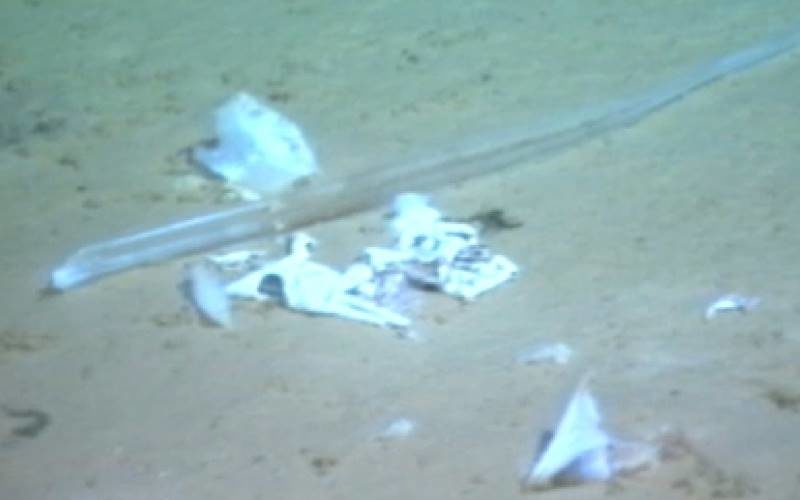
The bag at the bottom of the Mariana Trench
The world's deepest plastic bag has been found at the bottom of the Pacific Ocean's Mariana Trench, highlighting the spread of ocean pollution.

Scientists made the discovery at 36,000ft (10,898m) in the world's deepest ocean trench, one of 3,000 pieces of man-made debris dating back 30 years.

Numerous international teams working around the world on over 5,000 separate dives and using deep-sea remote vehicles helped study the ocean beds to discover what lies beneath.

Over a third of the debris found was micro-plastic, with 89 per cent from single-use products.

Galaxy

A mystery in the cosmic dawn: What's been eating the first starlight?

night sky mystery starlight
© Stewart Mcreath
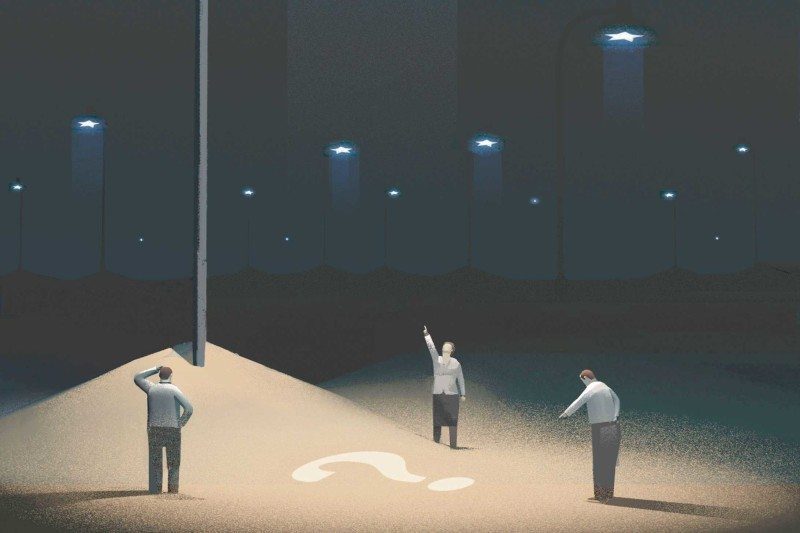
A shoestring experiment in the Australian outback has seen the signal of the very first stars - and a weird effect astronomers are struggling to explain

In the dusty, dry outback of Western Australia there is nothing for miles around but red dirt, unpaved roads and the occasional kangaroo. A journey across this alien landscape is a lesson in solitude - just you and the road, a 4×4 as essential as a sense of adventure. Astronomer Judd Bowman at Arizona State University has been coming here for nearly a decade to visit the Murchison Radio-astronomy Observatory, an old sheep and cattle station repurposed as a place to listen to the universe.

It hardly seems the stage for a scientific revolution, meagre compared with the cathedral-like majesty of machines like the Large Hadron Collider at CERN. Yet what Bowman and his colleagues have discovered here, using a telescope half the size of a ping-pong table, spells trouble for our picture of the early universe.