Science & TechnologyS


Info

Mounting evidence that herpes virus is a cause of Alzheimer's disease

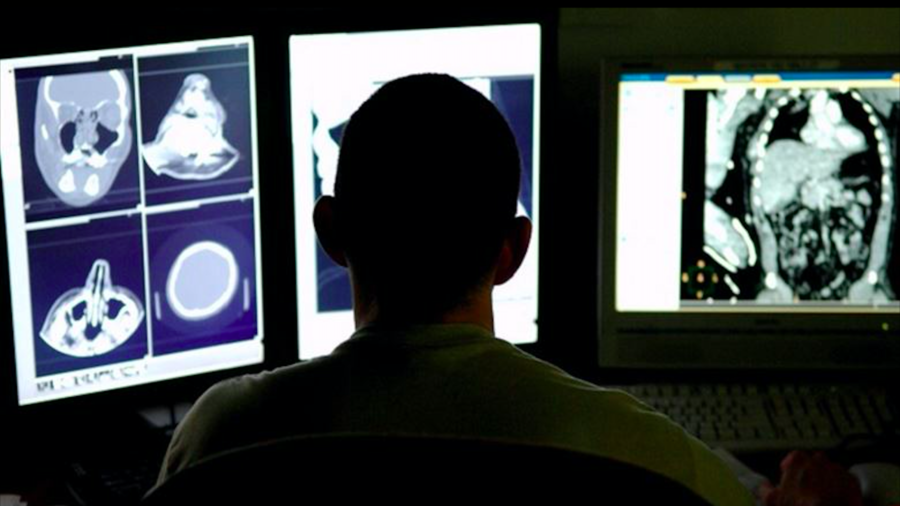
MRI of Brain
© ATTHAPON RAKSTHAPU/SHUTTERSTOCK
More than 30m people worldwide suffer from Alzheimer's disease - the most common form of dementia. Unfortunately, there is no cure, only drugs to ease the symptoms. However, my latest review, suggests a way to treat the disease. I found the strongest evidence yet that the herpes virus is a cause of Alzheimer's, suggesting that effective and safe antiviral drugs might be able to treat the disease. We might even be able to vaccinate our children against it.

The virus implicated in Alzheimer's disease, herpes simplex virus type 1 (HSV1), is better known for causing cold sores. It infects most people in infancy and then remains dormant in the peripheral nervous system (the part of the nervous system that isn't the brain and the spinal cord). Occasionally, if a person is stressed, the virus becomes activated and, in some people, it causes cold sores.

We discovered in 1991 that in many elderly people HSV1 is also present in the brain. And in 1997 we showed that it confers a strong risk of Alzheimer's disease when present in the brain of people who have a specific gene known as APOE4.

The virus can become active in the brain, perhaps repeatedly, and this probably causes cumulative damage. The likelihood of developing Alzheimer's disease is 12 times greater for APOE4 carriers who have HSV1 in the brain than for those with neither factor.

Galaxy

Confirmed: Earth has two dust clouds in a semi-stable orbit

Kordylewski cloud
© G. HorváthArtist's impression of the Kordylewski cloud in the night sky (with its brightness greatly enhanced) at the time of the observations.
A team of Hungarian astronomers and physicists may have confirmed two elusive clouds of dust, in semi-stable points just 400,000 kilometres from Earth. The clouds, first reported by and named for Polish astronomer Kazimierz Kordylewski in 1961, are exceptionally faint, so their existence is controversial. The new work appears in the journal Monthly Notices of the Royal Astronomical Society.

The Earth-Moon system has five points of stability where gravitational forces maintain the relative position of objects located there. Two of these so-called Lagrange points, L4 and L5, form an equal-sided triangle with the Earth and Moon, and move around the Earth as the Moon moves along its orbit.

L4 and L5 are not completely stable, as they are disturbed by the gravitational pull of the Sun. Nonetheless they are thought to be locations where interplanetary dust might collect, at least temporarily. Kordylewski observed two nearby clusters of dust at L5 in 1961, with various reports since then, but their extreme faintness makes them difficult to detect and many scientists doubted their existence.

Comment: See also:


SOTT Logo Radio

SOTT Focus: The Truth Perspective: Being As Communion: Why Information Theory Is Cooler Than You Think

information theory
Information is more than most people think. Sure, we get information from books, the news, gossip and google searches. Information is also the basis of computer programs and the DNA within our cells. But it's also much more than that. In fact, it may be a fundamental aspect of reality as we know it: from the particles and energy of physics to the shapes of our bodies and even the very acts of observation, thought and choice.

In his 2014 book Being As Communion, mathematician, philosopher, and intelligent design proponent William Dembski lays out what he calls a metaphysics of information, arguing that information and intelligence go to the very bottom and top of the cosmos. The ideas of information theory have strong resonances with the thought of Whitehead and Jordan Peterson, too.

Today on the Truth Perspective we discuss information theory, Dembski's book, and how information theory helps us not only to understand the nature of reality, but our place within it, and what our purpose might be.

Running Time: 01:35:09

Download: MP3


Pi

Anonymous 4chan poster solves math problem puzzling scientists for decades

Haruhi Suzumiya
© GabSL/DeviantartHaruhi Suzumiya fan art
Apparently part of the solution to a difficult mathematics problem has been available for years on a 4chan board about anime. The anonymous author provided it as a tip about how to best watch a non-linear series.

The amusing story where anime and science intersected was brought to light by Robin Houston, a computer scientist and mathematician on Twitter.


Life Preserver

Preparing for crop losses? China successfully harvests saltwater rice that could feed another 80 million people

Rice
© Global Look Press / Jeff Tzu-chao Lin
Chinese scientists have harvested alkali-resistant 'sea rice' planted in east China's Shandong Province, marking initial success of an ambitious plan to boost the country's rice production and feed an additional 80 million people.

The new type of rice, successfully harvested by a group of scientists in the seaside city of Qingdao, eastern China, was revealed a year ago. Sea rice that is able to grow in tidal flats or saline-alkali land was developed by crossbreeding different varieties of rice.

"If there are natural disasters, as China has a large population, it's difficult to rely on importing food from abroad as there are logistical barriers. If the Chinese go hungry because of crop failures caused by natural disasters, there will be social unrest and destabilizing factors for the world," Deputy Director of Qingdao Sea Rice R&D Centre Guodong Zhang told RT's Ruptly video news agency.


Comment: Earlier this year major cities in central and northern China had a taste of the future when fruit and vegetable prices surged as blizzards cut off roads and damaged crops.

Crop and cattle losses are already on the rise everywhere, whether it is due to extensive drought, massive hail, epic flooding, unexpected frosts, and even epidemics. See also: Erratic seasons and extreme weather devastating crops around the world


According to the scientist, turning barren land into fertile farmland will enable China to feed the entire country and will therefore be beneficial to peace and stability.

"Wheat and rice are the staple food of the Chinese people, and 60 percent of them depend on rice," he said.

"With the joint efforts of our team and the whole of society, more than 65,000 square kilometers of salt and alkali land will be transformed in China," the deputy director said.

"That can increase food by 30 billion kilograms based on the calculation of at least 300 kilograms per 667 square meters. This can support an additional 80 million people in China."

Earlier this year, the research team successfully grew and harvested the salt-resistant rice in a Dubai desert.

Bulb

'Galactic Panspermia': New Harvard study posits transfer of life between planets

Oumuamua
© ESA/Hubble, NASA, ESO, M. KornmeOumuamua, a rock 100-meters long, was the first interstellar object to be found in the solar system to originate from outside the solar system.
Researchers from the Harvard-Smithsonian Center for Astrophysics recently released a study claiming that panspermia, an astronomical theory that life is exchanged between planets within solar systems, can be expanded to support exchanging life within the Milky Way galaxy.

The study, "Galactic Panspermia," concluded that life, or the chemical compounds necessary for life, can be distributed between solar systems or even galaxies by astronomical objects such as meteoroids or asteroids. The study was led by Visiting Scholar at the Institute for Theory and Computation Idan Ginsburg and co-authored by Astronomy Department chair Abraham "Avi" Loeb and ITC postdoctoral fellow Manasvi Lingam.

The theory of panspermia proposes a mechanism by which astronomical objects could feasibly transport life to other planets within solar systems. The presence of life could take the form of anything from chemical compounds to microorganisms.

Comment: See also: Panspermia - A Distinct Posibility? Alien Bacteria Could Breed in Extreme 'Hypergravity'


Palette

Leonardo da Vinci may have had an artistic edge due to suspected eye disorder

da vinci exotropia
© Coldcreation/Wikimedia CommonsIt's believed that Leonardo da Vinci used his own likeness in his Salvator Mundi painting (shown).
If Leonardo da Vinci had a good eye doctor, he might not have become such a great artist. At least that's what an analysis of paintings and sculptures believed to be modeled after da Vinci suggests.

Visual neuroscientist Christopher Tyler of the City University of London examined six pieces of art, including Salvator Mundi and Vitruvian Man. Five of the pieces depict an eye misalignment consistent with a disorder called exotropia that can interfere with three-dimensional vision, Tyler reports online October 18 in JAMA Ophthalmology.

Brain

Researchers find that multitasking with multimedia is dulling our brains

multimedia
© Reuters / Paul Hanna
Whether it's for work or leisure switching between the vast number of media platforms in today's communication saturated world may be dulling your brain, according to a new research review.

In modern society, it's perhaps more difficult to escape multimedia 'noise' than it has ever been. Moving adverts adorn public transport, social media occupies people's spare time and smartphone notifications can invade almost every waking moment of our lives.

There are positives as people receive information from almost every angle. But what are the risks? According to a new review by Anthony Wagner, Director of the Stanford Memory Laboratory, there is evidence to suggest that jumping between multiple media platforms on a consistent basis is dulling the brain.

In the 'Minds and brains of media multitaskers' paper, published in the PNAS scientific journal, Wagner and Melina Uncapher of the University of California go through a decade of cognitive research.

Eye 1

Amazon pitched facial recognition tech to ICE, watchdog reports

facial recognition
© Reuters / Thomas Peter
Amazon wants to sell facial recognition technology to the US' immigration enforcement agency, a watchdog group reported, raising concerns about the online retail giant's surveillance capabilities.

Emails obtained by the Project on Government Oversight claim that US Immigration and Customs Enforcement (ICE) met with Amazon in June to discuss adding the powerful, privacy-invasive tool to its arsenal.

The government watchdog group, commonly known as POGO, wrote in a piece published by the Daily Beast that the deal would arm ICE with "real-time facial recognition surveillance technology" that "could supercharge the agency's enforcement power, and make undocumented immigrants afraid to seek out vital services in places where cameras could be located."

Candle

The postmodern 'church of equality' has turned even the hard sciences into a new dark age

science dark age
It's not a shock that Postmodernism has taken hold of subjects such as Literature or Social Anthropology. The more subjective the subject is, the easier it is for ideology to infiltrate it. But surely quantitative science-like genetics and physics-will survive as a fortress of logic? Wrong. An article this week in The New York Times interviewed "woke" geneticists, whose findings manifestly show that race and psychological racial differences are biological, revealing them clutching at the most desperate reasons why their research doesn't prove what it clearly does. [Why White Supremacists Are Chugging Milk (and Why Geneticists Are Alarmed), By Amy Harmon, The New York Times, October 17, 2018] Hard science has fallen to the latter-day Communists.

If someone excels in math, they excel in logical reasoning so, in general, you can expect them to possess an almost robotic ability to see through the emotion and dogma that props up Postmodernism. This may well be one of the reasons why SJWs had to make an example of CERN physicist Professor Alessandro Strumia earlier this month. [Cern physicist suspended over 'highly offensive' presentation on sexism in science, by Tom Embury-Dennis, Independent, October 2, 2018]