Science & TechnologyS


Binoculars

Russian Navy receives system that 'blinds the enemy'

Russian Navy
Russian Navy
Ruselectronics, owned by the Russian state corporation Rostec, began supplying the Russian Navy with 5P-42 Filin visual optical interference stations. These systems are capable of blinding the enemy, the company's press service said.

At present, the frigate Admiral Kasatonov and the frigate Admiral Gorshkov are equipped with two sets of the Filin station. This equipment will also be installed on two Project 22350 frigates being built at the Severnaya Verf shipyard.

The Filin station was designed and developed by the Integral Experimental Factory for the suppression of visual and optical optical channels of observation and aiming of light weapons at night and at dusk. Station operation is based on the modulation of the brightness of the light radiation. The low frequency oscillations of radiation brightness cause reversible temporary disturbances of the organs of vision due to excitation of the optic nerves.

Comment: Russia yet again proves it's at the forefront of defensive military weaponry: Also check out SOTT radio's: Behind the Headlines: Putin The World To Rights: Russia's New Nuclear Weapons And The End of 'Unipolarity'


UFO 2

Existence of alien life 'much more likely than previously thought' - NASA admin

aliens earth from space
© NASA
In comments that will likely fuel ardent Ufologists worldwide, a senior NASA official has conceded that the existence of alien life is "much more likely to be out there than we thought before."

Thomas Zurbuchen, an astrophysicist and associate administrator for NASA's Science Mission Directorate, told Boston University he believes there is life beyond Earth for the simple reason that we once "doubted whether water or complex molecules would exist beyond Earth," but in actuality "each one of those is much easier to achieve than we thought possible."

"We find it right in front of our doorsteps, everywhere, including the polar craters of the planet Mercury," he explained. "As for how that relates to the chain of life... well, life is much more likely to be out there than we thought before."

Comment: See also:


Attention

'Artificial diet systems' Rigging the science of GMO ecotoxicity

bugs
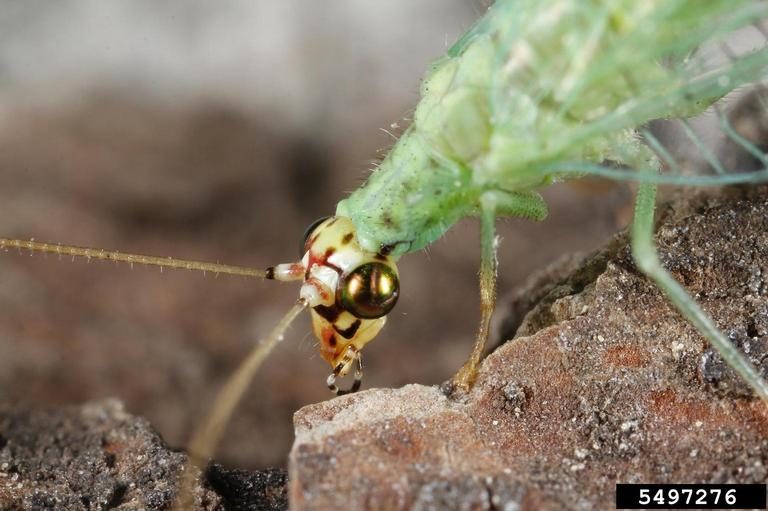
© Joseph Berger Bugwood.orgGreen Lacewing
Researchers who work on GMO crops are developing special "artificial diet systems". The stated purpose of these new diets is to standardise the testing of the Cry toxins, often used in GMO crops, for their effects on non-target species. But a paper published last month in the journal Toxins implies a very different interpretation of their purpose. The new diets contain hidden ingredients that can mask Cry toxicity and allow them to pass undetected through toxicity tests on beneficial species like lacewings (Hilbeck et al., 2018). Thus the new diets will benefit GMO crop developers by letting new ones come to market quicker and more reliably. Tests conducted with the new diets are even being used to cast doubt on previous findings of ecotoxicological harm.

Butterfly

In Cambrian Explosion Debate, Intelligent Design Wins by Default

Anomalocaris
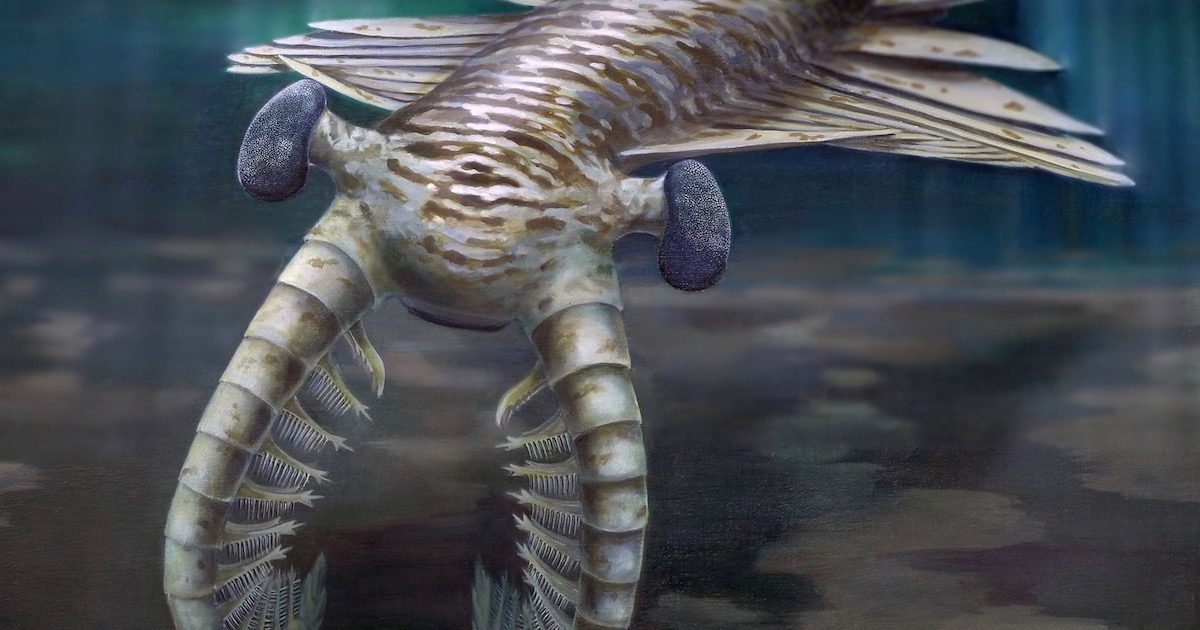
© Katrina Kenny & University of Adelaide/UNE Photos, via FlickrAnomalocaris
Sometimes you win a game by default. The loser might not acknowledge losing, but fails to show up.

Picture a world champion prize fighter who has command of the media. He hears a challenger who claims to have a knockout punch, but refuses to get into the ring with him. Instead, he runs to the media and tells them there is indeed a big challenge, and it "might" be winnable. That's it. Reporters run with the story and report, "The Fight Might Be Winnable." Nothing is said about the challenger or his knockout punch. Question: under these circumstances, who wins the fight?

This is the impression you get reading the mainstream media regarding the debate about the Cambrian explosion. Stephen Meyer offered a big challenge in Darwin's Doubt, claiming that Darwinian evolution is not only incapable of explaining the Cambrian event, but that the hierarchical information required to explain almost 20 new body plans that appeared suddenly in Cambrian layers gives positive evidence of intelligent design. His challenge was not lost on Darwin proponents. The book created a strong backlash by evolutionists in blogs, but only one Darwinian got into the ring with Meyer, so to speak, but at least by taking on his challenge. That was "heavyweight" paleontologist Charles Marshall, and a gentlemanly interchange resulted. Meyer answered the response by demonstrating that it did not explain the main point: the origin of the information required to create hierarchical body plans (see Debating Darwin's Doubt, Section III). The challenge stood.

Pi

Physics experiment leads to 1st quantum entanglement of living organisms

bacteria
© CNRI/Science Source
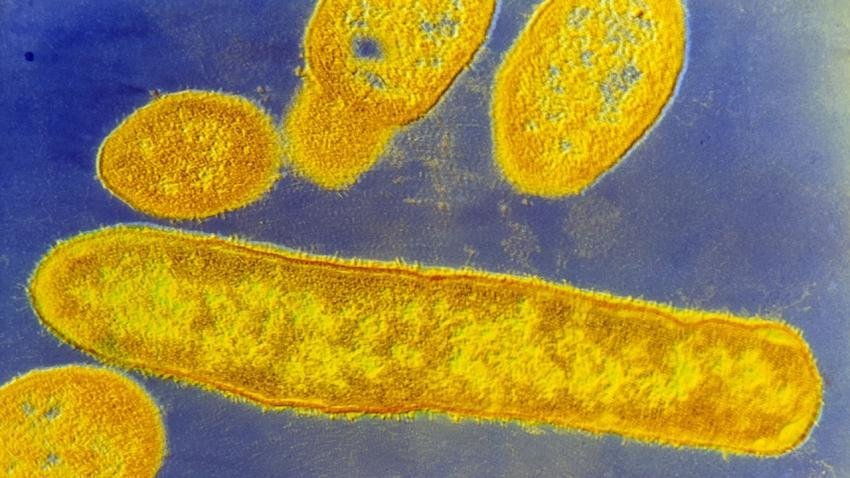
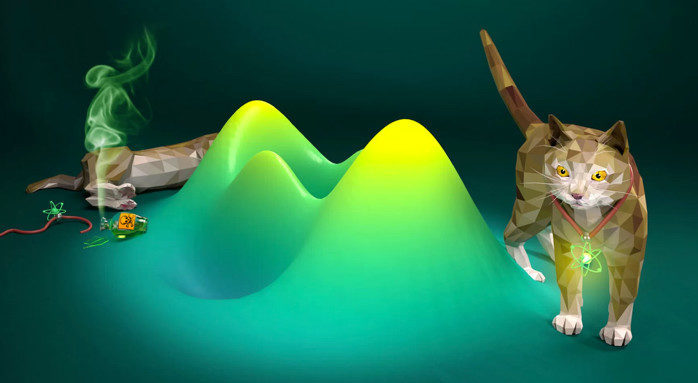
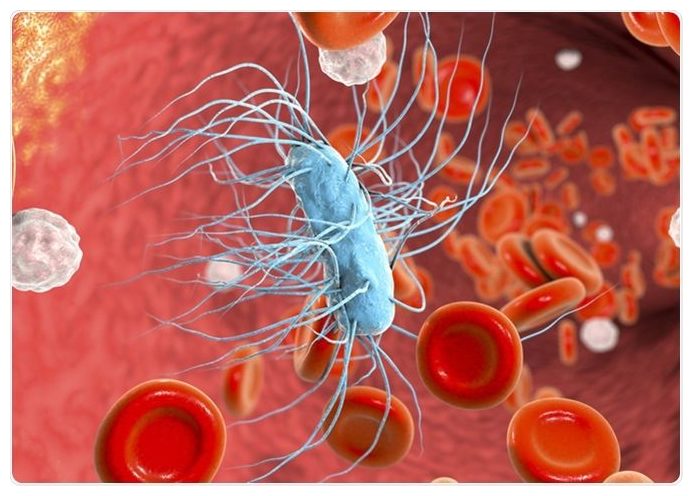
A lot of scientists think that major quantum effects like entanglement, in which particles separated by vast distances mysteriously link up their states, shouldn't work for living things. But a new paper argues that it already has - that scientists in 2016 have already created a sort of Schrödinger's cat - only with quantum-entangled bacteria.

Usually, we describe quantum physics as a set of rules that governs the behavior of extremely tiny things: light particles, atoms and other infinitesimally small objects. The larger world, at the bacterial scale (which is also our scale - the chaotic realm of life) isn't supposed to be anywhere near that weird.

That was what the physicist Erwin Schrödinger meant to say when he proposed his famous Schrödinger's cat thought experiment, as Jonathan O'Callaghan pointed out in Scientific American. In that thought experiment, a cat in a box would be exposed to a radioactive particle that had even odds of decaying or not. Until the box was opened, the poor cat would be both alive and dead at the same time, which seemed clearly absurd to Schrödinger. There's just something about the quantum world that doesn't seem to make sense in ours.

Robot

A step closer to self-aware robots

Self Aware Robots
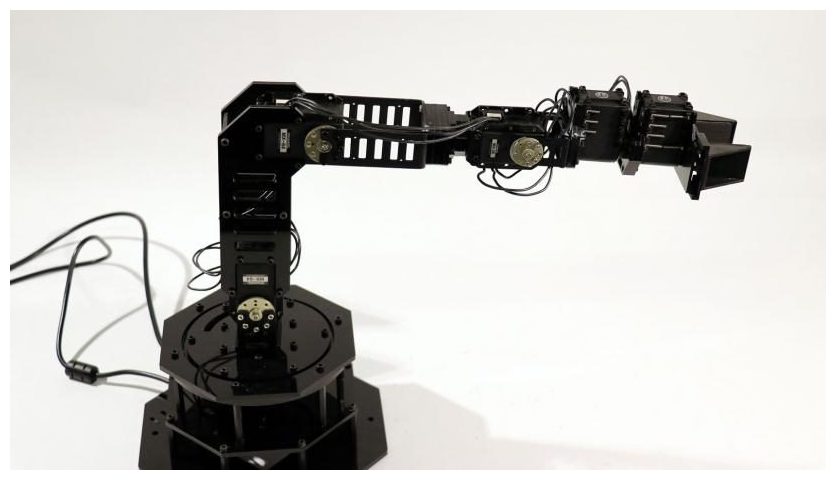
© Robert Kwiatkowski/Columbia EngineeringAn image of the intact robotic arm used to perform all of the tasks.
New York, NY - Robots that are self-aware have been science fiction fodder for decades, and now we may finally be getting closer. Humans are unique in being able to imagine themselves-to picture themselves in future scenarios, such as walking along the beach on a warm sunny day. Humans can also learn by revisiting past experiences and reflecting on what went right or wrong. While humans and animals acquire and adapt their self-image over their lifetime, most robots still learn using human-provided simulators and models, or by laborious, time-consuming trial and error. Robots have not learned to simulate themselves the way humans do.

Columbia Engineering researchers have made a major advance in robotics by creating a robot that learns what it is, from scratch, with zero prior knowledge of physics, geometry, or motor dynamics. Initially the robot does not know if it is a spider, a snake, an arm-it has no clue what its shape is. After a brief period of "babbling," and within about a day of intensive computing, their robot creates a self-simulation. The robot can then use that self-simulator internally to contemplate and adapt to different situations, handling new tasks as well as detecting and repairing damage in its own body. The work is published today in Science Robotics.

Fish

Sonar may provoke suicidal behaviour says study

Beached Whale
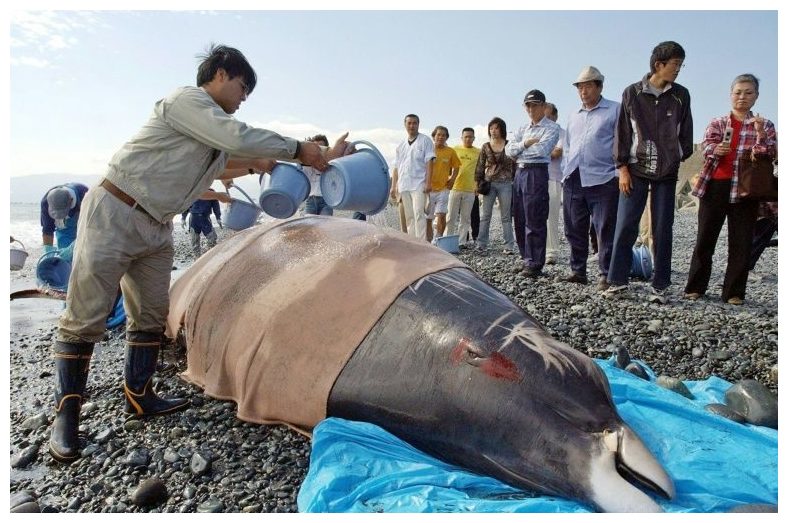
© AFP, JIJI PRESS/AFP/FileBeaked whales get stressed by sonar and can suffer decompression like scuba divers, according to researchers.
Scientists have long known that some beaked whales beach themselves and die in agony after exposure to naval sonar, and now they know why: the giant sea mammals suffer decompression sickness, just like scuba divers.

At first blush, the explanation laid out Wednesday by 21 experts in the Royal Society journal Proceedings B seems implausible.

Millions of years of evolution have turned whales into perfectly calibrated diving machines that plunge kilometres (miles) below the surface for hours at a stretch, foraging for food in the inky depths.

The heart rate slows, blood flow is restricted, oxygen is conserved.

So how could the ocean's most accomplished deep-sea diver wind up with nitrogen bubbles poisoning its veins, like a scuba novice rising too quickly to the surface?

Short answer: beaked whales -- especially one species known as Cuvier's -- get really, really scared.

"In the presence of sonar they are stressed and swim vigorously away from the sound source, changing their diving pattern," lead author Yara Bernaldo de Quiros, a researcher at the Institute of Animal Health at the University of Las Palmas de Gran Canaria, Spain, told AFP.

"The stress response, in other words, overrides the diving response, which makes the animals accumulate nitrogen," she added. "It's like an adrenalin shot."

One type of sonar in particular throws these whales off balance.

Black Cat 2

Physicists create a flying army of laser Schrödinger's cats

Laser Schrodinger' cats
© Christoph Hohmann, Nanosystems Initiative Munich (NIM)
A laser pulse bounced off a rubidium atom and entered the quantum world - taking on the weird physics of "Schrödinger's cat." Then another one did the same thing. Then another.

The laser pulses didn't grow whiskers or paws. But they became like the famous quantum-physics thought experiment Schrödinger's cat in an important way: They were large objects that acted like the simultaneously dead-and-alive creatures of subatomic physics - existing in a limbo between two simultaneous, contradictory states. And the lab in Finland where they were born had no limit on how many they could make. Pulse after pulse turned into a creature of the quantum world. And those "quantum cats," though they existed for only a fraction of a second inside the experimental machine, had the potential to be immortal.

"In our experiment, the [laser cat] was sent to the detector immediately, so it was destroyed right after its creation," said Bastian Hacker, a researcher at the Max Planck Institute of Quantum Optics in Germany, who worked on the experiment.

But it didn't have to be that way, Hacker told Live Science.

"An optical state can live forever. So if we had sent the pulse out into the night sky, it could live for billions of years in its [cat-like] state."

That longevity is part of what makes these pulses so useful, he added. A long-lived laser cat can survive long-term travel through an optical fiber, making it a good unit of information for a network of quantum computers.

Info

Secrets of sepsis may lie in rare white blood cells

Sepsis Prevention
© News-Medical Net
Sepsis is a deadly health threat that affects more than 75,000 children in the United States each year. Approximately 7000 of these pediatric patients die from infection and many of the children who do survive are left with debilitating health challenges. The rates of morbidity and mortality are estimated to be even higher in developing countries. Yet despite the deadly implications of this infection, very little is known about what exactly breaks down in the immune system of a child is fighting off an infection that leads to sepsis.

Now, a team of international investigators have discovered that a rare group of white blood cells called basophils play a critical role in inducing immune responses against infections and preventing the development of sepsis. Investigators from Seattle Children's Research Institute, along with Stanford University School of Medicine and other international labs, are hopeful that the discovery can inspire future research on ways to prevent sepsis.

"Sepsis is the number one killer of children globally, yet little is known about what goes wrong in an individual's immune system to cause sepsis as it fights off an infection," Adrian Piliponsky, PhD, a principal investigator in the research institute's Center for Immunity and Immunotherapies, said in a statement. "Without this information, it's hard to predict who will develop sepsis or explain why sepsis causes a range of immune responses in different individuals."

For the study, the investigators traced immune responses back to the early stages of infections and focused on the basophils, which are thought to play a role in enhancing immune defenses against bacterial infections. According to the investigators, basophils make up less than 1% of a person's white blood cells.

Light Sabers

Apple blocks Facebook from running its internal iOS apps

facebook
© Illustration by Alex Castro / Th
Apple has shut down Facebook's ability to distribute internal iOS apps, from early releases of the Facebook app to basic tools like a lunch menu. A person familiar with the situation tells The Verge that early versions of Facebook, Instagram, Messenger, and other pre-release "dogfood" (beta) apps have stopped working, as have other employee apps, like one for transportation. Facebook is treating this as a critical problem internally, we're told, as the affected apps simply don't launch on employees' phones anymore.

The shutdown comes in response to news that Facebook has been using Apple's program for internal app distribution to track teenage customers with a "research" app.

That app, revealed yesterday by TechCrunch, was distributed outside of the App Store using Apple's enterprise program, which allows developers to use special certificates to install more powerful apps onto iPhones. Those apps are only supposed to be used by a company's employees, however, and Facebook had been distributing its tracking app to customers. Facebook later said it would shut down the app.