Science & TechnologyS

Galaxy

Hubble snaps stunning photo of spiral galaxy sparkling with new-born stars

NGC 2903 galaxy
© ESA/Hubble & NASA, L. Ho et al.
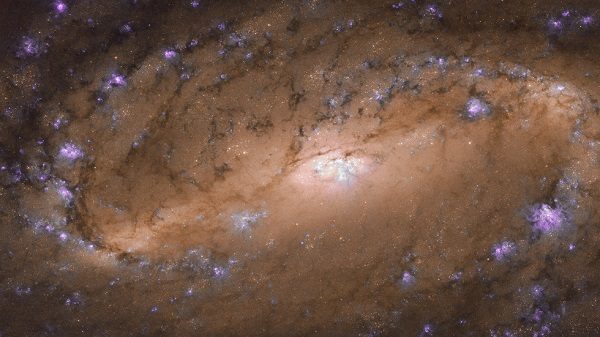
The Hubble telescope has captured a spectacular photograph of one of the universe's most majestic sights, a spiral galaxy in all its swirling glory.

The powerful orbital telescope explored the NGC 2903 galaxy and the European Space Agency (ESA) released the dazzling image this week. The stunning spiral is located a staggering 30 million light-years away in the Leo constellation.

The photo captures several star-forming regions which shine with a pinkish glow.

Microscope 2

Hospital viruses: Fake cancerous nodes in CT scans, created by malware, trick radiologists

CT scan
© JohnnyGreig/iStock


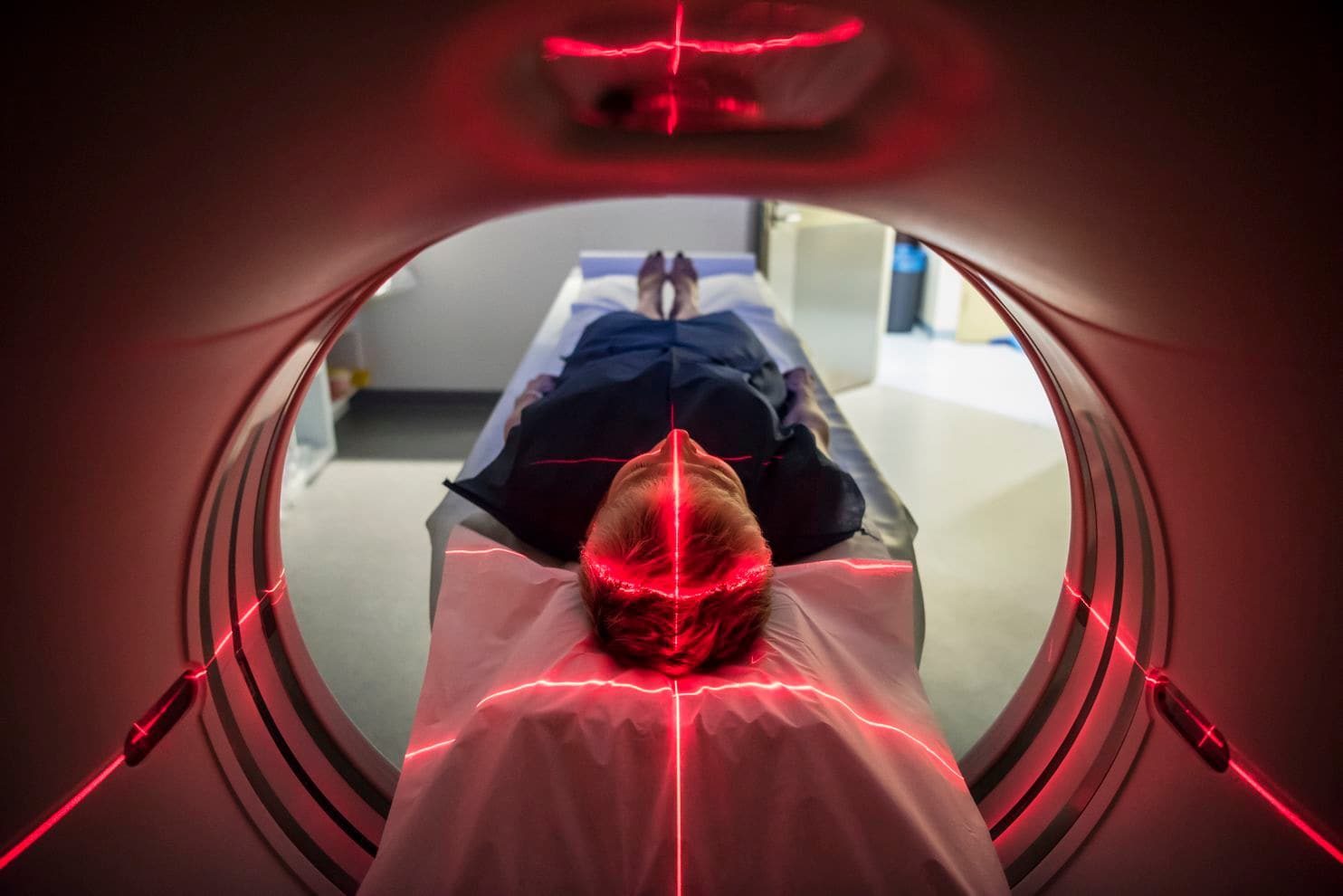
Researchers in Israel created malware to draw attention to serious security weaknesses in medical imaging equipment and networks.


When Hillary Clinton stumbled and coughed through public appearances during her 2016 presidential run, she faced critics who said that she might not be well enough to perform the top job in the country. To quell rumors about her medical condition, her doctor revealed that a CT scan of her lungs showed that she just had pneumonia.

But what if the scan had shown faked cancerous nodules, placed there by malware exploiting vulnerabilities in widely used CT and MRI scanning equipment? Researchers in Israel say they have developed such malware to draw attention to serious security weaknesses in critical medical imaging equipment used for diagnosing conditions and the networks that transmit those images - vulnerabilities that could have potentially life-altering consequences if unaddressed.

The malware they created would let attackers automatically add realistic, malignant-seeming growths to CT or MRI scans before radiologists and doctors examine them. Or it could remove real cancerous nodules and lesions without detection, leading to misdiagnosis and possibly a failure to treat patients who need critical and timely care.

Comment: So it's not enough that hackers can steal your identity, put charges on your credit cards, access your emails or force your car into oncoming traffic, now they can also hack your medical scans to make you think you have cancer when you don't (or make you think you don't have cancer when you do). It's a dangerous time to have enemies with technological know-how.

See also:


Magic Wand

The Muller Two-Step Model: A Refutation of Behe on Irreducible Complexity? Not Quite!

michael behe
© Discovery InstituteMichael Behe, a scene from Revolutionary: Michael Behe and the Mystery of Molecular Machines.
In his article in Skeptic Magazine reviewing Michael Behe's new book, Darwin Devolves, biologist Nathan Lents raises a number of objections to Behe's arguments. Many of those have already been addressed here and here. One of his objections was also brought up by Joshua Swamidass in a recent online discussion. This is the argument concerning the Muller two-step model, named after geneticist Hermann Joseph Muller, for explaining irreducibly complex features (Muller, 1918; Muller, 1939). This argument has been advanced several times in the past, including by Douglas Theobald and Alan Orr.

As Lents writes: "In 1918, H. J. Muller first proposed his two-step model of evolutionary innovation: 'Add a part; make it necessary,' which pre-empted Behe's theory of irreducible complexity by 80 years and remains unchallenged." Some ID critics (and perhaps even some ID proponents) who are relatively new to this debate may think that this is a promising objection to ID. However, it is actually been answered by ID proponents numerous times, in numerous different ways. For starters, we've addressed the Muller two-step model multiple times at Evolution News, including here, here, and here.

Info

Arsenic-breathing life discovered in the Pacific Ocean

Researchers gathering seawater
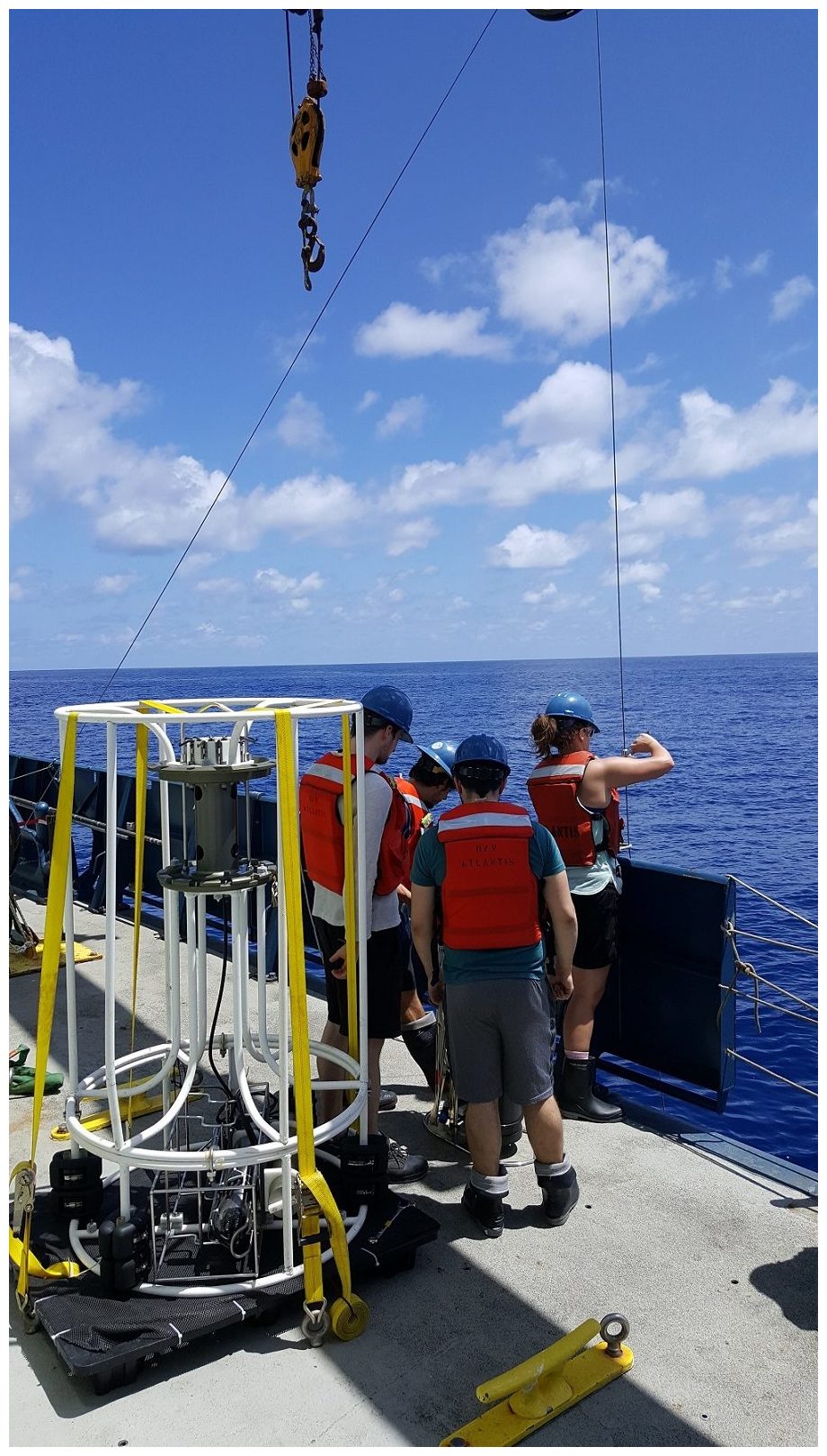
© Noelle Held/Woods Hole Oceanographic InstitutionJaclyn Saunders (far right) fixes the line on a McLane instrument that pumps large volumes of seawater in order to extract the DNA. The instrument on the left measures properties such as temperature, salinity and depth and collects smaller samples of seawater.
Arsenic is a deadly poison for most living things, but new research shows that microorganisms are breathing arsenic in a large area of the Pacific Ocean. A University of Washington team has discovered that an ancient survival strategy is still being used in low-oxygen parts of the marine environment.

"Thinking of arsenic as not just a bad guy, but also as beneficial, has reshaped the way that I view the element," said first author Jaclyn Saunders, who did the research for her doctoral thesis at the UW and is now a postdoctoral fellow at the Woods Hole Oceanographic Institution and the Massachusetts Institute of Technology.

The study was published this week in the Proceedings of the National Academy of Sciences.

Colosseum

Did the Romans build earthquake "invisibility cloaks" into structures?

amphitheatre
© Alex Livesey/Danehouse/Getty ImagesThe Roman Colosseum is an oval amphitheatre in the center of the city of Rome. French scientists suggest its structure might have helped protect it from earthquake damage.
Scientists are hard at work developing real-world "invisibility cloaks" thanks to a special class of exotic manmade "metamaterials." Now a team of French scientists has suggested in a recent preprint on the physics arXiv that certain ancient Roman structures, like the famous Roman Colosseum, have very similar structural patterns, which may have protected them from damage from earthquakes over the millennia.

Falling within the broader class of photonic band gap materials, a "metamaterial" is technically defined as any material whose microscopic structure can bend light in ways it doesn't normally bend. That property is called an index of refraction, i.e., the ratio between the speed of light in a vacuum and how fast the top of the light wave travels. Natural materials have a positive index of refraction; certain manmade metamaterials-first synthesized in the lab in 2000-have a negative index of refraction, meaning they interact with light in such a way as to bend light around even very sharp angles.

Comment: There is strong evidence that some past civilizations had knowledge of how to construct buildings that could withstand earthquakes:

See also:


Moon

India wants to be the 1st to land on uncharted Moon territory

Moon
© Global Look PressNew Delhi, India
India's space agency wants to touch down its rover on the Moon's south pole, an area on the Earth's natural satellite where no one has gone before. The launch is scheduled for July.

"All the [ISRO] missions, whatever we have had till now [to the moon], have all landed near the moon's equator. This is a place where nobody has gone," the Indian Space Research Organisation (ISRO) chief, Kailasavadivoo Sivan, told the Hindu.

India's second lunar exploration mission, Chandrayaan-2, seeks to gain access to some "new science" and information, the chairman said. For example, one of the goals of the probe is to find water on the Moon.

Sheriff

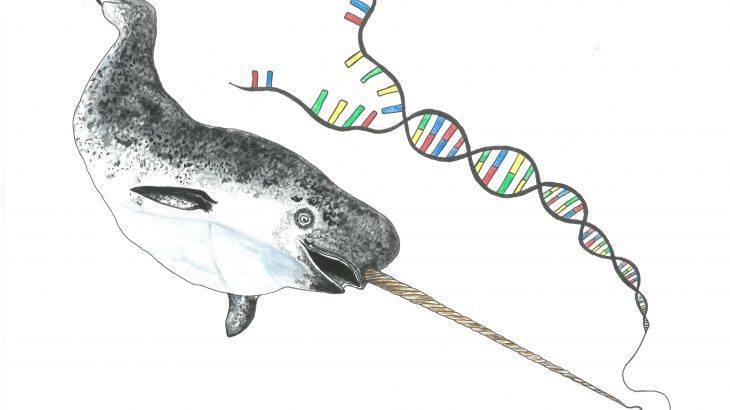
Despite lack of genetic diversity narwhals still thrive

narwhal
© Binia De Cahsan
Compared to other Arctic marine mammals, narwhals exhibit shockingly low levels of genetic diversity, as realized by Danish researchers who sequenced the narwhal's genome. Although this usually means a species is struggling, the researchers report that the narwhal is actually thriving with a population of about 170,000 individuals strong. Their findings are published in iScience.

"There's this notion that in order to survive and be resilient to changes, you need to have high genetic diversity, but then you have this species that for the past million years has had low genetic diversity and it's still around - and is actually relatively abundant," said Eline Lorenzen, an associate professor and curator at the Natural History Museum of Denmark.

She continued, "This shows us that just looking at the number of individuals isn't indicative of the genomic diversity levels of a species, but also looking at the genomic diversity levels isn't indicative of the number of individuals. Equating those two doesn't seem to be quite as simple as previously thought."

Comment: See also: And check out SOTT radio's:


Bug

Theory of anthropod evolution questioned following discovery of 99-million-year-old millipede in Myanmar

millipede amber
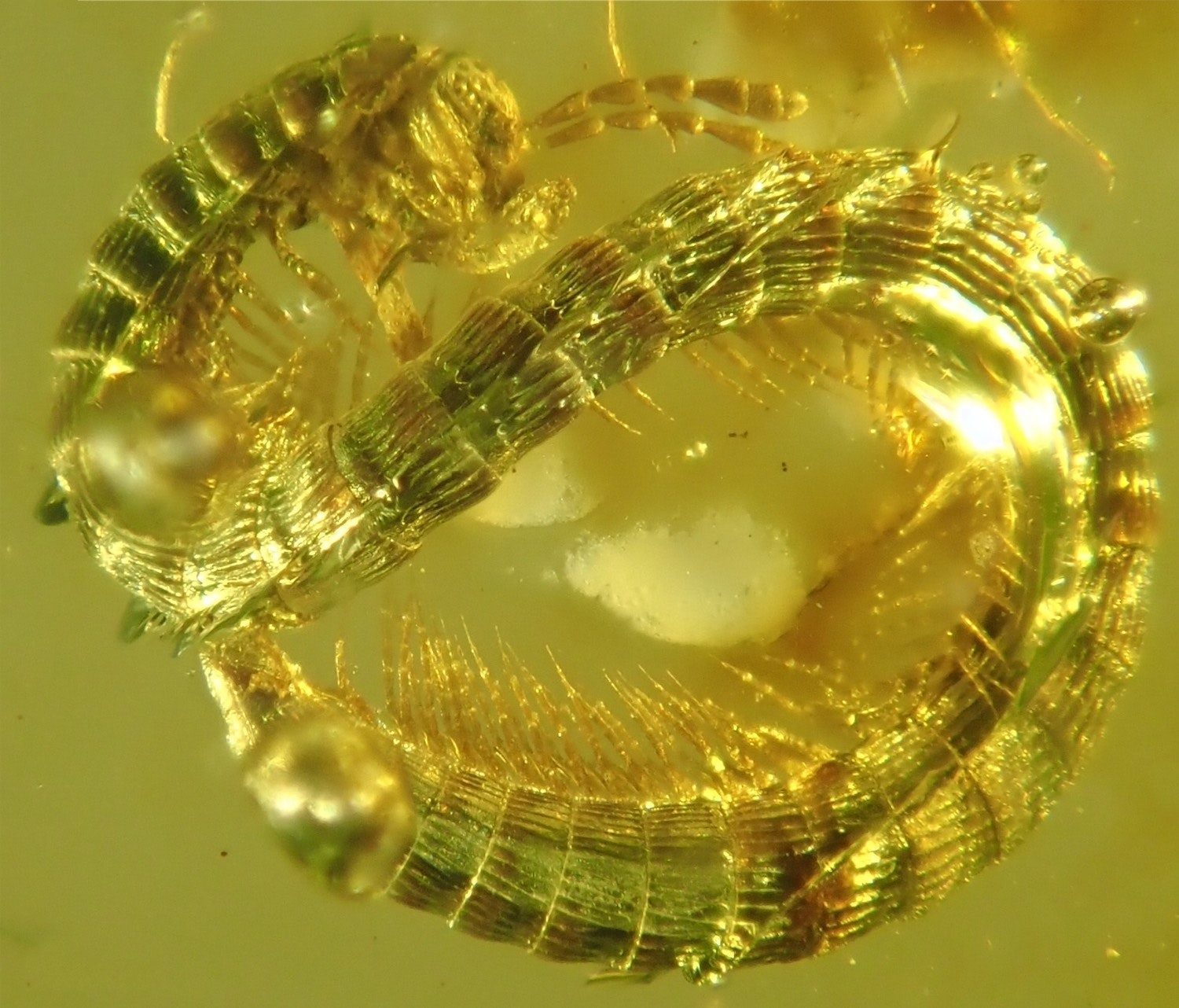
© Leif MoritzHeld still for 99 million years: a millipede preserved in amber.
The earliest known millipede fossil has been discovered preserved in amber in Myanmar.

The arthropod, just 8.2 millimetres long, was found trapped in a piece of amber dated to 99 million years ago, putting it well into the Cretaceous period.

Writing in the journal ZooKeys, researchers led by Pavel Stoev from Bulgaria's National Museum of Natural History suggest that the newly identified species - dubbed Burmanopetalum inexpectatum - will prompt a substantial rethink of the evolutionary history of the millipede order, Callipodida.

Comment: Discoveries like this are coming thick and fast these days: Also check out SOTT radio's:


Archaeology

Animal & human bones over 12,000 years old found in underwater graveyard

scuba diving
© Donald Miralle / Getty Images North America / AFP
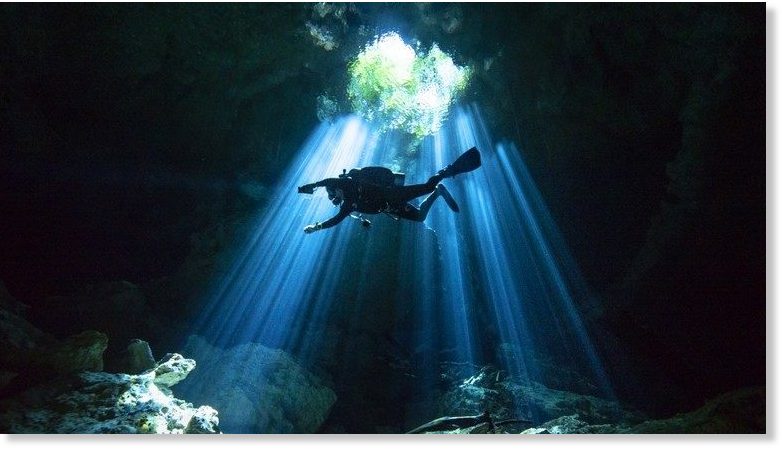
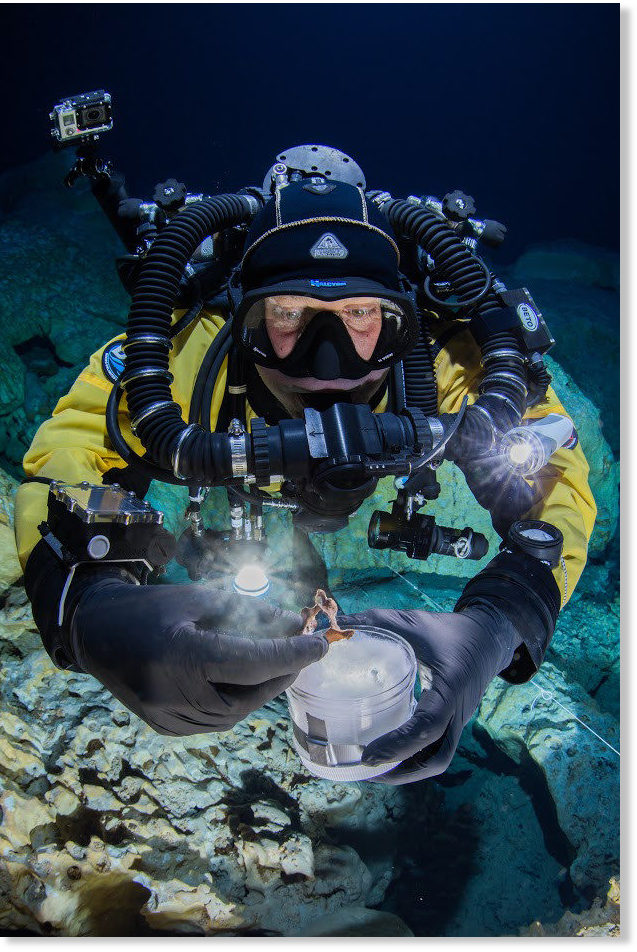
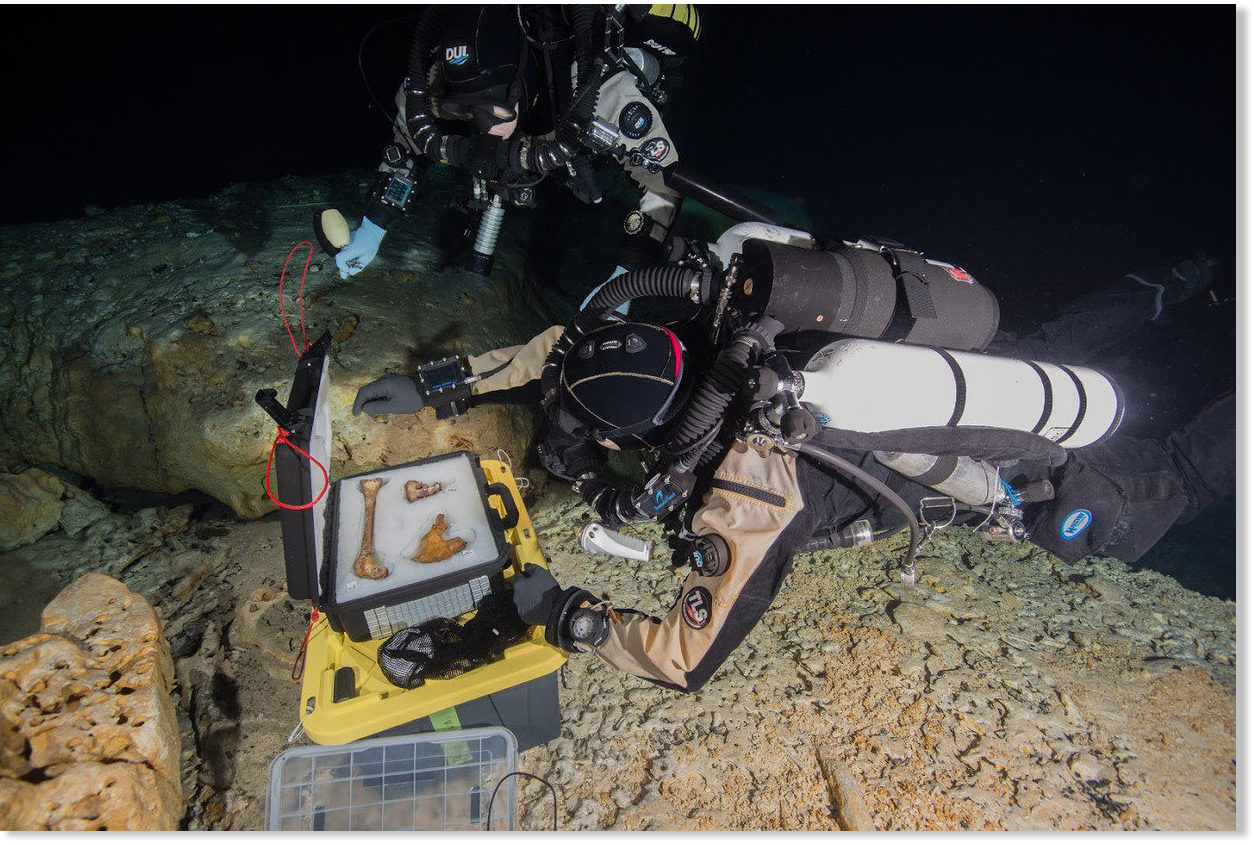
An array of ancient animal and human bones including a wolf-like dog, elephant-like animals, sabertooth cats and other strange creatures have been found buried in an ancient graveyard at the bottom of an underwater cave in Mexico.

hoyo negro cave
© Roberto Chavez / Mexican National Anthropology and History Institute / AFPScientist looks at 12,000 year old bone of a teenage girl in the Hoyo Negro (Black Hole) cave in Tulum, Mexico
Experts say the "underworld of exquisitely preserved fossils" includes human remains that are over 12,000 years old and the skull of a large, short-faced bear. The Hoyo Negro pit is a natural time capsule from the Late Pleistocene era. Before it was underwater, animals would fall 60 meters into the cave to their deaths.

hoyo negro cave
© Roberto CHAVEZ / INAH / AFPDivers collect bones in the Hoyo Negro cave in Tulum, Mexico, 2012

Chalkboard

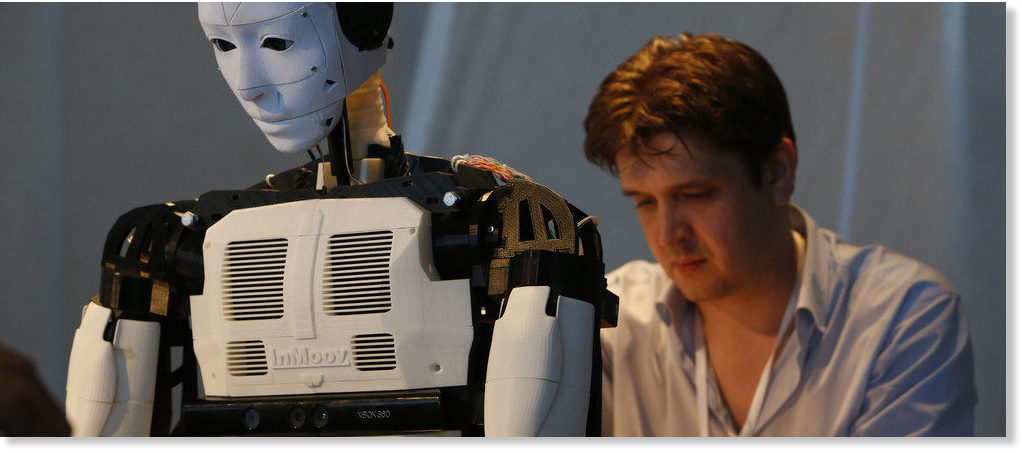
Scientists study "machine behavior" in order to prevent a robot apocalypse

robot behavior
Experts have been warning us about potential dangers associated with artificial intelligence for quite some time. But is it too late to do anything about the impending rise of the machines?

Once the stuff of far-fetched dystopian science fiction, the idea of robot overlords taking over the world at some point now seems inevitable.

The late Dr. Stephen Hawking issued some harsh and terrifying words of caution back in 2014:
The development of full artificial intelligence could spell the end of the human race. It would take off on its own, and re-design itself at an ever-increasing rate. Humans, who are limited by slow biological evolution, couldn't compete, and would be superseded. (source)
Elon Musk, the founder of SpaceX and Tesla Motors, warned that we could see some terrifying issues within the next few years:
The risk of something seriously dangerous happening is in the five year timeframe. 10 years at most. Please note that I am normally super pro technology and have never raised this issue until recent months. This is not a case of crying wolf about something I don't understand.

The pace of progress in artificial intelligence (I'm not referring to narrow AI) is incredibly fast. Unless you have direct exposure to groups like Deepmind, you have no idea how fast - it is growing at a pace close to exponential.

I am not alone in thinking we should be worried.

The leading AI companies have taken great steps to ensure safety. They recognize the danger, but believe that they can shape and control the digital superintelligences and prevent bad ones from escaping into the Internet. That remains to be seen... (source)