Science & TechnologyS

Monkey Wrench

Hackers can trick a Tesla car into accelerating by 50 miles per hour

Tesla car
© Tesla
A two inch piece of tape fooled the Tesla's cameras and made the car quickly and mistakenly speed up.

Don't believe your car's lying eyes.

Hackers have manipulated multiple Tesla cars into speeding up by 50 miles per hour. The researchers fooled the car's Mobileye EyeQ3 camera system by subtly altering a speed limit sign on the side of a road in a way that a person driving by would almost never notice.

This demonstration from the cybersecurity firm McAfee is the latest indication that adversarial machine learning can potentially wreck autonomous driving systems, presenting a security challenge to those hoping to commercialize the technology.

Mobileye EyeQ3 camera systems read speed limit signs and feed that information into autonomous driving features like Tesla's automatic cruise control, said Steve Povolny and Shivangee Trivedi from McAfee's Advanced Threat Research team.

The researchers stuck a tiny and nearly imperceptible sticker on a speed limit sign. The camera read the sign as 85 instead of 35, and in testing, both the 2016 Tesla Model X and that year's Model S sped up 50 miles per hour.


Cassiopaea

Best of the Web: The plasma universe and Max Planck's musical space-time revisited

planck
© Rising Tide Foundation
Near the end of 2019, signals arrived to Earth from the Voyager 2 spacecraft which have shaken the foundations of modern physics, and brought into question what are the forces and principles shaping the space time of stars within galaxies (and implicitly galaxies within clusters of galaxies). The data which NASA scientists received from Voyager 2 have catapulted mankind's ability to finally answer the old question of "what is in the "space" between stars or even between galaxies within our universe? As Voyager Project scientist Ed Stone stated:

"The Voyager probes are showing us how our sun interacts with the stuff that fills most of the space between stars in the milky way Galaxy."

What did Voyager 2 encounter?

As Voyager 2 exited the Heliosphere (the spherical boundary shaped by the sun's electro-magnetic field) and moved into the interstellar medium on November 5, 2019, the five sensors still functioning on the craft which was launched in 1977 alongside Voyager-1, measuring magnetic field intensity, cosmic radiation flux and plasma density produced surprising results. As the magnetic field intensity from the sun was no longer felt, an ocean of extremely dense cosmic radiation and plasma was encountered. Voyager-2's results corroborate those same measurements which occurred on the faster moving Voyager-1 when it traversed the Heliosphere in 2012 proving that this was not a "localized phenomenon".

Comment: See also: Also check out SOTT radio's:


Rocket

More efficient rocket engines developed by scientist

Soyuz spacecraft launches
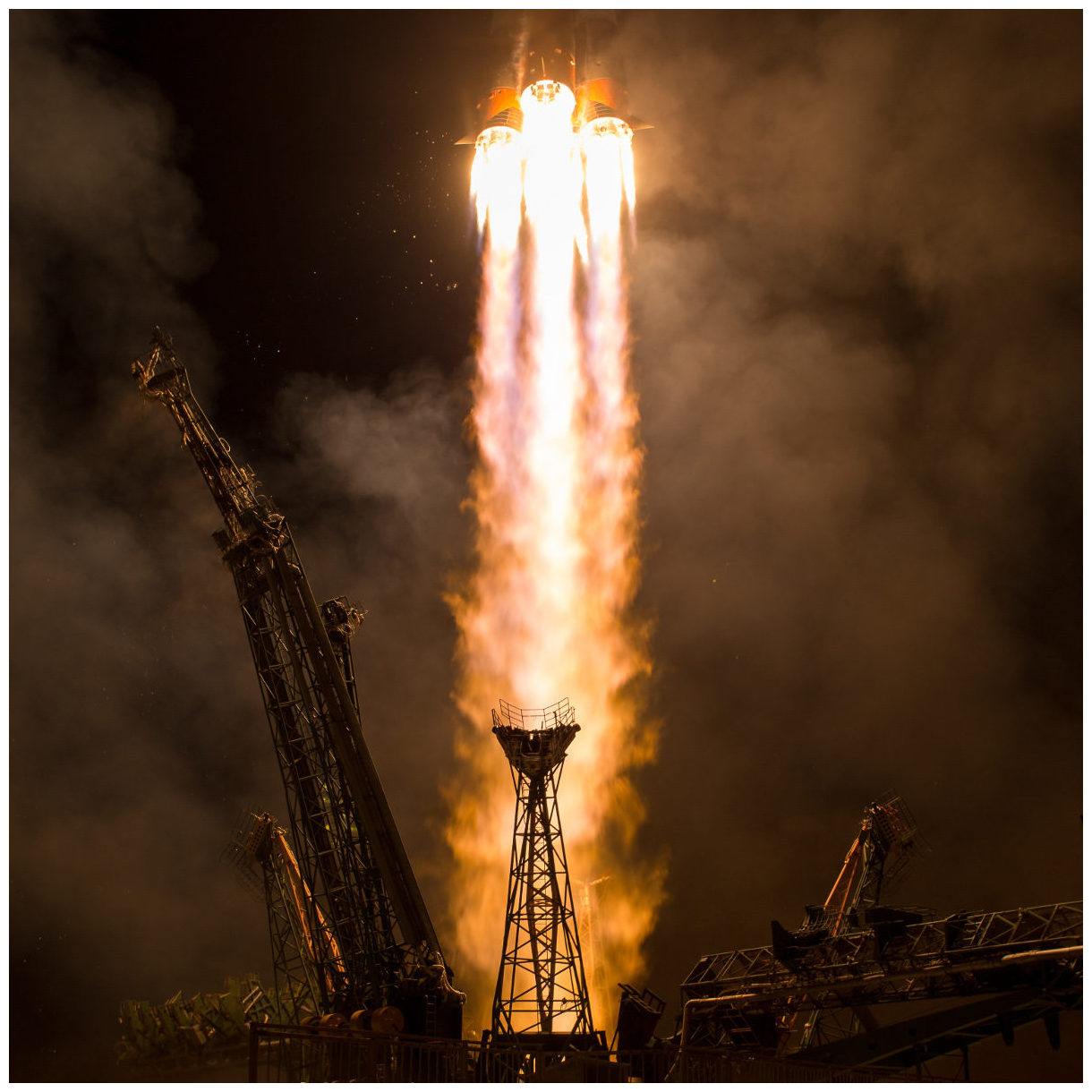
© NASA/Bill Ingalls/FlickrA Soyuz spacecraft launches from the Baikonur Cosmodrome in Kazakhstan in 2017 using a conventional, fuel-intensive engine. UW researchers have developed a mathematical model that describes how a new type of engine โ€” one that promises to make rockets fuel-efficient, more lightweight and less complicated to construct โ€” works.
It takes a lot of fuel to launch something into space. Sending NASA's Space Shuttle into orbit required more than 3.5 million pounds of fuel, which is about 15 times heavier than a blue whale.

But a new type of engine โ€” called a rotating detonation engine โ€” promises to make rockets not only more fuel-efficient but also more lightweight and less complicated to construct. There's just one problem: Right now this engine is too unpredictable to be used in an actual rocket.

Researchers at the University of Washington have developed a mathematical model that describes how these engines work. With this information, engineers can, for the first time, develop tests to improve these engines and make them more stable. The team published these findings Jan. 10 in Physical Review E.

"The rotating detonation engine field is still in its infancy. We have tons of data about these engines, but we don't understand what is going on," said lead author James Koch, a UW doctoral student in aeronautics and astronautics. "I tried to recast our results by looking at pattern formations instead of asking an engineering question โ€” such as how to get the highest performing engine โ€” and then boom, it turned out that it works."

A conventional rocket engine works by burning propellant and then pushing it out of the back of the engine to create thrust.

Blue Pill

Darwinist Jerry Coyne jumps into the Dawkins eugenics fray

jerry coyne
© YouTubeJerry Coyne on The Dave Rubin Show
Almost like he must:
Artificial selection will work if a trait has any positive heritability, that is, if any proportion of the total variation in a trait among individuals in a population is due to genetic variation โ€” what we specifically call "additive genetic variance" in the trade. And virtually all morphological or behavioral traits have some positive heritability.

Look at domestic dog breeds, for instance. All of them descend from the wolf, yet all the huge variety of their traits: the variation in their size, their shape, their color, and even their behavior (retrievers, border collies, etc.) have come from selecting on traits that have a positive heritability. As Darwin said in The Origin, "Breeders habitually speak of an animal's organization as something quite plastic, which they can model almost as they please."

That happens to be true. And it would be true of humans as well if we were able to select on them.

Jerry Coyne, "Dawkins makes a tweet" at Why Evolution Is True
Actually, eugenics wouldn't work in humans because reason and personal choice can frustrate efforts at programming.


Comment: Not to mention the fact that great people can be born to monsters, and vice versa.


Another issue was raised by a reader who reminds us that, in any event, dog breeding is devolution for dogs. It usually works that way, as Michael Behe points out in Darwin Devolves. Dogs are bred by humans at the expense of their genetic health. Some call it "malgenics."

That's quite correct. Domestic dog breeds often have serious inbred problems that the feral cur never knew. He stays alive despite all those who want to kill him. The pampered pedigreed with the fashionable but costly features might expire despite the vet's best efforts to save him. - News

Comment: It's things like this that show why you shouldn't automatically trust experts. They're often experts at being idiots. But their 'expertise' goes to their heads, inflating their self-importance, and the conviction that they actually know what they're doing. It's people like Dawkins and Coyne who rationally explain why things "should" or "will" work, when the actual implementation of their plans and policies results in disaster because they were either completely wrong to begin with, or were unaware of hidden variables. Don't trust experts to come up with solutions that don't already have a good track record.

Geneticist Dave Curtis has a useful Twitter thread on why eugenics just wouldn't work on humans.

See also:


X

If human eugenics wouldn't work, human evolution has a big problem

dawkings
Richard Dawkins got his wings clipped over the weekend, following a claim on Twitter that human eugenics, whatever its demerits otherwise, would certainly work. After all, it does with animals: "It works for cows, horses, pigs, dogs & roses. Why on earth wouldn't it work for humans?"


He was quickly forced to backpedal a bit, "For those determined to miss the point," saying he "deplores" it as a policy, "I simply said deploring it doesn't mean it wouldn't work." And again, "A eugenic policy would be bad. I'm combating the illogical step from 'X would be bad' to 'So X is impossible'."

Comment: See also:


Pi

Dynamic system of feedback loops: A mathematical model unlocks the secrets of vision

The first anatomically correct model of the visual cortex seeks to capture how the brain sees the world.
eye system image replication
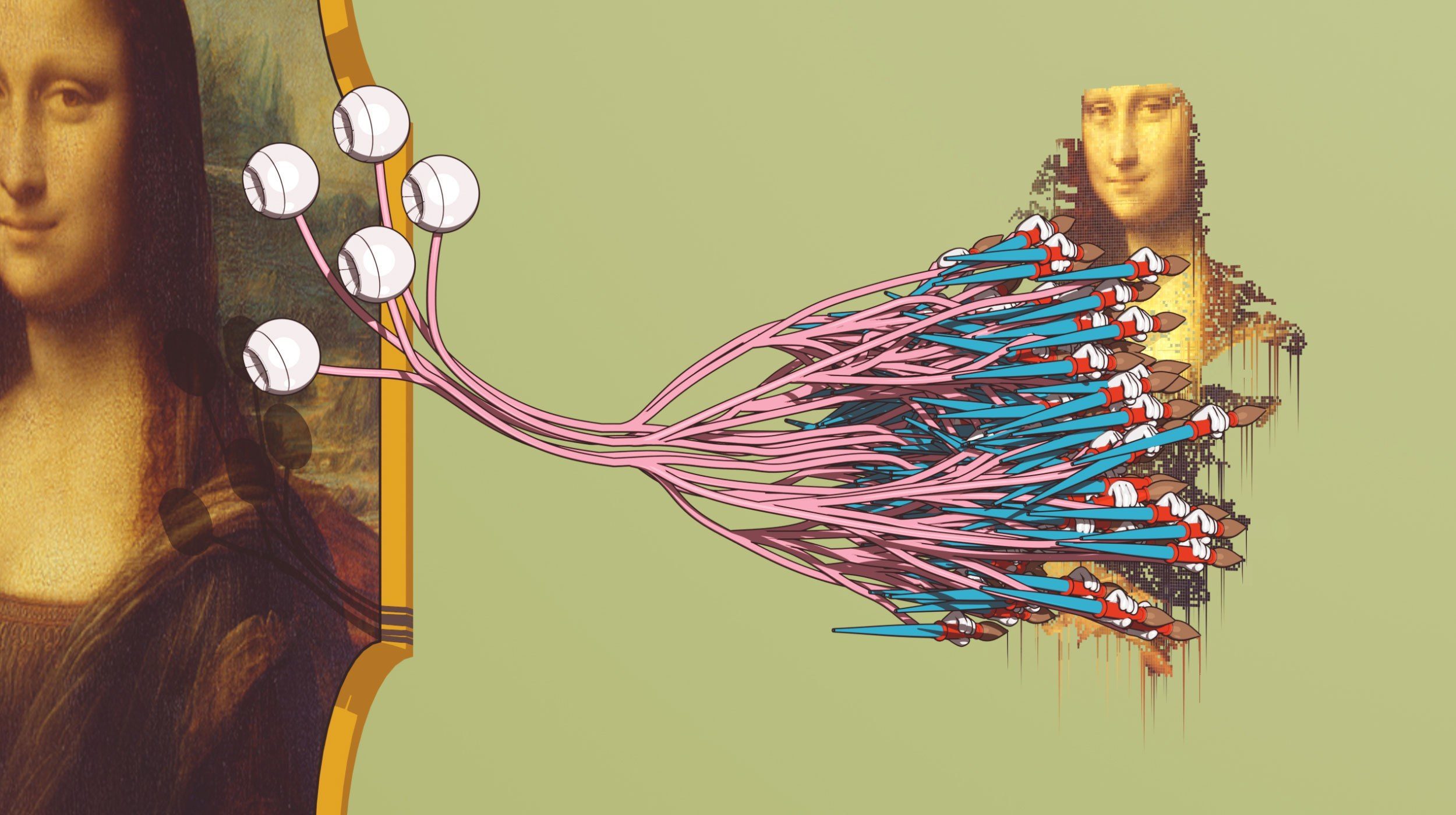
© DVDP FOR QUANTA MAGAZINEInformation from the eye passes through a bottleneck before it gets to the brainโ€™s visual cortex, which heavily processes the sparse signal.
Mathematicians and neuroscientists have created the first anatomically accurate model that explains how vision is possible. Information from the eye passes through a bottleneck before it gets to the brain's visual cortex, which heavily processes the sparse signal.

This is the great mystery of human vision: Vivid pictures of the world appear before our mind's eye, yet the brain's visual system receives very little information from the world itself. Much of what we "see" we conjure in our heads.

"A lot of the things you think you see you're actually making up," said Lai-Sang Young, a mathematician at New York University. "You don't actually see them."

Info

Unknown layer of information discovered in RNA

RNA Has New Layer
© Illustration: nobeastsofierce / Shutterstock / NTB scanpixRNA has become a hot topic, particularly in cancer research.
And we've only just gotten used to epigenetics!

Just a few years ago, scientists began to realize that our genes, neatly written with chemical letters in our DNA, are actually not carved in stone.

Although genes themselves don't change, they can be regulated.

They are turned on and off as we grow and develop. These changes are influenced by our surroundings, so we actually change over the course of our lives. And some of these changes in regulation are passed on to our children.

Figuratively speaking, our DNA can be described as the recipe book for who and how we are, while epigenetic regulation can be seen as notes that have been pencilled into the margin.

Epigenetics thus describes a fascinating layer of information and regulation of our genes that enables us to adapt to new environments much faster than via normal evolution.

But lately, scientists have seen evidence of something more.

Another layer.

This time it's not about DNA, but about RNA, says Professor Arne Klungland at the University of Oslo.

"There has been an extreme interest in this field over the last five years," says Klungland, who himself leads one of the few research groups in the world that has worked in the field for a long time.

Galaxy

Astronomers detect strange gas movements near the centre of our galaxy

black hole
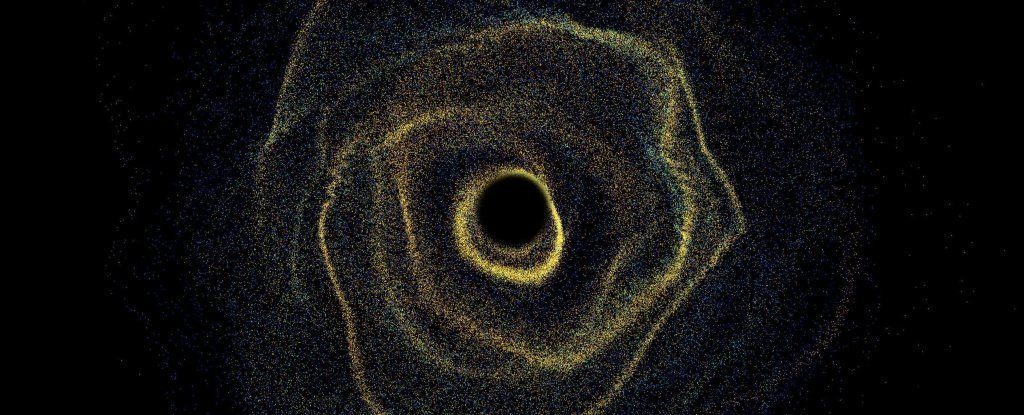
© noLimit46/iStockFILE PHOTO
Astronomers have detected unusual movements of gas clouds near the centre of our galaxy, and they could be pointing the way to the most elusive species of black hole, according to a new study. For the longest time, we weren't even sure if these types of black holes existed.

Researchers tracking the gasses in the middle of the Milky Way have concluded the clouds are orbiting an object 10,000 times the mass of the Sun - and yet, when they look at where that object should be, nothing is there.

The most obvious explanation is a quiescent black hole, one that isn't actively feeding, and therefore is emitting no detectable radiation.

It is, the researchers say, the fifth such candidate in the galactic centre, mounting evidence that not only do intermediate mass black holes exist, but that they're abundant in the heart of the Milky Way.

Comment: See also:


Butterfly

The intelligent design in birds, insects inspire aeronautic research and more

barn owl flight
© Mark WeinmeisterA barn owl in flight
Birds provided the initial inspiration for the Wright brothers' flyers, and yet their first aeroplanes did not try to imitate flapping flight. Technology has advanced considerably over the last century, and yet still jet and airplane wings are mostly immobile. Can we learn more from the flapping flight of birds? And do the same processes work at the small scale of small insects? How do bats fly so well with completely different wings? Here are some of the things engineers are learning from biologists who study animal flight.

Hummingbirds

Everyone's favorite garden bird has revealed another trick among its unique flying capabilities: the aerial roll. A paper by Ravi et al. in Current Biology describes how "Modulation of Flight Muscle Recruitment and Wing Rotation Enables Hummingbirds to Mitigate Aerial Roll Perturbations." To perform the roll maneuver โ€” which involves a challenging continuous perturbation โ€” the hummer must alter its wing tip trajectory (from a figure 8 to an oval), alter its tail fan position and use different muscles on its left and right wings. This must be an instinctive ability, because young birds were seen to master it on the first attempt.
The birds also augmented flight stabilization by adjusting body and tail posture to expose greater surface area to upwash than to the undesirable downwash. Our results provide insight into the remarkable capacity of hummingbirds to maintain flight control, as well as bio-inspiration for simple yet effective control strategies that could allow robotic fliers to contend with unfamiliar and challenging real-world aerial conditions. [Emphasis added.]

Bulb

University of Massachusetts scientists create electricity out of thin air

water bubbles
Graphic image of a thin film of protein nanowires generating electricity from atmospheric humidity.
Scientists at the University of Massachusetts Amherst have developed a device that uses a natural protein to create electricity from moisture in the air, a new technology they say could have significant implications for the future of renewable energy, climate change and in the future of medicine.

As reported today in Nature, the laboratories of electrical engineer Jun Yao and microbiologist Derek Lovley at UMass Amherst have created a device they call an "Air-gen" or air-powered generator, with electrically conductive protein nanowires produced by the microbe Geobacter. The Air-gen connects electrodes to the protein nanowires in such a way that electrical current is generated from the water vapor naturally present in the atmosphere.

"We are literally making electricity out of thin air," says Yao. "The Air-gen generates clean energy 24/7." Lovely, who has advanced sustainable biology-based electronic materials over three decades, adds, "It's the most amazing and exciting application of protein nanowires yet."

The new technology developed in Yao's lab is non-polluting, renewable and low-cost. It can generate power even in areas with extremely low humidity such as the Sahara Desert. It has significant advantages over other forms of renewable energy including solar and wind, Lovley says, because unlike these other renewable energy sources, the Air-gen does not require sunlight or wind, and "it even works indoors."