Science & TechnologyS


Sherlock

Rare Object puts Maidstone on the Map

Maidstone 1
© KJ/090210
An extremely rare object, which is thought to be just one of about 20 items in the world, has been discovered at Maidstone Museum.

The rare find, which is thought to be 4,000 years old, has caused a stir of excitement among the museum keepers.

The Early Cycladic III Kernos, a vessel that incorporates 6 cups around a globular basin on a fluted base, is an unusual item especially in the complete condition it is in.

There are known Kernoi at the British Museum in London, the Louvre in Paris, Sevres in Paris, The Fitzwilliam Museum in Cambridge and The New York Metropolitan Gallery of Art and other museums.

Maidstone Museum's Kernos was brought into the limelight thanks to museum keeper, Giles Guthrie and third year Liverpool University student Kayleigh McMahon, who is currently studying archaeology and ancient history and working with Giles at the museum.

Sherlock

Expanding on the Cult of Osiris

Studying and restoring a part of Egypt's ancient history at Karnak Temples was the task of the Franco-Egyptian Research Centre of Karnak in 2008.

Sites
© CFEETKClockwise from top: pillars hall of Tuthmosis IV; Ptolemaic bath; excavation work at Chabaka treasure; architectural survey at Ptah Temple; restoration at the Tuthmosis III's chapel.
The work undertaken by the Franco- Egyptian Research Centre of Karnak Temples (CFEETK) in 2008 was slightly different from in previous years. Last year's study focused on restoration more than excavation. The site that took up much of the centre's attention was the Osirian cults and featured the chapel of Osiris Wennefer Neb-Djefau, the path of Ptah and the neighbouring chapels of Osiris Neb-Neheh and Nebankh-Pa-Usheb-Iad, as well as the temples of Osiris from Coptos, Opet and Khonsu.

To achieve an efficient progress in restoration at the chapel of Osiris Wennefer Neb-Djefau, the CFEETK had to continue excavation in the area in an attempt to complete the plan of the mud- brick walls that surround the chapel.

Sun

A Robot Birthday for Darwin

Today is Charles Darwin's 200th birthday and this month also marks the 150th anniversary of his book, On the Origin of Species. As might be expected there are shindigs and events all over the world. There's even a Darwin Look-Alike contest at ASU and a Darwin Google logo for the occasion. Other organizations and website are focusing on how other fields of science were changed by Darwin's theory of evolution. But not us, no siree. We're going to remind you how much evolution has impacted robotics. While the direct application of evolutionary algorithms is obvious, there are other less obvious connections. For example, scientists are about to release a rough draft of the Neanderthal genome, pieced together from 38,000 year old bones found in Croatia. By comparing the Neanderthal genes to those of chimpanzees and humans, we'll learn a great deal about how our brains evolved. This in turn will suggest new approaches for creating intelligent robots.

Laptop

Legal ruckus over Kindle 2's text-to-speech feature

It was hardly the most interesting or earth-shaking part of Jeff Bezos's introduction of the Kindle 2 on Monday, but one small, experimental feature in the device is already causing a minor uproar. Specifically: The Kindle 2's text-to-speech function, which will use a computerized voice to read aloud anything displayed on the device's screen. The problem? The Authors Guild says that that's against the law.

The challenge revolves around audiobooks, which are treated separately from printed material from a copyright standpoint. A retailer can't record a copy of a book on a CD and sell it or bundle it along with a novel without paying a separate fee, just as buying a copy of an audiobook doesn't entitle you to a free copy of the printed version.

X

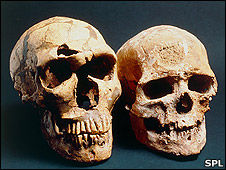
Neanderthals 'distinct from us'

Scientists studying the DNA of Neanderthals say they can find no evidence that this ancient species ever interbred with modern humans.

Neanderthals - Sapiens
© SPLThe DNA will tease out the differences between Neanderthals (l) and us (r)
But our closest ancestors may well have been able to speak as well as us, said Prof Svante Paabo from Germany's Max Planck Institute.

He was speaking in Chicago, US, where he announced the "first draft" of a complete Neanderthal genome.

The genetics information has been gleaned from fossils found in Croatia.

Prof Svante Paabo confirmed that Neanderthals shared the FOXP2 gene associated with speech and language in modern humans.

A total of three billion "letters", covering 60% of the Neanderthal genome, have been sequenced by scientists from Max Planck Institute for Evolutionary Anthropology and 454 Life Sciences Corporation, in Branford, Connecticut.

Info

United States tweaks Internet privacy guidelines

Washington - Federal regulators tweaked recommendations for how websites should collect, save and share information about users, extending them to Internet service providers and mobile users.

The Federal Trade Commission issued new guidance on Thursday for the self-regulated industry that urges websites to tell consumers that data is being collected during their searches and to allow them to opt out.

Satellite

Satellite collision could pose space threat - Crash creates debris; slight risk to space station, minor impact on Iridium

Russian and U.S. experts say the first-ever collision between two satellites has created clouds of debris that could threaten other unmanned spacecraft.

Russia's Mission Control spokesman Valery Lyndin says there is little risk to the international space station with three crew members aboard.

Lyndin said Thursday that officials would monitor the debris from Tuesday's collision to make sure no fragments get near the station. He said the station's orbit was adjusted in the past to avoid debris.

Sherlock

Neanderthals Could Walk Again After Discovery of Genetic Code

Neanderthals
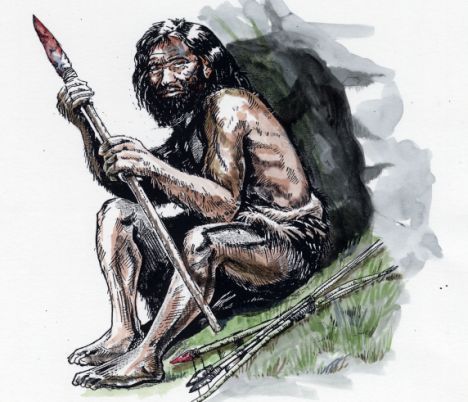
© UnknownBack from the dead?: Scientists could potentially revive man's closest relative.
Neanderthals are a step closer to walking on Earth again.

Scientists have unravelled the genetic code of man's closest cousin using fragments of bone found across Europe.

The blueprint could provide information on the Neanderthal's looks, intelligence, health and habits, as well as what makes us human.

It also raises the intriguing possibility of bringing our ancient relatives, who died out around 30,000 years ago, back from the dead.

Researcher Professor Jean-Jacques Hublin said: 'Studying the Neanderthals and studying the Neanderthal genome will tell us what makes modern humans really human, why we are alone, why we have these amazing capabilities that allowed our ancestors to draw paintings, to create complex symbols.'

Telescope

Ultra Compact Dwarf Galaxies Once Crowded with Stars

Astronomers think they've found a way to explain why Ultra Compact Dwarf Galaxies, oddball creations from the early universe, contain so much more mass than their luminosity would explain.

Pavel Kroupa, an astronomer at the University of Bonn in Germany, led a research team that's proposing the unexplained density may actually be a relic of stars that were once packed together a million times more closely than in the solar neighbourhood. The new paper appears in the Monthly Notices of the Royal Astronomical Society.

UCDs were discovered in 1999. At about 60 light years across, they are less than 1/1000th the diameter of the Milky Way - but much more dense. Astronomers have proposed they formed billions of years ago from collisions between normal galaxies. Until now, exotic dark matter has been suggested to explain the 'missing mass.'

Einstein

On his 200th Birthday, Darwin's Theory Still in Controversy

It's well known that Charles Darwin's groundbreaking theory of evolution made many people furious because it contradicted the Biblical view of creation. But few know that it also created problems for Darwin at home with his deeply religious wife, Emma.

Darwin held back the book to avoid offending his wife, said Ruth Padel, the naturalist's great-great-granddaughter. "She said he seemed to be putting God further and further off," Padel said in her north London home. "But they talked it through, and she said, "Don't change any of your ideas for fear of hurting me.'"

The 1859 publication of On the Origin of Species changed scientific thought forever - and generated opposition that continues to this day. It is this elegant explanation of how species evolve through natural selection that makes Darwin's 200th birthday on Feb. 12 such a major event.