Science & TechnologyS


Magnify

Rare ancient jewels found

Athens - Archaeologists on the Greek island of Crete have unearthed the 2,900-year-old tomb of three women buried with jewels of surprisingly advanced skill, culture officials said on Friday.

The tomb in the ancient town of Eleutherna, near the modern city of Rethymno in northern Crete, held gold necklaces and medallions decorated with lion heads and the forms of ancient gods, excavation supervisor Nikos Stambolidis said.

The tomb in the ancient town of Eleutherna, near the modern city of Rethymno in northern Crete, held gold necklaces and medallions decorated with lion heads and the forms of ancient gods, excavation supervisor Nikos Stambolidis said.

Magnify

Decoding the Ancient Script of the Indus Valley

Image
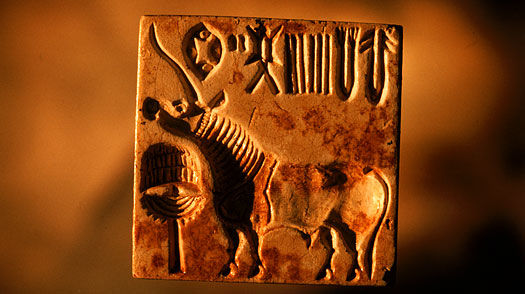
© Randy Olson / Aurora PhotosA Harappan unicorn seal, dated 2400BC, from the ancient Indus Valley civilization that spread across part of modern India and Pakistan
The ancient cities of the Indus Valley belonged to the greatest civilization the world may never know. Since the 1920s, dozens of archaeological expeditions have unearthed traces of a 4,500-year-old urban culture that covered some 300,000 square miles in modern day Pakistan and north-western India. Digs at major sites such as Mohenjo-daro and Harappa revealed a sophisticated society whose towns had advanced sanitation, bathhouses and grid-like city planning. Evidence of trade with Egypt and Sumer in Mesopotamia, as well as the presence of mining interests as far as Central Asia, suggest that the fertile Indus River basin could have been home to an empire larger and older than its more famous contemporaries in the Middle East.

Magnify

The Complicated World of Ancient Humans

Image
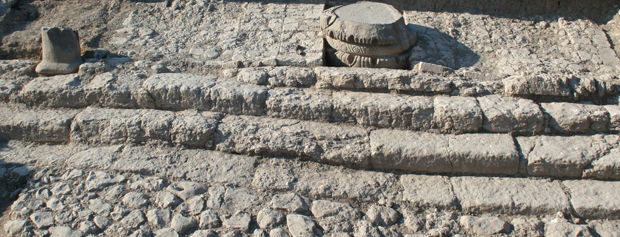
© UnknownPaved entrance to the Tayinat Temple in Turkey, a hotbed of trade in the Iron Age.
For civilizations in Europe and the Near East, the Bronze and Iron Ages - when metalworking was first developed - have been viewed as times when simple societies struggled through technological upheaval, famine, and sickness. But new findings are revealing surprising social and cultural complexity.

Info

Life's proteins related by seven degrees of separation

proteins
© Argonne National Laboratory
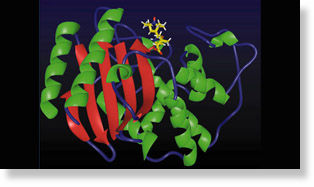
Starting with a database of all known structural features in proteins, researchers have performed a network analysis based on their similarities. The surprising result is that almost every protein we know of is related to the rest by seven degrees of separation.

Life requires lots of chemicals, from the DNA and RNA that carry genetic information to the lipids that keep the contents of cells separated from their environment. But it's fair to say a lot of the action involves proteins, which do everything from catalyzing chemical reactions to providing structural scaffolding for various parts of the cell. All these different functions are dependent upon how the protein is organized in three dimensions, which occurs through a process called protein folding.

All the dizzying variety of known proteins are generated by linking together a chain composed of 20 common amino acids (and a few rare variations on those). When you consider how quickly the number of possible combinations of these amino acids increases as the length of the protein does, however, it should be clear that the proteins that exist occupy only a small portion of the potential protein space. So, in this view, evolution has generated the rare, useful solutions within a sea of possibilities.

Laptop

New literacy: how online media helps develop writing skills

As the school year begins, be ready to hear pundits fretting once again about how kids today can't write - and technology is to blame. Facebook encourages narcissistic blabbering, video and PowerPoint have replaced carefully crafted essays, and texting has dehydrated language into "bleak, bald, sad shorthand" (as University College of London English professor John Sutherland has moaned). An age of illiteracy is at hand, right?

Andrea Lunsford isn't so sure. Lunsford is a professor of writing and rhetoric at Stanford University, where she has organized a mammoth project called the Stanford Study of Writing to scrutinize college students' prose. From 2001 to 2006, she collected 14,672 student writing samples - everything from in-class assignments, formal essays, and journal entries to emails, blog posts, and chat sessions. Her conclusions are stirring.

"I think we're in the midst of a literacy revolution the likes of which we haven't seen since Greek civilization," she says. For Lunsford, technology isn't killing our ability to write. It's reviving it - and pushing our literacy in bold new directions. [..]

Arrow Down

Facebook Exodus

farewell
© Kevin Van Aelst
Things fall apart; the center cannot hold. Facebook, the online social grid, could not command loyalty forever. If you ask around, as I did, you'll find quitters. One person shut down her account because she disliked how nosy it made her. Another thought the scene had turned desperate. A third feared stalkers. A fourth believed his privacy was compromised. A fifth disappeared without a word.

The exodus is not evident from the site's overall numbers. According to comScore, Facebook attracted 87.7 million unique visitors in the United States in July. But while people are still joining Facebook and compulsively visiting the site, a small but noticeable group are fleeing - some of them ostentatiously.

Leif Harmsen, once a Facebook user, now crusades against it. Having dismissed his mother's snap judgment of the site ("Facebook is the devil"), Harmsen now passionately agrees. He says, not entirely in jest, that he considers it a repressive regime akin to North Korea, and sells T-shirts with the words "Shut Your Facebook." What especially galls him is the commercialization and corporate regulation of personal and social life. As Facebook endeavors to be the Web's headquarters - to compete with Google, in other words, and to make money from the information it gathers - it's inevitable that some people would come to view it as Big Brother.

Satellite

India abandons moon-orbiting satellite after losing contact

India's space agency has abandoned the country's only satellite orbiting the moon after efforts to revive communication with it failed, an official said Monday.

Communications with the Chandrayaan-1 satellite, which has been orbiting the moon for nearly a year, snapped Saturday and scientists lost control of the satellite. The space agency's efforts to restore contact since then have failed, agency spokesman S. Satish told The Associated Press.

"The mission has been terminated," Satish quoted G. Madhavan Nair, chief of the Indian Space Research Organization, as saying Sunday.

Magnify

Microscopes zoom in on molecules at last

Image
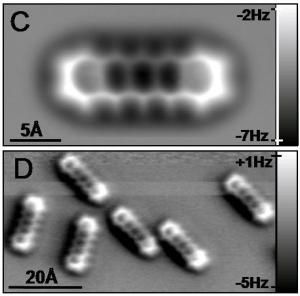
© IBM and SciencePentacene as you've never seen it before.
Thanks to specialised microscopes, we have long been able to see the beauty of single atoms. But strange though it might seem, imaging larger molecules at the same level of detail has not been possible - atoms are robust enough to withstand existing tools, but the structures of molecules are not. Now researchers at IBM have come up with a way to do it.

The earliest pictures of individual atoms were captured in the 1970s by blasting a target - typically a chunk of metal - with a beam of electrons, a technique known as transmission electron microscopy (TEM).

Info

Finding the ZIP-code for gene therapy: Scientists imitate viruses to deliver therapeutic genes

New research in the FASEB Journal describes the next generation of gene therapy, raising hope for successful treatment of genetic and other disorders

A research report featured on the cover of the September 2009 print issue of the FASEB Journal(http://www.fasebj.org) describes how Australian scientists developed a new gene therapy vector that uses the same machinery that viruses use to transport their cargo into our cells. As a result of this achievement, therapeutic DNA can be transferred to a cell's nucleus far more efficiently than in the past, raising hopes for more effective treatment of genetic disorders and some types of cancers.

Telescope

Astronomers Find Coldest, Driest, Calmest Place on Earth

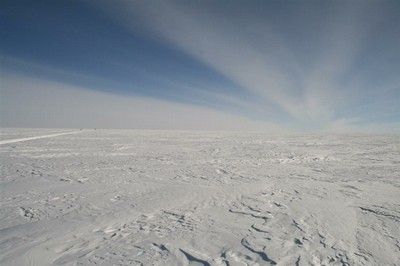
Antarctic Plateau
© ANIAntarctic Plateau
The search for the best observatory site in the world has lead to the discovery of what is thought to be the coldest, driest, calmest place on Earth. No human is thought to have ever been there but it is expected to yield images of the heavens three times sharper than any ever taken from the ground.

The joint US-Australian research team combined data from satellites, ground stations and climate models in a study to assess the many factors that affect astronomy - cloud cover, temperature, sky-brightness, water vapour, wind speeds and atmospheric turbulence.

The researchers pinpointed a site, known simply as Ridge A, that is 4,053m high up on the Antarctic Plateau. It is not only particularly remote but extremely cold and dry. The study revealed that Ridge A has an average winter temperature of minus 70C and that the water content of the entire atmosphere there is sometimes less than the thickness of a human hair.