Science & TechnologyS


Sherlock

Indiana: Archaeological Survey Finds Bones, Pottery

An archaeological survey being done in the Southern Indiana town of Clarksville has been turning up signs of prehistoric inhabitants.

The project, coordinated by the Indiana Division of Historic Preservation and Archaeology, is helping determine how a planned Lewis and Clark Heritage Trail would be built in the Ohio River city.

Those helping with the dig have found bones and artifacts, such as bits of pottery and indications of fire pits.

Saving the ground that holds the history of early settlers and prehistoric culture is important, said Clarksville parks Superintendent Brian Kaluzny.

Cow

Europe's First Farmers Were Immigrants: Replaced Their Stone Age Hunter-gatherer Forerunners

Image
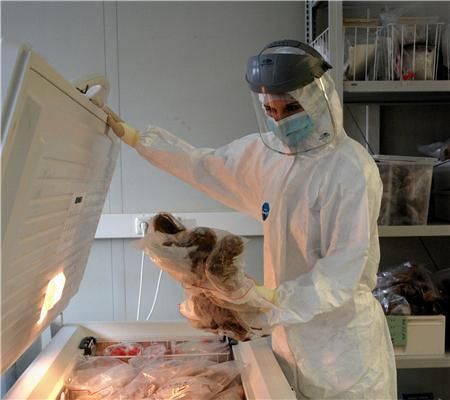
© Image copyright Joachim BurgerDNA-analysis in the laboratories of Mainz University.
Analysis of ancient DNA from skeletons suggests that Europe's first farmers were not the descendants of the people who settled the area after the retreat of the ice sheets. Instead, the early farmers probably migrated into major areas of central and eastern Europe about 7,500 years ago, bringing domesticated plants and animals with them, says Barbara Bramanti from Mainz University in Germany and colleagues.

The researchers analyzed DNA from hunter-gatherer and early farmer burials, and compared those to each other and to the DNA of modern Europeans. They conclude that there is little evidence of a direct genetic link between the hunter-gatherers and the early farmers, and 82 percent of the types of mtDNA found in the hunter-gatherers are relatively rare in central Europeans today.

Evil Rays

Telepathic microchip 'could help paraplegics control computers'

Image
© Living Truth Publishers
A 'telepathic' microchip that enables paraplegics to control computers has been developed by Dr Jon Spratley, a British scientist.

The chip is implanted onto the surface of the brain, where it monitors electronic 'thought' pulses.

While paraplegics may be unable to move their limbs, their brains still produce an electronic signal when they try.

The new chip captures this 'thought' and transmits it wirelessly, via Bluetooth-style technology, to control a range of simple devices.

It means paraplegics, amputees or those with motor neurone disease, such as Stephen Hawking, could be able to operate light switches, PCs and even cars by the power of thought alone.

The technology is the idea of British engineer Dr Spratley, who developed it while studying for a PhD at Birmingham University.

Comment:
"What we have designed would allow them to control a computer with their thoughts"
Presumably the reverse is just as feasible. The military-industrial complex has no doubt thought of many other applications for this technology.


Magnify

Weed-Whacking Herbicide Proves Deadly to Human Cells

Image
© AVIXYZ/FLICKRWEED KILLER: New research has found that an 'inert' ingredient in the herbicide Roundup can kill human embryonic, placental, and umbilical cord cells
Used in gardens, farms, and parks around the world, the weed killer Roundup contains an ingredient that can suffocate human cells in a laboratory, researchers say.

Used in yards, farms and parks throughout the world, Roundup has long been a top-selling weed killer. But now researchers have found that one of Roundup's inert ingredients can kill human cells, particularly embryonic, placental and umbilical cord cells.

Telescope

Milky Way's twin caught dismembering neighbour

Our two nearest large neighbours, the Andromeda and Triangulum galaxies, appear to have grazed each other about 2.5 billion years ago - and a worse collision is on the horizon. The findings lend weight to the theory that big galaxies grow by gobbling smaller ones.


Magnify

H1N1 Pandemic Virus Does Not Mutate Into 'Superbug' in Lab Study

A laboratory study by University of Maryland researchers suggests that some of the worst fears about a virulent H1N1 pandemic flu season may not be realized this year, but does demonstrate the heightened communicability of the virus.

Using ferrets exposed to three different viruses, the Maryland researchers found no evidence that the H1N1 pandemic variety, responsible for the so-called swine flu, combines in a lab setting with other flu strains to form a more virulent 'superbug.' Rather, the pandemic virus prevailed and out-competed the other strains, reproducing in the ferrets, on average, twice as much.

Clock

Lunar Clock To Be Built By River Thames

Image
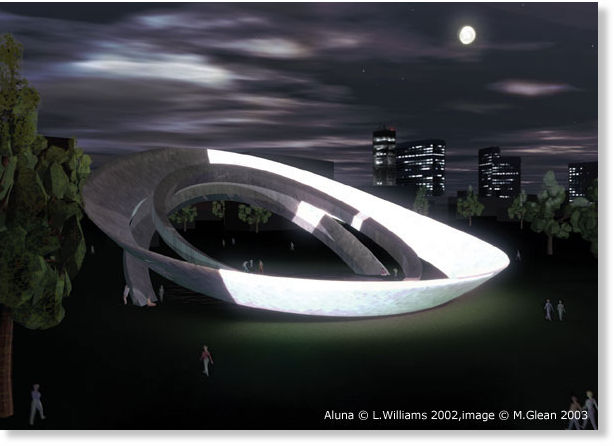
Scientists and artists say that by 2012, they plan to build a 130-foot lunar clock along the River Thames.

The goal is to create a new London landmark that is close to the proposed area for the Olympic stadium, which is at East India Dock six miles along the river from Westminster Palace.

The artists are hoping that the clock will be as iconic as Big Ben is, which has been keeping time now for 150 years.

Currently, the site is an unkempt nature reserve.

Laura Williams, an East London artist, told BBC news that the clock would be powered by the tides from the Thames.

"There are three giant concentric rings made from recycled glass," she said. "Light shines through from the glass in time with the Moon's cycles so the largest ring shows the lunar phase.

"Gradually the light waxes on all the way around the ring and connects full circle when it's full Moon.

Heart

First Genetic Link Between Reptile And Human Heart Evolution Found

Image
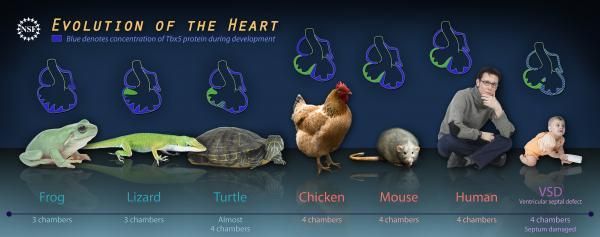
© Credit: Zina Deretsky, National Science Foundation after Benoit Brueau, the Gladstone Institute of Cardiovascular DiseaseEmbryo hearts show evolution of the heart from a three-chambered in frogs to a four-chambered in mammals.
Scientists at the Gladstone Institute of Cardiovascular Disease (GICD) have traced the evolution of the four-chambered human heart to a common genetic factor linked to the development of hearts in turtles and other reptiles.

The research, published in the September 3 issue of the journal Nature, shows how a specific protein that turns on genes is involved in heart formation in turtles, lizards and humans.

"This is the first genetic link to the evolution of two, rather than one, pumping chamber in the heart, which is a key event in the evolution of becoming warm-blooded," said Gladstone investigator Benoit Bruneau, PhD, who led the study. "The gene involved, Tbx5, is also implicated in human congenital heart disease, so our results also bring insight into human disease."

From an evolutionary standpoint, the reptiles occupy a critical point in heart evolution.

Crusader

Battle Of The Teutoburg Forest: Germany Recalls Myth That Created The Nation

Teutoburg 1
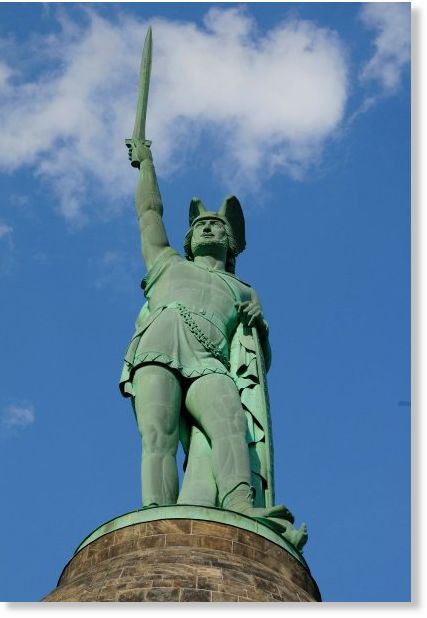
© David CrosslandHermann, portrayed as a blond, musclebound warrior, featured in more than 50 operas and plays during the 18th and 19th centuries. Nationalists turned the Germanic leader into an icon to help them forge unity in the face of such perceived enemies as the Vatican, the French and the Jews.
In September 9 AD, Germanic tribesmen slaughtered three Roman legions in a battle that marked the "big bang" of the German nation and created its first hero -- Hermann. The country is marking the 2,000th anniversary with restraint because the myth of Hermann remains tainted by the militant nationalism that would later be associated with Hitler.

Germany's 20th century history has been so troubled that anniversaries of positive events are in short supply. This year has two such rare examples, the 20th anniversary of the fall of the Berlin Wall and the 60th of the establishment of democracy after World War II.

There's a third one coming up in September that represents nothing less than the birth of the German nation -- the 2,000th anniversary of a devastating victory over three Roman legions by Germanic tribes in the Battle of the Teutoburg Forest.

Mr. Potato

How Facebook Ruins Friendships

Facebook
© Lisa Haney
Notice to my friends: I love you all dearly.

But I don't give a hoot that you are "having a busy Monday," your child "took 30 minutes to brush his teeth," your dog "just ate an ant trap" or you want to "save the piglets."

And I really, really don't care which Addams Family member you most resemble. (I could have told you the answer before you took the quiz on Facebook.)

Here's where you and I went wrong: We took our friendship online. First we began communicating more by email than by phone. Then we switched to "instant messaging" or "texting." We "friended" each other on Facebook, and began communicating by "tweeting" our thoughts - in 140 characters or less - via Twitter.